Fettuccine Alfredo
The American restaurant-style fettuccine alfredo: butter, cream and real Parmigiano-Reggiano tossed with hot pasta and a splash of its cooking water, so the sauce is silky instead of clumpy or oily.
- Prep
- 10 min
- Cook
- 15 min
- Makes
- Serves 4
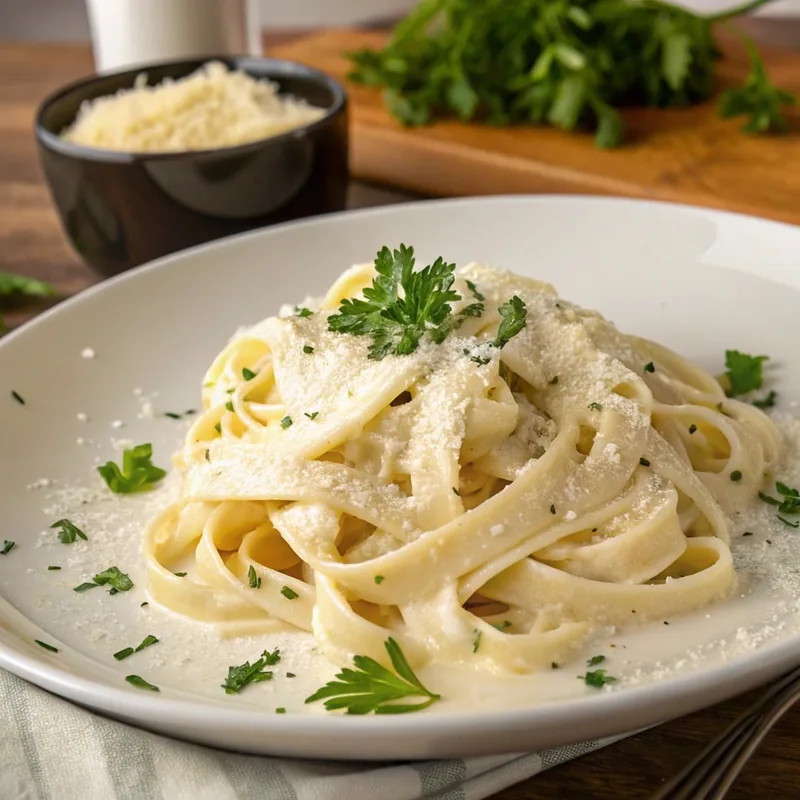
Butter, cream and Parmesan leave alfredo sauce very little room to go wrong, except for the cheese. It clumps into rubbery strings or splits into a slick of oil when it meets heat that is too high or too sudden.
Parmesan is a hard, aged cheese with very little moisture. When it melts, its proteins need something to keep them apart, or they bind into clumps and push the fat out. In a good alfredo, that something is the cream and the starchy pasta water, at a temperature hot enough to melt the cheese but well below a boil. Add the cheese to a bubbling pan and it seizes. Add it off the heat, gradually, while tossing, and it melts into a smooth, glossy coating.
The cheese itself matters more than in almost any other dish. Real Parmigiano-Reggiano, grated finely on a rasp just before it goes in, melts cleanly and tastes nutty and savory. The pre-grated kind in a shaker is dry and coated with anti-caking agents; it will not melt into a sauce no matter how careful you are. Grana Padano is a good, cheaper substitute that behaves the same way.
The original fettuccine all'Alfredo from Rome had no cream at all: just fresh pasta, a lot of butter and Parmesan, emulsified with the pasta's cooking water. The American version added cream, which makes the sauce richer and much more forgiving, and that is the version most people mean today. This recipe follows it, but keeps the pasta water, because the starch in it is what makes the sauce cling to every strand.
Reduce the cream by about a third before the pasta goes in. Simmering it gently for a few minutes thickens it so the finished sauce coats the noodles instead of pooling at the bottom of the plate. Then the drained fettuccine goes straight into the pan, followed by the cheese in handfuls, with a splash of pasta water whenever it looks too tight.
Serve it immediately. Alfredo thickens as it cools, and five minutes on the table turns a silky sauce into a stiff one. Warm the plates if you can, and keep a little pasta water nearby to loosen the last portion in the pan.
Nutmeg is a common addition in the American version; a pinch gives warmth without tasting of spice. Black pepper finishes it.
To make it a full meal, add sliced chicken from honey Dijon chicken or sautéed shrimp. For a chicken dinner built on the same garlic and Parmesan, creamy garlic chicken takes thirty minutes. For a heartier cream sauce, creamy chicken gnocchi is a one-skillet dinner, and creamy mushroom sauce uses the same reduce-then-finish approach.
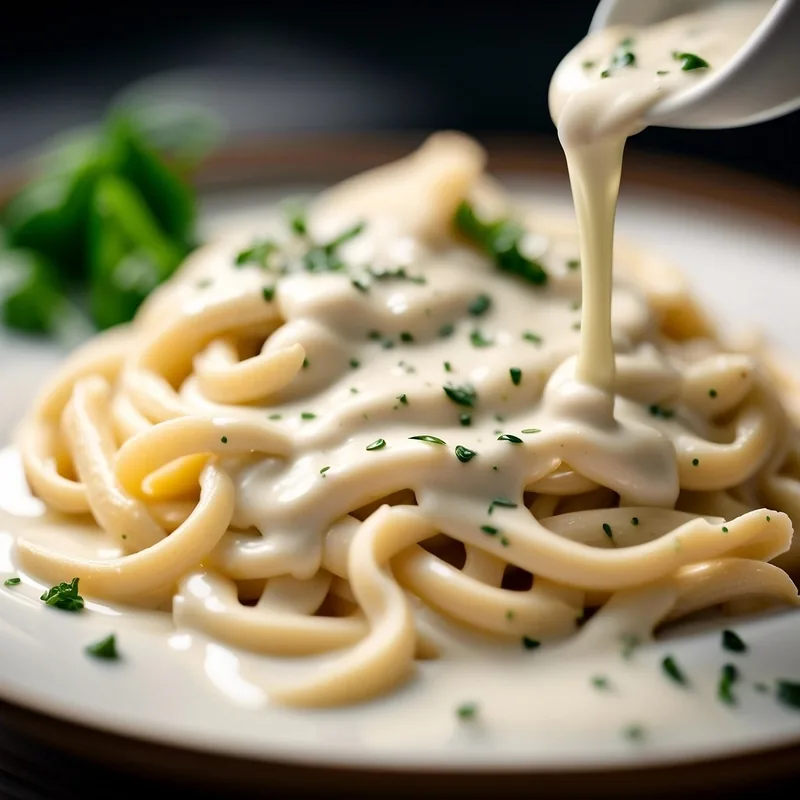
Fettuccine alfredo, ready to print
The American restaurant-style fettuccine alfredo: butter, cream and real Parmigiano-Reggiano tossed with hot pasta and a splash of its cooking water, so the sauce is silky instead of clumpy or oily.
Pasta, butter, cream and real Parmesan
For the pasta
- 1 lb (450 g) dried fettuccine
- 1 tbsp kosher salt, for the pasta water
For the sauce
- 4 tbsp (55 g) unsalted butter
- 2 cloves garlic, finely grated (optional)
- 1½ cups (355 ml) heavy cream
- 1½ cups (130 g) Parmigiano-Reggiano, finely grated, plus more to serve
- ½ tsp fine salt, plus more to taste
- ½ tsp black pepper
- Pinch of ground nutmeg
- 2 tbsp chopped fresh parsley
Reduce the cream, then cheese off the heat
- 1 Bring a large pot of water to a boil with the kosher salt.
- 2 While it heats, melt the butter in a large, deep skillet over medium heat. Add the garlic, if using, and cook 30 seconds without browning. Pour in the cream and bring to a gentle simmer. Cook until reduced by about a third and slightly thickened, 5–6 minutes. Lower the heat to the lowest setting.
- 3 Cook the fettuccine 1 minute less than the package directions. Before draining, scoop out 1 cup (240 ml) of the pasta water.
- 4 Add the drained pasta to the skillet and toss to coat. Take the skillet off the heat.
- 5 Add the Parmesan a handful at a time, tossing with tongs between each, until it melts into the sauce. Add pasta water a splash at a time whenever the sauce looks thick or sticky.
- 6 Season with the salt, pepper and nutmeg. Toss once more, adding a little more pasta water if needed so the sauce is glossy and flowing.
- 7 Serve immediately on warm plates, topped with parsley and more Parmesan.
Chicken, shrimp and a lighter sauce
- Chicken alfredo: slice 2 cooked chicken breasts and toss them in with the pasta.
- Shrimp alfredo: sauté 1 lb (450 g) peeled shrimp in butter for 2–3 minutes and add them at the end.
- Lighter: use half and half instead of cream and do not reduce it; the pasta water and cheese will thicken it. It is less forgiving, so keep the heat very low.
- Reheating: alfredo does not reheat well. If you must, warm it gently in a pan with a splash of milk, stirring constantly.
- Broccoli: add 2 cups (180 g) small broccoli florets to the pasta water for the last 3 minutes of cooking.
Grainy, split and too-thin sauce
The cheese was added to a pan that was too hot, or it was pre-grated. Use freshly grated Parmigiano-Reggiano and add it off the heat, a little at a time.
It got too hot, or there was not enough liquid to hold the fat. Take it off the heat and toss in a splash of hot pasta water; it often comes back together.
Reduce the cream a little longer before adding the pasta, or add more cheese. It also thickens as it cools, so do not overdo it in the pan.
Milk alone does not have enough fat to hold the cheese in a smooth sauce. Half and half works with care; whole milk needs 1 tbsp flour cooked in the butter first.
More creamy pasta and sauces
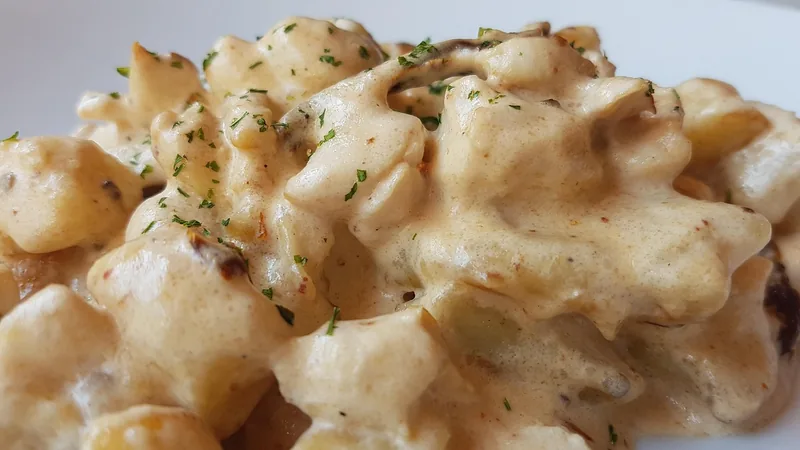
Creamy Chicken Gnocchi
Browned chicken thighs and potato gnocchi in a thyme cream sauce built deliberately loose, because the gnocchi thicken it themselves.
- Total time
- 35 min
- Yield
- Serves 4
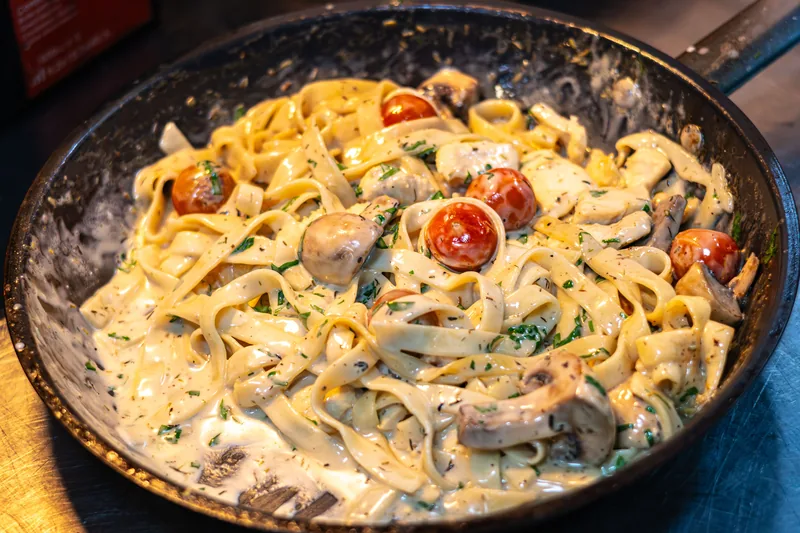
Creamy Sausage Pasta
Italian sausage browned hard for its fond, deglazed with wine, and finished into a clinging sauce with cream, Parmesan and pasta water.
- Total time
- 35 min
- Yield
- Serves 4
Cheesy Spinach Dip Chicken Pasta
A cream cheese and spinach sauce held just under a simmer, folded through seared chicken and short pasta in one skillet.
- Total time
- 40 min
- Yield
- Serves 4 generously