Creamy Chicken Gnocchi
Browned chicken thighs and potato gnocchi in a thyme cream sauce built deliberately loose, because the gnocchi thicken it themselves.
- Prep
- 15 min
- Cook
- 20 min
- Makes
- Serves 4
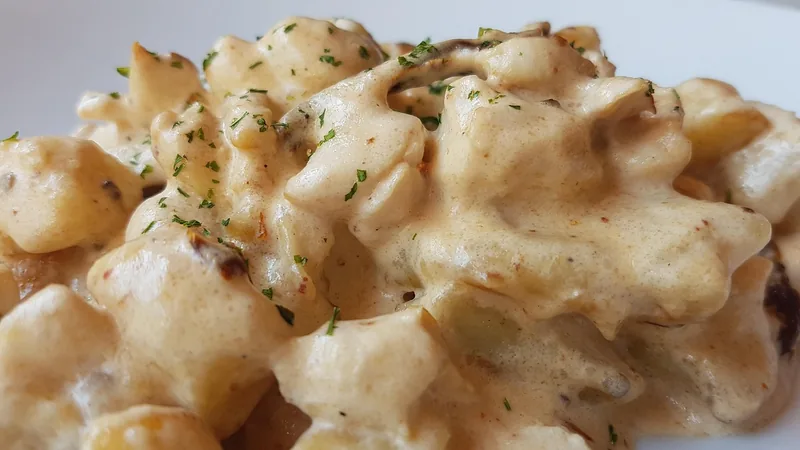
Gnocchi are not small pasta. Dried pasta is held together by gluten and gives up only a little surface starch no matter how long it sits; a potato dumpling is held together by the starch itself, and warm liquid takes that structure apart. Shelf-stable gnocchi are cooked through in about two minutes. At four they are soft and lovely. At eight in a hot cream sauce their surfaces have gone slick and gluey and the pillows have started to fuse into one another. Nothing you stir in afterward will separate them again.
That single fact sets the order of work. The sauce has to be finished — seasoned, tasted, the right consistency — before the gnocchi ever touch it, and the dish should reach the table within about five minutes of them going in. This is not a skillet you can hold on low while someone finishes a phone call.
The starch they shed does something useful on the way out, which is where the second problem comes from. A cream sauce that looks correct in the pan will be noticeably thicker once the gnocchi have been in it, and thicker again by the time it cools on a plate. Build it looser than seems right: pourable, just barely coating the back of a spoon, closer to a thin gravy than a paste. If it looks perfect at the stove you have already gone too far.
Browning the gnocchi first is the trick that makes all of this easier. Two or three minutes in butter in a dry pan gives each one a thin toasted shell, and a shell is a barrier — those gnocchi hold their shape in sauce for twice as long as raw ones, and they taste better besides. It costs one extra step and removes most of the risk.
Thighs over breasts here. They are cut into bite-size pieces, which is the fastest possible way to overcook a breast, and thigh meat tolerates the extra minute it takes to get real color. Sear them in two batches so the pan stays hot enough to brown rather than steam, take them out at 165°F (74°C), and leave the browned film on the pan bottom — the broth lifts it and it becomes most of the savor in the sauce.
Heavy cream, not half-and-half. This sauce never gets a hard boil, so it relies on fat to thicken, and a lower-fat dairy will either stay watery or, if you push it with heat to reduce, curdle. Keep it at a lazy simmer, add the parmesan off the burner, and it will hold together without a roux or a cornstarch slurry.
Spinach goes in at the very end and only wilts from residual heat, thirty seconds. Lemon zest, if you use it, goes in after the pan is off the stove — its acid can tip a warm cream sauce grainy if it lands while the pan is still hot.
For the same flavors with more liquid and no timing pressure at all, the site has a slow cooker gnocchi soup, and for a lighter Sunday pot, farmhouse chicken noodle soup. For a plainer pot on a sick day, homemade chicken soup with stelline in it is the one that actually gets finished.
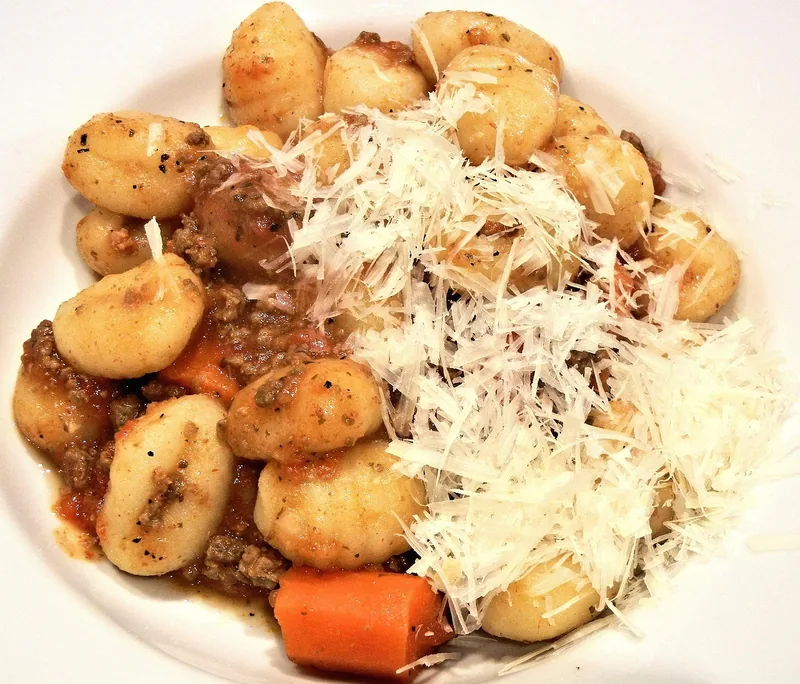
Chicken gnocchi, one skillet
Browned chicken thighs and potato gnocchi in a thyme cream sauce built deliberately loose, because the gnocchi thicken it themselves.
What goes in the pan
For the chicken
- 1¼ lb (565 g) boneless skinless chicken thighs, cut into 1 in (2.5 cm) pieces
- 1 tbsp olive oil
- ¾ tsp fine salt
- ½ tsp black pepper
For the skillet
- 1 lb (450 g) shelf-stable potato gnocchi
- 3 tbsp unsalted butter, divided
- 1 shallot, finely chopped
- 3 garlic cloves, minced
- 1 tsp fresh thyme leaves, or ½ tsp dried
- 1¼ cups (300 ml) chicken broth
- 1 cup (240 ml) heavy cream
- ½ cup (50 g) parmesan, finely grated
- 3 oz (85 g) baby spinach
- Zest of ½ lemon, optional
Sear, brown, sauce, finish fast
- 1 Season the chicken with the salt and pepper. Sear it in the oil over medium-high heat in two batches, about 4 minutes total per batch, until well browned and 165°F (74°C) inside. Move it to a plate and leave the browned film in the pan.
- 2 Melt 2 tablespoons of the butter in the same skillet and add the gnocchi in a single layer. Leave them undisturbed 2 minutes, turn, and give them 1 minute more — you want toasted gold on two sides, not color all over. Tip them onto the plate with the chicken.
- 3 Lower the heat to medium. Melt the last tablespoon of butter, soften the shallot 2 minutes, then add the garlic and thyme for 30 seconds.
- 4 Pour in the broth and scrape the pan bottom clean with a wooden spoon. Simmer 3 minutes to reduce it by about a third.
- 5 Stir in the cream and hold it at a lazy simmer — small bubbles at the edge only — for 4 minutes, until it just coats a spoon. Take the pan off the heat and stir in the parmesan until smooth. The sauce should still look slightly too thin.
- 6 Return the gnocchi and chicken with any juices, put the pan back on low, and cook 3 minutes, stirring gently, until the gnocchi are tender through and the sauce has tightened around them.
- 7 Add the spinach and fold it through for 30 seconds, off the heat, until it collapses. Stir in the lemon zest now if using, and serve immediately.
Gnocchi types, shortcuts and leftovers
- Frozen gnocchi go into the skillet straight from the freezer and need an extra minute of browning. Do not thaw them — they turn to paste on the counter.
- Fresh refrigerated gnocchi are softer and more fragile; skip the browning step and add them for the last 2 minutes only.
- Rotisserie chicken works when you are in a hurry. Use 3 cups (400 g) shredded, add it with the gnocchi, and add an extra ¼ teaspoon salt to make up for the missing pan browning.
- This is a same-day dish. The sauce keeps 3 days, but reheated gnocchi are soft — if you expect leftovers, hold half the gnocchi back and cook them fresh.
- To reheat anyway: low heat, a splash of broth, and stop stirring as soon as it is hot.
- Sun-dried tomatoes, drained and slivered, are the one addition that does not upset the balance. Add 2 tablespoons with the garlic.
Gnocchi texture and cream sauce questions
You can, and the sauce comes out thicker because all of their starch ends up in it. Add ½ cup (120 ml) more broth to compensate, drop them into the barely simmering sauce, and pull the pan the moment they float and puff. The margin is roughly a minute wide, which is why browning them first is the safer route.
The thickening comes from a different place. Pasta holds its starch and a pasta sauce is thickened by cheese, cream or a roux that you control. Here the dumplings themselves dissolve slightly into the sauce and thicken it on their own schedule, which is why this sauce starts out thinner and why it cannot sit.
Almost always the parmesan went in over direct heat, or the cream was boiled hard to speed up reducing. Cheese proteins seize above a simmer and push their fat out. Off the burner, added in handfuls, it melts smoothly into cream that is hot but not bubbling.
Whole milk plus 2 teaspoons of cornstarch slurried into it will thicken, but it tastes thinner and is much more likely to curdle. Evaporated milk is the better low-fat option — it is already concentrated and stabilized, so it holds heat without separating.
At least 12 inches. The gnocchi need to sit in one layer to brown, and a crowded pan steams them instead, which puts you right back to the soft, sticky texture the browning exists to prevent.
Other ways with gnocchi and chicken
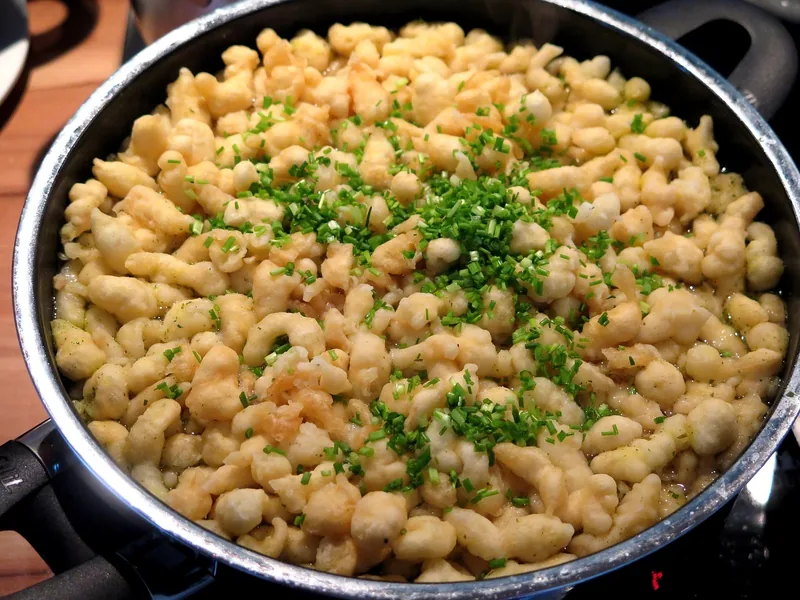
Crock Pot Gnocchi Soup
Sausage, spinach and a cream broth built over four hours. The gnocchi go in for the last thirty minutes.
- Total time
- 4 hr 45 min
- Yield
- Serves 6
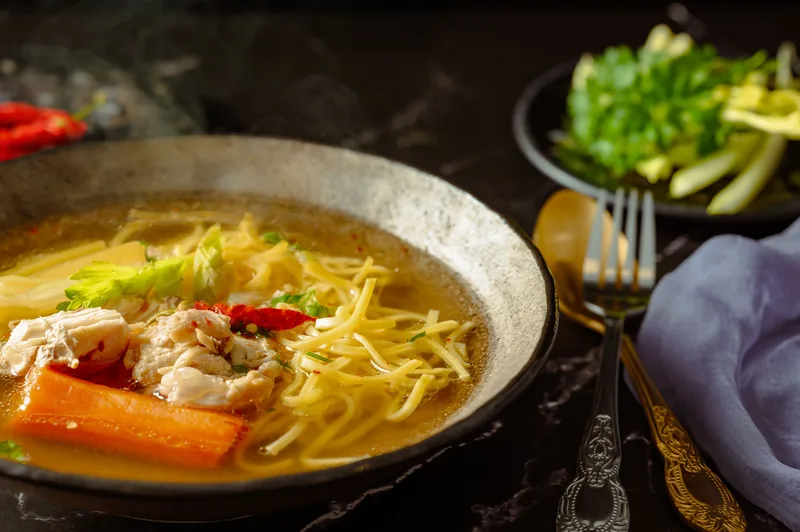
Farmhouse Chicken Noodle Soup
A whole chicken poached into its own stock, then shredded back in. The noodles cook separately and that is not fussiness.
- Total time
- 1 hr 50 min
- Yield
- Serves 8
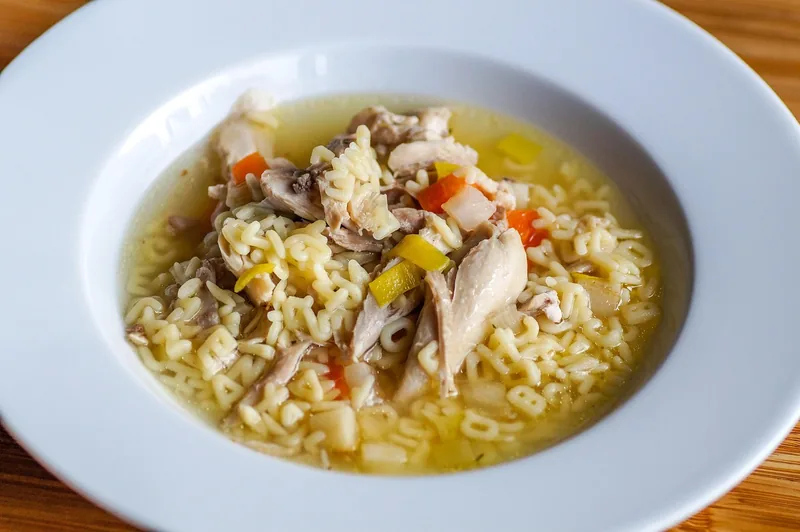
Chicken and Stars Soup
The canned soup of everybody's childhood, made with real thigh meat and stelline cooked apart from the broth so it stays clear.
- Total time
- 45 min
- Yield
- Serves 6