Baked Honey Dijon Chicken
Chicken breasts baked plain, glazed in the last ten minutes with honey, two mustards and cider vinegar, then flashed under the broiler.
- Prep
- 10 min
- Cook
- 30 min
- Rest
- 5 min
- Makes
- Serves 4
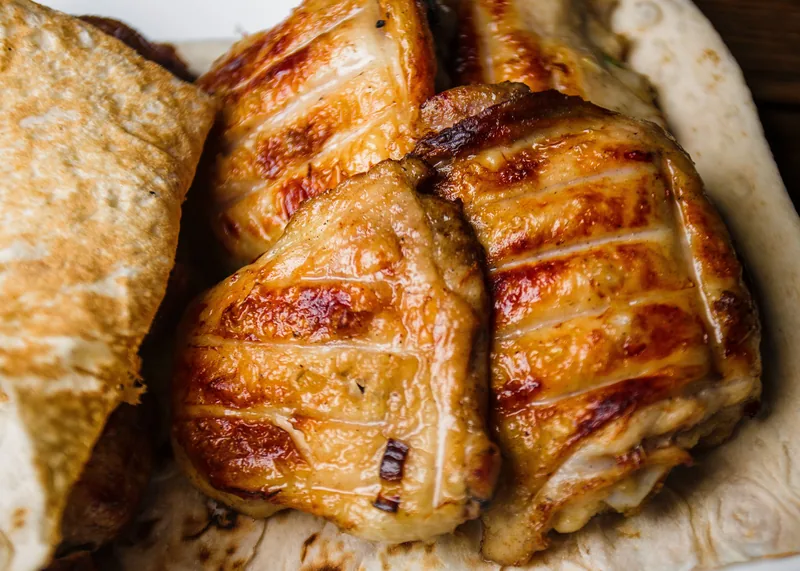
Honey starts to darken at about 230°F (110°C) and turns bitter not far above it. A chicken breast needs roughly twenty-five minutes in a moderate oven to reach 165°F (74°C). Those two facts are incompatible, and every burnt, blackened, sticky-pan version of this dish comes from ignoring the conflict: the glaze goes on at the start, spends half an hour above its scorching point, and is carbonized by the time the meat is safe to eat.
So the glaze goes on late. The chicken bakes naked and seasoned for the first fifteen minutes, which is when almost all the cooking happens, and the honey mixture only arrives for the last eight to ten. That is long enough for it to tighten, cling and caramelize at the edges, and short enough that it never sits at burning temperature.
Mustard, interestingly, could go on from the beginning. It is mostly vinegar, water and ground seed with barely any sugar, and it browns gently rather than scorching. If you want more mustard flavor driven into the surface, a thin coat of plain Dijon before baking is a free upgrade. It is the honey that has to wait.
The broiler at the end is not a flourish. Eight minutes of oven heat on a glaze gives you a shiny wet coat; ninety seconds under direct radiant heat is what pulls it into the lacquered, slightly blistered surface you are picturing. Watch it the whole time, because the same sugar chemistry that makes it lovely at ninety seconds makes it acrid at a hundred and fifty. Leave the door cracked and stand there.
Two mustards, because they do different jobs. Smooth Dijon emulsifies — it holds the honey, the oil and the vinegar together so the glaze clings instead of sliding into the pan. Whole grain mustard adds texture and pops of sharpness that survive the heat. Skip the whole grain if you must; skip the Dijon and the glaze separates.
The vinegar is there to stop the whole thing tasting like candy. A tablespoon of cider vinegar in a third of a cup of honey barely registers as sour, but without it the dish reads flat and cloying by the third bite.
Even thickness is the last variable. A chicken breast as it comes is often an inch and a half at the thick end and half an inch at the tail, and one of those two is going to be wrong. A few whacks with a rolling pin through plastic wrap to bring it to an even three quarters of an inch (2 cm) means the whole thing finishes at once. Pull it at 165°F (74°C) in the thickest part and rest it five minutes; it will carry a couple of degrees higher on the counter.
Reserve some glaze before it touches raw chicken and you have a sauce for the table. Boil the rest in the pan if you prefer, but the reserved spoonful is easier and tastes fresher.
Garlic herb potatoes handle the starch, and roasted cabbage with yogurt sauce gives the plate something tangy to argue with the honey. Any breast left over gets sliced the next day into baked chicken chimichangas, where a dry, well-seasoned filling is exactly what you want.
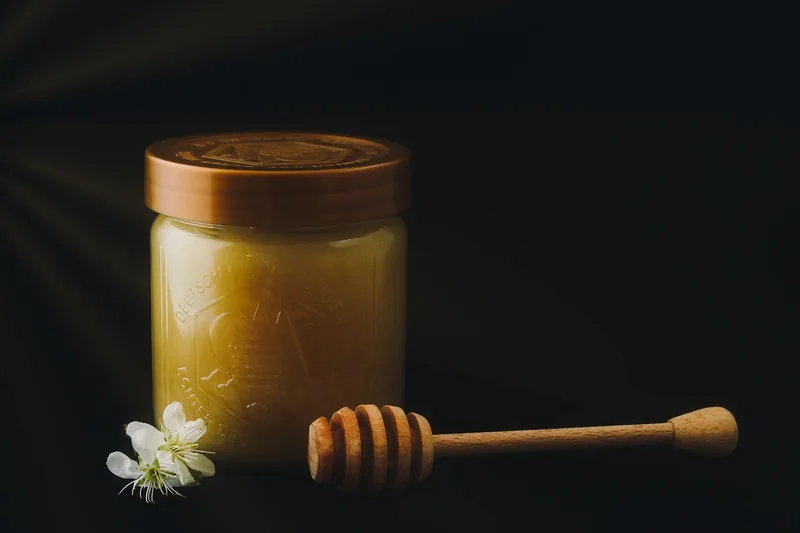
Honey Dijon chicken: the card
Chicken breasts baked plain, glazed in the last ten minutes with honey, two mustards and cider vinegar, then flashed under the broiler.
Four breasts, and a glaze you whisk in a bowl
The chicken
- 4 boneless, skinless chicken breasts, about 6 oz (170 g) each
- 1 tbsp olive oil
- ¾ tsp fine salt
- ½ tsp black pepper
- ½ tsp garlic powder
The honey Dijon glaze
- ⅓ cup (115 g) honey
- ¼ cup (60 g) smooth Dijon mustard
- 1 tbsp whole grain mustard
- 1 tbsp apple cider vinegar
- 1 tbsp olive oil
- 2 cloves garlic, grated
- 1 tsp fresh thyme leaves
- ¼ tsp fine salt
- Pinch of cayenne
Bake bare, glaze late, broil briefly
- 1 Heat the oven to 375°F (190°C). Lay the breasts between two sheets of plastic wrap and pound the thick ends until each one is an even ¾ inch (2 cm) thick.
- 2 Whisk all the glaze ingredients together in a small bowl until smooth and glossy. Spoon a third of it into a separate dish and set that aside for the table — it must not touch raw chicken.
- 3 Rub the breasts with the olive oil and season all over with the salt, pepper and garlic powder. Set them in a baking dish or on a foil-lined sheet pan with space between them.
- 4 Bake 15 minutes, bare. The surface will look pale and unpromising at this point, which is correct.
- 5 Brush the remaining two thirds of the glaze thickly over the tops and sides. Return to the oven for 8 to 12 minutes, until the thickest part reads 165°F (74°C) and the glaze has stopped looking watery.
- 6 Move the pan 6 inches (15 cm) under a hot broiler for 60 to 90 seconds, watching continuously, until the glaze blisters and darkens in patches. It goes from lacquered to burnt in under a minute.
- 7 Rest 5 minutes, spoon the reserved glaze over, and scatter with a little more thyme.
Other cuts, other sweeteners, and the spare glaze
- Dijon is naturally gluten-free, but a few brands finish with wheat-derived flavorings — check the label if it matters, and the rest of the dish has nothing to worry about.
- Maple syrup swaps in for honey one for one and burns just as readily, so the timing does not change. Brown sugar does not work: it needs liquid to dissolve and stays gritty.
- Bone-in, skin-on thighs are the better cut if you have them. Bake 30 minutes bare, glaze, then 10 minutes more to 175°F (80°C), which is where thigh meat turns tender.
- The glaze keeps a week in the fridge and is worth making double. It is good on salmon, pork chops and roasted carrots.
- Leftover chicken keeps 3 days. Slice it cold for sandwiches rather than reheating — the glaze weeps when it is warmed a second time and the meat tightens.
- Cooking for six or eight: use two pans on separate racks and swap them at the glazing step, so both get a turn nearer the heat.
Why sugar and long bakes do not mix
Two causes. A thin glaze slides off a wet surface, so pat the chicken dry before seasoning and whisk the glaze until it is thick enough to coat a spoon. And any glaze that lands on bare metal has no moisture under it — it goes straight past caramelized. Lining the pan with foil means the scorched patches leave with the foil.
Marinate it in the mustard, vinegar, oil and garlic overnight by all means — that part only improves. Hold the honey back and stir it in when you glaze. Sugar on the surface at the start of a long bake is exactly the problem this method is arranged to avoid.
No, and the dish is still good without it. What you lose is the blistered, slightly bittersweet surface that comes from radiant heat hitting sugar directly. A convection setting for the last five minutes gets partway there. Whatever you do, do not solve it by baking longer — that dries the meat without changing the glaze.
It should land closer to tangy than sweet. If yours is cloying, the honey was probably a dark varietal or the vinegar got left out. Push the Dijon up to a third of a cup and add a second tablespoon of vinegar — the mustard has far more assertiveness than its quantity suggests.
Yes, with one adjustment: sear the seasoned breasts 5 minutes a side over medium, drop the heat to low, then add the glaze and turn the chicken in it for the last 3 or 4 minutes. On direct heat the sugar hits its burning point in a fraction of the time it takes in an oven, so the pan has to come down before the glaze goes in.
Two things to put on the same plate
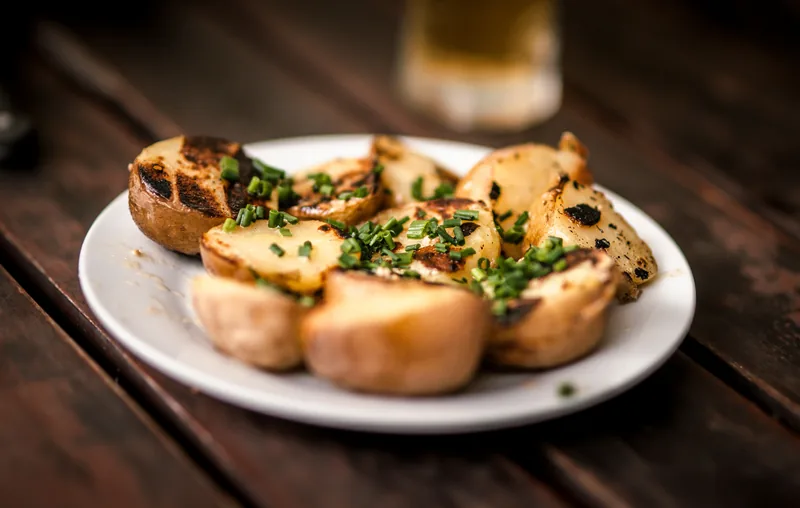
Grilled Potatoes with Garlic and Herbs
Parboiled first so the grill only has to char them. Twelve minutes over the coals, not forty.
- Total time
- 40 min
- Yield
- Serves 6
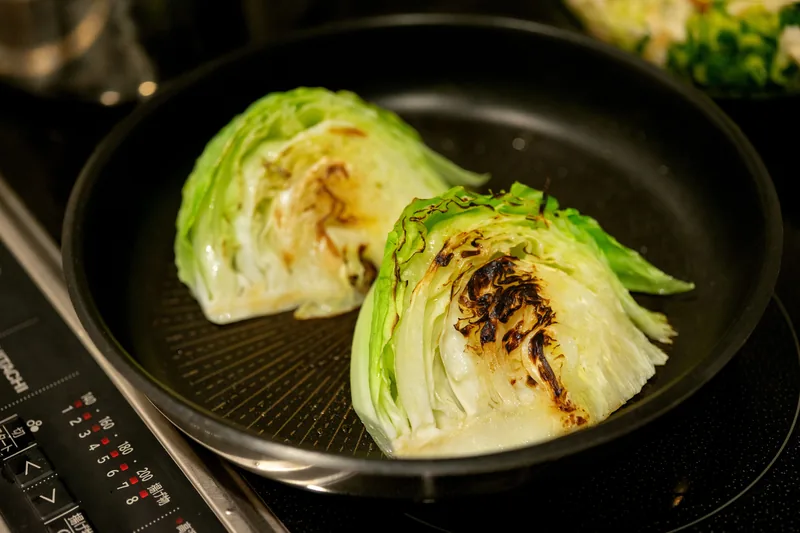
Roasted Cabbage Steaks with Yogurt Sauce
Thick wedges roasted until the edges char and the core turns sweet, under a cold garlic yogurt.
- Total time
- 45 min
- Yield
- Serves 4
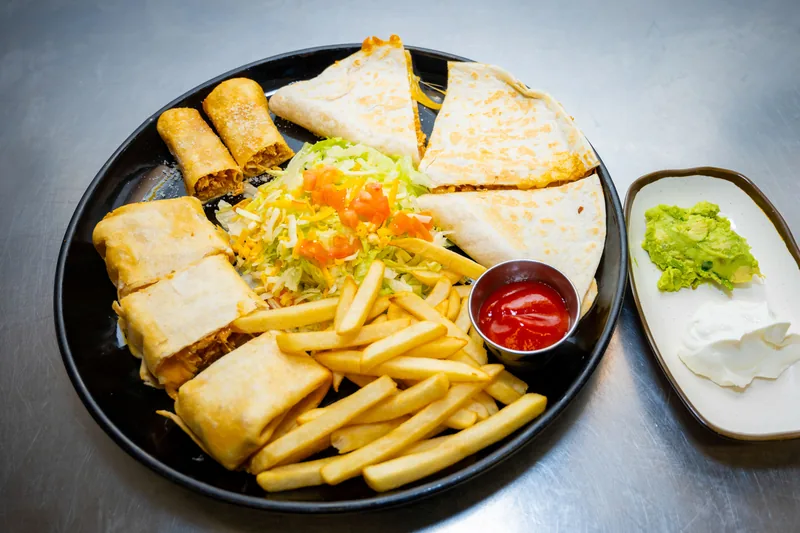
Baked Chicken Chimichangas
A dry, well-seasoned chicken filling rolled tight, brushed with butter and baked seam down on a preheated pan until the tortilla blisters.
- Total time
- 50 min
- Yield
- Makes 6 chimichangas