Creamy Sausage Pasta
Italian sausage browned hard for its fond, deglazed with wine, and finished into a clinging sauce with cream, Parmesan and pasta water.
- Prep
- 10 min
- Cook
- 25 min
- Makes
- Serves 4
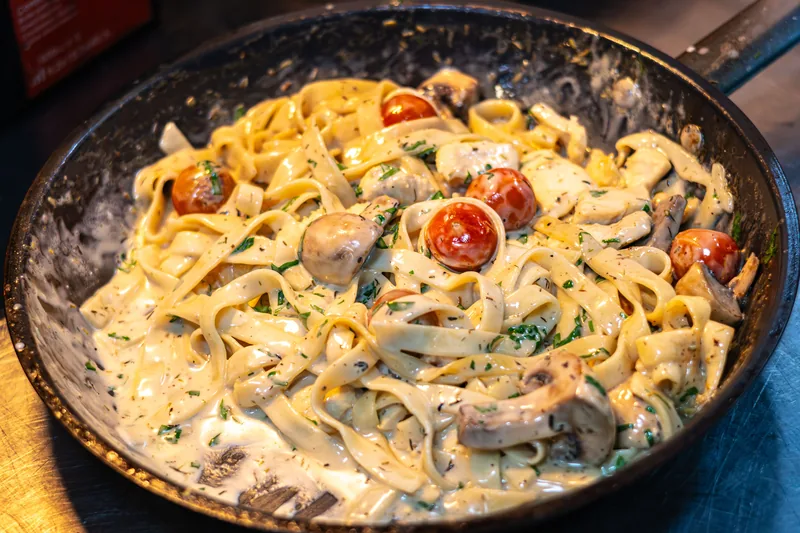
Cream is not the flavor in this dish. It is the carrier. All the flavor comes out of the sausage in the first four minutes, and it comes out in two forms: the fat that renders into the pan, and the brown crust that sticks to the bottom of it. Stir the sausage constantly while it cooks and you get neither — the meat greys, releases its water, and simmers in it. Press it flat and leave it completely alone until the underside has gone properly dark, and the pan acquires a layer of fond that is the entire backbone of the sauce.
That fond is also why the wine is in the ingredient list. A quarter cup of anything acidic, poured into a screaming pan and scraped with a wooden spoon, lifts all of it back into the liquid. Without that step it stays welded to the steel and you wash it down the drain.
Cream sauces break for one reason: they get too hot. Heavy cream is an emulsion of butterfat in water held together by a thin protein film, and at a hard boil that film fails and the fat pools out as grease. Parmesan makes it worse, because cheese proteins tighten and squeeze out their own fat above roughly 180°F (82°C), which is well below a simmer. So the cream goes in over low heat and the cheese goes in off the heat entirely, in handfuls, stirred until each one disappears before the next.
Pasta water is the third component and the one people throw away. The cloudiness is dissolved starch, and starch granules physically get between the fat droplets and stop them coalescing — the same job an egg yolk does in mayonnaise. A splash of it turns a thin, separating cream sauce into something that clings to a rigatoni ridge. Reserve a full cup before draining; you will use most of it.
Pull the pasta a minute before the box says. It finishes in the sauce, and that last minute of cooking in a starchy emulsion is what makes the sauce and the noodle behave like one thing rather than two.
The sausage needs to reach 160°F (71°C), which happens well before the browning does, so by the time the crust looks right the safety question has answered itself. Buy bulk sausage if you can find it. Otherwise slit the casings with a knife and squeeze the meat out — casings that go into the pan whole never break into the shreds you want.
Judge the sauce in the pan, not on the plate. It should look slightly too loose while you are tossing, because the pasta keeps absorbing liquid for a minute or two after it leaves the heat. A sauce that looks perfect in the skillet is a dry one by the time it reaches the table, and the fix — another splash of that reserved water — takes five seconds if you kept it.
Leftover spinach or a handful of arugula wilted in at the end costs nothing; if the spinach is the part you want more of, spinach dip pasta builds the whole sauce around it. For a soupier version of the same idea there is creamy spinach tortellini soup, and an orzo pasta salad for when it is too warm to want any of this.
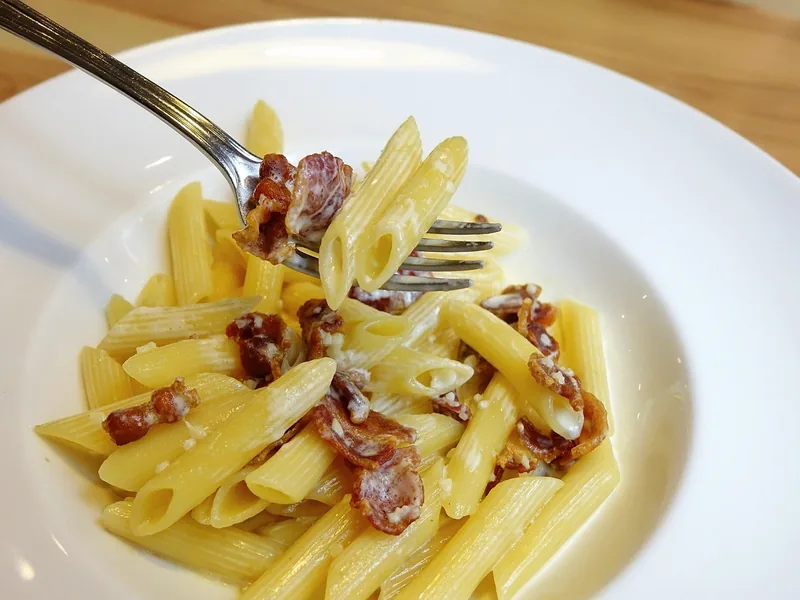
Sausage pasta in cream: the card
Italian sausage browned hard for its fond, deglazed with wine, and finished into a clinging sauce with cream, Parmesan and pasta water.
A pound of sausage and eleven other things
For the pasta
- 12 oz (340 g) rigatoni or penne
- 1 tbsp salt, for the water
For the sauce
- 1 tbsp olive oil
- 1 lb (450 g) Italian sausage, casings removed
- 1 small yellow onion, finely diced
- 4 cloves garlic, thinly sliced
- ½ tsp red pepper flakes
- ⅓ cup (40 g) oil-packed sun-dried tomatoes, chopped
- ¼ cup (60 ml) dry white wine
- ¾ cup (180 ml) heavy cream
- ¾ cup (75 g) finely grated Parmesan
- 3 cups (60 g) baby spinach
- Black pepper, and torn basil to finish
Brown hard, deglaze, finish off the heat
- 1 Bring a large pot of water to a boil and salt it. Start the sauce while it heats.
- 2 Warm the oil in a wide skillet over medium-high. Add the sausage in one layer, press it flat, and do not touch it for 4 minutes, until the underside is deeply browned. Only then break it into rough pieces and cook 3 minutes more.
- 3 Tip out all but about 2 tablespoons of the rendered fat. Add the onion and cook 3 minutes, then the garlic, pepper flakes and sun-dried tomatoes for 1 minute, until the garlic smells sweet rather than raw.
- 4 Pour in the wine and scrape the bottom of the pan hard with a wooden spoon until every brown patch has lifted. Let it bubble down to almost nothing, about 2 minutes.
- 5 Drop the pasta into the boiling water and cook it 1 minute short of the package time. Reserve 1 cup of the cooking water, then drain.
- 6 Turn the heat under the skillet to low and stir in the cream. Let it warm through for 2 minutes without ever reaching a boil — small lazy bubbles at the edge are as far as it should go.
- 7 Add the drained pasta and ½ cup of the reserved water and toss for a minute. Slide the pan off the heat, add the Parmesan in three handfuls, stirring each one in completely, then fold through the spinach until it collapses.
- 8 Loosen with more pasta water until the sauce coats the back of a spoon and looks a shade looser than you want it. Finish with black pepper and basil and serve straight away.
Which sausage, and what happens to the leftovers
- Hot Italian sausage instead of sweet, and drop the pepper flakes. Chicken or turkey sausage renders far less fat — leave all of it in the pan and add an extra tablespoon of oil.
- No wine: 3 tablespoons of chicken broth with 1 teaspoon of white wine vinegar deglazes just as well. Plain broth alone lifts the fond but leaves the sauce tasting rounder and duller.
- Grate the Parmesan yourself. Pre-shredded cheese is coated with cellulose to stop it clumping in the bag, and that coating stays gritty in a cream sauce.
- Leftovers keep 3 days and thicken solid in the fridge. Reheat in a skillet over low heat with a splash of milk or water, stirring — the microwave breaks the sauce.
- This does not freeze. Cream sauces separate on thawing and no amount of stirring brings them back.
- Scaling up past six servings needs a wider pan, not a deeper one. Piled-up pasta cannot be tossed, and a sauce that is not tossed does not emulsify.
Split sauce, thin sauce, greasy sauce
It got too hot. Cream separates at a rolling boil and Parmesan tightens and expels fat above about 180°F (82°C). Both failures happen in seconds. Take the pan off the heat before the cheese goes in, and if it does split, a splash of cold pasta water whisked in hard will sometimes pull it back together.
Half-and-half works if you keep the heat low and accept a thinner result. Milk is risky — its lower fat content and higher proportion of protein mean it curdles readily, especially with the acid from the wine and the tomatoes in the pan. If milk is what you have, whisk a teaspoon of cornstarch into it first; the starch stabilizes it.
Too much rendered sausage fat stayed in the pan for the amount of starch available to hold it. Pouring off all but 2 tablespoons is the first fix; the second is more pasta water, which brings the starch that binds the fat back into suspension.
Usually the pasta was drained and rinsed, or it went into the pan fully cooked. Rinsing washes off the surface starch that the sauce grabs onto, and pasta pulled at the exact package time has no absorbing left to do. That final minute together in the skillet is the step that binds them.
Ridged tubes — rigatoni, penne rigate, cavatappi. A cream sauce this rich needs somewhere to sit, and ridges and hollows give it that. Long strands work but carry less sauce per bite, and smooth penne lisce sheds it almost entirely.
More pasta for a weeknight
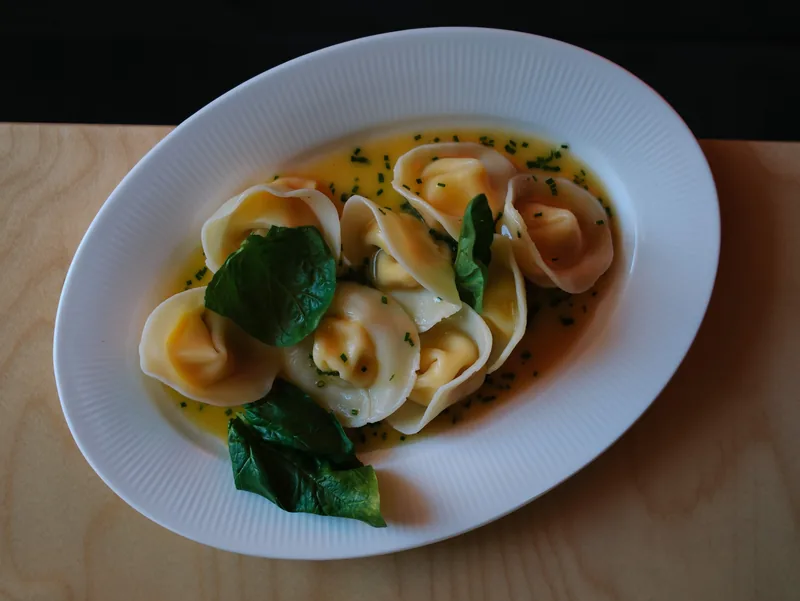
Creamy Spinach Tortellini Soup
Twenty-five minutes, one pot. The cream goes in off the heat and the tortellini go in last.
- Total time
- 35 min
- Yield
- Serves 6
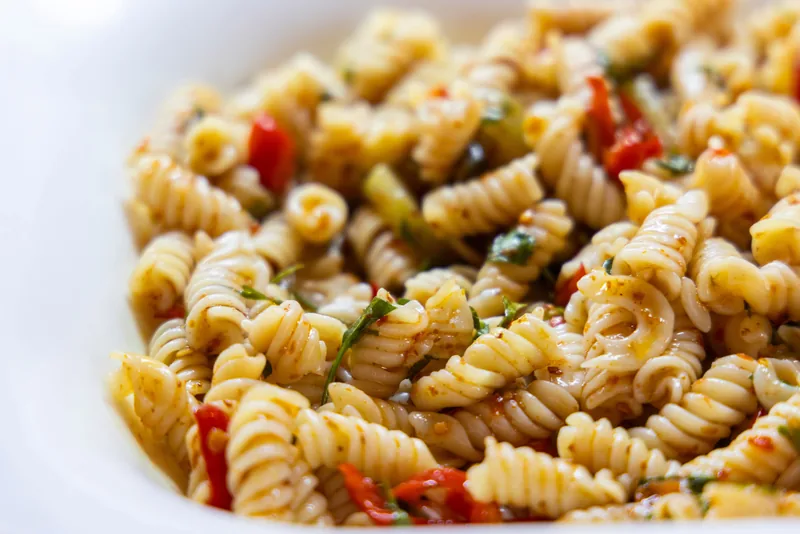
Orzo Pasta Salad
Dressed twice — once warm, once cold — so the seasoning goes through the pasta instead of sitting on it.
- Total time
- 30 min
- Yield
- Serves 8
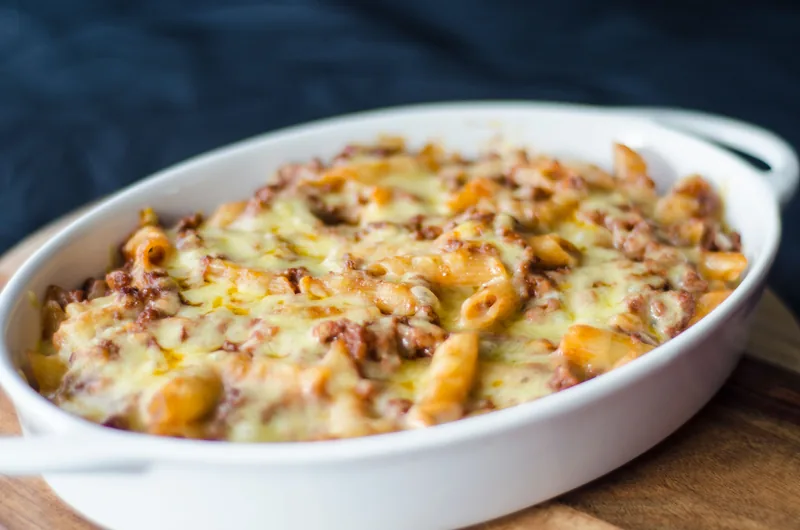
Cheesy Spinach Dip Chicken Pasta
A cream cheese and spinach sauce held just under a simmer, folded through seared chicken and short pasta in one skillet.
- Total time
- 40 min
- Yield
- Serves 4 generously