Cheesy Spinach Dip Chicken Pasta
A cream cheese and spinach sauce held just under a simmer, folded through seared chicken and short pasta in one skillet.
- Prep
- 15 min
- Cook
- 25 min
- Makes
- Serves 4 generously
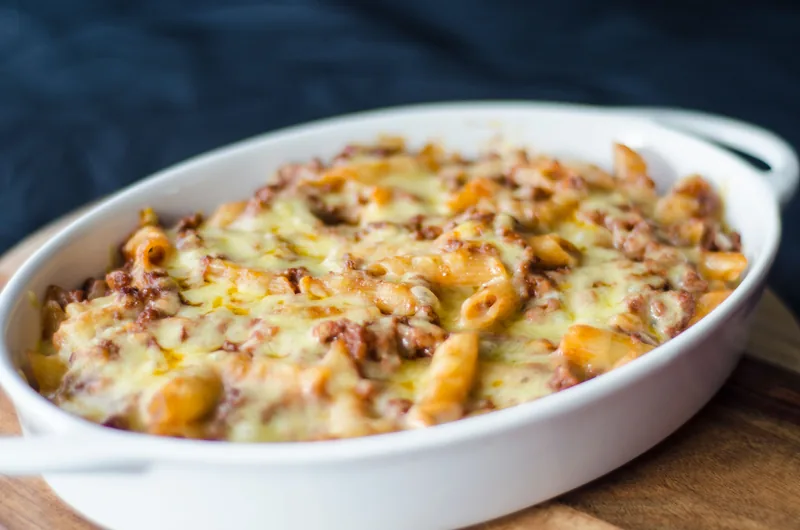
Spinach dip is never boiled. It is warmed until the cheese slumps and no further, and that restraint is the entire reason it stays smooth in the bowl. Turn the same base into a pasta sauce and the rule does not change — it just gets harder to obey, because there is a skillet under it and an instinct to hurry things along.
What happens when you hurry: cream cheese is an emulsion of milk fat suspended in protein, and around a simmer those proteins contract and wring the fat out. The sauce goes from glossy to grainy in under a minute, with visible slicks of yellow oil at the edge of the pan. It cannot be whisked back. So the sauce is built over medium-low heat, and the surface should never do more than tremble — if bubbles are breaking, the burner is already too high.
Two habits make that easy. Cube the cream cheese and let it sit out while the pasta water heats, because cold blocks melt so slowly that you will be tempted to raise the heat to move them along. And keep a cup of the pasta cooking water. The dissolved starch in it coats the fat droplets and physically holds them apart, which is the difference between a sauce that survives a stir and one that breaks the moment it warms through.
The chicken comes out of the pan before the sauce goes in. Boneless thighs or breasts, cut into strips, seared hard in two batches so they brown rather than steam, then set aside until the end. Chicken is safe at 165°F (74°C) and reaches it fast in strips; leaving it to sit in the sauce past that point only tightens the muscle fibers and squeezes out the juice you just sealed in. It goes back in at the last second to warm through.
Spinach brings water, and water is the other thing that ruins this. Five ounces of fresh leaves look absurd going into the skillet and collapse to almost nothing, and everything they lose ends up in the sauce. Wilt them in the pan first, on their own, and let that liquid cook off before a single dairy ingredient appears. Frozen spinach is worse: squeeze a thawed block in a towel until it stops dripping, then squeeze again.
Grate your own cheese. Pre-shredded mozzarella and parmesan are dusted with cellulose or potato starch so the shreds do not clump in the bag, and that coating does not dissolve — it stays as a faint grit in a sauce this smooth. In a baked casserole nobody notices. Here you will.
The pasta comes out of its water a full minute shy of the box time. It finishes in the sauce, and in the process it gives up a little more starch and drinks in a little liquid, which is what makes the sauce cling instead of pooling underneath. Short shapes with ridges or cups hold this sauce best — rigatoni, shells, cavatappi.
If you want the same flavors with a spoon instead of a fork, there is creamy spinach tortellini soup on the site, and a slower version in the crockpot tortellini. The same keep-it-below-a-simmer discipline is what carries creamy chicken gnocchi, where the sauce is built in the pan the chicken just came out of.
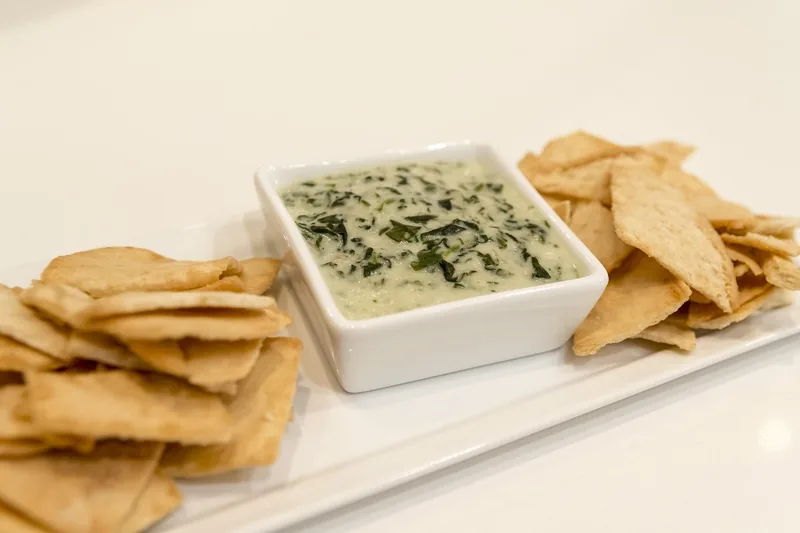
Spinach dip pasta, measured out
A cream cheese and spinach sauce held just under a simmer, folded through seared chicken and short pasta in one skillet.
What builds the dip and what it coats
For the chicken and pasta
- 1¼ lb (565 g) boneless skinless chicken thighs or breasts, cut into ½ in (1 cm) strips
- 2 tbsp olive oil
- 1 tsp fine salt
- ½ tsp black pepper
- ½ tsp garlic powder
- 12 oz (340 g) rigatoni, shells or cavatappi
For the spinach dip sauce
- 5 oz (140 g) fresh baby spinach
- 2 tbsp unsalted butter
- 4 garlic cloves, minced
- ¼ tsp red pepper flakes
- 8 oz (225 g) cream cheese, cubed and at room temperature
- 1 cup (240 ml) chicken broth
- ½ cup (120 g) sour cream
- 1 cup (115 g) mozzarella, grated from a block
- ½ cup (50 g) parmesan, finely grated
- 1 cup (240 ml) reserved pasta water
Building the sauce without breaking it
- 1 Cube the cream cheese and leave it on the counter. Bring a large pot of well-salted water to a boil and cook the pasta 1 minute less than the package says. Scoop out 1 cup (240 ml) of the water before draining.
- 2 Toss the chicken with the salt, pepper and garlic powder. Sear it in the oil over medium-high heat in two batches, 3 minutes a side, until browned and 165°F (74°C) at the thickest strip. Move it to a plate.
- 3 Drop the heat to medium and add the spinach to the empty skillet in handfuls. Cook until it has collapsed and the water it released has fully evaporated — the pan should look dry, not glossy. Set the spinach aside with the chicken.
- 4 Lower the heat to medium-low, melt the butter, and cook the garlic and pepper flakes 45 seconds, just until fragrant. Pour in the broth and let it warm.
- 5 Add the cream cheese a few cubes at a time, stirring each batch until it disappears before adding more. Keep the surface at a tremble; if it starts to bubble, lift the pan off the burner for a moment.
- 6 Off the direct heat, stir in the sour cream, then the mozzarella and parmesan in handfuls until melted and glossy. Loosen with pasta water, a few tablespoons at a time, until the sauce coats the back of a spoon.
- 7 Fold in the drained pasta and the spinach. Cook 2 minutes to finish the pasta, then return the chicken and any juices from the plate and stir just until hot.
- 8 Taste for salt — parmesan varies enough that this matters — and serve straight from the skillet, while the sauce is still loose.
Substitutions, reheating and scale
- Frozen spinach: use 10 oz (280 g), thawed and squeezed dry in a towel, and add it with the pasta rather than wilting it first.
- The sauce tightens noticeably as it cools. Reheat gently in a pan with a splash of milk or broth, stirring — a microwave heats unevenly and splits it at the hot spots.
- Keeps 3 days refrigerated. It does not freeze; cream cheese sauces go grainy on thawing and there is no fixing that.
- For a lighter version, swap half the cream cheese for whole-milk ricotta. Do not use fat-free cream cheese, which is stabilized with gums that turn stringy over heat.
- To make it ahead, cook the chicken and sauce but stop before the pasta goes in. Boil the pasta fresh and combine just before serving.
- Halving works in a 10-inch skillet; doubling needs a Dutch oven, or the spinach water will not evaporate in any reasonable time.
Cream cheese sauce troubleshooting
Once the proteins have tightened, no — whisking harder only makes it worse. Take it off the heat immediately, and try stirring in 2 tablespoons of cold cream plus a splash of starchy pasta water; sometimes that pulls a barely broken sauce back together. A fully split one with oil pooling at the edge should be started again over lower heat.
Alfredo is butter, cream and parmesan, and it stays thin and pourable. This is a cream cheese base, which is thicker, tangier and much more heat-sensitive — it behaves like a warm dip rather than a cream sauce, and it sets up firm in the refrigerator instead of staying liquid.
Not with this one. Pasta needs a rolling boil to cook evenly, and a rolling boil is precisely what breaks a cream cheese sauce. Boil it separately, and steal a cup of that water for the sauce instead.
Full-fat Greek yogurt, stirred in off the heat as written. It is tangier, so taste before adding extra salt. Add either one to a pan still sitting on a burner and it will curdle within seconds — the acid plus direct heat is a worse combination than either alone.
That is normal and expected: the starch and cheese keep setting as the temperature drops. Keep back some of the pasta water and stir in a splash right before serving. It loosens without diluting the flavor the way plain water would.
More spinach and cheese, other formats
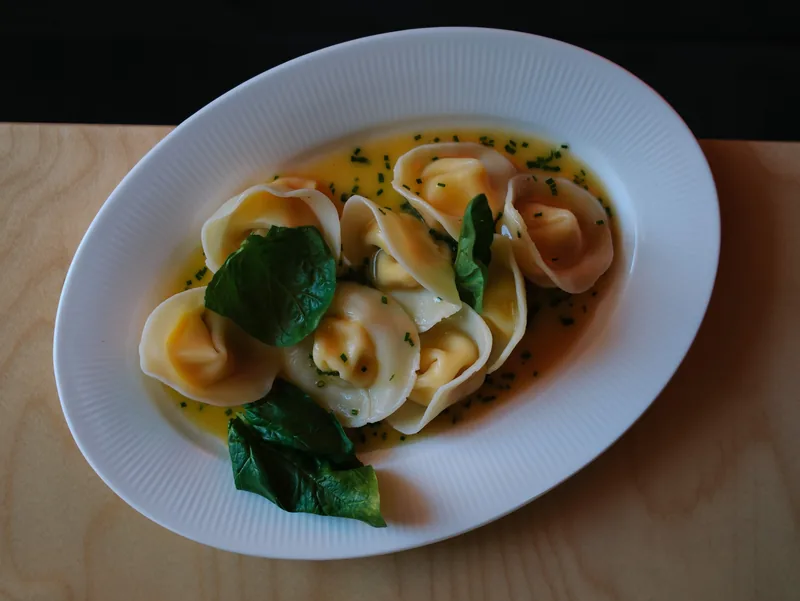
Creamy Spinach Tortellini Soup
Twenty-five minutes, one pot. The cream goes in off the heat and the tortellini go in last.
- Total time
- 35 min
- Yield
- Serves 6
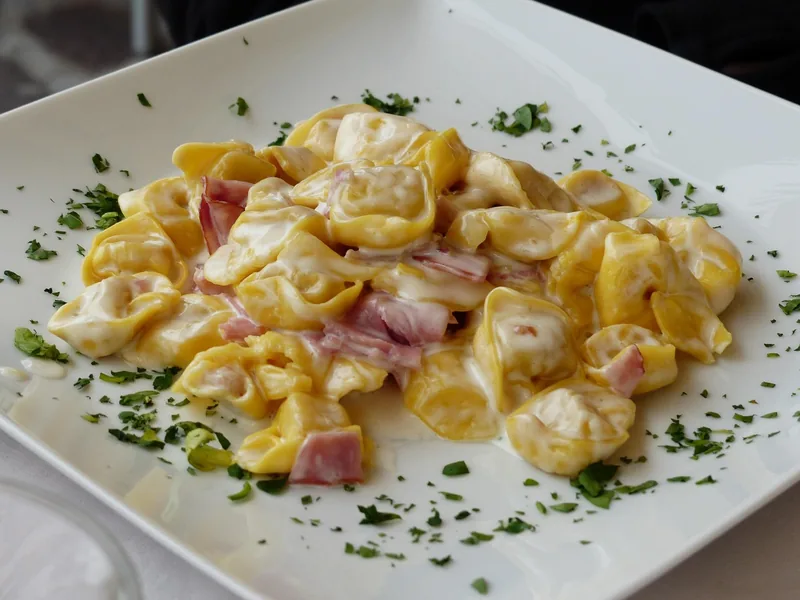
Crockpot Tortellini
Italian sausage and a cream sauce that builds itself over four hours. The pasta joins for the last twenty minutes.
- Total time
- 4 hr 25 min
- Yield
- Serves 6
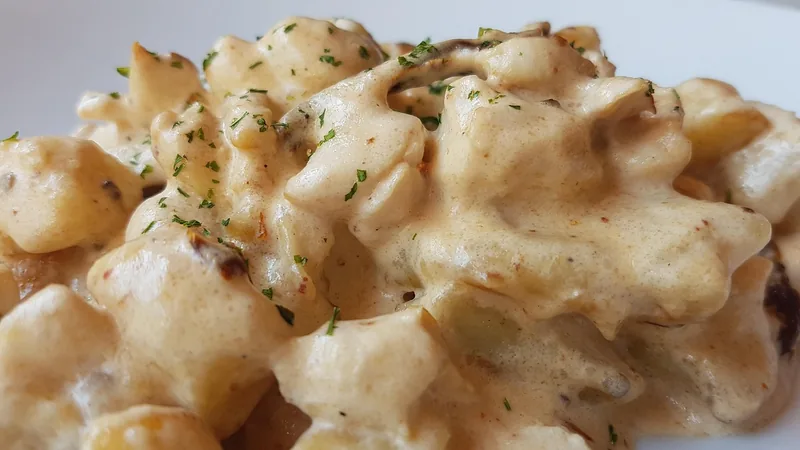
Creamy Chicken Gnocchi
Browned chicken thighs and potato gnocchi in a thyme cream sauce built deliberately loose, because the gnocchi thicken it themselves.
- Total time
- 35 min
- Yield
- Serves 4