Creamy Mushroom Sauce
Built in the pan the steak came out of, in the time the steak needs to rest. Ten minutes, five ingredients that matter.
- Prep
- 5 min
- Cook
- 12 min
- Makes
- Serves 4
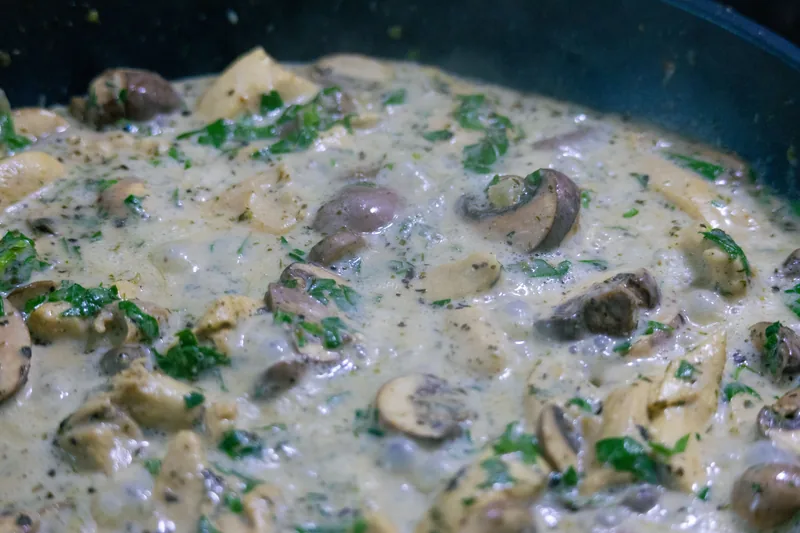
This sauce exists to use the brown crust left in the pan after searing meat. Those stuck-on bits are the most concentrated flavor in the kitchen and most people wash them down the sink.
That crust has a name — fond — and it is browned protein and sugar bonded to the metal. It dissolves in liquid and not in fat, which is why adding more butter does nothing and a splash of wine lifts the whole layer in seconds. It also decides the pan. Stainless and carbon steel build fond; nonstick is engineered specifically not to, and a sauce started in a nonstick skillet tastes of mushrooms and cream and nothing underneath.
Mushrooms go into a hot, dry, uncrowded pan. They are around 90% water, and that water has to leave before browning can start. Add fat and salt at the beginning and you draw the water out into the pan, where the mushrooms then sit and simmer in it — gray, squeaky, and never brown. Dry pan first, wait for the squeak to stop and the edges to catch, then add butter.
You can hear the whole sequence. Raw slices squeak against hot metal. A minute or two later they go quiet and the pan floods. Then the quiet turns into a steady hiss as the liquid boils off, and when the hiss sharpens and the first edges catch gold, the butter goes in. Adding it before that point is the single most common way this sauce ends up beige. The same dry-pan discipline is what keeps the filling in mushroom stuffed chicken from leaking water into the roasting dish and steaming the meat it is supposed to be seasoning.
Deglaze with something acidic. Brandy is traditional, dry white wine works, and even a splash of stock with a squeeze of lemon will do. The alcohol lifts the fond off the base and the acid keeps the finished cream from tasting flat.
Cream last, and let it reduce properly. Cream straight off the heat is thin and tastes of nothing much; three or four minutes at a simmer concentrates it into something that clings to the back of a spoon. The test is older than the recipe: coat a spoon, draw a finger through the coating, and the line should hold its edges instead of closing up.
Use heavy cream and nothing lighter. At about 36% fat it will sit at a simmer next to wine and mustard without breaking. Half-and-half, at roughly 12%, splits into grainy flecks the moment the acid reaches it. The failure to watch for looks like this: the sauce goes from glossy to dull, and a thin oily ring gathers at the edge of the pan. That is fat separating out because the pan was at a hard boil rather than a lazy one. Pull it off the heat, whisk in a tablespoon of cold stock, and it usually comes back together. The Dijon helps here too — mustard is a mild emulsifier, and a teaspoon of it makes the sauce noticeably harder to break.
Start it the moment the steak comes out of the pan. A thick steak wants ten minutes of rest and the sauce takes about twelve, so it lands a minute behind the meat, which is the right order — the juices that pool under a resting steak go into the sauce at the end.
Scaled up with stock and grain it becomes wild rice soup. And it is as good over potato pancakes as it is over steak.
Mushroom cream sauce: the card
Built in the pan the steak came out of, in the time the steak needs to rest. Ten minutes, five ingredients that matter.
Ten ingredients
- 10 oz (300 g) cremini mushrooms, thickly sliced
- 2 tbsp (30 g) butter
- 2 shallots, finely chopped
- 3 garlic cloves, minced
- ¼ cup (60 ml) brandy or dry white wine
- ½ cup (120 ml) beef or chicken stock
- ¾ cup (180 ml) heavy cream
- 1 tsp Dijon mustard
- 1 tbsp chopped thyme
- Salt and plenty of black pepper
Dry pan first, cream last
- 1 Heat the pan the steak came out of over medium-high, with no added fat. Add the mushrooms in a single layer and leave them.
- 2 After 4–5 minutes they will stop squeaking, release their water, and the water will cook away. Only then add the butter and let them brown properly, another 3 minutes.
- 3 Add the shallots and cook 2 minutes, then the garlic for 30 seconds.
- 4 Pour in the brandy and scrape the base of the pan hard with a wooden spoon. Everything stuck there should lift. Let it reduce almost dry.
- 5 Add the stock and reduce by half, then the cream, mustard and thyme. Simmer 3–4 minutes until it coats a spoon.
- 6 Season, and pour any juices from the resting steak into the sauce.
On mushrooms, swaps and reheating
- Cremini mushrooms have more flavor than white button. A handful of dried porcini, soaked, turns this into something else again — use the soaking liquid as the stock.
- No alcohol: use stock with 2 teaspoons of sherry vinegar or lemon juice added at the deglazing stage. The acid is doing as much work as the alcohol.
- No steak pan to work from? Brown the mushrooms harder than you think, then add 1 teaspoon of tomato paste with the garlic and cook it until it darkens. It is not the same, but it gives the sauce a base.
- Make-ahead: take it as far as the reduced stock, cool, and refrigerate up to 2 days. Reheat and add the cream fresh.
- It does not reheat well once the cream is in; it splits. Make what you will eat.
- Doubling works in a wide skillet, not a deep one — you need the surface area for the mushroom water to evaporate.
Gray mushrooms and broken sauce
Fat and salt too early, or too many in the pan. Both trap the water the mushrooms need to lose. Dry pan, single layer, patience.
It boiled instead of simmering. Fat comes out of suspension at a rolling boil, especially with wine and mustard in the pan. Off the heat, a tablespoon of cold stock and hard whisking usually pulls it back; keep it at a lazy bubble after that.
Not straight. Below about 20% fat, dairy curdles when it meets acid at a simmer. If light cream is what you have, thicken it first with a teaspoon of cornstarch slurried in cold liquid — the starch holds the proteins apart.
A teaspoon of cornstarch in a tablespoon of cold water, stirred in and boiled for a minute. It works, but reduction is what concentrates the flavor as well as the body, so use the shortcut only when you are short on time.
Yes, and better than you would expect, because those pans leave a paler fond that lets the mushrooms lead. Use chicken stock and add the thyme a minute earlier so it has time to soften.
What to spoon it over
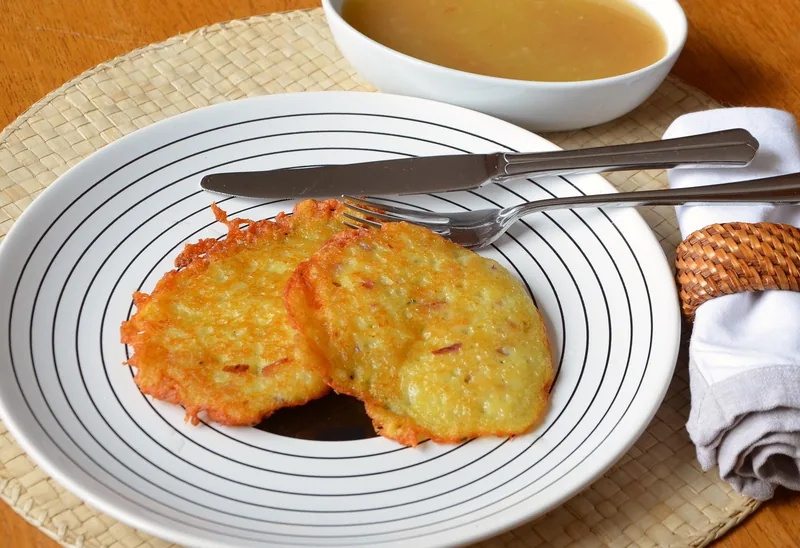
German Potato Pancakes
Kartoffelpuffer: lacy, deep-golden, crisp to the edge. The trick is wringing the potatoes dry and reclaiming the starch.
- Total time
- 45 min
- Yield
- Makes 12 pancakes
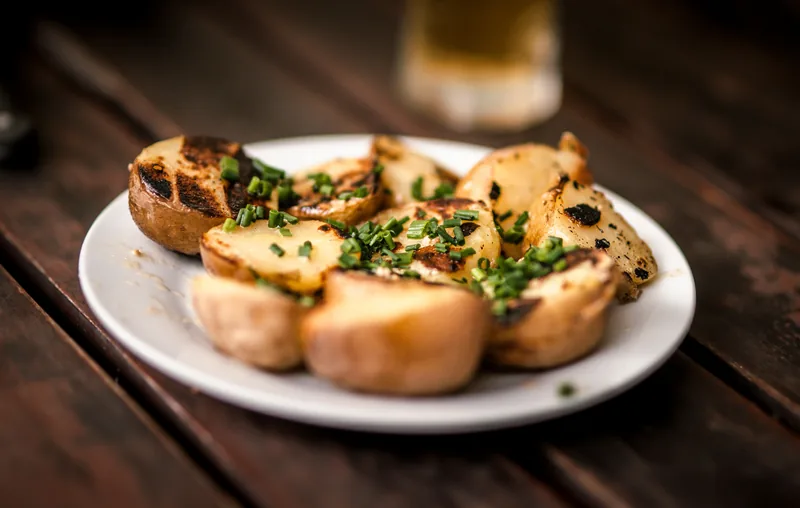
Grilled Potatoes with Garlic and Herbs
Parboiled first so the grill only has to char them. Twelve minutes over the coals, not forty.
- Total time
- 40 min
- Yield
- Serves 6
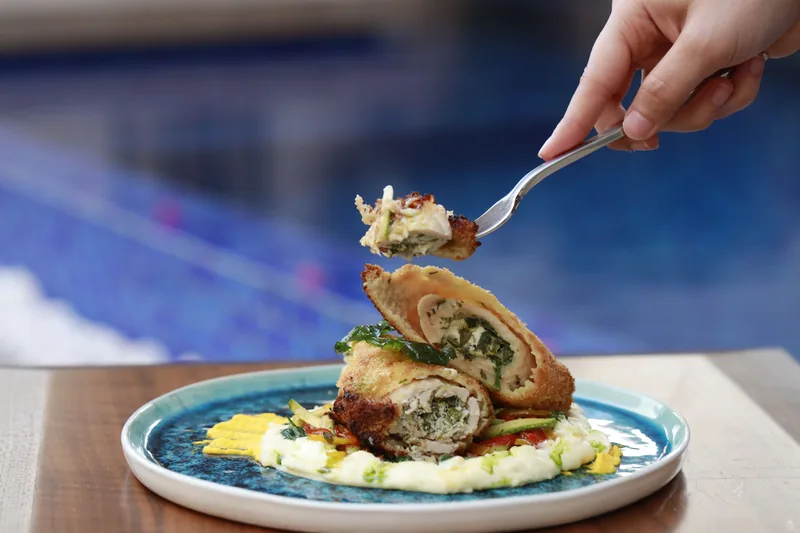
Cheesy Garlic Butter Mushroom Stuffed Chicken
Chicken breasts packed with dry-cooked mushrooms and three cheeses, seared to seal the seam and finished in a garlic butter pan.
- Total time
- 55 min
- Yield
- Serves 4