Chicken and Stars Soup
The canned soup of everybody's childhood, made with real thigh meat and stelline cooked apart from the broth so it stays clear.
- Prep
- 15 min
- Cook
- 30 min
- Makes
- Serves 6
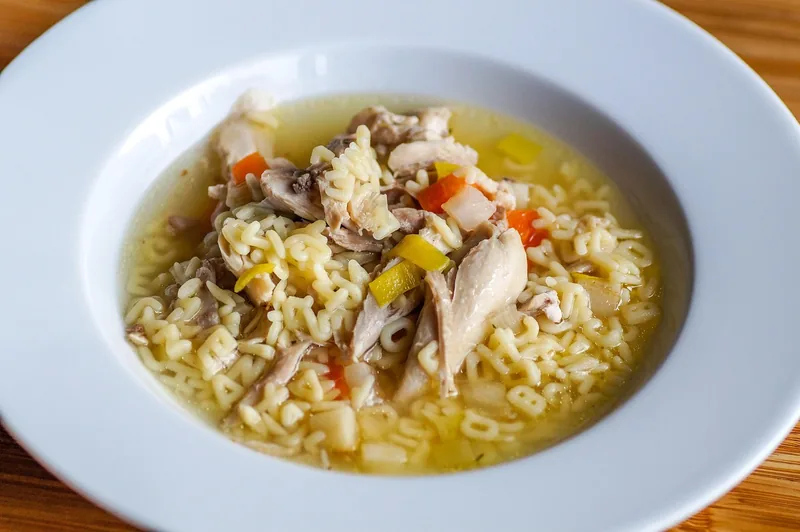
Stelline are tiny, and tiny pasta has an enormous amount of surface area for its weight. Boil three-quarters of a cup of stars directly in a pot of broth and they will shed enough starch in six minutes to turn it from clear to cloudy, then keep drinking it up for as long as they sit there. That is the whole engineering problem with this soup. By the next morning a pot that went into the refrigerator as soup comes out as a pale, thick porridge with the stars swollen to twice their size.
The fix is unglamorous: cook the pasta in salted water in a separate pan and add it to the bowls, not the pot. Do it that way and the leftovers reheat as soup rather than as paste. If the whole batch is going to be eaten in one sitting, by all means cook the stars in the broth — the starch actually gives it a pleasant body, and there is no tomorrow to ruin.
It is worth being straight about why anyone makes this. It is nostalgia. Chicken and stars is a canned soup, and the thing people miss is the flavor of the can: soft vegetables, a broth that tastes strongly of sage and thyme, and the stars themselves, which are fun in a way no other pasta shape is. Homemade does not reinvent it. What homemade fixes is that the chicken is real meat rather than pale cubes, and that the broth has some fat and body to it.
Which makes poultry seasoning the ingredient that earns its place. It is mostly sage and thyme with marjoram behind them, and it is precisely the flavor the can has. Leave it out and you have made a decent generic chicken soup that nobody at the table will recognize. A teaspoon is enough; sage turns dusty and medicinal past a certain point.
Thighs, poached whole in the broth and then shredded. Breast meat cooked this way goes stringy and chalky the moment it passes 165°F (74°C), and it will pass it, because the broth around it is at a simmer. Thigh meat has enough collagen to stay tender across a much wider window, and it leaves a little fat in the broth, which is where a lot of the difference between homemade and canned actually lives.
Keep the pot at a bare simmer — a lazy bubble breaking the surface every couple of seconds. A rolling boil emulsifies the fat into the broth and clouds it as badly as the pasta does, and it drives the vegetables to mush before the chicken is cooked. Fifteen minutes at a whisper is right.
Taste for salt at the very end and expect it to need more than you think. Store-bought broth varies enormously, the pasta has taken salt out of the equation on its own, and a chicken soup that tastes flat is almost always under-salted rather than under-seasoned. Add it a half teaspoon at a time.
If you want the grown-up version of the same pot, farmhouse chicken noodle soup runs on the same broth with wider noodles. For something creamier on a cold night, creamy spinach tortellini soup is the other direction. And when you want a bowl with nothing in it that swells overnight, fish stew is built on the opposite principle: a tomato broth that takes its time and a protein that goes in for the last five minutes.
Chicken and stars, printed
The canned soup of everybody's childhood, made with real thigh meat and stelline cooked apart from the broth so it stays clear.
The pot, and the pasta pan
For the soup
- 1 lb (450 g) boneless, skinless chicken thighs
- 8 cups (1.9 L) chicken broth
- 2 tbsp butter
- 1 large yellow onion, finely diced
- 3 carrots, cut into ¼ in (6 mm) coins
- 3 celery ribs, sliced thin
- 2 garlic cloves, minced
- 1 tsp poultry seasoning
- 1 bay leaf
- ½ tsp black pepper
- Fine salt, to taste
For the stars
- ¾ cup (120 g) stelline or other tiny star pasta
- 1 tbsp fine salt, for the pasta water
- 2 tbsp chopped flat-leaf parsley
Simmering low and keeping the stars separate
- 1 Melt the butter in a large pot over medium heat and cook the onion, carrots and celery for 8 minutes, stirring, until the onion is translucent and the celery has lost its squeak. Add the garlic and poultry seasoning and cook 1 minute more, until it smells like Thanksgiving stuffing.
- 2 Pour in the broth, add the bay leaf and the whole chicken thighs, and bring it to the point where a bubble breaks the surface every couple of seconds. Hold it there — a rolling boil clouds the broth and shreds the vegetables.
- 3 Simmer 15 minutes, until the thighs read 165°F (74°C) at the thickest part and a fork twists the meat apart without resistance.
- 4 Lift the chicken out onto a board, shred it with two forks, and return it to the pot. Fish out the bay leaf.
- 5 Meanwhile, boil the stelline in well-salted water for 5–6 minutes, tasting at 5: they should be tender with no chalk in the middle. Drain but do not rinse.
- 6 To serve leftovers as soup rather than porridge, put a spoonful of stars in each bowl and ladle the broth over. Only tip the whole lot into the pot if the batch is being finished tonight.
- 7 Season with salt a half teaspoon at a time until the broth tastes like itself, add the pepper, and finish with parsley.
Shortcuts, freezing and thinning it out
- No stelline: acini di pepe, ditalini or broken angel hair all behave the same way and want the same separate pot.
- A rotisserie chicken shortcuts the whole thing — skip step 3, add 3 cups (420 g) of shredded meat at the end, and simmer 5 minutes to warm through.
- Storage: 4 days refrigerated with the pasta kept apart. Combined, it is soup for about a day and thick stew after that.
- Freezes well without the pasta, 3 months. Frozen with it, the stars come out disintegrated.
- Thinning day-old soup: add broth, not water. Water dilutes the salt and seasoning along with the starch.
- No poultry seasoning: ¾ tsp dried sage plus ½ tsp dried thyme and a pinch of marjoram gets you there.
Cloudy broth, dry chicken and the canned version
Two usual causes. Pasta starch, if the stars went straight into the pot. Or a hard boil, which emulsifies the chicken fat into the liquid instead of leaving it floating in gold spots on top. Neither hurts the flavor, but a clear broth is the difference between this tasting homemade and tasting institutional.
You can, and you will need to stay with the pot. Breast meat goes stringy within a minute or two of hitting 165°F (74°C), and the simmering broth will keep pushing it past that. Pull it the second it reads done and shred it away from the heat.
The flavor profile is deliberately close — that is the poultry seasoning doing the work. The differences are real chicken instead of processed cubes and a broth with some fat and body in it. It is not a dramatic improvement on the can so much as the same idea, made properly.
Yes, on low for 4 hours with everything but the pasta and parsley. You lose the flavor the vegetables get from being cooked in butter first, so brown them in a skillet and tip them in if you have the pan out anyway.
Use bone-in thighs, pull the skin off before they go in, and leave the bones in the pot for the full simmer. Twenty minutes of bone in liquid is not stock, but it is noticeably more than none.
More bowls for a cold day
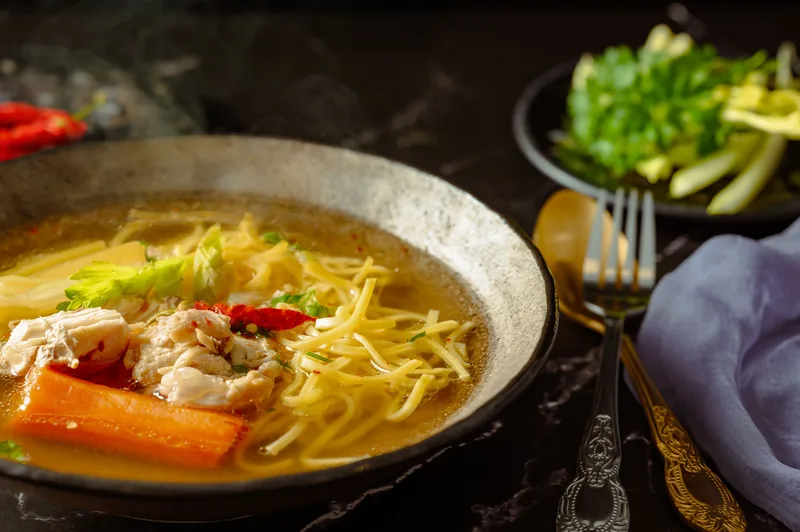
Farmhouse Chicken Noodle Soup
A whole chicken poached into its own stock, then shredded back in. The noodles cook separately and that is not fussiness.
- Total time
- 1 hr 50 min
- Yield
- Serves 8
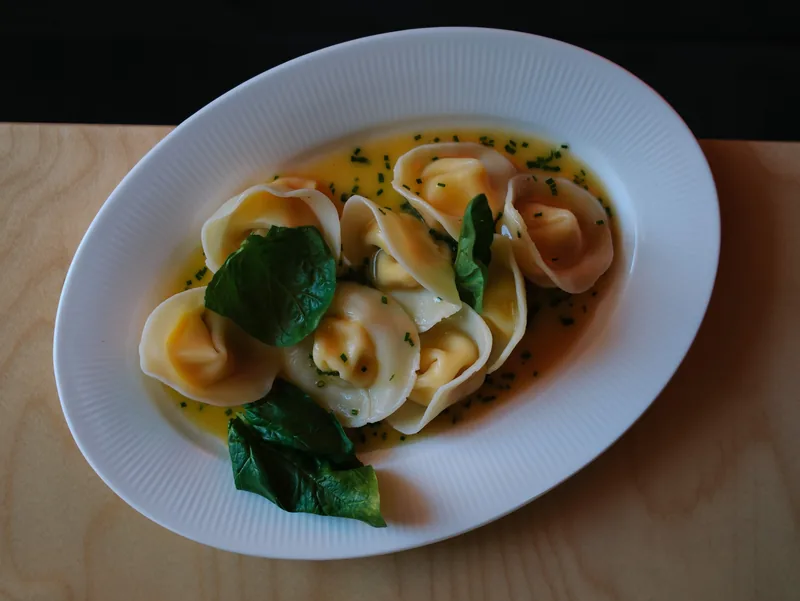
Creamy Spinach Tortellini Soup
Twenty-five minutes, one pot. The cream goes in off the heat and the tortellini go in last.
- Total time
- 35 min
- Yield
- Serves 6
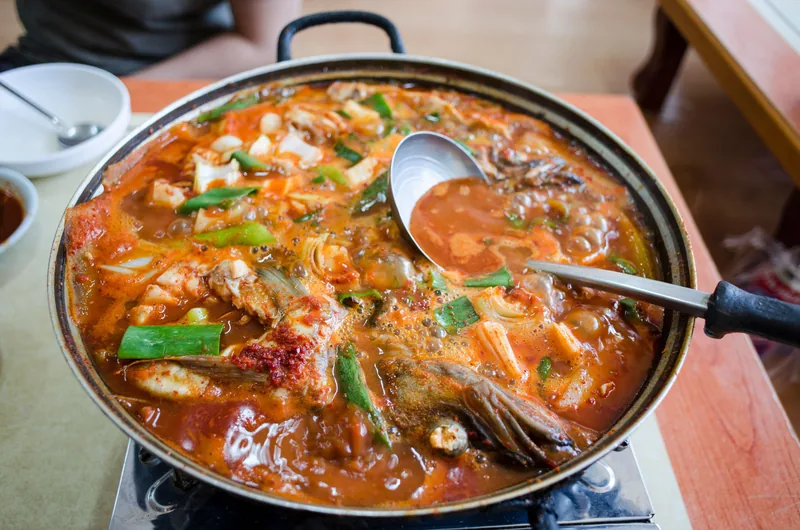
Easy Fish Stew Delight
White fish poached gently in a tomato, fennel and garlic broth, with the fish added last and the pot never allowed to boil.
- Total time
- 45 min
- Yield
- Serves 4