Creamy Spinach Tortellini Soup
Twenty-five minutes, one pot. The cream goes in off the heat and the tortellini go in last.
- Prep
- 10 min
- Cook
- 25 min
- Makes
- Serves 6
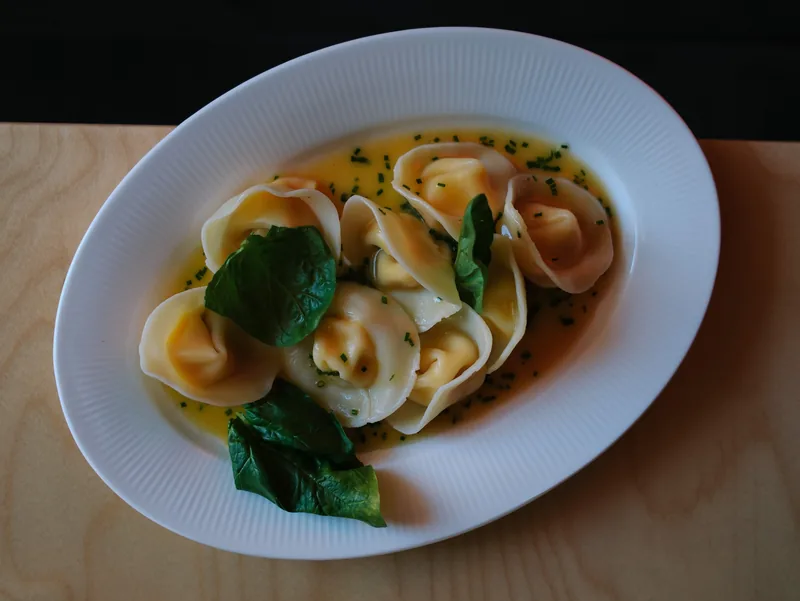
This is a weeknight soup, and the two rules that keep it from disappointing are both about timing.
The tortellini go in for the last four minutes and not a moment before. Fresh filled pasta is done in three to five; leave it longer and the parcels swell, split, and release their filling into the broth. If you plan to have leftovers, cook the tortellini separately and add them per bowl — otherwise by tomorrow they will have drunk half the soup.
That is not a figure of speech. Pasta keeps absorbing liquid as long as it is sitting in any, hot or cold, and a pound of tortellini can take up two cups of broth overnight. What you open the next day is not soup that went wrong; it is the same soup with the liquid relocated into the pasta.
The cream goes in off the heat. Boiled cream in an acidic broth — and tomato paste makes this acidic — will curdle into grainy specks. Pan off, cream in, stir. It stays smooth and it stays smooth reheated, provided you never boil it again.
What is happening is a tug of war over the milk proteins. Casein stays suspended because the individual particles repel one another; acid neutralizes that repulsion and heat gives them the energy to collide, so acid plus a boil equals curds. Either one alone is survivable. Both together are not. The fat in heavy cream buffers the whole thing, which is the one argument against reaching for something lighter.
Parmesan follows the same rule and for a related reason. Dropped into a boiling pot it seizes into stringy clumps and its fat weeps out; stirred into a pan that has stopped bubbling, it melts into the broth and thickens it slightly. Grate it yourself if you can — the pre-shredded kind is dusted with cellulose to stop it caking, and that coating is what makes bagged cheese sit on top in a gritty film.
Give the tomato paste its ninety seconds in the hot oil before any liquid arrives. Straight from the can it tastes tinny and sharp; cooked until it darkens to brick red and starts sticking to the pot, it turns savory and deep, and that single minute is most of the difference between a broth that tastes built and one that tastes like stock with tomatoes in it.
The spinach needs about ninety seconds and it needs to go in last of all. It looks like far too much and it collapses to almost nothing.
Salt at the end, not the start. Both the tortellini filling and the parmesan are salty, and they release that salt into the broth as they go in — a pot seasoned to taste before they arrive will be over-seasoned by the time it reaches the table.
Chicken noodle soup is the weekend version of this idea, made from a whole bird. For the slow-cooker version, see crockpot tortellini. Leave the broth out altogether and the same cream-off-the-heat rule gives you creamy sausage pasta, which is this soup's weeknight habit without the ladle.
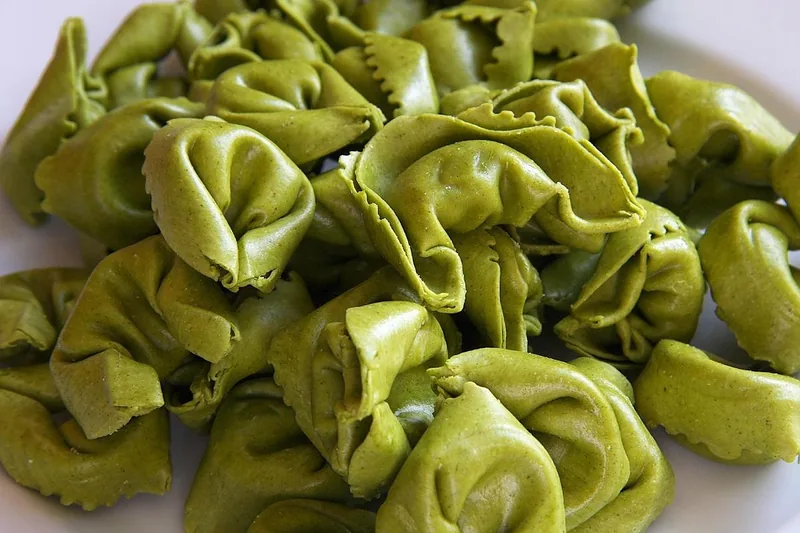
Creamy tortellini soup: the card
Twenty-five minutes, one pot. The cream goes in off the heat and the tortellini go in last.
One pot, one list
- 2 tbsp olive oil
- 1 onion, diced
- 3 garlic cloves, minced
- 2 tbsp tomato paste
- 1 tsp dried Italian herbs
- ½ tsp red pepper flakes
- 5 cups (1.2 liters) chicken or vegetable stock
- 14 oz (400 g) can diced tomatoes
- 18 oz (500 g) fresh cheese tortellini
- ¾ cup (180 ml) heavy cream
- 5 oz (150 g) baby spinach
- ½ cup (50 g) grated parmesan, plus more to serve
Building the broth, then the pasta
- 1 Soften the onion in the oil over medium heat for 6 minutes. Add the garlic, tomato paste, herbs and pepper flakes and cook 90 seconds, until the paste darkens to brick red — that is the raw tinny taste cooking off.
- 2 Pour in the stock and tomatoes, bring to a simmer, and cook 12 minutes to let it come together.
- 3 Add the tortellini and cook 4 minutes, or as the package says, no longer. They are done when they float and the pasta at the seam turns translucent.
- 4 Take the pan off the heat entirely. Stir in the cream and the parmesan.
- 5 Add the spinach in handfuls, stirring until it wilts — about 90 seconds in the residual heat.
- 6 Season and serve with more parmesan.
Leftovers, freezing and frozen tortellini
- For leftovers, cook the tortellini in a separate pan and add them to each bowl. In the soup overnight they turn to mush.
- Frozen tortellini work; add two minutes and do not thaw.
- Dried tortellini need 10–11 minutes and about 1 cup (240 ml) more stock, because they absorb far more than fresh.
- The broth alone freezes well for 3 months. Freeze it before the cream and pasta go in, then finish a fresh batch in ten minutes.
- Keeps 3 days in the fridge. Reheat over low heat to steaming, never to a bubble.
- To make it vegetarian, use vegetable stock and check the parmesan — most is made with animal rennet.
Stopping creamy tortellini soup from curdling
The cream boiled in an acidic broth. Take the pan off the heat before the cream goes in, and warm leftovers gently without letting them bubble.
You can, and you lose the safety margin. Fat is what keeps the proteins apart when acid is in the pot, so lighter dairy curdles at a temperature heavy cream shrugs off. If you use it, take the pot fully off the heat and let it stop steaming first.
Nothing in this pot thickens it except the parmesan and the starch the pasta gives up in four minutes, which is not much. If you want body, mash half a can of white beans into the broth before the tortellini go in, or let it simmer an extra ten minutes uncovered to reduce.
Not once assembled. Freezing ruptures the pasta and the cream separates on thawing. Freeze the broth at the end of step 2 instead — that is the part worth keeping.
Yes. Shredded cooked chicken stirred in with the tortellini is the easiest route; a pound of raw thighs simmered in the broth for 15 minutes before the pasta works too, and improves the stock while it is at it.
More bowls
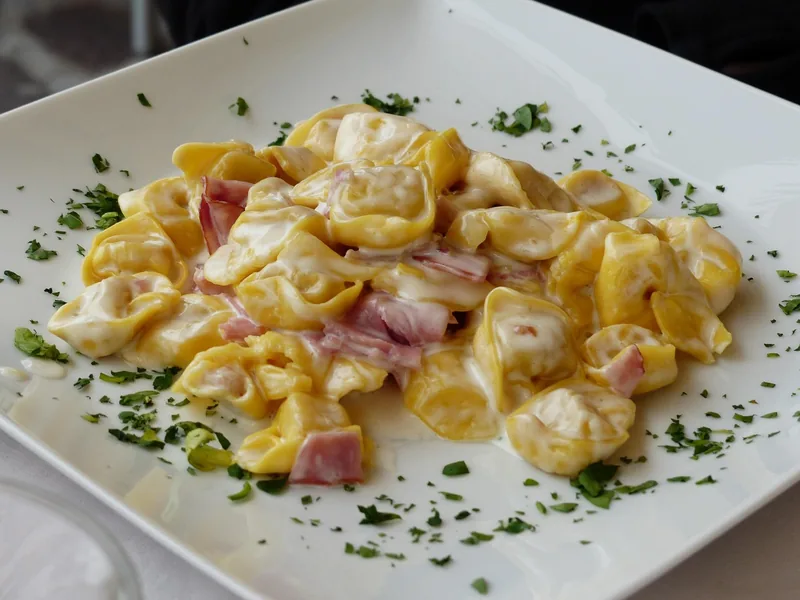
Crockpot Tortellini
Italian sausage and a cream sauce that builds itself over four hours. The pasta joins for the last twenty minutes.
- Total time
- 4 hr 25 min
- Yield
- Serves 6
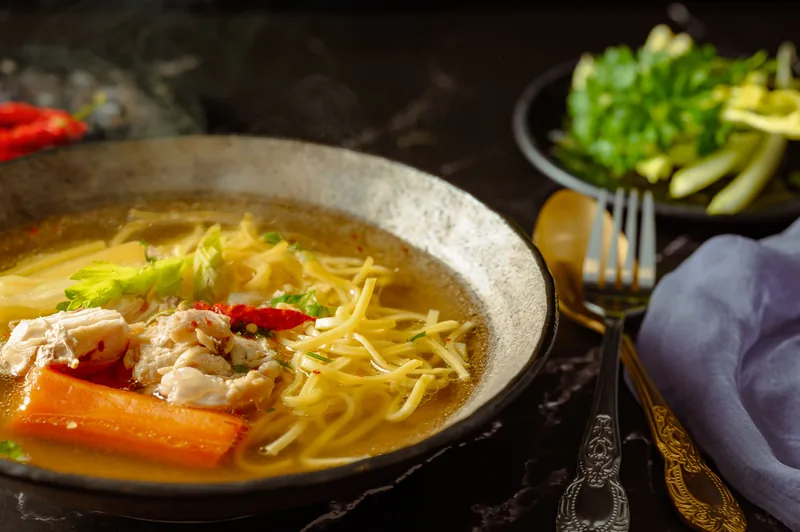
Farmhouse Chicken Noodle Soup
A whole chicken poached into its own stock, then shredded back in. The noodles cook separately and that is not fussiness.
- Total time
- 1 hr 50 min
- Yield
- Serves 8
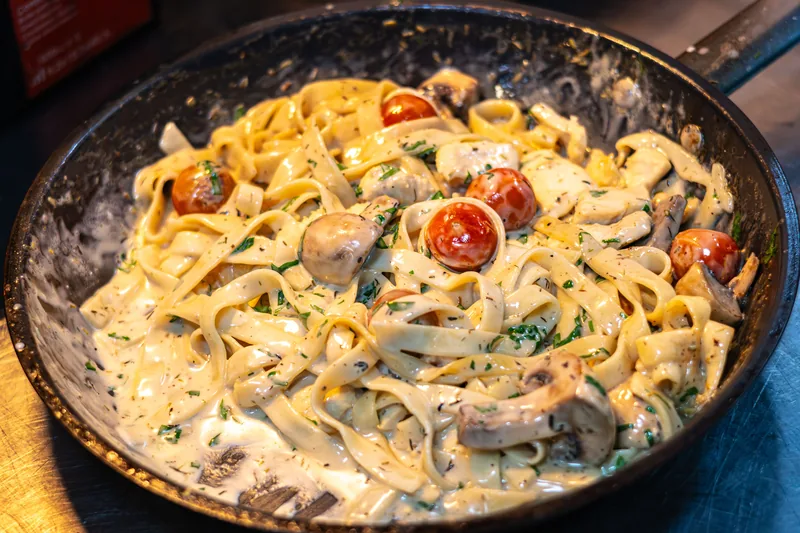
Creamy Sausage Pasta
Italian sausage browned hard for its fond, deglazed with wine, and finished into a clinging sauce with cream, Parmesan and pasta water.
- Total time
- 35 min
- Yield
- Serves 4