Farmhouse Chicken Noodle Soup
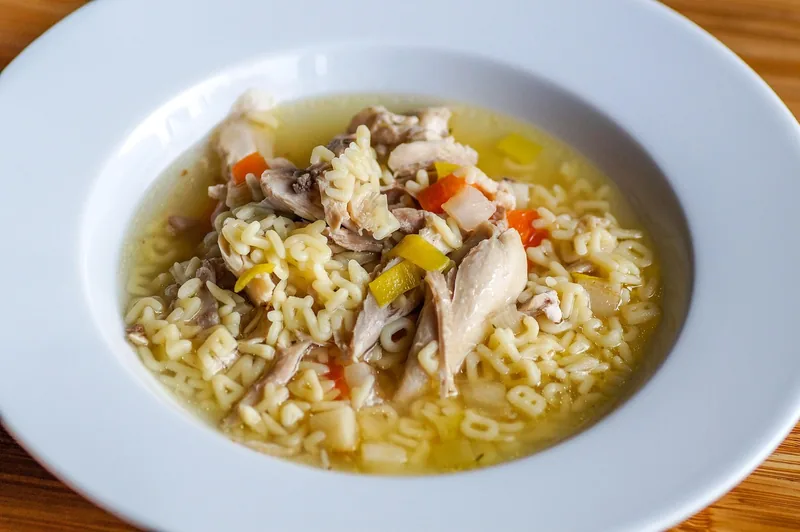
A whole chicken poached into its own stock, then shredded back in. The noodles cook separately and that is not fussiness.
- Prep
- 20 min
- Cook
- 1 hr 30 min
- Makes
- Serves 8
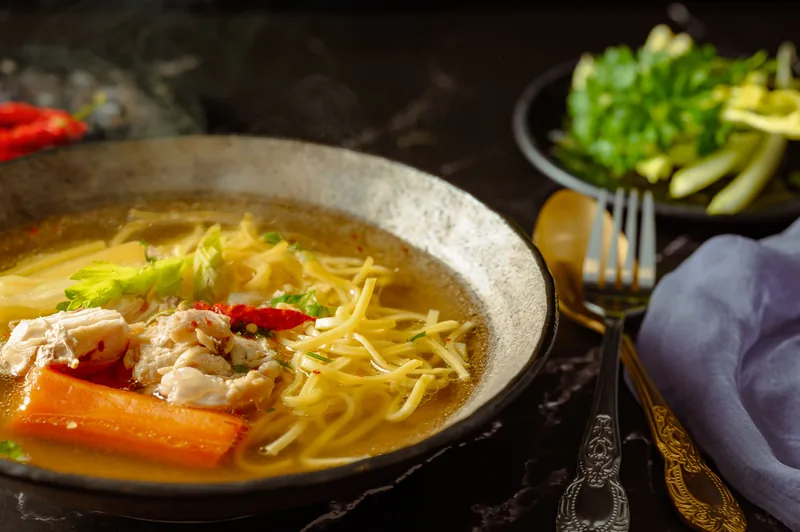
The difference between chicken noodle soup that tastes of chicken and soup that tastes of stock cubes is that you poach a whole bird and use the liquid. It takes ninety minutes, almost all of it unattended, and it produces both the meat and the broth at once.
Start in cold water and climb slowly. Soluble muscle proteins leach out at temperatures well below a simmer, so the twenty minutes the pot spends heating up are doing real extraction work. Lower a chicken into water that is already hot and the surface proteins set almost instantly, sealing the bird against the very thing you are trying to pull out of it.
Keep it below a boil. A rolling boil emulsifies the fat into the liquid and turns a clear golden broth cloudy and slightly greasy — once that happens there is no getting it back. You want the surface barely trembling, the occasional bubble breaking. That is around 185°F (85°C).
What you are actually manufacturing in that hour and a quarter is gelatin. Collagen in the skin, wing joints and back starts converting somewhere around 160°F (70°C) and keeps converting for as long as you hold it there, and gelatin is what gives broth weight on the tongue — the quality that salt can flatter but never fake. The proof comes the next day: chill a cup of the strained broth and it should set to a soft wobble. If it stays liquid, either the bird was very lean or the pot never held its temperature.
Skim the surface for the first ten minutes. What rises then is protein scum, and leaving it in makes the broth murky. Add the aromatics only after that skimming is done — gray foam is easy to spot against clear water and nearly impossible to find once there are onion halves and peppercorns floating in the way.
The bird is done when the drumstick swings loose in its socket and a twist lifts the thigh meat cleanly off the bone. The breast will be past its best by then, and that is a trade worth making: shredded thin and dropped back into hot broth, slightly overcooked breast meat drinks the liquid back up, while an undercooked leg is simply unpleasant.
Season at the very end, never at the start. An uncovered pot loses a good deal of water over seventy-five minutes, and a broth salted to taste at the beginning arrives sharp and unfixable. Taste it hot, in a spoon, and keep adding until it stops tasting like something that needs an ingredient — broth needs more salt than seems decent.
Lemon juice and soft herbs go in off the heat. Both are volatile; ten minutes at a simmer boils the brightness straight out through the top of the pot.
The noodles cook in a separate pan of salted water. This looks like extra washing up and it is, but noodles cooked in the soup release starch that clouds the broth and thickens it, and any leftovers turn into a solid mass of swollen pasta overnight. Cooked separately and added to the bowl, the soup keeps four days and the second bowl is as good as the first.
If the broth looks rich to the point of slick, chill it an hour and lift the solid fat cap off the top. Save a spoonful to stir back in; it carries most of the roasted-chicken aroma.
The same separate-pan rule applies to tortellini soup and gnocchi soup, where the pasta swells even faster. On an evening that has no ninety minutes in it, homemade chicken soup built on stelline and a good store broth is the honest shortcut.
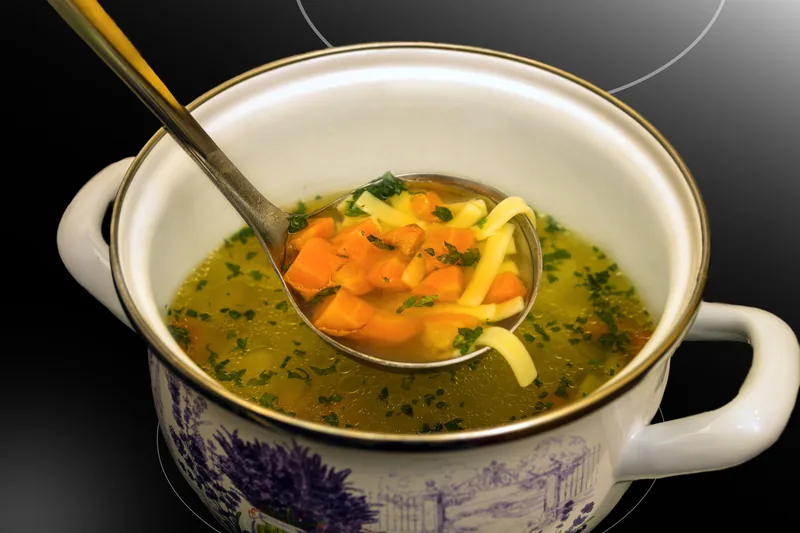
Chicken noodle soup, printed
A whole chicken poached into its own stock, then shredded back in. The noodles cook separately and that is not fussiness.
For the broth, and to finish
For the broth
- 1 whole chicken, about 3½ lb (1.6 kg)
- 12 cups (2.8 L) cold water
- 2 onions, halved
- 3 carrots, halved
- 3 celery sticks, halved
- 1 head of garlic, halved crossways
- 2 bay leaves
- 10 black peppercorns
- Small bunch of parsley stalks
To finish
- 3 carrots, sliced into coins
- 3 celery sticks, sliced
- 9 oz (250 g) egg noodles
- Juice of ½ lemon
- Chopped dill and parsley
- Salt and black pepper
Poaching the bird, then building the bowl
- 1 Put the chicken in a large pot and cover with the cold water. Starting cold, not hot, draws more flavor out of the bird.
- 2 Bring it slowly to a bare simmer and skim the gray foam off the surface for the first 10 minutes.
- 3 Add the halved vegetables, garlic, bay, peppercorns and parsley stalks. Keep it barely trembling — never boiling — for 75 minutes.
- 4 Lift out the chicken and strain the broth, discarding the spent vegetables. They have given everything they have.
- 5 Return the broth to the pot with the fresh sliced carrot and celery and simmer 10 minutes until just tender.
- 6 Meanwhile cook the noodles in a separate pan of salted water and drain them.
- 7 Shred the chicken meat off the bones and return it to the pot. Off the heat, add the lemon juice and herbs, and season properly — broth needs more salt than you expect.
- 8 Put noodles in each bowl and ladle the soup over.
A second stock, and freezing
- The carcass makes a second, lighter stock. Cover it with water again and simmer another two hours.
- The broth freezes for three months. Freeze it without noodles or vegetables.
- Bone-in thighs and drumsticks, about 3 lb (1.4 kg), stand in for a whole bird and give a slightly richer broth. Skip the breast entirely and cut the poaching time to 50 minutes.
- The finished soup keeps 4 days refrigerated. Store the noodles in their own container or they will drink the broth overnight.
- Wide egg noodles hold up best. Thin pasta overcooks in the residual heat of the bowl before it reaches the table.
- To stretch it, add a can of drained white beans with the sliced carrots — it thickens nothing and feeds two more.
Cloudy broth and swollen noodles
They release starch that clouds the broth, and they keep absorbing liquid in the fridge until the leftovers are a solid block. Separate pan, added per bowl.
It boiled. Above a gentle simmer the fat emulsifies into the liquid and it will not clear again. Keep it at a tremble.
Salt cannot supply body. Thin broth means either too much water for the size of the bird or not enough collagen — a lean supermarket breast-heavy bird gives less than a whole one with its back and wings. Simmer it down by a third, or add a couple of chicken feet or wings next time.
The thigh meat is. The breast has given a lot of its flavor to the broth, which is the point of the exercise, so it is best shredded fine and served in the liquid rather than sliced onto a plate.
You can get broth faster, but not this broth. A pressure cooker runs above boiling point and agitates hard, which is exactly the condition that emulsifies fat and clouds the liquid. You trade clarity for an hour.
More noodle soup
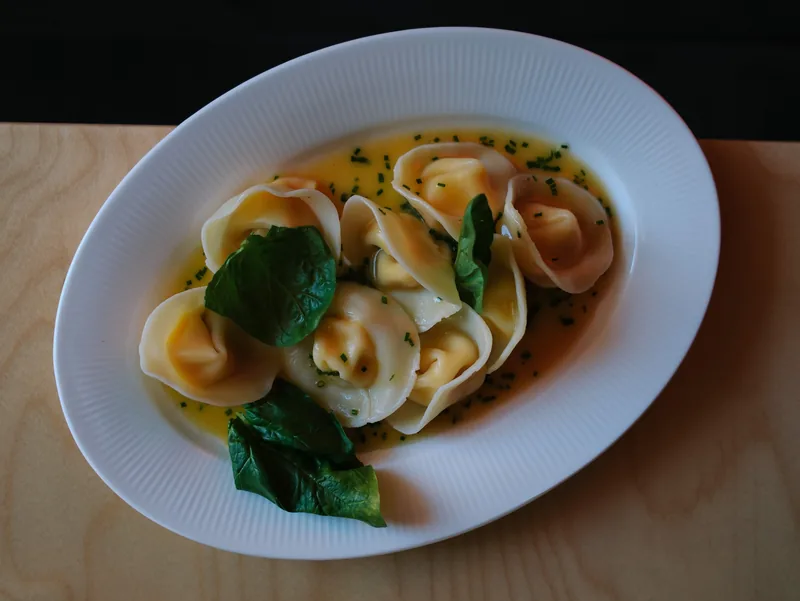
Creamy Spinach Tortellini Soup
Twenty-five minutes, one pot. The cream goes in off the heat and the tortellini go in last.
- Total time
- 35 min
- Yield
- Serves 6
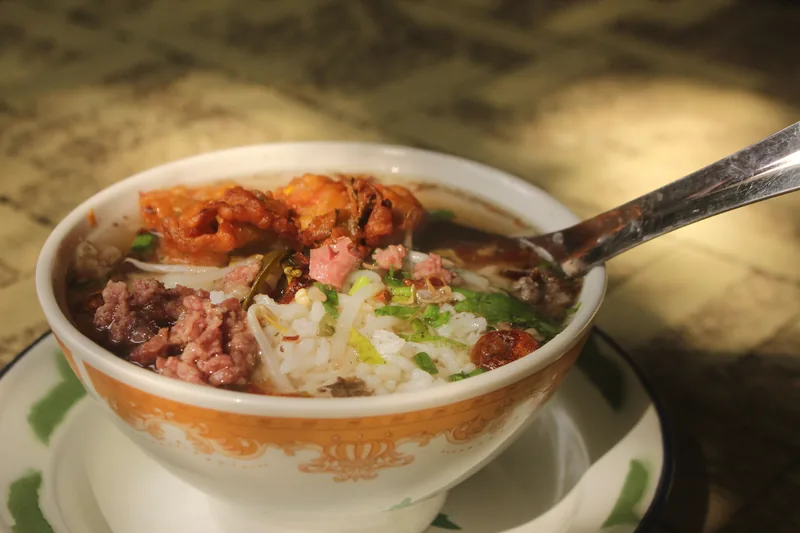
Wild Rice Soup
Creamy, mushroomy and thick with grain. The wild rice cooks separately because it takes three times as long as anything else.
- Total time
- 1 hr
- Yield
- Serves 6
Chicken and Stars Soup
The canned soup of everybody's childhood, made with real thigh meat and stelline cooked apart from the broth so it stays clear.
- Total time
- 45 min
- Yield
- Serves 6