Slow Cooker Baby Potatoes with Garlic and Herbs
Four hours unattended, then five minutes under the broiler for the crust a slow cooker cannot give you.
- Prep
- 10 min
- Cook
- 4 hr 5 min
- Makes
- Serves 8
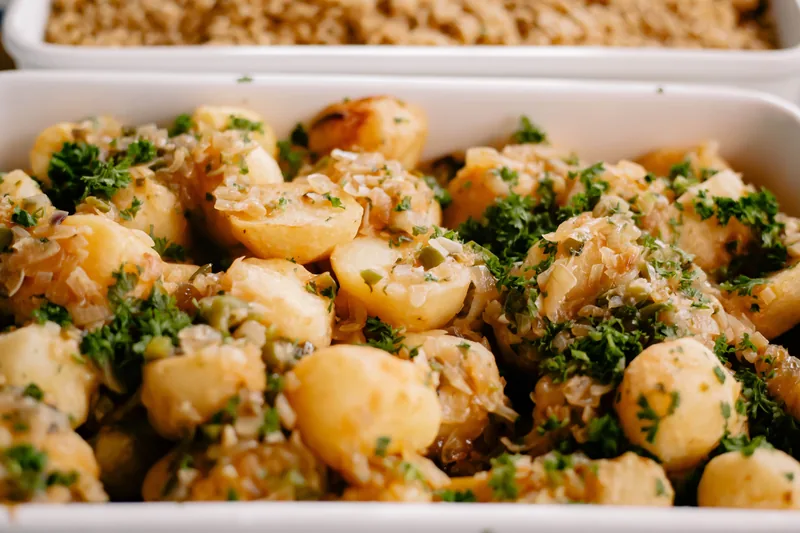
The honest thing to say about slow-cooked potatoes is that they come out soft, buttery and completely pale. A slow cooker cannot brown anything — it never exceeds boiling point and browning starts around 285°F (140°C). Every recipe that promises crisp slow-cooker potatoes is describing something that did not happen.
The reason is the lid. A slow cooker on low holds somewhere near 200°F (93°C) and on high near 210°F (99°C), and every bit of steam that rises off the food hits the lid, condenses and runs back down. The pot is a sealed, saturated box, and nothing in a saturated box gets hotter than the water in it. Browning needs a dry surface well past that. This is the same limitation that crockpot beef and broccoli works around by searing first.
So the last five minutes happen elsewhere. Tip them onto a tray, put them under a hot broiler, and you get the crust. A broiler is radiant heat with nothing between the element and the food, which dries the outside of each potato and takes it past browning temperature long before the inside notices. It is one extra pan and it is the difference between a side dish and a bowl of boiled potatoes.
Spread them in a genuine single layer for that step and give them a little room. Potatoes stacked two deep steam each other under the broiler exactly the way they did in the pot, and you will pull out a tray where the top ones are blistered and the rest are still pale.
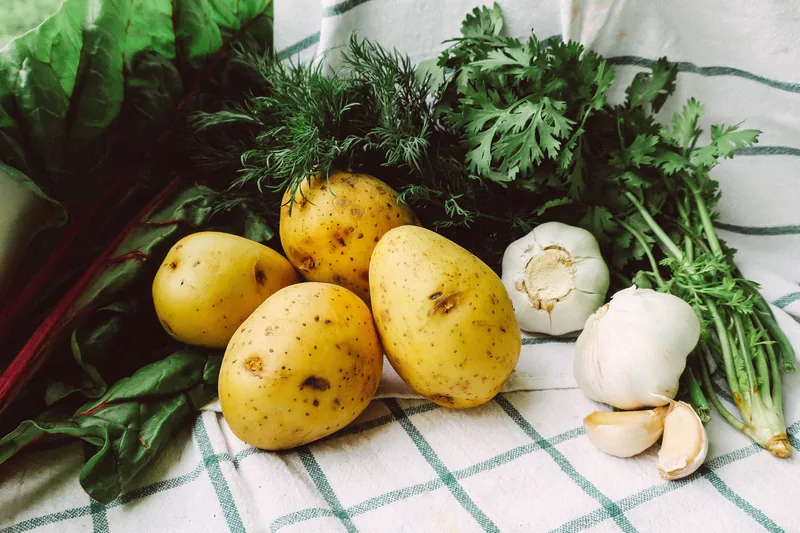
Baby potatoes with the skin on, because the skin holds each one together over four hours when a peeled potato would collapse. Waxy ones, too — red, fingerling or new potatoes. Their cells are lower in starch and better glued together, so they soften without bursting. A russet in the same pot arrives as mashed potato with lumps.
The garlic goes in whole and unpeeled. Crushed garlic at this length of cooking turns bitter and slightly acrid; whole cloves in their skins turn sweet and spreadable, and you squeeze them over at the end.
Dried herbs at the start, fresh herbs at the end, and the order is not interchangeable. Dried herbs need time and fat to release anything and will taste like dust if added at the finish. Fresh parsley and chives are volatile and four hours in a covered pot leaves them gray and flavorless.
Know what done feels like rather than counting hours. A knife or a skewer should meet no resistance at all at the center — not a little give, none. Slow cookers vary by a surprising margin, and an older one with a loose lid can need an extra hour to reach the same place. Under the broiler, the cue is sound as much as sight: when the butter on the tray starts to crackle audibly and the skins wrinkle and blister, you have about ninety seconds left. Stay at the oven for those five minutes, because pale goes to burnt faster than anything else in this recipe. That same knife test is how you judge an amish casserole of sliced potatoes and ground beef, because potatoes are stubborn about being rushed no matter what is baked around them.
Slow cooker baby potatoes: the recipe card
Four hours unattended, then five minutes under the broiler for the crust a slow cooker cannot give you.
What goes in
- 3 lb (1.4 kg) baby potatoes, halved if large
- ¼ cup (60 g) butter, melted
- 2 tbsp olive oil
- 1 whole head of garlic, cloves separated but unpeeled
- 2 tsp dried Italian herbs
- 2 tsp fine salt
- 1 tsp black pepper
- 3 tbsp chopped parsley and chives, to finish
- ⅓ cup (30 g) grated parmesan, optional
Four hours, then five minutes under the broiler
- 1 Toss the potatoes with the melted butter, oil, dried herbs, salt and pepper directly in the slow cooker. Tuck the unpeeled garlic cloves among them.
- 2 Cook on low 4 hours, or high 2½, until a knife slides in with no resistance. Do not lift the lid — each look costs about 20 minutes of cooking time.
- 3 Heat the broiler to its highest setting. Tip the potatoes onto a sheet pan in a single layer, along with the buttery liquid from the pot.
- 4 Broil 5–7 minutes, until blistered and golden. Watch them — this goes from pale to burnt quickly.
- 5 Squeeze the softened garlic out of its skins over the potatoes, scatter with the fresh herbs and parmesan, and serve.
Why the broiler step matters
- The broiler step is not optional if you want color, and it is the only way to get it.
- They hold well on the slow cooker's warm setting for two hours before broiling — useful when the oven is busy.
- Waxy potatoes only: red, fingerling or new. Starchy russets fall apart over four hours.
- Halving the recipe works, but use a smaller cooker if you have one. Potatoes in a thin layer across a wide pot cook faster and can be done in 3 hours.
- Add the parmesan for the last 2 minutes under the broiler rather than at the end, and it melts into a crust instead of sitting on top.
- Leftovers keep 4 days and reheat best crushed flat in a hot skillet with a little more butter. The microwave brings back the soft interior and none of the crust.
Liquid, timings and finishing the potatoes
No, and adding it is the main way this goes wrong. Potatoes are about 80 percent water and the sealed lid keeps all of it, so by hour two they are sitting in plenty of liquid. Extra water means they boil, the butter and seasoning dilute into it, and the broiler then has to drive off far more moisture before anything browns.
The heating element wraps the sides of the crock, not the base, so the outside of the pile runs hotter than the center. Give the pot one stir at the halfway mark if you can bear the lost time, or simply use larger halves so nothing sits more than two layers deep.
You can, at 450°F (230°C) for about 20 minutes, and it works less well. Oven heat travels through air and has to raise the whole potato before the surface dries; broiler heat is radiant and hits the surface directly, which is exactly where you want it. If you use the oven, preheat the pan too.
For potatoes, barely — starch gelatinizes and cell walls soften at much the same temperature either way, so both settings land in the same place. The low setting is more forgiving of being left an extra half hour, which is usually the real reason to choose it.
Yes, and this is the best thing about the recipe. Cook, cool and refrigerate them in their buttery liquid, then bring them to room temperature and broil straight from there. Chilled potatoes actually crisp slightly better, because some of the starch retrogrades overnight and the surface holds together more firmly under heat.
More easy side dishes
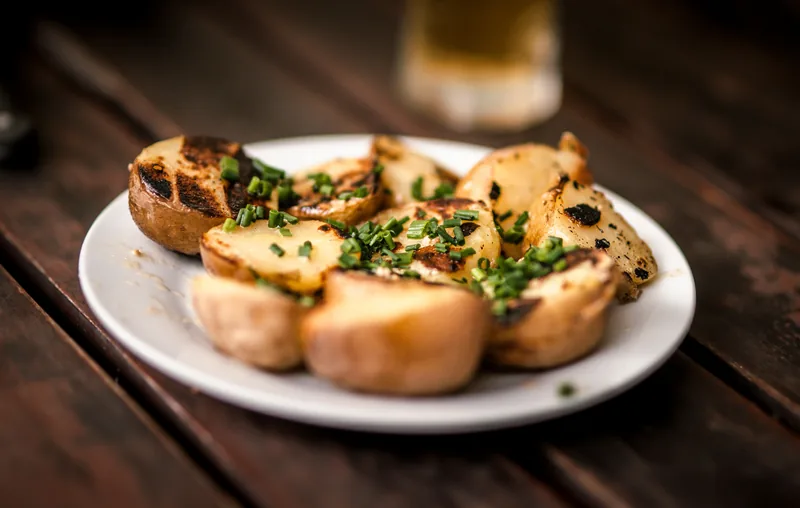
Grilled Potatoes with Garlic and Herbs
Parboiled first so the grill only has to char them. Twelve minutes over the coals, not forty.
- Total time
- 40 min
- Yield
- Serves 6
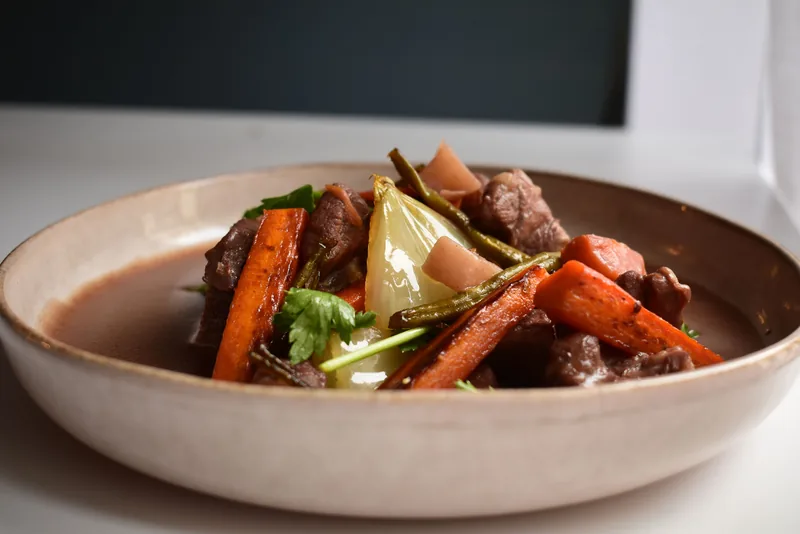
Instant Pot Beef Stew with Vegetables
Thirty-five minutes under pressure for meat that would take three hours in the oven. The vegetables go in for a second, shorter round.
- Total time
- 1 hr 20 min
- Yield
- Serves 6
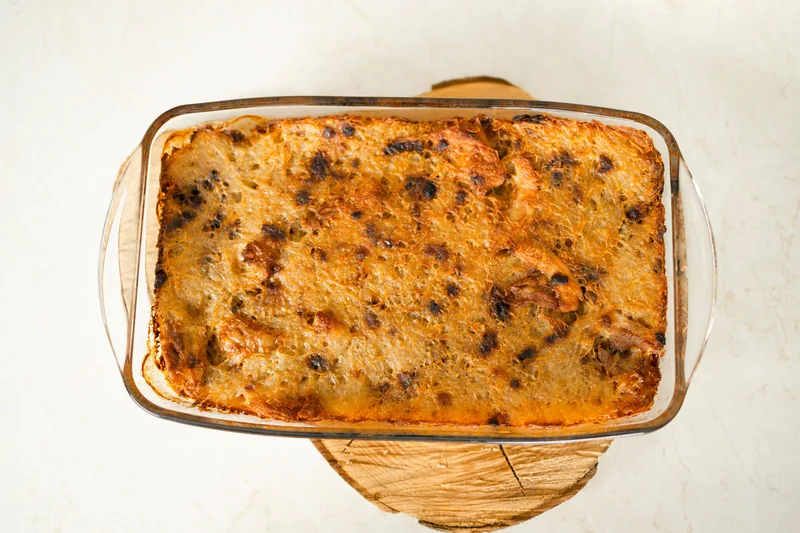
Amish Harvest Casserole
Sliced potatoes, seasoned ground beef and sweet corn under a sharp cheddar sauce, baked until a knife goes through the middle without resistance.
- Total time
- 1 hr 55 min
- Yield
- Serves 6