Amish Harvest Casserole
Sliced potatoes, seasoned ground beef and sweet corn under a sharp cheddar sauce, baked until a knife goes through the middle without resistance.
- Prep
- 25 min
- Cook
- 1 hr 20 min
- Rest
- 10 min
- Makes
- Serves 6
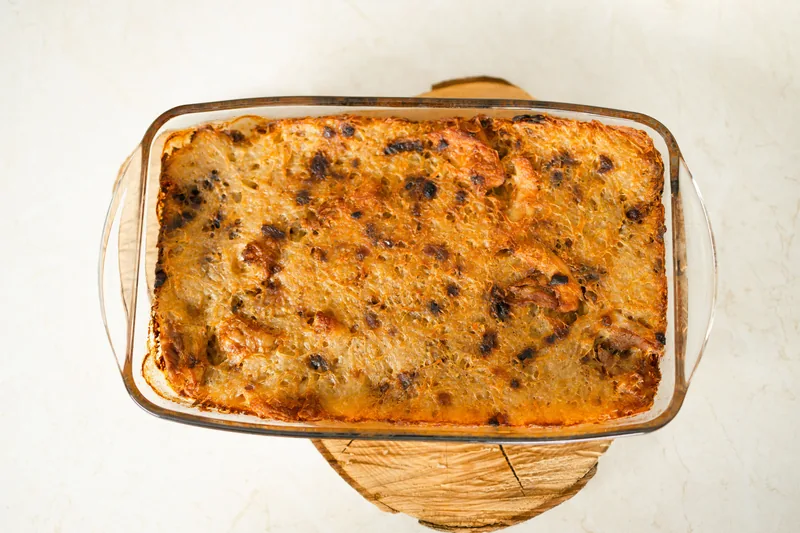
A casserole with raw potatoes in it is really two dishes cooking at different speeds. The beef is done the moment it leaves the skillet. The corn only needs to get hot. The potatoes need an hour of steady, wet heat to go from crunchy to sliceable, and everything else in the dish has to wait for them. Build the casserole around that fact and it works every time. Ignore it and you get the classic failure: a handsome browned top over potato slices that still squeak against the fork.
Two things control whether the potatoes cook. Thickness is the first, and it matters more than people expect — an eighth of an inch cooks through in an hour, a quarter inch needs closer to ninety minutes, and a pile of unevenly hand-cut slices gives you both in the same pan. A mandoline is the easy answer. A steady hand and a sharp knife is the other one.
The second is the foil. Covered, the dish traps steam and the potatoes essentially braise in the sauce; uncovered, the surface dries and browns while the middle stalls. So the whole bake is covered except the last twenty minutes, which is the only part that is about color. Pulling the foil at the halfway point feels productive and costs you the texture of the entire dish.
The cheddar sauce is a plain white sauce with the cheese stirred in off the heat, and off the heat is not a formality. Cheddar is an aged cheese with relatively little moisture holding its fat in place, and a sauce that keeps simmering after the cheese goes in will break into grease and grain within a minute or two. Take the pan off the burner, add the cheese in handfuls, and let the residual heat do it.
Brown the beef hard and drain it. Sixteen ounces of ground chuck can give up a quarter cup of fat, and fat that stays in the pan ends up pooling on top of the finished casserole where it is impossible to hide. Cook it to 160°F (71°C) in the skillet, which is easy to overshoot and does no harm here since it finishes in a sauce.
Watch for two cues at the end. A thin knife should slide into the center of the dish and out again with no drag — any resistance means more time under foil, no matter what the top looks like. And the edges should be bubbling slowly, a lazy blip every second or so, not boiling hard. A hard boil means the oven is running hot and the sauce is tightening; drop the oven to 325°F (160°C) and give it longer.
Let it sit ten minutes before serving. A casserole straight from the oven is structurally soup — the starch in the sauce has not set and the slices slide apart on the spatula. Ten minutes is the difference between a portion and a spill.
Serve it with something sharp to cut through, like roasted cabbage with yogurt sauce. If you want the same comfort from a pot instead of an oven, beef stew with vegetables covers the same ground. And on a night when an hour of oven time is not on the table, creamy sausage pasta gets you to the same place in a single skillet.
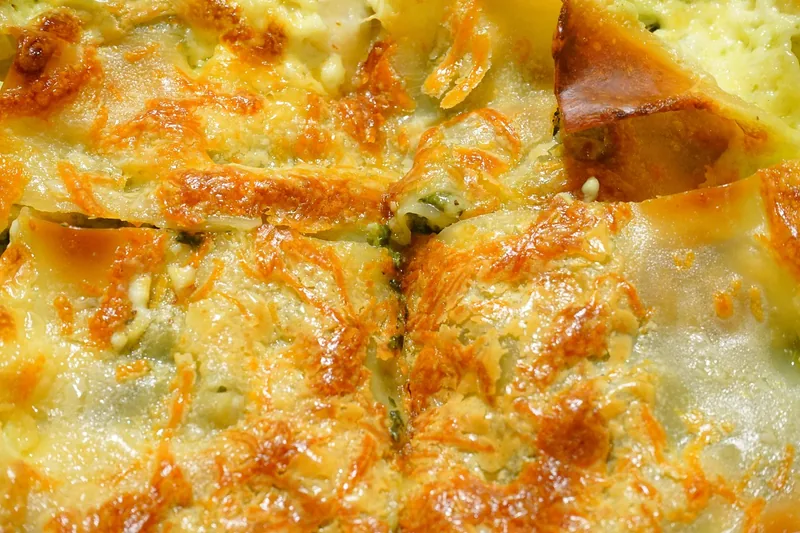
The harvest casserole, printed
Sliced potatoes, seasoned ground beef and sweet corn under a sharp cheddar sauce, baked until a knife goes through the middle without resistance.
For the layers and the cheddar sauce
For the layers
- 2 lb (900 g) Yukon Gold potatoes, peeled and sliced ⅛ in (3 mm) thick
- 1½ lb (680 g) ground beef
- 1 large yellow onion, diced
- 2 cups (280 g) corn kernels, fresh or frozen
- 1 tsp fine salt
- ½ tsp black pepper
- 1 tsp dried thyme
For the cheddar sauce
- 4 tbsp (55 g) butter
- ¼ cup (32 g) all-purpose flour
- 3 cups (720 ml) whole milk
- 2 cups (225 g) sharp cheddar, grated, plus ½ cup (55 g) for the top
- 1 tsp Dijon mustard
- ½ tsp fine salt
Layering it so the potatoes actually cook
- 1 Heat the oven to 350°F (180°C) and butter a 9×13 in (23×33 cm) baking dish. Slice the potatoes ⅛ in (3 mm) thick and hold them in cold water so they do not brown.
- 2 Brown the beef and onion in a skillet over medium-high heat, breaking it up, until no pink remains and the pan is sizzling rather than steaming — about 10 minutes, and 160°F (71°C) on a thermometer. Drain off the fat, then season with the salt, pepper and thyme.
- 3 Melt the butter in a saucepan, whisk in the flour and cook 1 minute until it smells toasty. Pour in the milk in a steady stream, whisking, and simmer 4–5 minutes until it coats the back of a spoon.
- 4 Take the pan off the heat entirely. Stir in the 2 cups of cheddar a handful at a time, then the Dijon and salt. Keep it off the burner — cheese added over direct heat splits into grease and grain.
- 5 Drain the potatoes and pat them dry. Layer half the slices in the dish, then the beef, then the corn, then the rest of the potatoes. Pour the sauce over and tilt the dish so it runs into the layers.
- 6 Cover tightly with foil and bake 60 minutes. Uncover, scatter the remaining cheddar over, and bake 20 minutes more until the top is patched with brown and the edges bubble slowly.
- 7 Test the center with a thin knife: it should meet no resistance. If it drags, cover again and give it another 10 minutes. Rest 10 minutes before cutting so the sauce sets enough to hold a portion.
Swaps, assembling ahead, and what not to freeze
- Bulk sausage instead of beef, hot or sweet, changes the dish for the better if you like it spicier. Drain it the same way.
- Russets work but break down more; the slices go soft at the edges and the layers blur. Yukon Golds hold their shape.
- Assemble up to a day ahead, refrigerate covered, and add 15 minutes to the covered bake. Do not pre-bake and reheat — the potatoes go grainy.
- Storage: 4 days refrigerated. Reheat individual portions covered at 325°F (160°C) for 20 minutes rather than in a microwave, which weeps liquid out of the sauce.
- It freezes poorly. The sauce separates on thawing and the potatoes turn mealy.
- Halve it in an 8 in (20 cm) square dish: same temperature, 45 minutes covered and 15 uncovered.
Potatoes, sauce and the fat on top
No, and you should not. Sliced thin, they cook through in the covered hour and absorb sauce while they do it. Par-boiled slices arrive already soft and turn to paste by the end.
Either the cheese went in while the pan was still on the heat, or the beef was not drained. Both leave visible fat on top. The cheese problem is not fixable once it breaks; the beef one you can spoon off.
It works but thickens the sauce more than you expect — the anti-caking starch on the shreds goes into the milk. Add an extra splash of milk if the sauce looks like wallpaper paste before it goes in the dish.
The pantry, mostly: potatoes, corn, ground beef and a milk-based sauce, all things a farm kitchen would have in quantity in the fall. There is no single canonical version, which is why recipes under this name vary so widely.
Green beans and peas fold in fine. Anything watery — zucchini, mushrooms, fresh tomatoes — releases liquid under the foil and thins the sauce into a puddle. Cook those off separately first if you want them in.
More cold-weather dinners
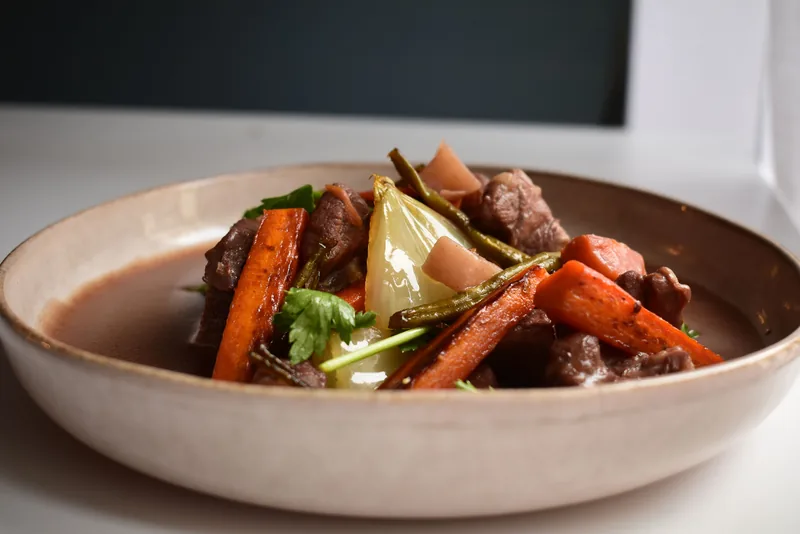
Instant Pot Beef Stew with Vegetables
Thirty-five minutes under pressure for meat that would take three hours in the oven. The vegetables go in for a second, shorter round.
- Total time
- 1 hr 20 min
- Yield
- Serves 6
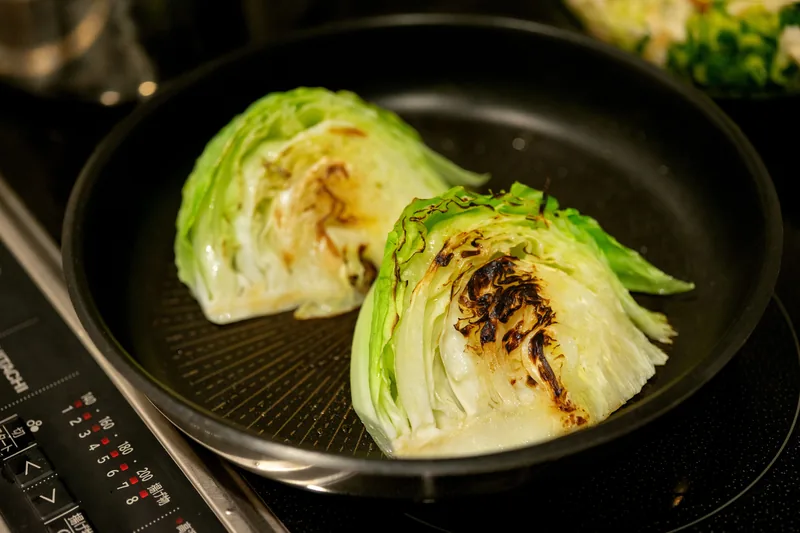
Roasted Cabbage Steaks with Yogurt Sauce
Thick wedges roasted until the edges char and the core turns sweet, under a cold garlic yogurt.
- Total time
- 45 min
- Yield
- Serves 4
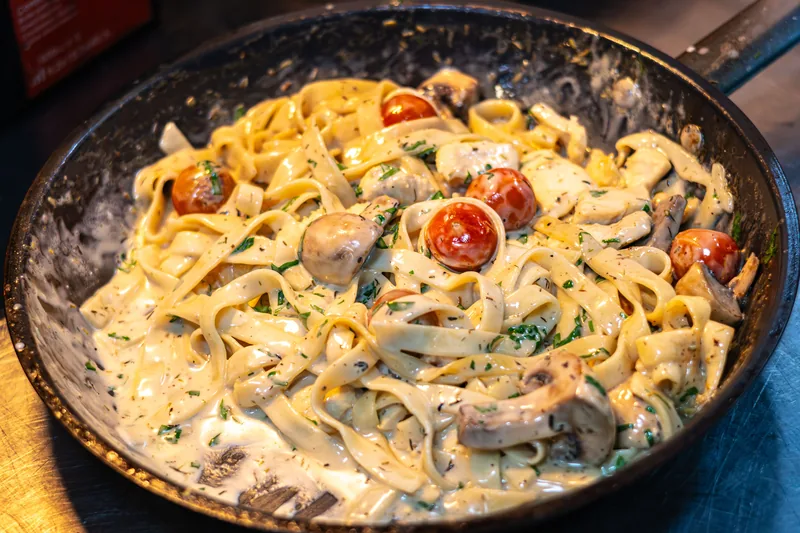
Creamy Sausage Pasta
Italian sausage browned hard for its fond, deglazed with wine, and finished into a clinging sauce with cream, Parmesan and pasta water.
- Total time
- 35 min
- Yield
- Serves 4