Crockpot Beef and Broccoli
Chuck steak braised until it gives, in a glossy soy and ginger sauce, with broccoli added at the very end so it stays green.
- Prep
- 20 min
- Cook
- 5 hr
- Makes
- Serves 6
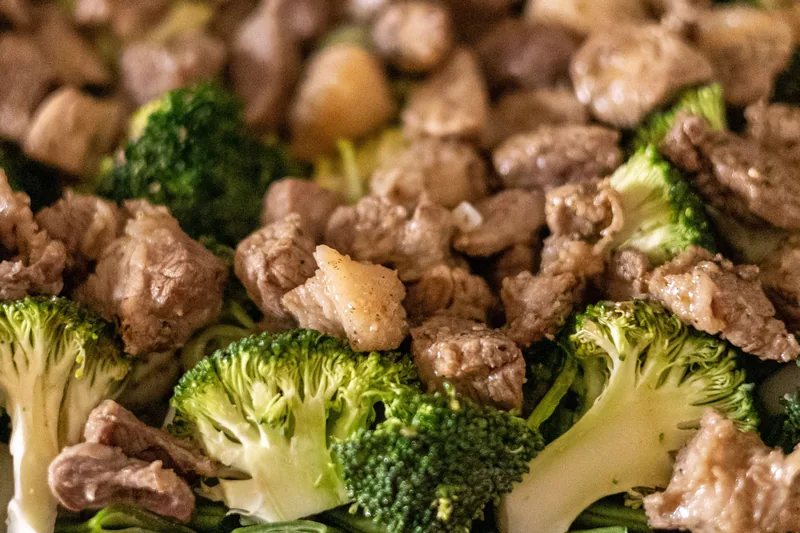
Almost every slow-cooker version of this dish arrives gray and watery, and both faults come from the same two decisions.
The first is the cut. Recipes that call for sirloin or flank are describing a stir-fry, not a braise: lean cuts have no collagen, and five hours of moist heat turns them stringy. Chuck is the opposite — it is full of connective tissue, and long slow heat melts that into gelatin, which is what gives braised beef its texture and the sauce its body. Chuck is also the cheaper cut, which is a rare piece of good news.
That conversion is slow and it is worth knowing its shape, because the middle of it is alarming. Muscle fiber contracts and squeezes out moisture well before the collagen around it starts to dissolve, so beef that was fine at two hours is tough and dry at three. Cooks pull it out there, decide the recipe failed, and eat something disappointing. Push through. Somewhere past four hours the collagen gives way, the gelatin released fills the gaps the fibers left, and the meat goes from tight to yielding over about thirty minutes.
The test is a fork, not a clock. Press a piece against the side of the pot and it should collapse into short strands under almost no pressure. If it resists and springs back, it is in the middle of the conversion, and the answer is another hour with the lid down.
The second is the broccoli. It does not go in at the start. Broccoli needs about five minutes; give it five hours and it disintegrates into the sauce and takes the color with it. It goes in at the end, on top, with the lid on for a few minutes.
The green is chemistry, not freshness. Chlorophyll holds a magnesium atom at its center, and prolonged heat in an acidic liquid — and soy sauce is acidic — knocks that atom out and replaces it with hydrogen. What you get then is pheophytin, which is the olive-drab color of overcooked broccoli, and it is not reversible. Five minutes under a lid is inside the window. Fifteen is not.
The sauce thickens off the heat, not during. A slow cooker never reaches a real boil, and cornstarch needs one to set. Ladle some liquid into a pan, bring it up, whisk in the slurry, then stir it back — the same trick that keeps sweet and sour sauce glossy rather than watery. Give it a full minute at a boil after the slurry goes in. Undercooked cornstarch tastes chalky and, worse, thins back out again as it sits.
Slice the chuck across the grain and slice it while it is cold — half an hour in the freezer firms it enough that the knife tracks straight instead of sliding along the fibers.
Serve it over rice, which is not just tradition. This sauce is salty and concentrated by design, and it needs something plain underneath to carry it. Crockpot tortellini is the same appliance pointed at a completely different dinner. On a night when there are not five hours to give it, a sausage stir-fry puts a green vegetable and a salty glaze on the table in fifteen minutes.
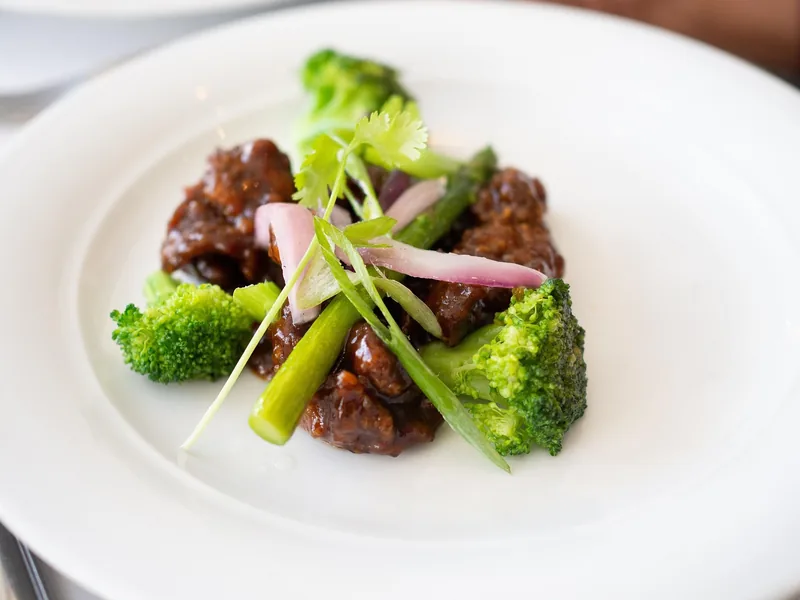
Beef and broccoli: the recipe card
Chuck steak braised until it gives, in a glossy soy and ginger sauce, with broccoli added at the very end so it stays green.
For the beef, and for the finish
For the beef
- 2½ lb (1.1 kg) chuck steak, sliced ⅜ inch (1 cm) thick across the grain
- 1 cup (240 ml) beef stock
- ½ cup (120 ml) soy sauce
- ⅓ cup (60 g) light brown sugar
- 4 garlic cloves, minced
- 1 tbsp grated fresh ginger
- 1 tbsp toasted sesame oil
To finish
- 1 lb (450 g) broccoli, cut into florets
- 3 tbsp cornstarch mixed with 4 tbsp cold water
- Sesame seeds and sliced scallion
Making beef and broccoli in a slow cooker
- 1 Put the sliced chuck in the slow cooker. Whisk the stock, soy, sugar, garlic, ginger and sesame oil together and pour it over.
- 2 Cook on low for 5 hours, or high for 3. It is ready when a piece pulls apart under a fork with no resistance.
- 3 Lift 1 cup (240 ml) of the cooking liquid into a small pan and bring it to a proper boil. Whisk in the cornstarch slurry and cook 1 minute until it turns glossy, then stir it back into the pot.
- 4 Scatter the broccoli over the top, put the lid back on, and leave it 5 minutes on high. It should be bright and still squeaky, not soft.
- 5 Stir once, gently, and serve over rice with sesame seeds and scallion.
On slicing, salt and leftovers
- Slicing across the grain matters even for a braise: it shortens the fibers before cooking starts, so the meat falls into short pieces rather than long strands.
- Frozen broccoli works and needs 3 minutes rather than 5. Do not thaw it first.
- Use low-sodium soy sauce if your stock is already salted. Nothing evaporates in a covered cooker, so a salty start stays salty.
- Leftovers keep 4 days and reheat well on the stovetop. The broccoli does not — add fresh florets to the reheated portion if it matters to you.
- Freeze the beef and sauce for 3 months, but freeze it before thickening. Cornstarch-set sauces go spongy and weep when thawed; thicken after reheating instead.
- A tablespoon of rice vinegar or a squeeze of lime at the end lifts the whole pot. Five hours of covered heat flattens sharp flavors and this one has none left.
Tough beef, thin sauce, drab broccoli
Not for this method. Sirloin and flank have no collagen to break down, so five hours leaves them dry and stringy. Save those for a stir-fry.
Cornstarch needs a real boil to thicken and a slow cooker never gets there. Thicken a ladleful in a pan on the stovetop, then return it.
Then it is undercooked, not overcooked — the opposite of what people assume. Collagen needs hours at temperature to turn to gelatin, and the meat tightens before it loosens. Put the lid back on and check again in an hour.
You do not, and thin slices sear badly anyway — they curl and overcook before they brown. The depth here comes from the soy, sesame oil and sugar, which caramelize enough on their own over a long braise.
No. A slow cooker warms gently, and a frozen block sits between 40°F (4°C) and 140°F (60°C) for hours while it thaws, which is exactly the range you want food to pass through quickly. Thaw it in the fridge overnight first.
More easy beef dinners
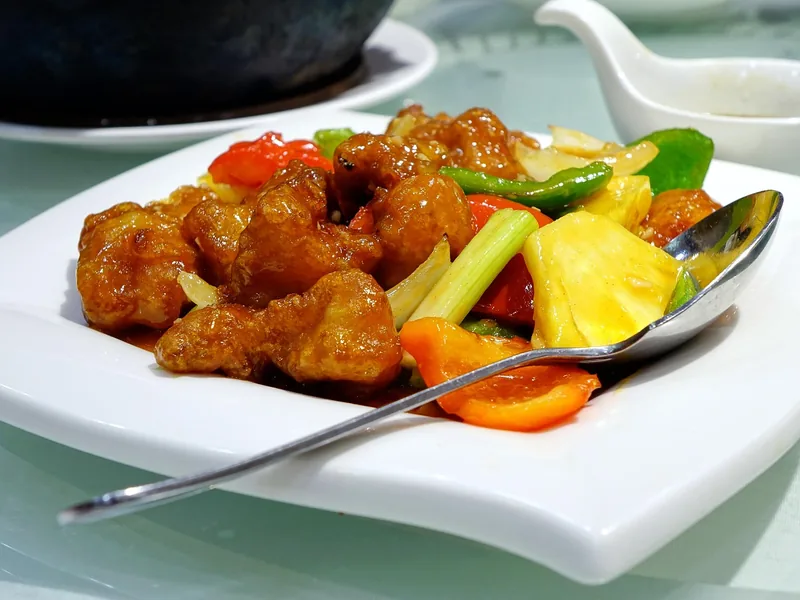
Chinese Sweet and Sour Sauce
Clear, glossy and sharp enough to cut through fried food. No ketchup, no food coloring, ready in eight minutes.
- Total time
- 13 min
- Yield
- Makes about 1½ cups (350 ml)
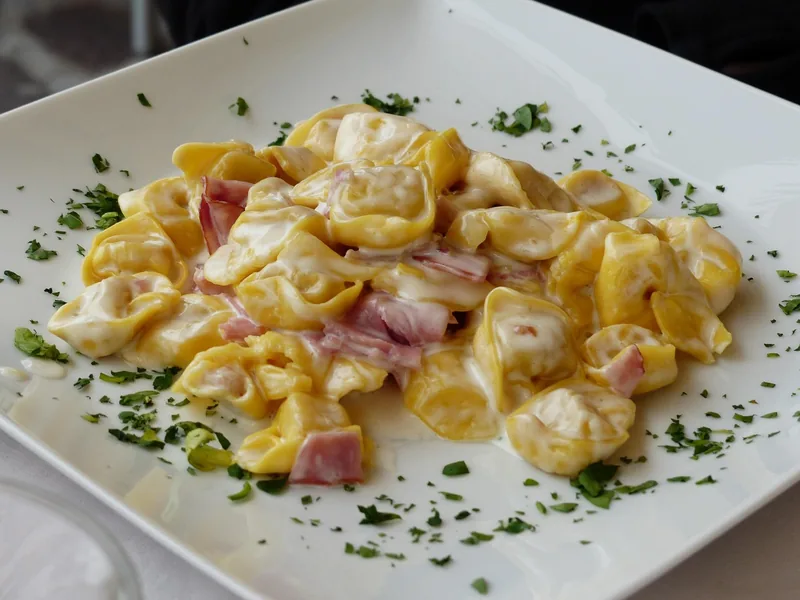
Crockpot Tortellini
Italian sausage and a cream sauce that builds itself over four hours. The pasta joins for the last twenty minutes.
- Total time
- 4 hr 25 min
- Yield
- Serves 6
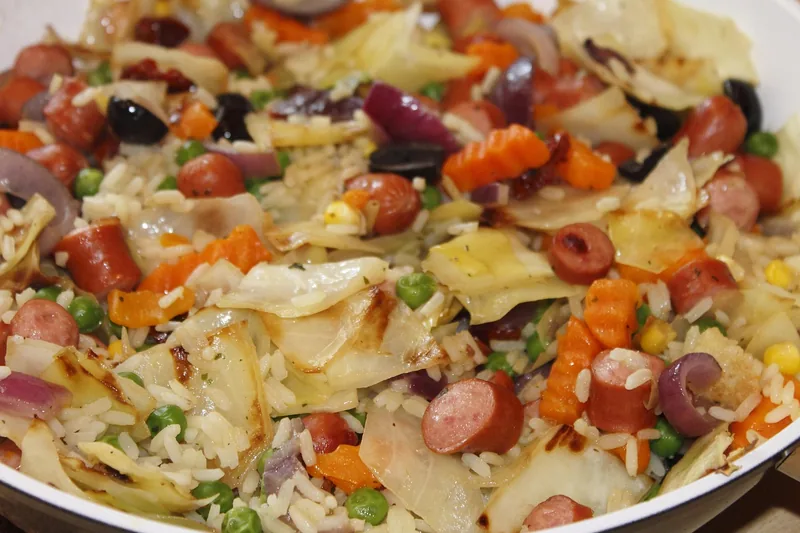
Five-Spice Brussels Sprouts and Sausage Stir-Fry
Halved sprouts seared hard in rendered sausage fat, glazed with soy, honey and five-spice, done in one skillet in under twenty minutes.
- Total time
- 30 min
- Yield
- Serves 4