Grilled Potatoes with Garlic and Herbs
Parboiled first so the grill only has to char them. Twelve minutes over the coals, not forty.
- Prep
- 15 min
- Cook
- 25 min
- Makes
- Serves 6
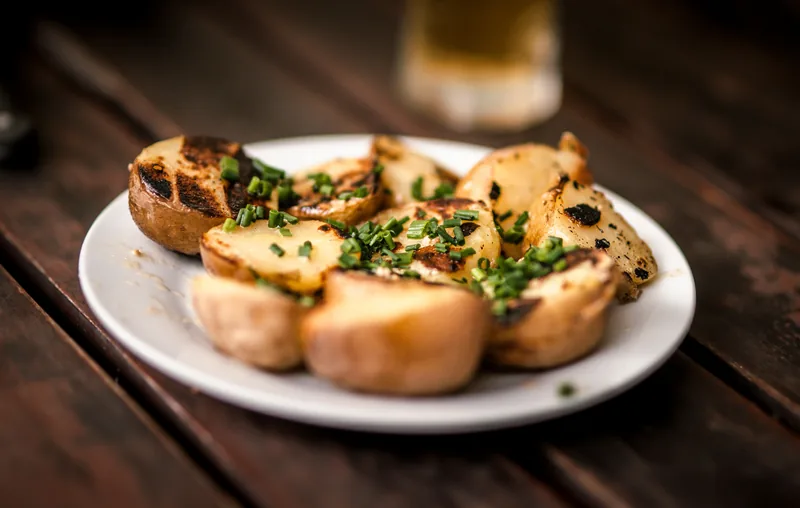
Raw potato on a grill is a slow disaster. The outside blackens long before the middle is edible, and by the time the center is cooked the skin is carbon. Parboiling separates the two jobs: water cooks the inside, fire browns the outside.
Water conducts heat into a potato far faster than hot air does, and it cannot go above 212°F (100°C) no matter how long you leave it, so nothing burns. Fire is the opposite — grate bars sit far hotter than that, which is exactly what you want for a crust and exactly what you do not want for a raw interior. Give each medium the job it is good at and the potato takes twelve minutes over the coals instead of forty.
Cook them in salted water until a knife just enters — no further. A fully soft potato falls through the grill bars, and there is no recovering it once it does.
Salt the water properly. It is the only moment the inside of the potato gets seasoned; anything added later sits on the surface, and the difference between a potato salted from within and one salted at the end is obvious across the whole plate.
The unattended version, finished under the broiler rather than over a grill, is slow cooker potatoes with garlic and herbs.
Dry them completely and let the steam finish escaping before oiling. Water on the surface prevents contact browning and makes the oil spit.
Build two zones, not one. Bank the coals to one side, or leave one burner off. Oil drips, fat catches, and flare-ups turn a browning potato into a sooty one in about fifteen seconds; a cool side gives you somewhere to move them rather than closing the lid on a fire and hoping.
The potato tells you when to turn it. A cut face that has browned releases itself from the bars with no resistance — slide a thin spatula under and it lifts. If it grips and starts to tear, the crust has not set and the sugars and starch are still bonded to the metal. Wait another minute and it will let go on its own.
They go with Greek chicken gyros as naturally as anything on this site.
The garlic and herb butter goes on after grilling, never before. Garlic over direct flame burns black in under a minute and turns bitter, and chopped herbs simply incinerate. Off the heat, tossed through while the potatoes are still hot enough to melt the butter, both do exactly what you wanted.
Toss the butter through in a warm metal bowl rather than on the platter. The residual heat in the potatoes is what carries the raw garlic from harsh to mellow and softens the rosemary, and a wide cold platter drops the temperature before any of that happens.
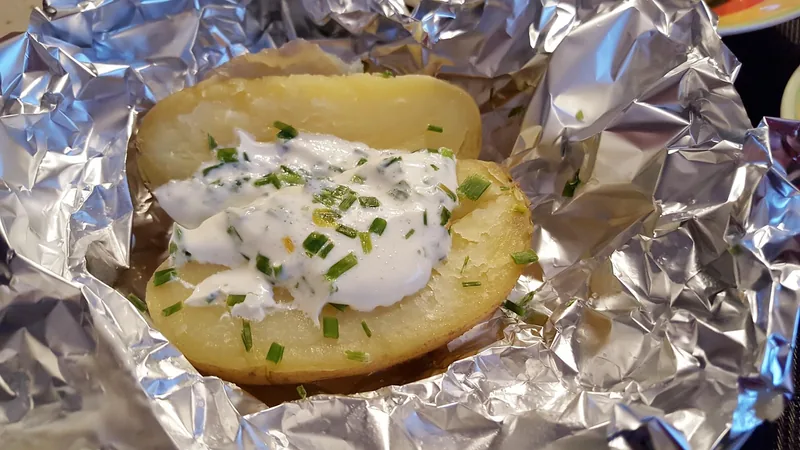
Herb potatoes on the grill: the card
Parboiled first so the grill only has to char them. Twelve minutes over the coals, not forty.
Potatoes, and the garlic herb butter
For the potatoes
- 2½ lb (1.1 kg) waxy potatoes, halved
- 1 tbsp salt, for the water
- 3 tbsp olive oil
- 1 tsp fine salt
- ½ tsp black pepper
For the garlic herb butter
- ¼ cup (60 g) butter, melted
- 4 garlic cloves, minced
- 3 tbsp chopped parsley
- 1 tbsp chopped rosemary
- Juice of ½ lemon
- Flaky salt
Parboil, then grill
- 1 Put the halved potatoes in cold salted water, bring to the boil and cook 10–12 minutes until a knife just goes in. They should still feel firm.
- 2 Drain and leave them 5 minutes to steam dry, then toss with the oil, salt and pepper.
- 3 Heat the grill to medium-high, around 425°F (220°C) with the lid down, and scrape the bars clean. Lay the potatoes cut side down and leave them 6–7 minutes without moving — moving them early tears the surface that is forming.
- 4 Turn and grill 5–6 minutes more, until marked and crisp on both sides.
- 5 Stir the butter, garlic, herbs and lemon together. Toss the hot potatoes through it and finish with flaky salt.
Which potato, and doing it ahead
- Waxy potatoes here, unlike most roast potato recipes — they hold their shape on the bars where a floury potato crumbles.
- Parboil up to a day ahead and refrigerate. They grill better cold and dry.
- A tablespoon of vinegar in the parboiling water helps the pieces keep their edges — acid slows the breakdown of pectin in the cell walls. It leaves no taste behind.
- Baby potatoes under 1½ inches (4 cm) across are worth threading onto skewers, two per pair so they cannot spin when you turn them.
- The garlic herb butter keeps five days refrigerated and freezes for three months. Make a double batch; it is the same butter that finishes steak, corn and bread.
- Leftovers are better than they have any right to be: chop them and fry hard in a dry skillet for a hash the next morning.
Sticking, tearing and skipping the parboil
The times do not line up. A half potato needs roughly 30 to 40 minutes of gentle heat to cook through, and a cut face exposed to a medium-high grate is charred inside 12. You can get there over indirect heat with the lid down, but that is roasting in a grill, not grilling, and it takes three times as long.
They were turned too early. Starch and sugar at the cut surface bond to hot metal and only let go once that surface has dried and browned. Clean and oil the bars, oil the potato rather than the grate, and wait for the release.
You can, and you will get steamed potatoes with a smoky smell. Foil traps the moisture that has to leave for browning to happen. If it is raining, use the broiler instead — cut side up on a sheet pan, about 4 inches from the element.
They taste good and they break apart. Russets are floury, so the parboiled edges crumble the moment a spatula goes under them. If russets are what you have, cut them into larger wedges and parboil only 6 minutes.
Dried rosemary is acceptable at about a third of the quantity, stirred into the melted butter a few minutes ahead so it rehydrates. Dried parsley is not worth adding; it contributes color and nothing else.
More for the barbecue

Greek Chicken Gyros
Yoghurt-marinated thighs off a screaming hot pan, folded into warm pita with tzatziki, tomato and raw onion.
- Total time
- 3 hr 34 min
- Yield
- Makes 6 gyros
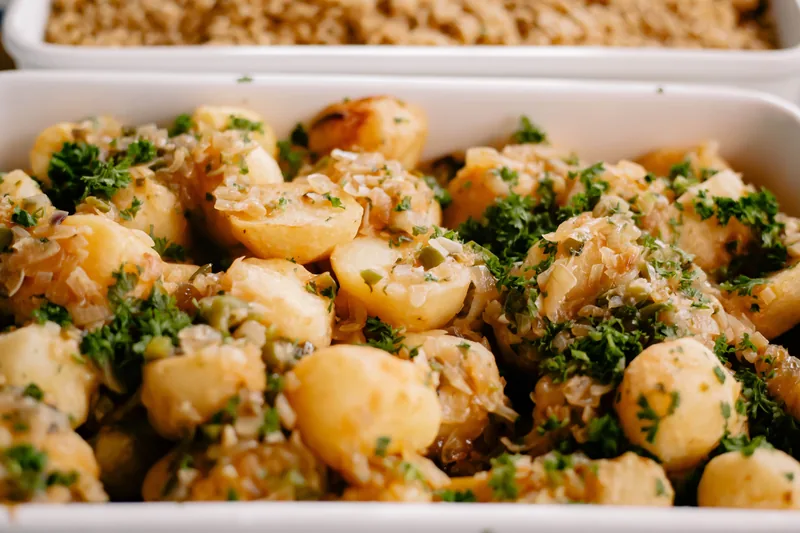
Slow Cooker Baby Potatoes with Garlic and Herbs
Four hours unattended, then five minutes under the broiler for the crust a slow cooker cannot give you.
- Total time
- 4 hr 15 min
- Yield
- Serves 8
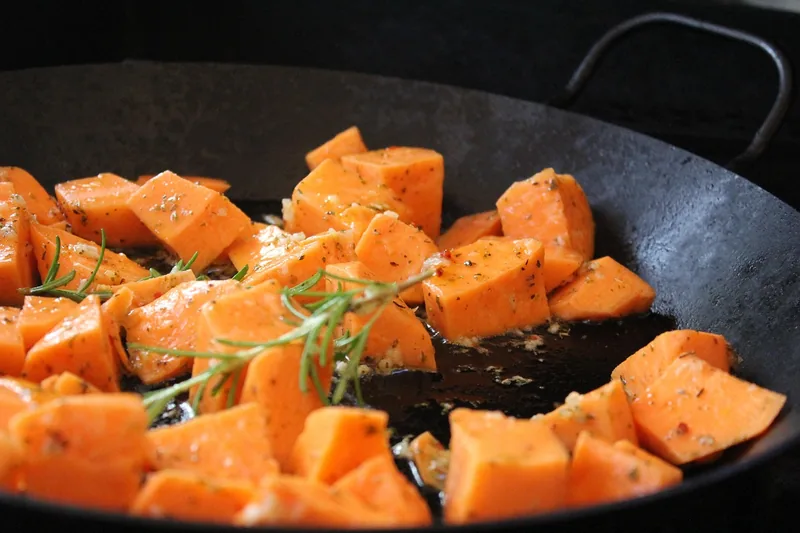
Roasted Sweet Potato Bites
Caramelized at the edges, soft inside. High heat, a hot tray, and enough space between the cubes.
- Total time
- 40 min
- Yield
- Serves 6