Instant Pot Beef Stew with Vegetables
Thirty-five minutes under pressure for meat that would take three hours in the oven. The vegetables go in for a second, shorter round.
- Prep
- 25 min
- Cook
- 55 min
- Makes
- Serves 6
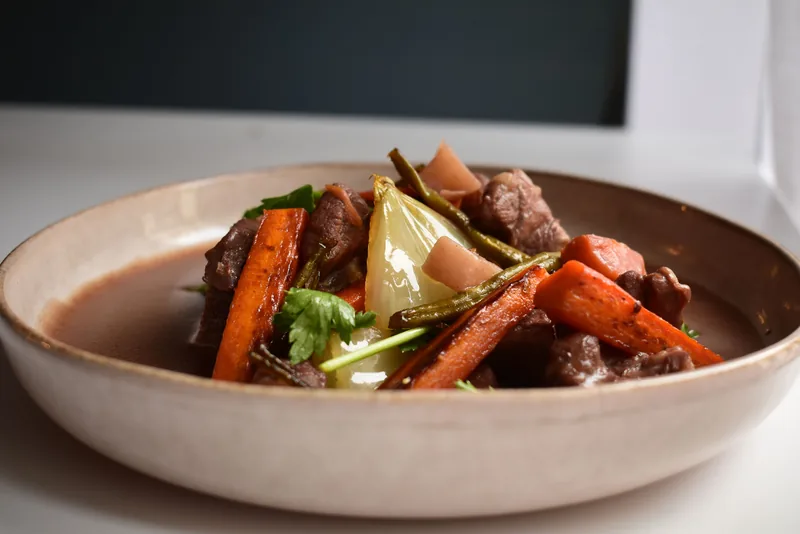
A pressure cooker gets to about 250°F (121°C) instead of the 212°F (100°C) a pot can manage, and collagen breaks down roughly three times faster at that temperature. Thirty-five minutes gives you meat that an oven would need three hours to produce.
That speed is also the trap. Potatoes and carrots are done in four minutes at pressure; give them thirty-five and they dissolve, leaving you with beef in a thick orange soup. So there are two cooking rounds — beef alone, then a quick release, then vegetables for four minutes. It sounds like extra work and it is about ninety seconds of it.
Sear in batches, on sauté, before anything else. The sear is where the flavor of a stew comes from and a crowded pot steams instead. Three batches for two and a half pounds of beef, and take the time. You are listening for a hard, continuous sizzle; the moment it drops to a murmur, the pot has given up more heat than the meat can absorb and the surface is boiling in its own juice. It is the same argument for browning that crockpot tortellini makes about sausage.
Then deglaze properly and scrape every brown patch off the base. Any left behind will trigger the burn warning under pressure, and the machine will stop and refuse to continue — this is the single most common Instant Pot failure and it is entirely preventable with a wooden spoon and thirty seconds. The pot senses temperature at the base plate, not in the liquid, so a scorched film there reads as a boil-dry even when the stew above it is fine.
The flour goes in before the liquid and cooks for a minute in the fat. Raw flour stirred into hot stock clumps instantly, because the outside of each lump gelatinizes and seals the dry center in. Coated in oil first, the grains stay separate long enough to disperse. A minute in the pot also takes the pasty taste off it.
Chuck is not a compromise cut here, it is the correct one. Pressure is brutal on lean muscle: without collagen to melt into gelatin, the fibers simply contract and squeeze out their water, and you get dry shreds in a thin broth. The marbling and connective tissue that make chuck chewy in a hot pan are exactly what make it tender in this one.
Let the pressure fall on its own for fifteen minutes after the beef round. Venting immediately drops the pressure faster than the liquid inside the meat can follow, so it flashes to steam and forces its way out — the meat is measurably drier, and you can see the juice pooling at the bottom of the pot. A natural release lets it settle back in.
The peas never see the pressure cooker. Frozen peas are already blanched; thirty seconds of residual heat brings them up to temperature while they still taste green. Four minutes under pressure turns them gray and sweet in the wrong way.
For the same deep, long-cooked flavor out of a lean pot and an ordinary stovetop, turkey chili gets there by keeping the simmer low rather than raising the pressure.
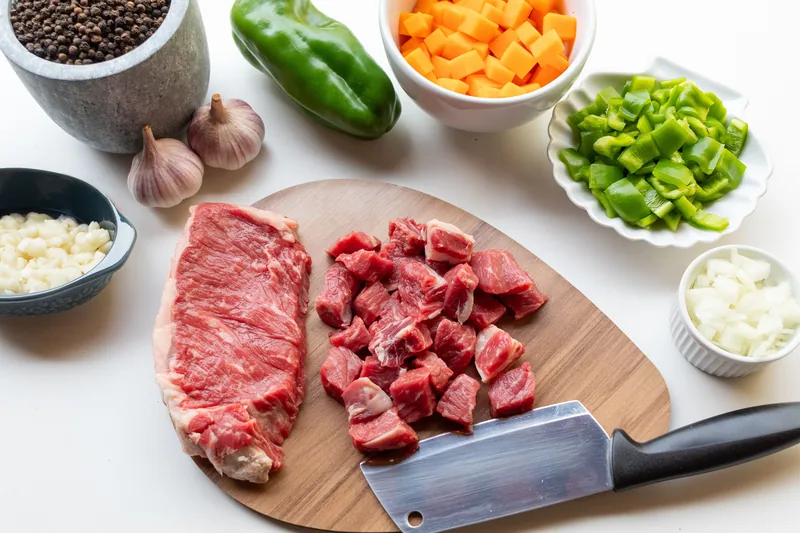
Beef stew with vegetables, printed
Thirty-five minutes under pressure for meat that would take three hours in the oven. The vegetables go in for a second, shorter round.
For the stew, and for the second round
For the stew
- 2½ lb (1.1 kg) chuck steak, cut into 1½-inch (4 cm) cubes
- 2 tbsp neutral oil
- 2 onions, diced
- 4 garlic cloves, minced
- 3 tbsp tomato paste
- 3 tbsp all-purpose flour
- 1 cup (240 ml) red wine
- 3 cups (700 ml) beef stock
- 2 bay leaves
- 2 tsp dried thyme
- 1 tbsp Worcestershire sauce
For the second round
- 1½ lb (700 g) waxy potatoes, in 1½-inch (4 cm) chunks
- 4 carrots, in thick coins
- 7 oz (200 g) mushrooms, halved
- 1 cup (150 g) frozen peas
- Chopped parsley, to finish
Two pressure cycles, not one
- 1 Dry the beef and season it hard. On sauté, sear it in the oil in three batches until deeply browned, moving each batch to a plate.
- 2 Soften the onions 5 minutes, add the garlic and tomato paste and cook 90 seconds, then stir in the flour and cook another minute.
- 3 Pour in the wine and scrape the base of the pot completely clean. Nothing should still be stuck. Let it reduce by half.
- 4 Return the beef and any juices, add the stock, bay, thyme and Worcestershire. Seal and cook on high pressure 35 minutes, then let the pressure release naturally for 15 minutes before venting the rest.
- 5 Add the potatoes, carrots and mushrooms. Seal again and cook 4 minutes on high pressure, then quick release.
- 6 Stir in the peas — the residual heat is enough — and rest 10 minutes before serving with parsley.
Cut of beef, and the natural release
- Chuck, brisket or shin. Anything lean turns stringy under pressure rather than tender.
- The 15-minute natural release matters: venting immediately after the beef round squeezes juice out of the meat.
- Waxy potatoes only — red, fingerling or Yukon Gold. Russets are too starchy and fall apart even in four minutes.
- Thin stew: set it back to sauté, uncovered, and let it reduce for 5 minutes. A pressure cooker loses no liquid to evaporation, so the gravy is always looser than an oven stew at the same point.
- Skip the wine by replacing it with an extra cup (240 ml) of stock plus 1 tablespoon of red wine vinegar, added at the end.
- Keeps 4 days refrigerated and freezes 3 months, though the potatoes go slightly grainy after freezing. Reheat gently on the stovetop, not on sauté, which scorches the base.
When the pot says BURN, and other pressure problems
Food stuck to the base. Cancel, release the pressure, and scrape the bottom thoroughly before resealing. Deglazing completely after searing prevents it entirely. Thick liquids are the other culprit — the pot needs enough thin stock to circulate, so never add tomato paste or flour after the stock is in.
You can, and the stew will taste fine and look like mush. Beef and potatoes have opposite requirements: the beef needs half an hour to convert collagen, and the potato cell walls have collapsed long before then. If you truly want one round, cut the potatoes into large 2-inch (5 cm) pieces and accept that the outer third of each one will dissolve into the gravy.
Press a cube against the side of the pot with a spoon. It should give and start to separate along the grain with almost no force. If it springs back, it is in the tough middle stage where collagen has contracted but not yet melted — reseal and give it another 8 minutes. More time genuinely fixes this; it is the one stew problem that does.
Two reasons, both structural. Nothing evaporates in a sealed pot, so the flavor never concentrates. And the pot stays below the temperature at which the surface of a stew browns, so you get none of the roasted notes an uncovered oven pot develops on top. Sear harder at the start and reduce at the end, and you recover most of the gap.
The searing does. Everything else is chopping, and you can do it while the first batch browns. What you cannot do is shorten the sear by turning the heat up — the pot has a fixed ceiling on sauté and pushing past it just scorches the oil.
More slow dinners
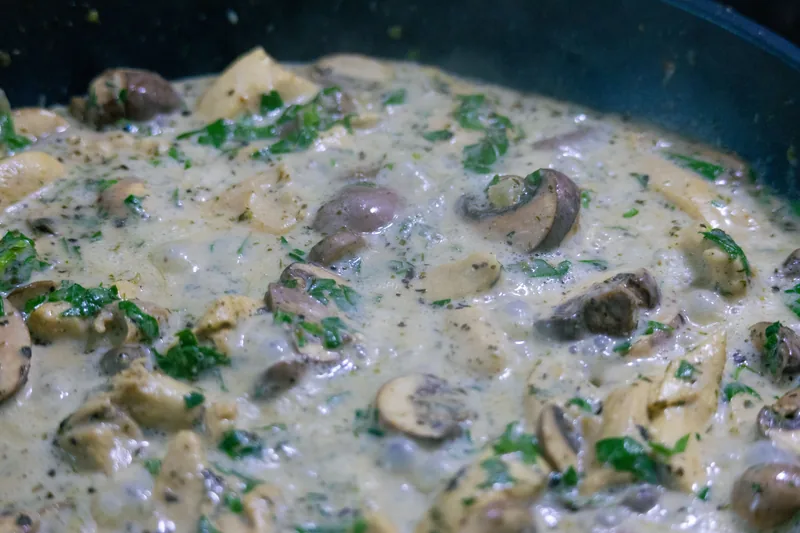
Creamy Mushroom Sauce
Built in the pan the steak came out of, in the time the steak needs to rest. Ten minutes, five ingredients that matter.
- Total time
- 17 min
- Yield
- Serves 4
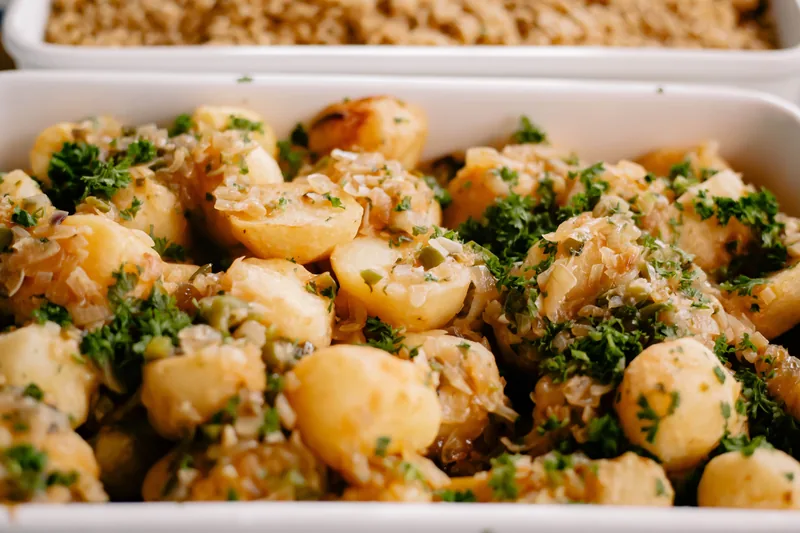
Slow Cooker Baby Potatoes with Garlic and Herbs
Four hours unattended, then five minutes under the broiler for the crust a slow cooker cannot give you.
- Total time
- 4 hr 15 min
- Yield
- Serves 8

Easy Turkey Chili Recipe for Comfort Food Lovers
Ground turkey browned hard, spices bloomed in fat and a slow, lazy simmer — the three things that keep a lean chili from going dry.
- Total time
- 1 hr 20 min
- Yield
- Serves 6