French Onion Soup
Onions cooked slowly to deep brown, simmered in beef stock with a splash of wine, and finished under the broiler with toasted baguette and bubbling Gruyère.
- Prep
- 20 min
- Cook
- 1 hr 40 min
- Rest
- 5 min
- Makes
- Serves 6
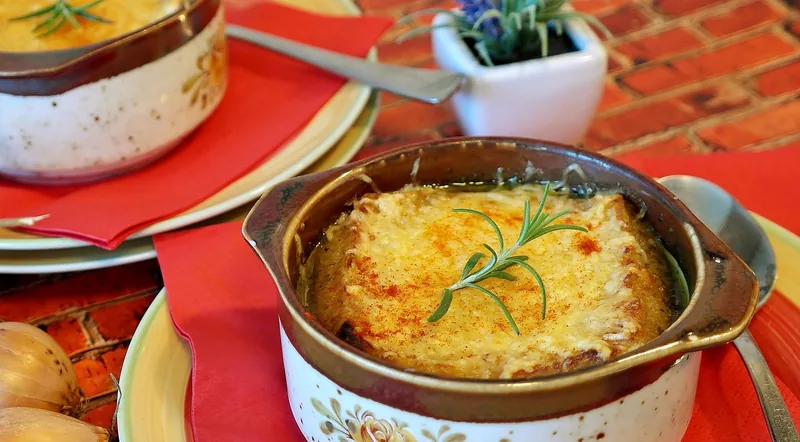
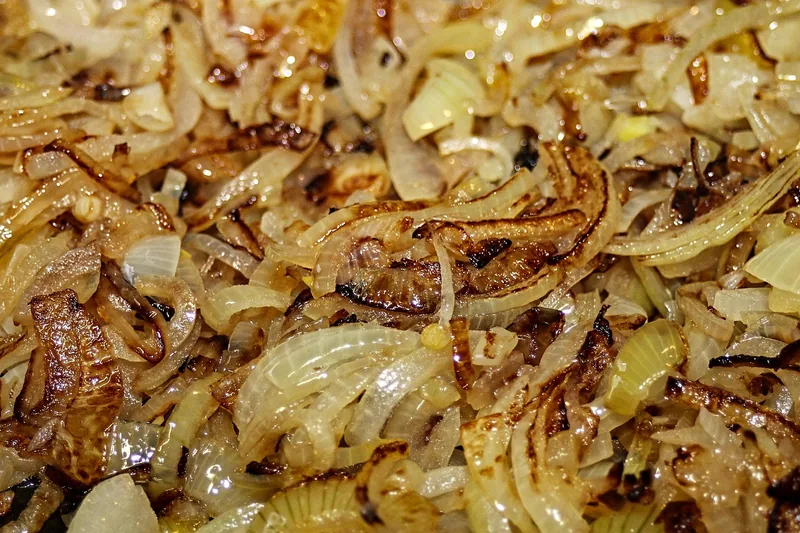
French onion soup has four ingredients that matter: onions, stock, bread and cheese. Only one of them takes skill, and it takes time. Nearly all the flavor in the bowl comes from the onions, cooked down for close to an hour until they turn from sharp and white to soft, sweet and the color of strong tea. There is no shortcut that tastes the same, and the recipes that promise onion soup in thirty minutes are selling a paler, thinner soup. Easy, yes; quick, no — the hour is mostly waiting.
What happens in that hour is two things in sequence. First the onions give up their water, which is why five large onions fill a Dutch oven to the brim and then collapse to a small fraction of the volume. Only once most of the water is gone can the pan get hot enough for browning, where the sugars caramelize and amino acids in the onions react with them to build the savory, almost meaty depth the soup is known for. A little salt at the start speeds the first stage by drawing water out.
Heat is where it goes wrong. Push it too high and the onions scorch at the edges while the middle is still pale, and scorched onion tastes acrid through the whole pot. Keep it at medium, stir every few minutes, and pay attention to the bottom of the pan. A brown film will form there. That film is flavor, not a problem, as long as it stays brown. When it gets dark, add two tablespoons of water and scrape it up; the onions absorb it and take on its color. Repeating this three or four times is what gets them evenly deep brown instead of burned in patches.
The wine goes in once the onions are done, to lift the last of that film off the pan. Dry white wine is the usual choice; dry sherry makes it rounder and slightly nutty. Then the stock. Store-bought beef stock can taste thin or tinny on its own, and cutting it with a third chicken stock gives a fuller, cleaner broth. Taste before salting: boxed stocks vary enormously in salt, and the cheese adds more at the end.
The bread has to be dry before it goes on. Fresh baguette dissolves the moment it touches hot soup and sinks into a paste under the cheese. Toasted in the oven until it is crisp all the way through, it soaks up broth slowly and stays in one piece long enough to eat. Gruyère is the classic cheese because it melts smoothly and browns without going greasy; a little Parmesan on top helps it color.
Finish it under the broiler in oven-safe crocks set on a baking sheet, and watch it the whole time. The gap between bubbling and burnt is under a minute.
The same patience with a browning pan runs through mushroom sauce for steak. For a soup that builds its depth from a long simmer rather than a long sauté, farmhouse chicken noodle soup is the other half of the lesson, and wild rice soup is a creamier bowl for the same cold nights.
French onion soup, printed
Onions cooked slowly to deep brown, simmered in beef stock with a splash of wine, and finished under the broiler with toasted baguette and bubbling Gruyère.
For the pot, and for under the broiler
For the soup
- 4 tbsp (55 g) unsalted butter
- 1 tbsp olive oil
- 3 lb (1.4 kg) yellow onions, about 5 large, halved and thinly sliced
- 1 tsp fine salt, plus more to taste
- ½ cup (120 ml) dry white wine or dry sherry
- 4 cups (950 ml) beef stock
- 2 cups (475 ml) chicken stock
- 3 sprigs fresh thyme, or ¼ tsp dried
- 1 bay leaf
- ½ tsp black pepper
For the topping
- 12 slices baguette, ¾ in (2 cm) thick, about half a baguette, cut to fit inside the crocks
- 2 cups (225 g) Gruyère, grated
- ¼ cup (25 g) Parmesan, finely grated
An hour of onions, then the cheese
- 1 Melt the butter with the oil in a large Dutch oven over medium heat. Add the onions and salt and stir to coat. They will fill the pot; they shrink quickly.
- 2 Cook, stirring every few minutes, until the onions have collapsed and are a deep, even brown, the color of strong tea, 50–60 minutes. Whenever the brown film on the bottom of the pot gets dark, add 2 tbsp water and scrape it up. If the onions brown at the edges before softening, lower the heat.
- 3 Pour in the wine and scrape the bottom of the pot clean. Simmer until the wine has almost disappeared, about 3 minutes.
- 4 Add the beef stock, chicken stock, thyme, bay leaf and pepper. Bring to a boil, then lower the heat and simmer, partly covered, for 30 minutes. Remove the thyme stems and bay leaf and season with salt to taste.
- 5 While the soup simmers, heat the oven to 400°F (200°C). Toast the baguette slices on a baking sheet for 10–12 minutes, turning once, until dry and crisp all the way through.
- 6 Switch the oven to broil and set a rack so the tops of the crocks will sit about 4 in (10 cm) below the element. Set six oven-safe crocks on a rimmed baking sheet and ladle in the soup. Float two toasts on each, cover with the Gruyère, and sprinkle with Parmesan.
- 7 Broil 3–5 minutes, watching closely, until the cheese is bubbling and spotted brown. Let the bowls stand 5 minutes before serving; they stay very hot.
Other onions, no crocks and no wine
- Onions: yellow onions give the deepest, most balanced flavor. Sweet onions such as Vidalia caramelize faster but make the soup sweeter; red onions turn it a muddy color.
- Make ahead: the soup without bread and cheese keeps 4 days refrigerated and improves overnight. Reheat to a simmer before topping and broiling.
- Freezing: freeze the soup alone for up to 3 months. The caramelized onions also freeze well on their own, so a double batch saves the hour next time.
- No crocks: toast the bread, top it with cheese and broil it on the baking sheet, then float the cheese toasts on bowls of soup.
- No wine: use an extra ½ cup (120 ml) of stock plus 1 tsp sherry vinegar or balsamic vinegar at the end, for the acidity the wine would have added.
- Slow cooker: the onions can be softened in a slow cooker on high for 8–10 hours with the lid ajar, but they need a final 15 minutes in a hot pan to pick up real color.
Bitter broth, soggy bread and faster onions
A little. Higher heat with frequent splashes of water gets there in about 40 minutes if you stay at the stove, and a pinch of baking soda speeds browning further but softens the onions to a mush. Much faster than that and they burn instead of browning.
The onions or the film on the bottom of the pot scorched. Brown is flavor, black is bitterness, and once it is in the broth it cannot be removed. Lower heat and more frequent deglazing prevent it.
Comté and Emmental are the closest. Swiss cheese, provolone or mozzarella all melt well but taste milder; mixing one of them with some Parmesan brings back the sharpness.
It went in fresh. Toast the slices until they are dry right through, not just golden outside; dried bread takes up broth slowly and keeps its shape under the cheese.
Oven-safe crocks or bowls that hold 10–16 oz (300–475 ml). This batch fills six of them to just below the rim, which leaves room for the toast and cheese without the soup bubbling over under the broiler.
Yes, with a good mushroom or vegetable stock and a teaspoon of soy sauce for depth. It will be lighter than the beef stock version but still rich from the onions.
More bowls for cold nights
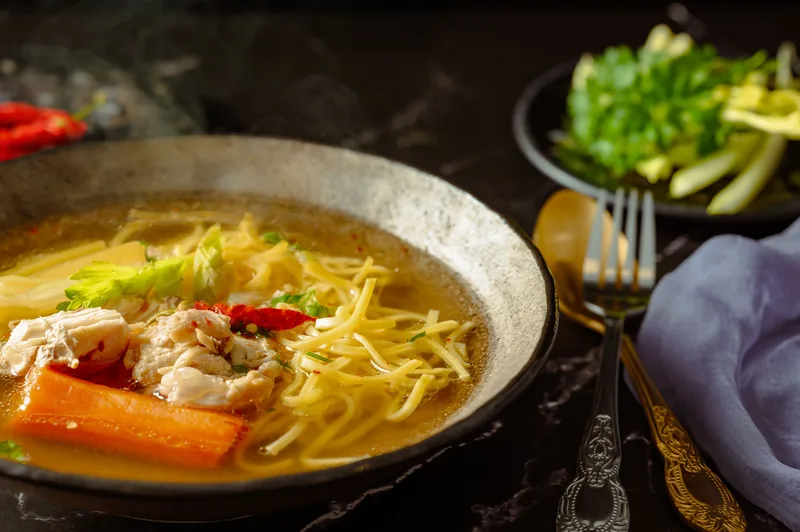
Farmhouse Chicken Noodle Soup
A whole chicken poached into its own stock, then shredded back in. The noodles cook separately and that is not fussiness.
- Total time
- 1 hr 50 min
- Yield
- Serves 8
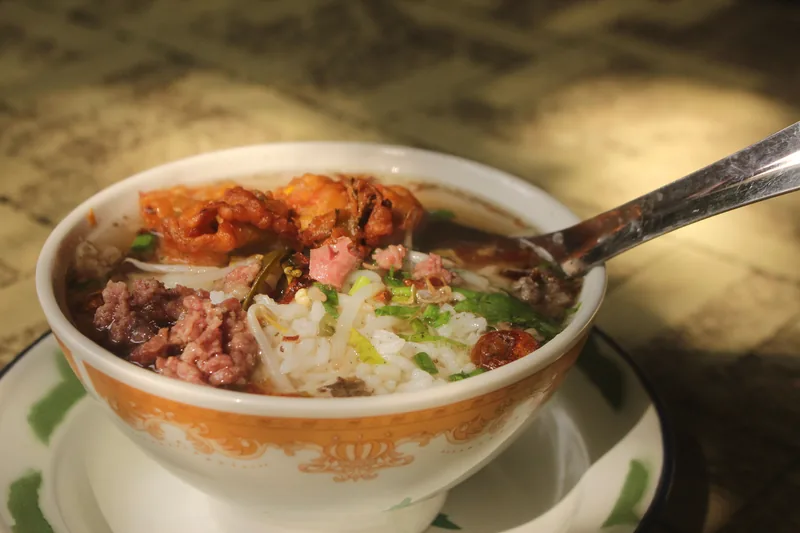
Wild Rice Soup
Creamy, mushroomy and thick with grain. The wild rice cooks separately because it takes three times as long as anything else.
- Total time
- 1 hr
- Yield
- Serves 6
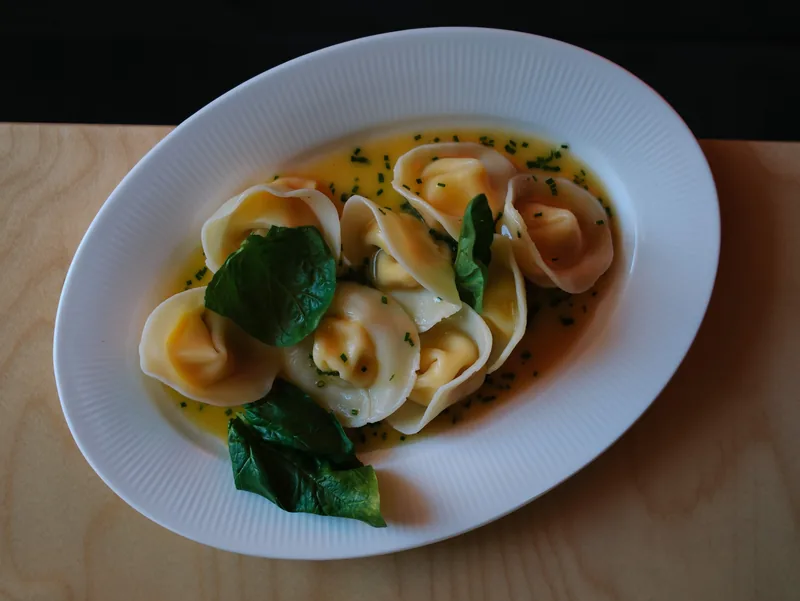
Creamy Spinach Tortellini Soup
Twenty-five minutes, one pot. The cream goes in off the heat and the tortellini go in last.
- Total time
- 35 min
- Yield
- Serves 6