Crispy Air Fryer Breakfast Potatoes
Parboiled, roughed up, then air-fried hard. Craggy outside, fluffy inside, twenty minutes.
- Prep
- 10 min
- Cook
- 22 min
- Makes
- Serves 4
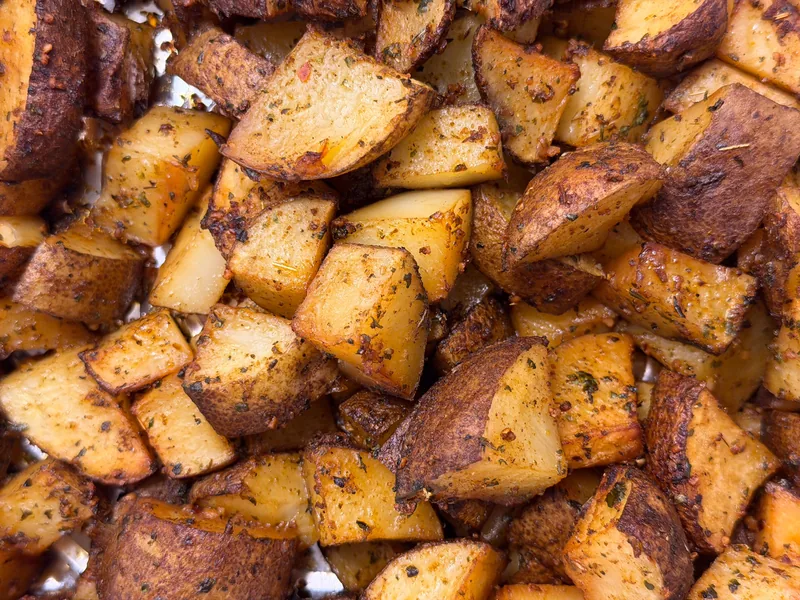
Raw potato into an air fryer gives you a smooth-surfaced cube that is crisp in the way a chip is crisp — thinly, and only at the very outside. The technique that produces the craggy, shattering surface takes one extra pan and eight minutes.
Parboil the cubes until a knife just goes through, drain them, then put the lid on the pan and shake it hard. The outsides break down into a rough starchy paste while the insides stay intact. That paste is what fries into ridges and blisters, and there is no way to get it without this step.
Surface area is the whole argument. A smooth cube has six flat faces; a roughed-up one has hundreds of little ridges and torn edges, and every one of them browns independently. You are not adding a coating, you are manufacturing more outside.
Use russets or another floury variety. Their starch granules are packed loosely and swell and burst readily in the boiling water, which is what gives you the paste; waxy potatoes hold together through the same treatment and come out of the pan as smooth as they went in. They also carry less water, and water is the thing you are trying to get rid of.
Then let them steam dry for five minutes. Surface water is the enemy of browning: it has to boil off before the potato can get above 212°F (100°C), and every second spent doing that is a second not spent crisping.
Cook them in one layer with space between the cubes. A crowded basket traps the steam the potatoes are giving off and they braise instead of frying — the same reason air fryer fried chicken goes soft when the pieces touch. Two smaller batches beat one full one.
Salt and paprika go on before cooking; garlic powder and herbs go on after. Garlic powder burns bitter in twenty minutes of dry heat, and dried herbs turn to dust.
You can hear when they are done. Shake the basket at the twenty-minute mark and listen: finished cubes rattle, with a hard click against the metal, while cubes that need longer land with a dull thud. The look to aim for is mottled — deep brown ridges over paler flat faces, not an even tan. An even tan across everything means the basket was too full, and another five minutes will not fix it; it will only dry out the middles.
The failure mode at the other end is worth naming too. Boil the cubes two minutes past the point where a knife meets slight resistance and the shaking turns them to mash instead of scuffing them. There is no recovery from that. Pull them early rather than late — the air fryer finishes the cooking.
Salt the boiling water properly, a tablespoon for the pan. It is the only chance the inside of the potato gets to be seasoned, and salt sprinkled on afterward sits on the crust where it tastes sharp rather than built in.
They belong on the same plate as scrambled eggs with sausage and biscuits, and the parboil-and-shake step is the same one that makes grilled potatoes work.
Air fryer breakfast potatoes: the card
Parboiled, roughed up, then air-fried hard. Craggy outside, fluffy inside, twenty minutes.
Potatoes and seasoning
- 2 lb (900 g) russet or other floury potatoes, cut into 1¼-inch (3 cm) cubes
- 1 tbsp salt, for the water
- 2 tbsp olive oil
- 1 tsp smoked paprika
- 1 tsp fine salt
- ½ tsp black pepper
- 1 tsp garlic powder, to finish
- 1 tbsp chopped chives, to finish
Parboil, rough up, air fry
- 1 Put the cubes in cold salted water, bring to a boil, and cook 7–8 minutes until a knife meets slight resistance. Overcooked here means mush later.
- 2 Drain well, return them to the dry pan, put the lid on and shake hard three or four times. The edges should look scuffed and floury.
- 3 Leave uncovered 5 minutes to steam dry.
- 4 Toss with the oil, paprika, salt and pepper — gently, or the roughed-up edges come away.
- 5 Air fry at 400°F (200°C) for 20–22 minutes, shaking the basket twice, until deep brown and audibly crisp.
- 6 Toss with the garlic powder and chives while still hot.
Choosing the potato, and getting ahead
- Floury potatoes only. Waxy ones will not break down in the shaking step and stay smooth.
- Half a teaspoon of baking soda in the boiling water speeds the surface breakdown — alkaline water dissolves pectin faster, so you get more paste from the same shake. Rinse nothing off afterward.
- Parboil and shake up to a day ahead. Spread the cubes on a tray and refrigerate them uncovered; the surface dries out further overnight, which only helps.
- Use an oil that can take the heat — olive, avocado or canola. Butter scorches at 400°F (200°C).
- They hold 15 minutes in a low oven on a rack. Covered, they soften within five.
- Reheat at 350°F (180°C) for 4 minutes in the air fryer. A microwave turns the crust back into potato.
Why parboiling is the step that matters
Only if you want the craggy surface. Raw cubes cook through perfectly well in about 18 minutes and come out smooth and pleasant. The paste that makes them shatter exists only because boiling water burst the starch granules first, and dry air will not do that.
Almost always a full basket, occasionally a skipped steam-dry. Both leave water on the surface, and while water is evaporating the potato cannot get hot enough to brown. Give the cubes room and let them air out before the oil goes on.
They will dry rather than crisp. Oil conducts heat into the ridges and carries the paprika; without it the starch just dehydrates and goes leathery. One tablespoon is enough if you are cutting back.
Yes. Preheat a heavy sheet pan at 425°F (220°C), spread the cubes on it so they sizzle on contact, and give them 35–40 minutes with one turn. It is slower because an oven moves far less air, so crowding punishes you even harder.
The starchy surface is exactly the thing that sticks. Spray the basket before the potatoes go in, and leave them undisturbed for the first eight minutes — once a crust has formed they release on their own.
The rest of the plate
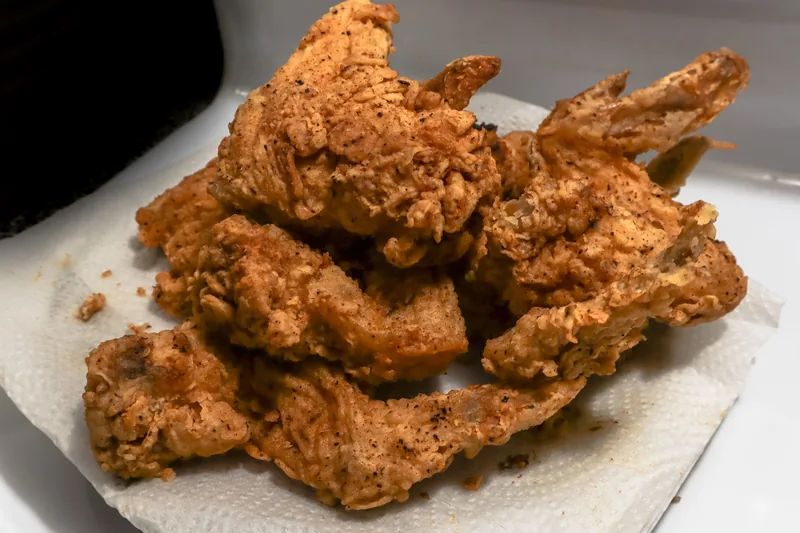
Air Fryer Fried Chicken
Buttermilk-brined thighs in a craggy seasoned crust, crisp all over in 25 minutes without a pot of hot oil.
- Total time
- 4 hr 45 min
- Yield
- Serves 4
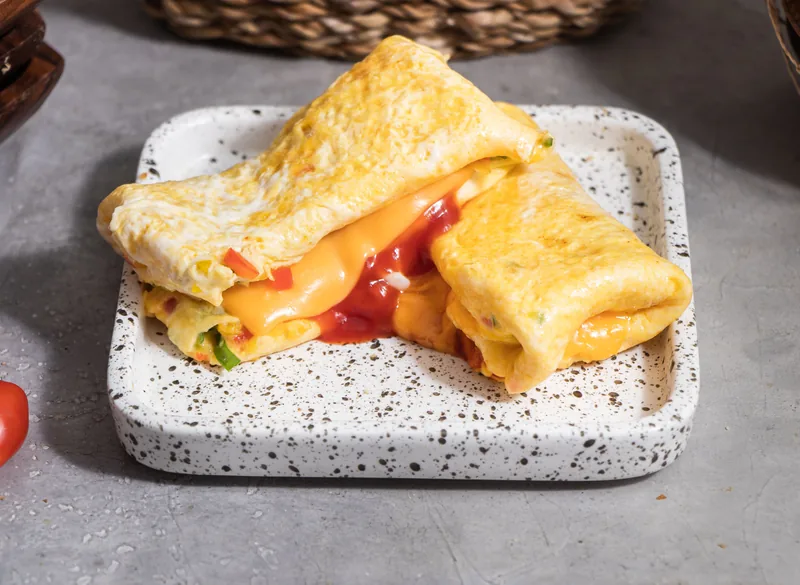
Breakfast Grilled Cheese with Scrambled Eggs
Soft-curd eggs folded into melted cheddar between buttered, mayonnaise-crusted bread.
- Total time
- 22 min
- Yield
- Makes 2 sandwiches
Blueberry Oatmeal Breakfast Bars
One oat mixture, used twice — pressed as a base and crumbled on top. Cut them cold or they fall apart.
- Total time
- 3 hr
- Yield
- Makes 12 bars