Breakfast Grilled Cheese with Scrambled Eggs
Soft-curd eggs folded into melted cheddar between buttered, mayonnaise-crusted bread.
- Prep
- 10 min
- Cook
- 12 min
- Makes
- Makes 2 sandwiches
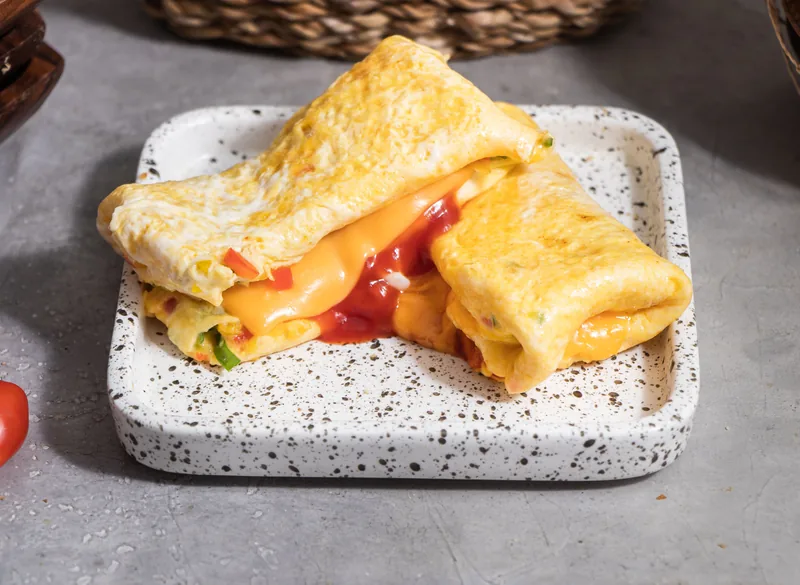
Two techniques, both counterintuitive, and both worth the paragraph.
Scramble the eggs low and slow, and take them off while they still look wet. Eggs are around 75% water and heat squeezes it out; hard, fast scrambling produces dry curds sitting in a puddle. Low heat, constant movement, off the pan at the point where they seem two-thirds done — they finish in the residual heat and then again inside the sandwich.
Mayonnaise on the outside of the bread instead of butter. It sounds wrong and it is what most diners actually do. Mayonnaise is oil emulsified with egg, so it spreads evenly on soft bread without tearing it, has a higher smoke point than butter, and the egg proteins brown into a more even, more golden crust. Nobody tastes mayonnaise in the finished sandwich.
Medium-low heat in the pan. High heat gives you a dark crust around cheese that has not melted, which is the defining failure of a grilled cheese. If the bread is browning before three minutes are up, the pan is too hot — and a lid for the first couple of minutes traps enough heat above the sandwich to melt the cheese while the outside is still only golden.
The bread has to be sturdy enough to carry a wet filling. A soft supermarket sandwich loaf collapses under scrambled eggs and goes translucent where it meets them. Use a proper white loaf cut about half an inch thick: thinner and it tears, thicker and the middle is still cold when the outside is done.
Cheese goes on both sides of the eggs, not all in one layer. Melted cheese is the only thing holding this sandwich together — eggs will not bind to bread — so a layer against each slice glues the whole thing into something you can pick up. Mature cheddar is right because it is sharp enough to be tasted through the eggs; a mild cheese disappears entirely.
Grate it yourself. Pre-grated cheese is tossed with potato starch or cellulose to stop it clumping in the bag, and that coating is exactly what stops it flowing smoothly when it melts. It goes oily and grainy instead of running.
Rest it a minute before cutting. Straight out of the pan the cheese is liquid and the filling slides out of the first cut; sixty seconds is enough for it to set into something that holds.
Serve it with crispy breakfast potatoes and it becomes a proper breakfast.
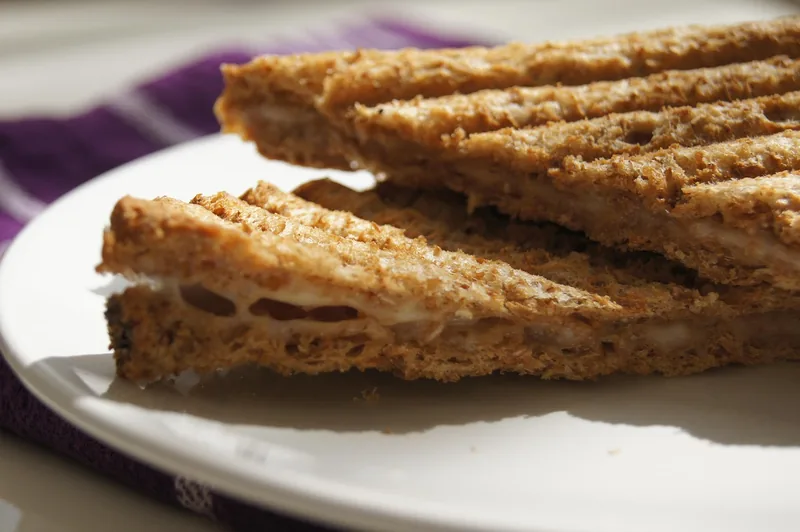
A scrambled eggs sandwich, printed
Soft-curd eggs folded into melted cheddar between buttered, mayonnaise-crusted bread.
What you need
- 4 slices of good white bread
- 4 eggs
- 2 tbsp heavy cream
- 1½ tbsp (20 g) butter, for the eggs
- 1 cup (120 g) mature cheddar, coarsely grated
- 2 tbsp mayonnaise, for the outside
- Chives, salt and black pepper
Soft scrambled eggs, then the sandwich
- 1 Beat the eggs with the cream and a pinch of salt until completely uniform — no streaks of white left.
- 2 Melt the butter in a non-stick pan over low heat. Add the eggs and stir constantly with a spatula, pulling the setting edges into the middle.
- 3 After 4–5 minutes they will be soft, glossy and still visibly wet. Take them off then, not later, and stir in the chives.
- 4 Spread mayonnaise on one side of each slice of bread. That side faces out.
- 5 Build each sandwich: bread, half the cheese, half the eggs, the rest of the cheese, bread. Cheese on both sides of the egg glues the sandwich together as it melts.
- 6 Cook in a dry pan over medium-low for 4 minutes a side, pressing gently with a spatula, until deep golden and the cheese has run.
- 7 Rest 1 minute before cutting, or the filling slides out.
On cheese and on lids
- Grate the cheese yourself. Pre-grated cheese is dusted with anti-caking starch and it melts badly.
- A lid on the pan for the first two minutes traps enough heat to melt the cheese before the bread is too dark.
- Gruyère or a young Comté melts even better than cheddar, though you lose some of the sharpness that cuts the eggs.
- A few slices of crisp bacon or a spoonful of caramelised onion go in with the eggs without unbalancing anything.
- Butter works on the outside if mayonnaise offends you. Clarify it or use ghee — the milk solids in whole butter are what burn before the bread is golden.
Why mayonnaise goes on the outside
Really, and most diners do it. It is oil emulsified with egg, so it spreads on soft bread without tearing it, it browns more evenly than butter because of those egg proteins, and it does not burn at the heat butter does. You cannot taste it in the finished sandwich.
The pan is too hot. Drop to medium-low and put a lid on for the first two minutes — the trapped heat melts the cheese from above while the bread browns gently from below.
Wetter than you want to eat them. They keep cooking in the residual heat, and then again inside a hot sandwich for four more minutes. Eggs that looked right in the pan are dry by the time the sandwich is cut.
No. This is a sandwich that has about ten good minutes. The eggs go on setting, the bread softens from the inside, and reheating finishes the job. Cook it when you intend to eat it.
A firm white loaf, about half an inch thick. Sourdough works if the crumb is tight, but an open, holey crumb lets the egg fall straight through. Avoid anything soft and pre-sliced — it collapses under the filling.
An easy breakfast to go with it
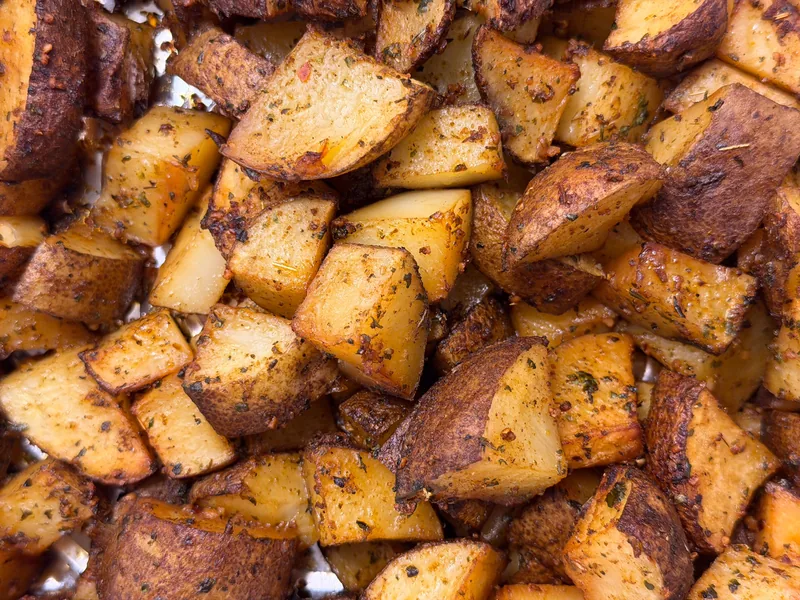
Crispy Air Fryer Breakfast Potatoes
Parboiled, roughed up, then air-fried hard. Craggy outside, fluffy inside, twenty minutes.
- Total time
- 32 min
- Yield
- Serves 4
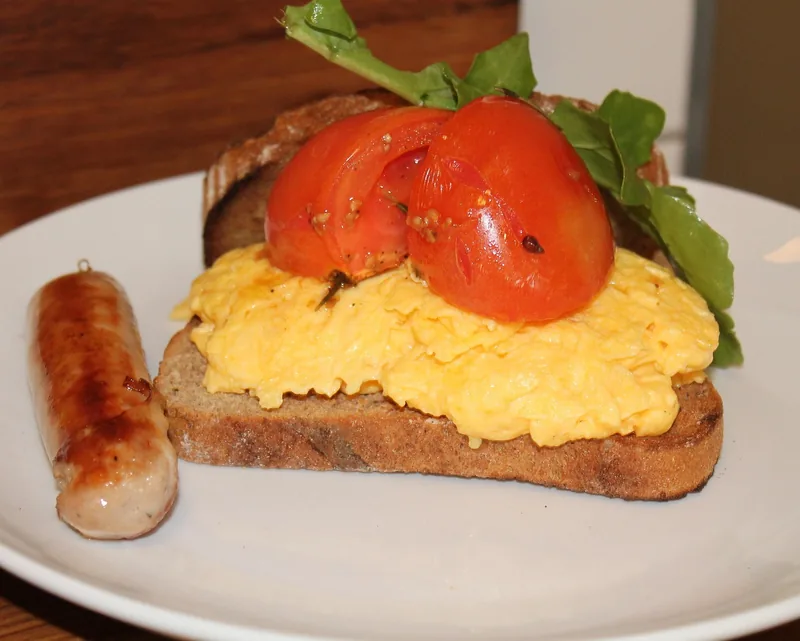
Scrambled Eggs with Sausage and Biscuits
A full plate timed so everything arrives hot. The biscuits go in the oven first and the eggs are cooked last.
- Total time
- 50 min
- Yield
- Serves 4
Blueberry Oatmeal Breakfast Bars
One oat mixture, used twice — pressed as a base and crumbled on top. Cut them cold or they fall apart.
- Total time
- 3 hr
- Yield
- Makes 12 bars