Scrambled Eggs with Sausage and Biscuits
A full plate timed so everything arrives hot. The biscuits go in the oven first and the eggs are cooked last.
- Prep
- 20 min
- Cook
- 30 min
- Makes
- Serves 4
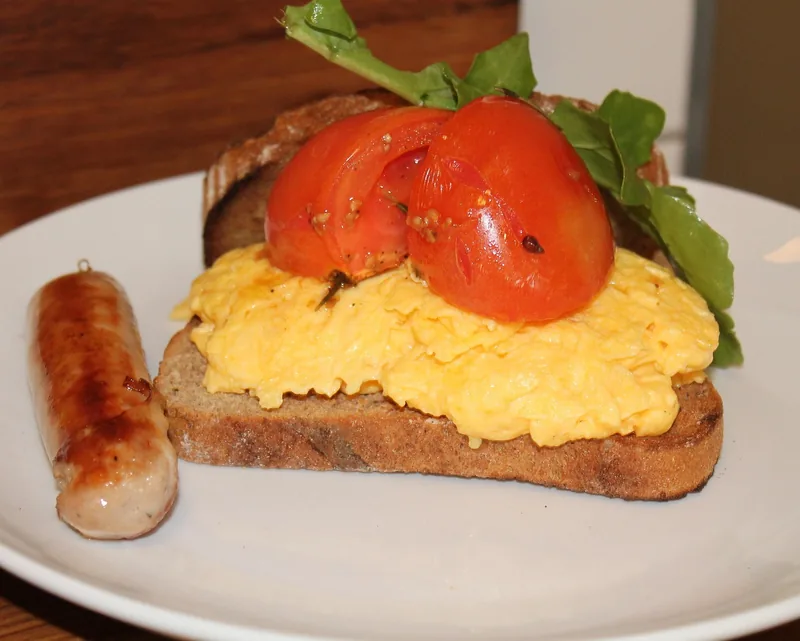
Cooking four things so they land hot at the same time is the actual skill in a breakfast like this, and the order is fixed by how long each element holds.
Biscuits first, because they take 15 minutes and are perfectly happy sitting in a warm oven. Sausage patties second — they hold for ten minutes and their fat is what the tomatoes then cook in. Tomatoes third, four minutes cut side down in that fat. Eggs last and always last, because scrambled eggs hold for approximately zero minutes.
On the biscuits: the butter must be frozen and grated, and the dough must be handled as little as possible. Solid pieces of butter melt in the oven and leave pockets that steam the dough apart into layers. Warm butter blends into the flour and gives you a scone. Grating from frozen is a fast way to get small even pieces without warming them in your hands.
Buttermilk, not milk. Its acidity reacts with the baking soda for lift and tenderises the gluten so the crumb stays short.
Cut the biscuits straight down and lift straight up, without twisting. A twist drags the cut edge sideways and seals the layers you just spent effort creating, and the biscuit rises lopsided or barely at all. It is the single most common reason home biscuits come out squat.
The patties want a light hand and a dimple. Sausage meat compacted hard turns dense and bouncy, so form the patties loosely, and press a shallow thumbprint into the middle of each — meat contracts as it cooks and the dimple stops them doming into meatballs that then rock on the plate.
Tomatoes cut side down, in the sausage fat, and left alone. Four minutes without moving them gives a blistered, caramelised face; turning them repeatedly just releases water and you end up stewing them. The fat matters too — this is the step that ties the plate together, because the tomatoes end up tasting faintly of the sausage.
The holding oven should be switched off, not left on low. A 425°F (220°C) oven that has been turned off sits at a perfect holding temperature for fifteen minutes and will not dry out the biscuits or keep cooking the sausage. An oven left on will do both.
On the eggs: low heat, constant stirring, off the pan while they still look wet — exactly as in breakfast grilled cheese. They carry on setting on the plate, and then again on the way to the table. The cream is there for insurance as much as richness: the extra fat and water slow the proteins down and widen the window between soft and rubbery.
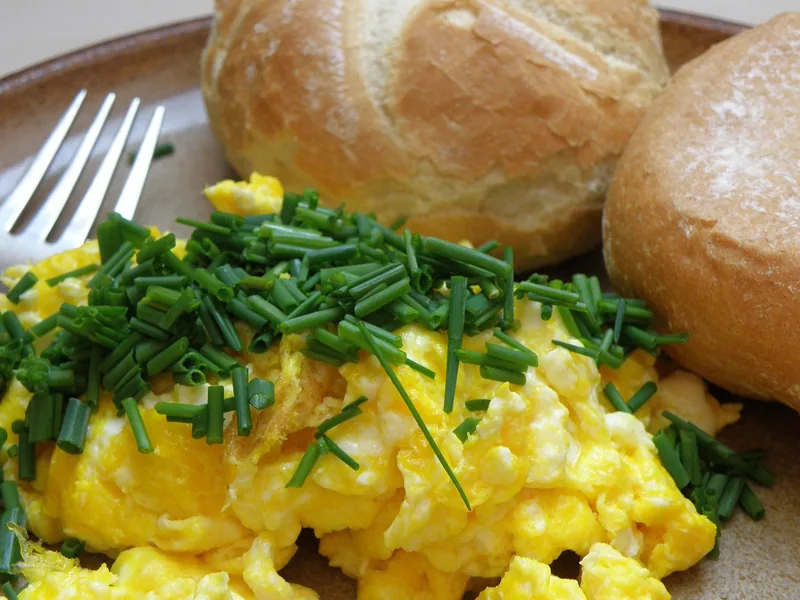
Scrambled eggs and sausage patties: the card
A full plate timed so everything arrives hot. The biscuits go in the oven first and the eggs are cooked last.
Biscuits, and the rest of the plate
For the biscuits
- 2 cups (250 g) all-purpose flour
- 1 tbsp baking powder
- ½ tsp baking soda
- 1 tsp fine salt
- ½ cup (115 g) butter, frozen
- ¾ cup (180 ml) cold buttermilk
For the plate
- 1 lb (450 g) sausage meat, formed into 8 patties
- 4 tomatoes, halved
- 8 eggs
- 3 tbsp heavy cream
- 1½ tbsp (20 g) butter
- Chives, salt and black pepper
The order everything is cooked in
- 1 Heat the oven to 425°F (220°C) convection. Whisk the dry biscuit ingredients, then grate in the frozen butter and toss it through with a knife — do not rub it in with your hands.
- 2 Add the buttermilk and stir just until it comes together. Pat out to 2 cm thick, cut rounds without twisting the cutter, and bake 14–15 minutes until risen and golden. Keep them warm in the switched-off oven.
- 3 Fry the sausage patties over medium heat, 4 minutes a side, until browned through. Move them to the oven with the biscuits.
- 4 Put the tomatoes cut side down in the sausage fat and cook 4 minutes until blistered. Add them to the oven.
- 5 Beat the eggs with the cream and a pinch of salt. Melt the butter in a clean non-stick pan over low heat, add the eggs, and stir constantly, pulling the setting edges inward.
- 6 After 4–5 minutes, when they are soft and still glossy, take them off. Stir in the chives and serve everything at once.
On cutting biscuits
- Twisting the biscuit cutter seals the cut edge and stops the biscuit rising. Press straight down and lift straight up.
- The biscuit dough can be cut and frozen raw; bake from frozen, adding 3 minutes.
- No buttermilk: ¾ cup (180 ml) milk with 2 teaspoons lemon juice, left 10 minutes. It is not quite as tender but it rises the same.
- Buy sausage meat rather than skinned sausages if you can. Sausages are seasoned for eating whole and are usually saltier than you want in a patty.
- Everything except the eggs can be done 20 minutes ahead and held in the switched-off oven. Do not try to hold scrambled eggs at all.
Timing a full breakfast plate
Biscuits, sausage, tomatoes, eggs — set by how long each one holds. Biscuits are happy in a warm oven for fifteen minutes, sausage for ten, tomatoes for five, and scrambled eggs for none at all. Work backwards from the eggs.
Usually the butter was too warm or the cutter was twisted. Butter has to stay in solid pieces until it hits the oven, where it melts and steams the layers apart; blended into the flour it just shortens the dough. Grate it from frozen and stop mixing as soon as the dough holds together.
Overcooked. Eggs are about three-quarters water and the proteins squeeze it out as they tighten, so the puddle appears after the curds have set too hard. Take them off while they still look underdone.
Better to cut them and freeze them raw, then bake from frozen with 3 extra minutes. Baked biscuits go stale fast — by the next morning they want reheating, and they are never quite what they were.
Everything doubles except the eggs, which should still be cooked in two pans rather than one. A crowded pan of eggs cooks unevenly at the edges no matter how low the heat is.
More breakfast recipes
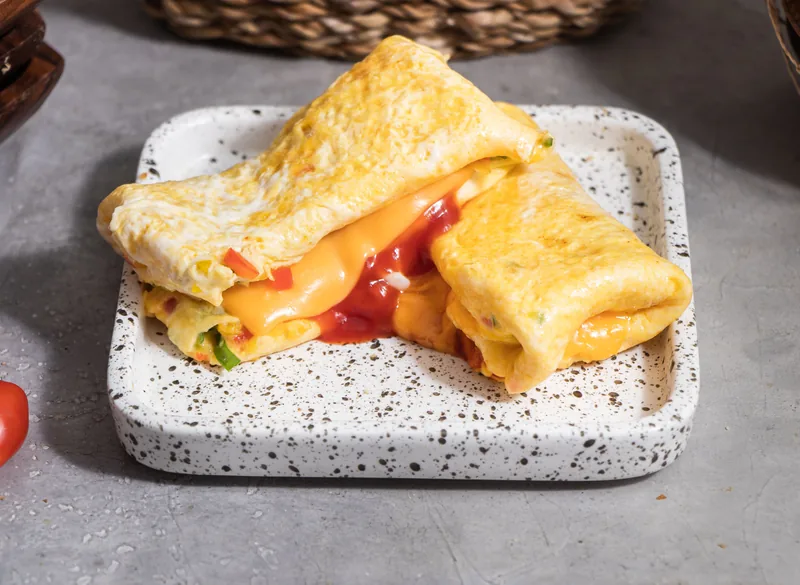
Breakfast Grilled Cheese with Scrambled Eggs
Soft-curd eggs folded into melted cheddar between buttered, mayonnaise-crusted bread.
- Total time
- 22 min
- Yield
- Makes 2 sandwiches
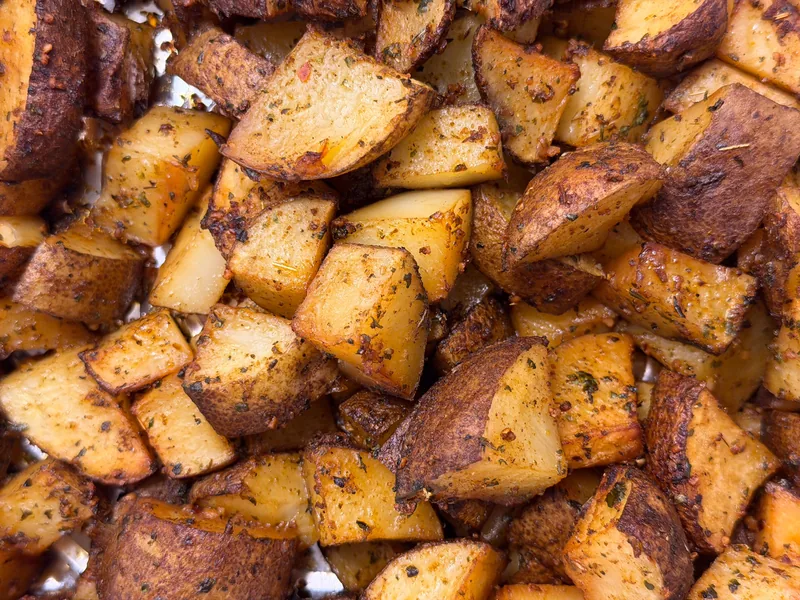
Crispy Air Fryer Breakfast Potatoes
Parboiled, roughed up, then air-fried hard. Craggy outside, fluffy inside, twenty minutes.
- Total time
- 32 min
- Yield
- Serves 4
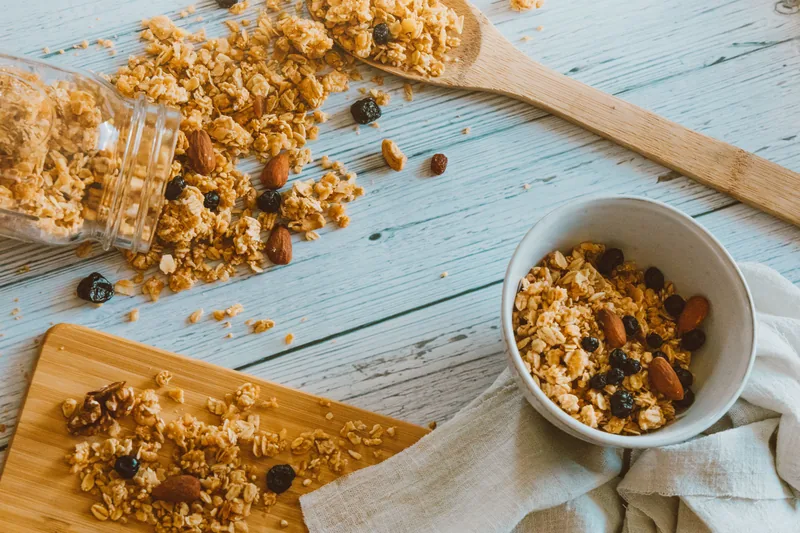
Blueberry Oatmeal Breakfast Bars
One oat mixture, used twice — pressed as a base and crumbled on top. Cut them cold or they fall apart.
- Total time
- 3 hr
- Yield
- Makes 12 bars