Roasted Cabbage Steaks with Yogurt Sauce
Thick wedges roasted until the edges char and the core turns sweet, under a cold garlic yogurt.
- Prep
- 10 min
- Cook
- 35 min
- Makes
- Serves 4
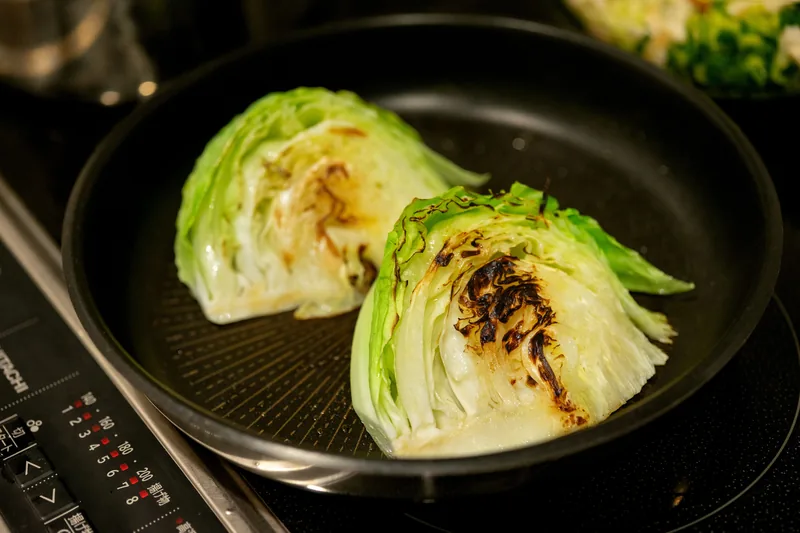
Boiled cabbage tastes of sulfur. Roasted cabbage tastes of caramel, and the reason is chemistry rather than opinion: boiling breaks down the glucosinolates into the sulfurous compounds people remember from school dinners, while dry heat above 400°F (200°C) drives the Maillard reaction and the sugars in the core instead.
Water is what decides which of those you get. The enzyme that liberates those sulfur compounds needs moisture and moderate warmth to work, and a wet pan gives it both — the wedges sit in their own liquid at boiling point, well under the temperature browning needs, and you have effectively boiled cabbage on a sheet pan. Dry heat runs past that enzyme's working range fast enough to destroy it before it does much.
So the single most useful thing you can do is give the wedges room. Space between them lets steam leave; wedges shoulder to shoulder trap it, and a cabbage is mostly water looking for an exit. Two pans beats one crowded pan, and if you can only fit one, cut a smaller cabbage.
Cut through the stem, not across it. The core is what holds a wedge together, and a wedge without it collapses into leaves the moment you move it.
Leave them alone for the first twenty minutes. Every time the oven door opens the temperature drops by about 45°F (25°C), and browning stops until it recovers. One turn, at twenty minutes, is enough. The same high-heat rule applies to roasted sweet potato bites.
The failure mode is easy to recognize: gray-green wedges, limp leaves, and a wet gloss on the pan instead of dark brown patches. That is not underroasted cabbage that needs another ten minutes — the water is already out and there is nothing left to brown. Ten more minutes only dries it further.
You are looking for three things at the end, and the timer is the least reliable of them. The outer leaves should be blackened and papery at the tips, almost burnt, and they will taste like it in a good way. The cut faces should be mahogany where they met the pan. And a knife slipped into the core should go in without the small crunch a raw stem gives — that stem is the last thing to cook and the reason wedges go in at 425°F (220°C) rather than something gentler.
The oil matters more than it looks. Cabbage leaves are dry and slightly waxy, and oil is what conducts heat into the surface and gets those edges past browning temperature. Brush both cut faces properly rather than drizzling from above, where most of it runs off onto the pan.
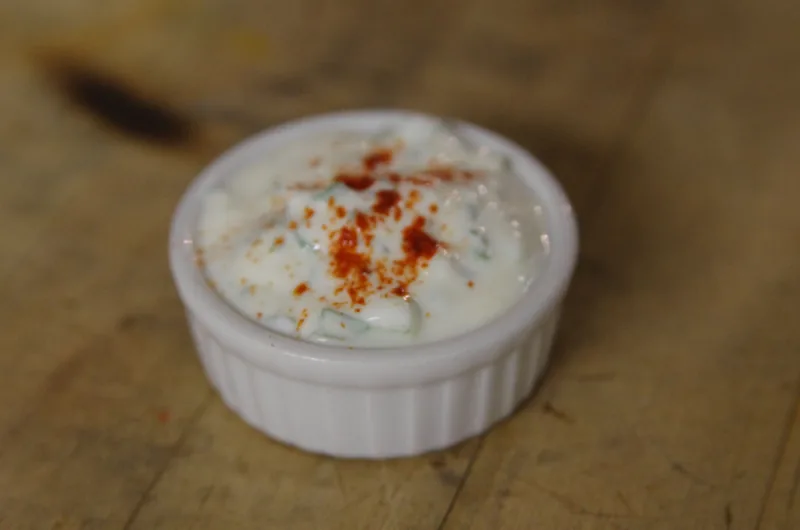
The sauce is cold and sharp on purpose. Roasted cabbage is sweet and a little smoky, and hot creamy sauce on top of that is cloying. Cold yogurt with raw garlic and lemon cuts straight through it, and crushing the garlic with salt rather than mincing it gives you a smoother, more even heat — the salt grinds the cells apart instead of slicing them. The opposite instinct — hot, rich and meant for scooping — belongs to a creamy mushroom dip, which is a different job on a different night.
Roasted cabbage with yogurt sauce, printed
Thick wedges roasted until the edges char and the core turns sweet, under a cold garlic yogurt.
Cabbage, and the yogurt sauce
For the cabbage
- 1 large white or savoy cabbage
- 4 tbsp olive oil
- 2 tsp fine salt
- 1 tsp black pepper
- 1 tsp caraway seeds, optional
For the yogurt sauce
- 1 cup (250 g) Greek yogurt
- 2 garlic cloves, crushed with salt
- Juice and zest of 1 lemon
- 2 tbsp olive oil
- 2 tbsp chopped dill
- Salt and pepper
Cutting wedges that hold together
- 1 Heat the oven to 425°F (220°C) convection. Cut the cabbage through the stem into 1¼-inch (3 cm) wedges, keeping a piece of core in each so it holds together.
- 2 Lay them on a sheet pan with space between them, brush both cut faces with oil, and season with salt, pepper and caraway.
- 3 Roast 20 minutes without opening the door. Turn each wedge and roast another 12–15 minutes, until the edges are properly charred and a knife slides into the core.
- 4 While they roast, stir the sauce together and keep it cold.
- 5 Serve the wedges hot with the cold sauce spooned over and more dill.
On charring
- Savoy gives frillier, crispier edges; white cabbage gives a sweeter core. Both work.
- Charred edges are the point, not a mistake. Pale roasted cabbage tastes of very little.
- Skip the parchment. A bare metal pan conducts heat straight into the cut face; paper insulates it and costs you the browned side.
- The sauce holds 4 days refrigerated and improves after a few hours, though the raw garlic gets noticeably stronger by day two. Make it thinner with a splash of water if it stiffens.
- To make it a main course, add a can of drained chickpeas to the pan for the last 15 minutes and finish with toasted pine nuts.
- Leftover wedges are better chopped and fried in a hot pan the next day than reheated whole in the oven, which dries them out.
Charring, spacing and the sauce
The knife went across the cabbage rather than through the stem, so most of the wedges got no core. Stand the cabbage on its cut base, halve it top to bottom straight through the root, and cut each half into wedges from the same direction. Every piece then has a triangle of stem holding it.
Yes — go to 450°F (230°C) and expect 5 to 10 minutes longer. Convection is genuinely better here because moving air carries the evaporating water away from the surface, and standing air lets it hang around the wedges and steam them. If your oven has no fan, use a lower rack position and be even more careful about spacing.
No, but it is doing something specific. Caraway is faintly anise-like and reads as warm against the sweetness roasting brings out, which is why central European cooking pairs the two constantly. Fennel seed or cumin play a similar role. Leave it out and the dish leans more toward the lemon in the sauce.
Only just ahead. Roasted cabbage is at its best within about fifteen minutes, because the charred edges soften as the residual steam inside the wedge migrates outward. If you must hold it, leave it on the hot pan in a 200°F (95°C) oven rather than covering it — a lid or foil traps exactly the steam you spent 35 minutes driving off.
It will taste right and run off the cabbage. Greek yogurt is strained, so it has roughly twice the protein and far less whey, and that is what lets it sit on a hot wedge instead of pooling on the plate. If you only have plain yogurt, strain a cup of it through a coffee filter for an hour, or stir in a spoonful of tahini to thicken it.
More roasted vegetables
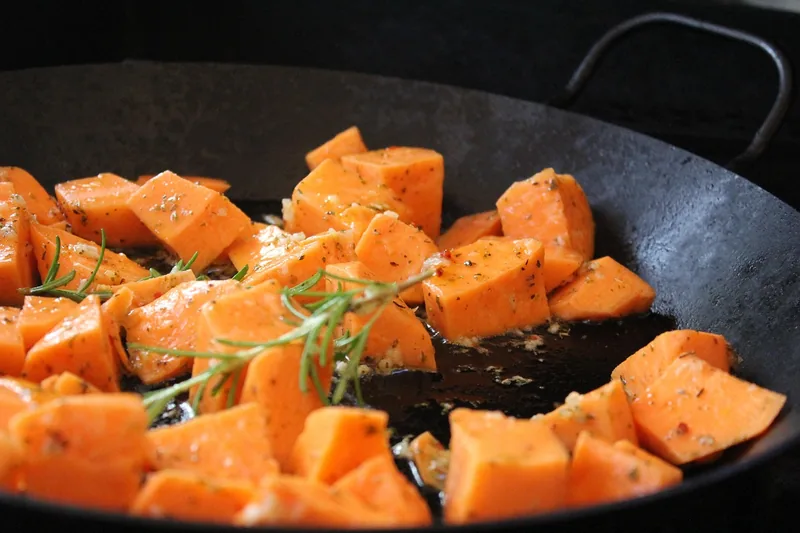
Roasted Sweet Potato Bites
Caramelized at the edges, soft inside. High heat, a hot tray, and enough space between the cubes.
- Total time
- 40 min
- Yield
- Serves 6
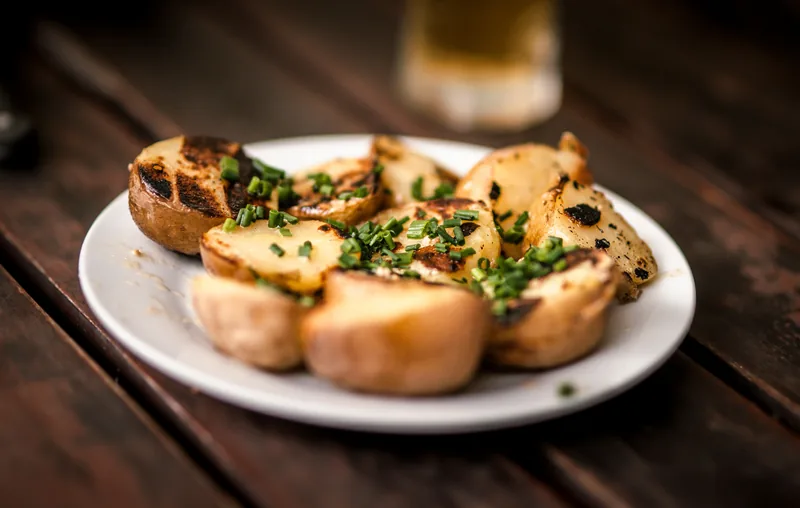
Grilled Potatoes with Garlic and Herbs
Parboiled first so the grill only has to char them. Twelve minutes over the coals, not forty.
- Total time
- 40 min
- Yield
- Serves 6
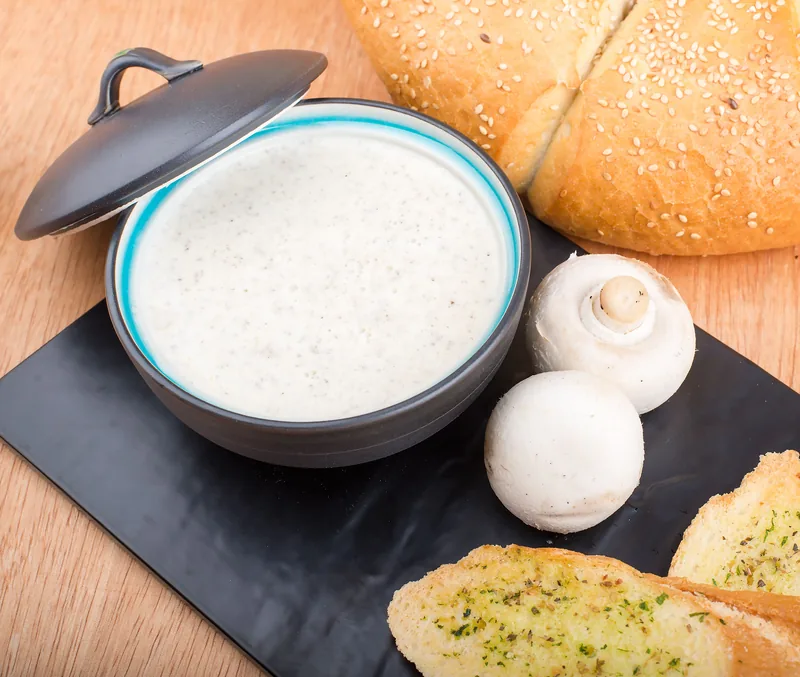
Creamy Stuffed Mushroom Dip
Everything that goes inside a stuffed mushroom — garlic, herbs, cream cheese, a buttered crumb top — baked as one scoopable dish.
- Total time
- 1 hr 10 min
- Yield
- Serves 10 as an appetizer