Baked Chicken Chimichangas
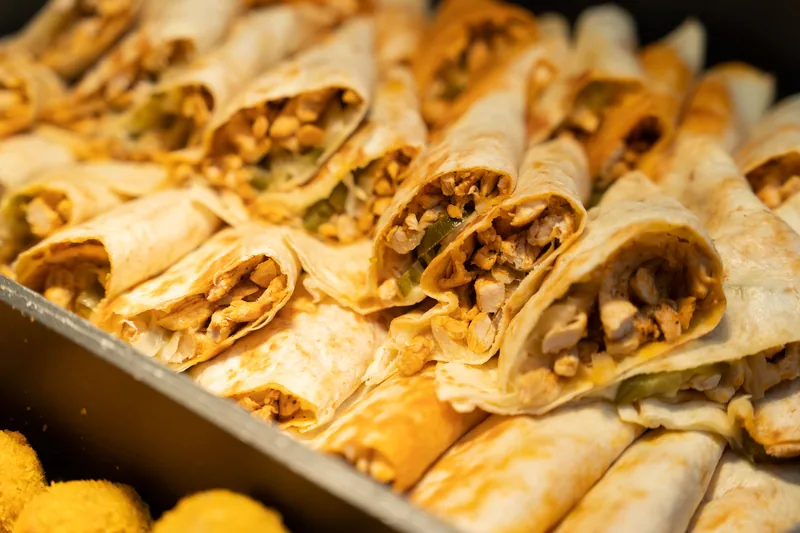
A dry, well-seasoned chicken filling rolled tight, brushed with butter and baked seam down on a preheated pan until the tortilla blisters.
- Prep
- 25 min
- Cook
- 25 min
- Makes
- Makes 6 chimichangas
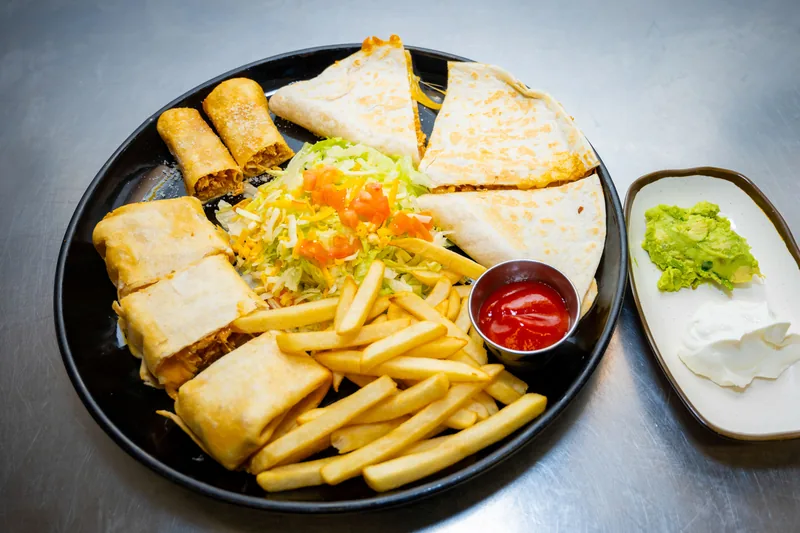
Say the obvious thing first: a baked chimichanga is not a fried one, and no amount of technique closes that gap entirely. Deep frying works because hot oil touches every square millimeter of the tortilla at once, boils the surface water out of it in under a minute, and leaves behind a shell full of tiny bubbles. An oven can only heat the air around the thing, and air moves heat about a twentieth as well as oil does. What you get from this recipe is a blistered, crackly, deeply golden tortilla that shatters at the corners. What you do not get is that uniform glassy crunch across the whole surface.
Knowing which problem you are solving tells you what to do about it. Crispness in the oven comes down to two variables: fat in contact with the tortilla, and how much water is trying to escape from underneath it.
Fat contact is the easy one. Brush melted butter or oil over every exposed surface, including the folded ends and the underside — anywhere left bare bakes into dry cardboard rather than crisping. Butter browns harder than oil because of the milk solids in it, so it colors faster and tastes better; a light spray of oil after the butter is not overkill.
Water is the harder one, and it is why most baked chimichangas come out limp. A filling with sauce in it steams from the inside all through the bake, and steam only has one direction to go — into the tortilla. So the filling gets cooked down until the pan is nearly dry before anything is rolled. It should mound on a spoon and stay there. If a puddle collects when you set the spoon down, keep cooking.
The pan matters more than it sounds like it should. Slide the chimichangas onto a sheet pan that has been heating in the oven and the bottoms start crisping on contact, instead of sitting in their own condensation for the first eight minutes. Seam side down does the same job twice over: the weight of the chimichanga holds the fold shut while the heat sets it, and the seam is the part most likely to go soggy.
Warm the tortillas before rolling. A cold flour tortilla cracks along the fold, and once the shell is split the filling leaks, the steam escapes into the pan, and you are eating a casserole. Fifteen seconds a side in a dry skillet, or the whole stack wrapped in a damp towel for thirty seconds in the microwave, makes them fold like cloth.
Listen for doneness rather than watching the clock. Tap a finished chimichanga with the back of a fork at twenty-two minutes: a dull thud means there is still moisture in the tortilla, and a dry papery tick means it is ready. The surface should be unevenly blistered, dark gold at the ridges and pale in the folds.
Serve them with something cold and sharp against all that richness — a crunch salad does it, and so does a tray of roasted sweet potato bites if you would rather keep the whole meal in the oven. On a night when nobody wants to roll anything, a harvest casserole puts the same oven to work with no folding involved.
Baked chimichangas, printed
A dry, well-seasoned chicken filling rolled tight, brushed with butter and baked seam down on a preheated pan until the tortilla blisters.
Filling, tortillas, and the fat that browns them
The filling
- 1 tbsp neutral oil
- 1 small yellow onion, diced
- 3 cups (420 g) cooked chicken, shredded
- 2 tsp chili powder
- 1 tsp ground cumin
- ½ tsp dried oregano
- ½ tsp fine salt
- 1 can (4 oz / 113 g) diced green chiles, drained
- ½ cup (120 ml) salsa or red enchilada sauce
- 2 oz (55 g) cream cheese
- ¾ cup (85 g) shredded Monterey Jack
To roll and bake
- 6 large flour tortillas, 10 inches (25 cm)
- 3 tbsp butter, melted
- Oil spray
To serve
- Sour cream, guacamole, pickled jalapeños, chopped cilantro and lime
Cook the filling dry, roll tight, hot pan
- 1 Heat the oven to 425°F (220°C) with a rimmed sheet pan on the middle rack. Warm the oil in a skillet over medium heat and cook the onion 4 minutes, until soft and translucent.
- 2 Add the chicken, chili powder, cumin, oregano and salt, and stir for a minute until the spices smell toasted. Pour in the chiles and the salsa and cook 5 to 7 minutes, until the pan is dry enough that a spoon drawn across the bottom leaves a track that does not fill in.
- 3 Take it off the heat, stir the cream cheese through until it vanishes, then fold in the Jack. Let the filling cool for 10 minutes — hot filling steams a tortilla soft before you can roll it.
- 4 Warm the tortillas until pliable: 15 seconds a side in a dry skillet, or the stack wrapped in a damp kitchen towel for 30 seconds in the microwave.
- 5 Spoon about ⅔ cup of filling in a line across the lower third of each tortilla. Fold the bottom edge up over it and pull it back toward you to tighten, fold both sides in, then roll the whole thing up snugly.
- 6 Brush every surface of each roll with melted butter, including the ends and the underside, then give the tops a short spray of oil.
- 7 Pull the hot pan out, set the chimichangas on it seam side down with an inch (2.5 cm) between them, and bake 14 minutes. Turn each one over and bake 8 to 11 minutes more, until deeply blistered and papery when tapped with a fork.
- 8 Let them sit 3 minutes before cutting — the filling comes out of the oven hotter than the shell and needs a moment to stop running.
Shortcuts, freezing and bringing them back
- A supermarket rotisserie chicken gives you the 3 cups (420 g) with about ten minutes of pulling. Poaching your own works too — simmer breasts gently until they read 165°F (74°C), then shred while warm; ground chicken does not shred and reads as a different dish.
- Flour tortillas only. Corn will crack no matter how you warm them, and the roll needs a wrapper that stretches.
- Assemble the rolls up to a day ahead, wrapped tight and refrigerated, but butter them only as they go in. Buttered tortillas left overnight go greasy and slack.
- To freeze, bake, cool completely and freeze on a tray before bagging. From frozen, 20 minutes at 400°F (200°C) brings them back; thawed ones go soft.
- Leftovers reheat properly in a 400°F (200°C) oven for 8 minutes. A microwave turns the shell to paste in under a minute.
- Feeding more people: the filling doubles cleanly, but bake in two rounds. A crowded pan traps steam between the rolls and the sides never brown.
What an oven can and cannot do to a tortilla
Close on color and close on the corners, not close on the overall crunch. Oil transfers heat to a surface far faster than air does, so frying dehydrates the whole tortilla at once while an oven works inward from the hot spots. Expect a crackly shell with some chewy patches. If that is not the trade you want, fry them.
Either the seam was not underneath, or the roll was loose. The weight of the chimichanga sitting on its own seam is the only thing holding it shut for the first few minutes, before the tortilla dries and sets in position. Pulling the fold back toward you to tighten it before folding in the sides is what removes the slack.
They were cold. Flour tortillas stiffen in the fridge and in the bag, and the fold snaps the layers rather than bending them. Thirty seconds of gentle heat and a little moisture makes the starch pliable again. Very fresh tortillas need no warming at all.
The pan went in cold. A room-temperature sheet pan spends the first several minutes coming up to heat while the chimichanga sits in the condensation collecting under it. Preheating the pan skips that entirely. A wire rack is the other answer, though it browns the bottom less.
Yes, and they come out slightly crisper because the air moves faster. Set it to 380°F (195°C) and cook 12 to 14 minutes, turning halfway. Only two will fit in a standard basket at a time, and the fold needs to face down for the same reason it does in the oven.
Cold and crunchy things for the table
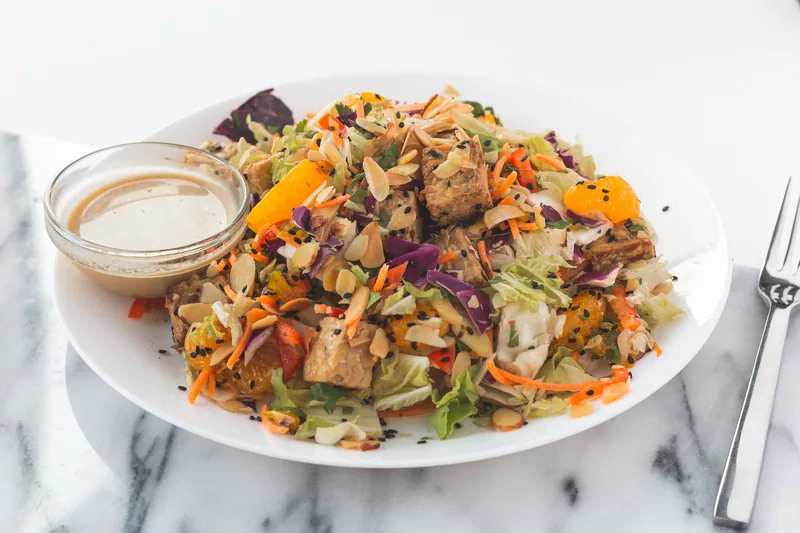
Crunch Salad
Six vegetables cut to the same size, feta, toasted seeds and a sharp balsamic vinaigrette. Assembled, not tossed in advance.
- Total time
- 20 min
- Yield
- Serves 6
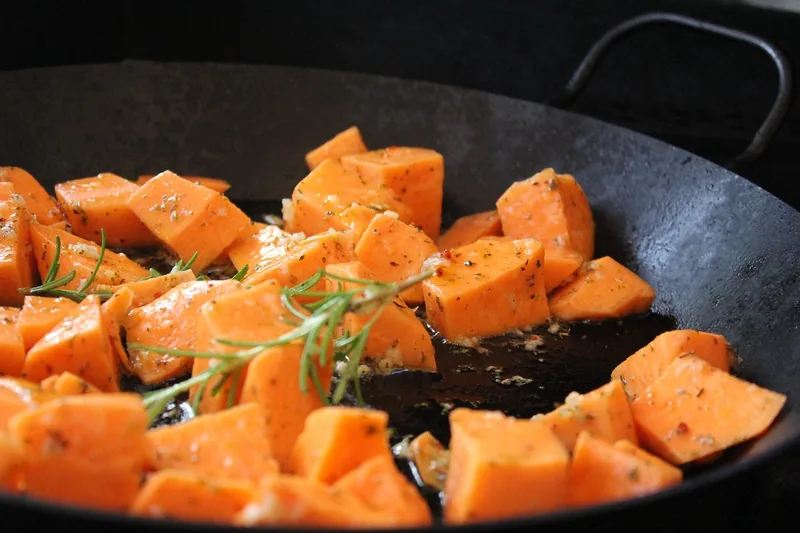
Roasted Sweet Potato Bites
Caramelized at the edges, soft inside. High heat, a hot tray, and enough space between the cubes.
- Total time
- 40 min
- Yield
- Serves 6
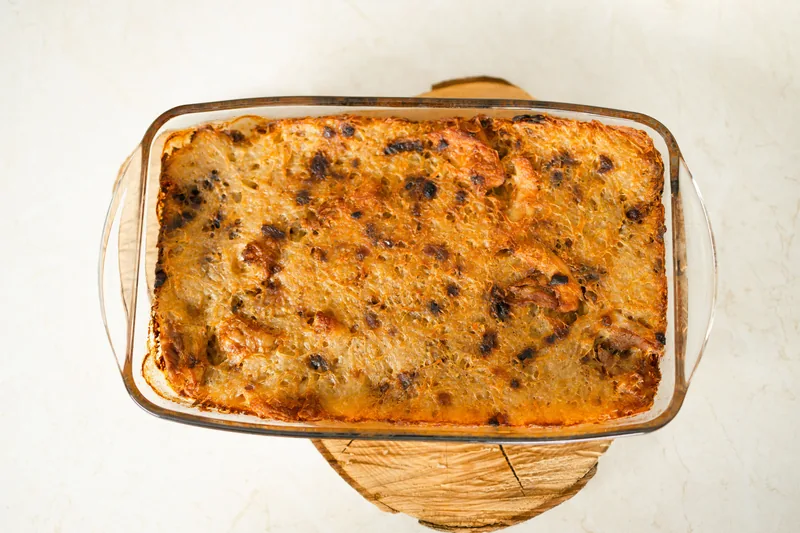
Amish Harvest Casserole
Sliced potatoes, seasoned ground beef and sweet corn under a sharp cheddar sauce, baked until a knife goes through the middle without resistance.
- Total time
- 1 hr 55 min
- Yield
- Serves 6