Crunch Salad
Six vegetables cut to the same size, feta, toasted seeds and a sharp balsamic vinaigrette. Assembled, not tossed in advance.
- Prep
- 20 min
- Makes
- Serves 6
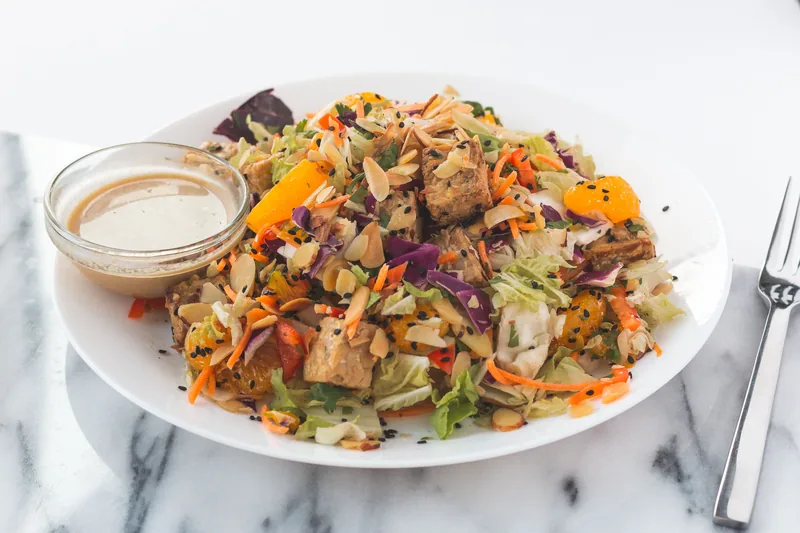
A salad called crunch has to earn the name, and it does that through knife work rather than ingredients. Cut everything to roughly the same size — about half an inch (1 cm) — and every forkful gets the same balance. Cut the cucumber into chunks and the peppers into slivers and you get a salad where each bite is a different, worse salad.
Crunch itself is water under pressure. Every cell in a fresh cucumber or a romaine rib is inflated against its own wall, and that turgor is what snaps when you bite. Anything that lets water out — salt, acid, time, a bruise from rough handling — deflates the cell, and a deflated cell bends instead of breaking. Every rule below is a way of keeping that water where it is until the last possible minute.
Which is why you dress at the table. Not five minutes before, not in the kitchen — the vinaigrette starts pulling water out of everything the moment it lands, and a salad that stood dressed for twenty minutes is limp and sitting in liquid.
The dressing is three parts oil to one part vinegar, which is sharper than the classic four to one. There is a reason: feta is salty and cucumber is watery, and both blunt acidity. A dressing that tastes correct on a spoon will taste flat on this salad.
Shaking it in a jar does something specific. Oil and vinegar do not mix; violent shaking tears the oil into droplets small enough to stay suspended for a while, and the mustard keeps them there — its mucilage coats each droplet and stops them merging back. Honey thickens the liquid and slows the same collapse. If your jar separates into two clear layers within a minute, you are short on mustard, not short on shaking.
The cucumber gets salted for ten minutes and patted dry before it goes in. Cucumber is 96% water and it will donate all of it to the bottom of your bowl otherwise. You are trading a little crispness for a lot of dryness, and you can see the exchange happen — a good tablespoon of liquid will collect under the sieve.
Toast the seeds until you can smell them, then get them out of the pan. The cue is nutty and slightly sweet, and it arrives maybe thirty seconds before the smell turns sharp and acrid, at which point they are bitter and no amount of dressing hides it. Cool them on a plate, not in the hot pan, which goes on cooking them.
Two small things that are easy to skip. Soak the diced red onion in cold water for ten minutes to wash out the sulfur compounds that give raw onion its burn — it stays crisp and loses the aftertaste. And buy feta as a block in brine rather than pre-crumbled; the crumbled kind is dried and dusted with starch to stop it clumping, and it goes powdery against a vinaigrette instead of creamy.
Alongside it, caprese skewers cover the same no-cook territory with three ingredients instead of eight. For the version built on pasta rather than leaves, see orzo pasta salad — it uses the same twice-dressed idea for a different reason. And for the other answer to the water problem — salting it out on purpose hours ahead rather than dressing late — cranberry slaw makes the case.
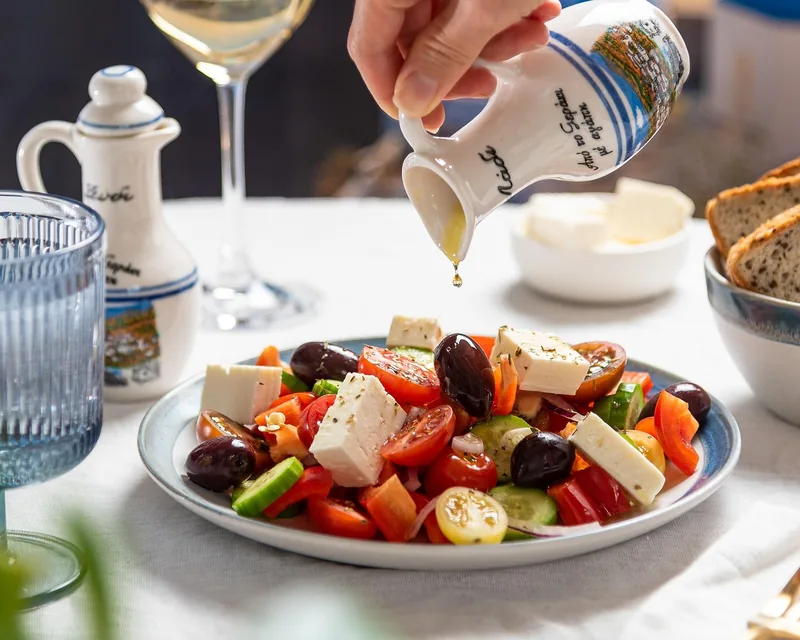
Mixed greens salad with feta: the card
Six vegetables cut to the same size, feta, toasted seeds and a sharp balsamic vinaigrette. Assembled, not tossed in advance.
Six vegetables and a balsamic vinaigrette
For the salad
- 1 cucumber, seeded and cut into ½-inch (1 cm) dice
- 2 romaine hearts, chopped
- 1½ cups (250 g) cherry tomatoes, halved
- 1 red bell pepper, diced
- ½ red onion, finely diced
- 7 oz (200 g) feta, broken into rough pieces
- ½ cup (60 g) toasted sunflower and pumpkin seeds
- Handful of dill and flat-leaf parsley
For the vinaigrette
- 6 tbsp (90 ml) olive oil
- 2 tbsp (30 ml) balsamic vinegar
- 1 tsp Dijon mustard
- 1 tsp honey
- 1 small garlic clove, crushed
- Black pepper
Cutting and assembling
- 1 Dice the cucumber, toss it with a good pinch of salt and leave it in a sieve for 10 minutes. Pat it dry.
- 2 Soak the diced red onion in cold water for 10 minutes, then drain it well.
- 3 Shake the vinaigrette ingredients together in a jar until thick and emulsified. It should not separate immediately — if it does, add another half teaspoon of mustard and shake again.
- 4 Toast the seeds in a dry pan over medium heat for 3 minutes, shaking often, until they smell nutty. Tip them onto a plate to cool; hot seeds wilt the leaves and a hot pan keeps toasting them.
- 5 Layer everything in a wide bowl: leaves first, then the cut vegetables, then feta, then seeds and herbs.
- 6 Take the jar to the table and dress it there. Toss once, gently, and serve.
On salt, timing and getting ahead
- No salt in the vinaigrette — the feta and the salted cucumber carry it.
- The undressed salad keeps a day covered in the fridge, seeds stored separately.
- The vinaigrette keeps a week in the fridge. Olive oil clouds and thickens when cold, so leave it out for 15 minutes and shake it again before it goes to the table.
- Limp romaine is recoverable: 10 minutes in a bowl of ice water and the leaves take water back up and stiffen. Dry them thoroughly afterward.
- To make it a meal, add shredded rotisserie chicken, a can of drained chickpeas, or leftover steak sliced thin. All three want a little more dressing.
- Swap the seeds for toasted walnuts or almonds; skip croutons, which go soft the moment the dressing lands.
Keeping a crunch salad crunchy
Cut everything up to a day ahead and keep the components in separate containers — vegetables in one, feta in another, seeds at room temperature, dressing in its jar. What you cannot do is combine them early. The salt and acid start drawing water the moment they touch.
That is oil and vinegar doing what they naturally do. Mustard is what holds the emulsion; add another half teaspoon and shake hard for a full fifteen seconds. A jar that stays cloudy for a couple of minutes is all you need here.
With a standard field cucumber, yes — it is seedy and wet and will flood the bowl. An English cucumber has fewer seeds and thinner skin, so seeding it and skipping the salt is defensible if you are serving straight away.
Red wine vinegar or sherry vinegar both work and are sharper, so drop back to a scant 2 tablespoons. Balsamic is sweeter and darker than it looks; the honey is there to complement it, and you can leave the honey out if you switch.
Wet leaves. Water clinging to romaine after washing runs straight to the base of the bowl and dilutes the dressing on top of it. Spin them dry, or roll them in a towel — a salad cannot be crisp and wet at the same time.
What to put beside it

Greek Chicken Gyros
Yoghurt-marinated thighs off a screaming hot pan, folded into warm pita with tzatziki, tomato and raw onion.
- Total time
- 3 hr 34 min
- Yield
- Makes 6 gyros
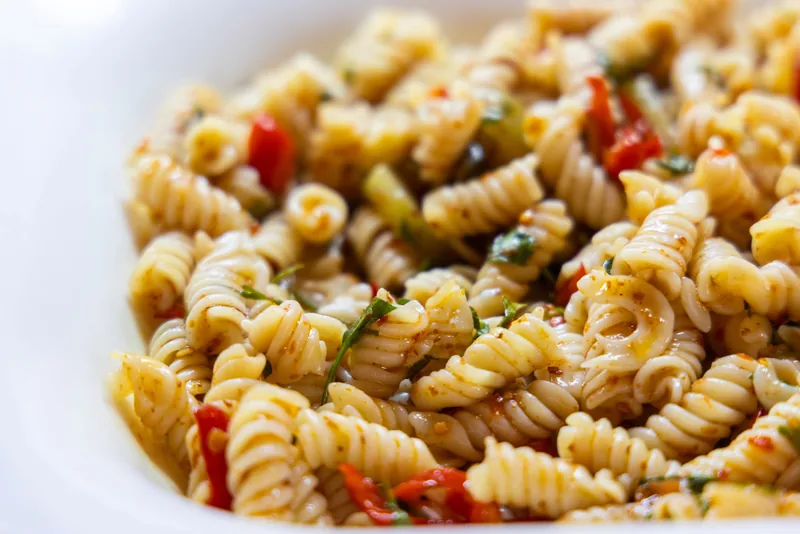
Orzo Pasta Salad
Dressed twice — once warm, once cold — so the seasoning goes through the pasta instead of sitting on it.
- Total time
- 30 min
- Yield
- Serves 8
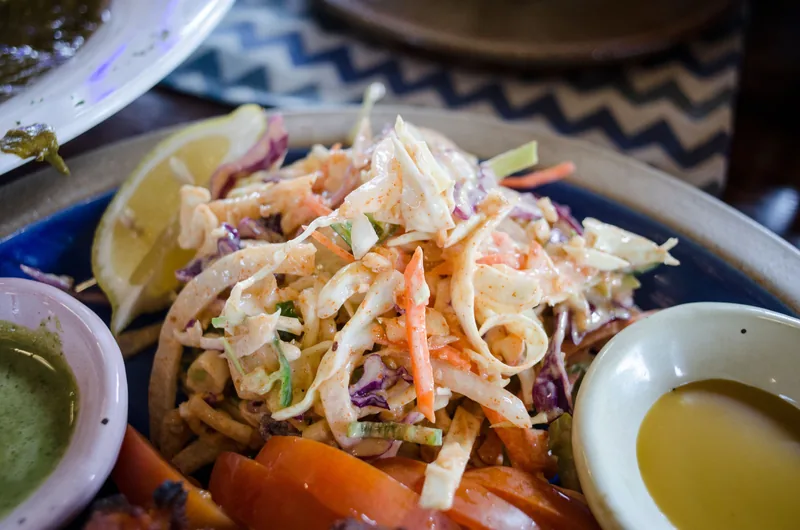
Cranberry Pecan Slaw
Salted, squeezed cabbage in a tangy maple dressing with dried cranberries and toasted pecans — crisp the next day, not soupy.
- Total time
- 50 min
- Yield
- Serves 6