Peach Lemonade
Ripe peaches blitzed into fresh lemonade, strained smooth. Nothing from a bottle, ready in ten minutes.
- Prep
- 10 min
- Cook
- 5 min
- Makes
- Makes about 6 cups (1.5 liters), serves 6
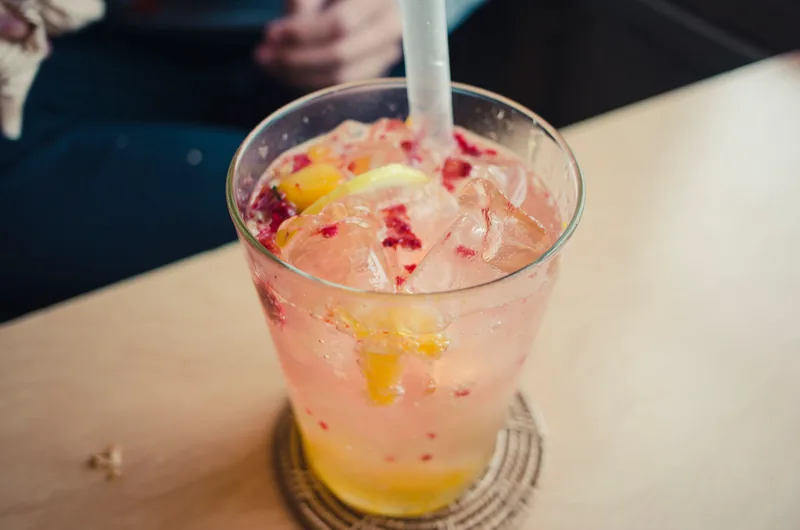
Two things make the difference between this and store-bought lemonade.
Make a syrup rather than stirring sugar into cold liquid. Sugar barely dissolves in cold water — it sinks, and you end up with a sweet last inch and a sour first one. Two minutes on the stovetop with equal water fixes it permanently. Heat roughly doubles how much sucrose a given volume of water will hold, and once dissolved it stays dissolved as the syrup cools, so what you pour into the pitcher is already liquid sugar rather than a suspension waiting to settle.
And use peaches that are actually ripe: fragrant at the stem, giving slightly under a thumb. An underripe peach has almost no aroma and a mealy texture, and blending does not improve either. Peaches are climacteric — they soften and sweeten after picking, but they stop making sugar the moment they leave the tree, so a hard peach ripened on your counter gets softer and more fragrant without ever getting sweeter. If yours are hard, leave them in a paper bag on the counter for two days. Frozen peaches are a better bet than fresh-but-unripe ones, and they chill the drink as they blend.
Blend them with the lemon juice, not with water, and do it in that order. Cut peach flesh browns within minutes because an enzyme in the fruit reacts with oxygen, and acid shuts that enzyme down. Lemon juice in the blender jar keeps the puree the color of the fruit instead of the color of a bruised apple. Leave the peaches sitting chopped on the board while you juice lemons and you have already lost it.
Strain it. Peach skins and fibers make the lemonade cloudy and slightly furry on the tongue, and thirty seconds through a sieve removes both. Press the solids hard — the pulp still holds a third of the flavor, and a rubber spatula gets most of it out.
The failure you are most likely to meet is not sourness or sweetness but flatness, and it shows up at the glass rather than in the pitcher. Lemonade tasted warm at the pitcher stage should read slightly too strong. Cold blunts sweetness and aroma, and a glass packed with ice dilutes by a fifth as it melts. Balance it warm to taste correct, and it will be watery and shy by the second sip.
Salt is the other easy gain. A pinch in the syrup does not make the drink salty; it suppresses bitterness from the lemon pith and makes the peach read as more peach. Two grinds' worth is enough for the whole pitcher.
Freeze what is left into cubes and you have the base for a frozen lemonade slush.
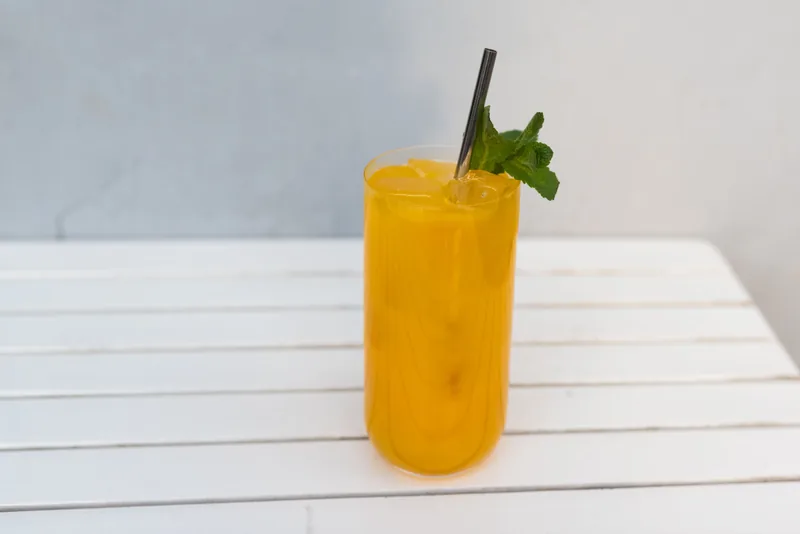
Peach lemonade drink, printed
Ripe peaches blitzed into fresh lemonade, strained smooth. Nothing from a bottle, ready in ten minutes.
Syrup, then the lemonade
For the syrup
- ¾ cup (150 g) superfine sugar
- ⅔ cup (150 ml) water
- Pinch of fine salt
For the lemonade
- 4 ripe peaches, stoned and roughly chopped
- 1 cup (240 ml) lemon juice, from about 6 lemons
- 3¾ cups (900 ml) cold water
- Ice, lemon slices and mint, to serve
Blending and straining
- 1 Heat the sugar, water and salt in a small pan, stirring, just until the sugar dissolves. Do not boil it down — this is a syrup, not a caramel. Cool it.
- 2 Blend the peaches with the lemon juice until completely smooth, about 45 seconds.
- 3 Pour the purée through a fine sieve into a pitcher, pressing the solids with the back of a ladle to get everything but the fiber.
- 4 Stir in the cooled syrup and the cold water. Taste and adjust — peaches vary enormously in sweetness, and this is the only moment it can be corrected.
- 5 Chill at least an hour. Serve over plenty of ice with lemon slices and mint.
Frozen peaches, and the syrup
- Frozen peaches work straight from the freezer and give a colder, thicker drink. Use 1 lb 2 oz (500 g).
- The syrup keeps a month refrigerated, so it is worth making double.
- Nectarines are a straight swap. Canned peaches work in a pinch — drain them, cut the sugar syrup by a third, and add a little extra lemon juice, because they are packed sweet and cooked soft.
- Made and strained, it keeps 3 days refrigerated. It separates as it stands, which is normal; stir before pouring rather than reaching for the blender again.
- Scaling for a crowd: keep the ratio of 1 part lemon juice to 4 parts water and taste the syrup in last. Doubling the sugar blindly is how a pitcher ends up cloying.
- For a sparkling version, drop the cold water to 2 cups (480 ml) and top each glass with chilled soda water at the moment you serve it.
Peaches, lemons and getting the balance right
No, because the sieve does it for you. The skin holds color and a little tannic edge that are both welcome, and everything unpleasant about its texture stays in the strainer. Peeling is only worth it if you are skipping the straining step, which you should not.
Not enough acid, too slowly. That browning is oxidation, and the fix is to get the lemon juice onto the cut fruit immediately rather than after the blender is loaded. A drink that has already gone tan is perfectly good to drink; it just photographs badly.
It will be sour but not lemony. Most of what you recognize as lemon lives in oils from the peel that come across when you squeeze a fresh fruit, and those are gone from a bottled, pasteurized juice. If bottled is what you have, add the zest of one lemon to the blender to put some of it back.
There is no fixed answer, which is why the recipe has you taste at the pitcher. Peaches at the height of the season can carry twice the sugar of early ones, and the lemons vary too. Start with three-quarters of the syrup, taste, and add the rest if it needs it — you can always sweeten a sharp lemonade, and you cannot unsweeten a sweet one without more lemons.
Make the syrup and the strained peach-lemon base up to two days ahead and keep them separate and cold. Combine with the water an hour before people arrive. What you should not do is add ice ahead of time — an hour of melting is a fifth of the drink gone, and it is the most common reason party lemonade tastes thin.
Another summer drink
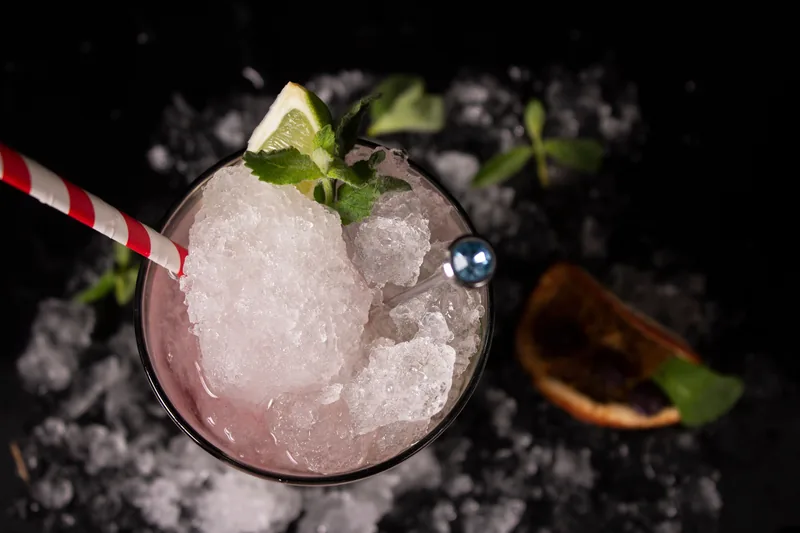
Frozen Lemonade Slush
Frozen lemonade cubes blitzed back into a slush. Five minutes, no ice, no dilution.
- Total time
- 4 hr 10 min
- Yield
- Serves 4
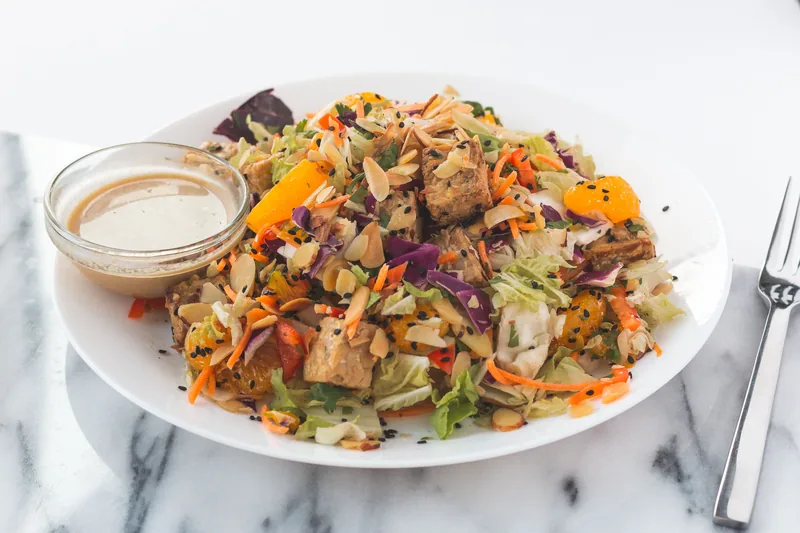
Crunch Salad
Six vegetables cut to the same size, feta, toasted seeds and a sharp balsamic vinaigrette. Assembled, not tossed in advance.
- Total time
- 20 min
- Yield
- Serves 6
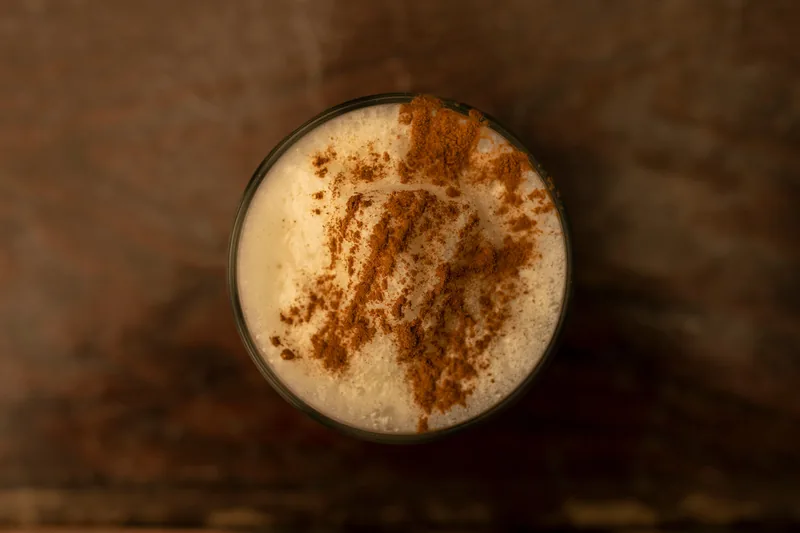
Homemade Eggnog
A cooked custard base, chilled overnight, thick enough to coat a spoon. Nothing like the carton.
- Total time
- 8 hr 30 min
- Yield
- Makes 5 cups (1.2 liters), serves 8