Homemade Eggnog
A cooked custard base, chilled overnight, thick enough to coat a spoon. Nothing like the carton.
- Prep
- 15 min
- Cook
- 15 min
- Rest
- 8 hr
- Makes
- Makes 5 cups (1.2 liters), serves 8
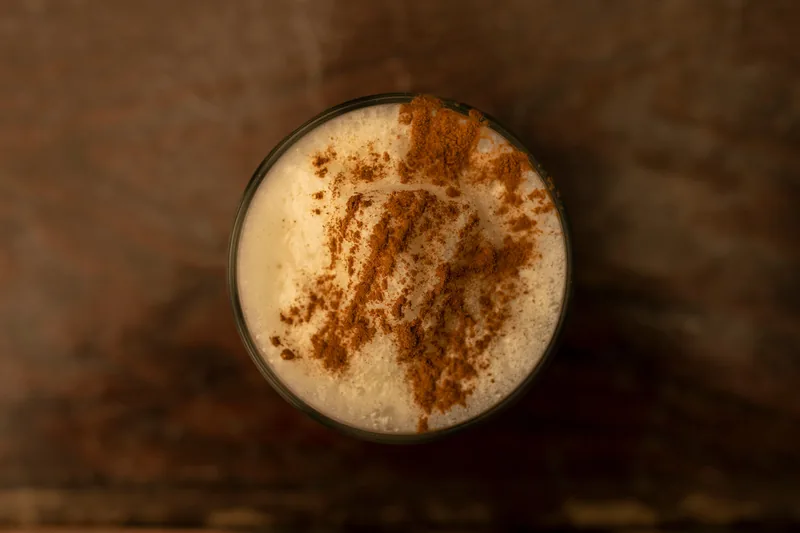
Raw-egg eggnog exists and is traditional, but a cooked custard base is safer, thicker and better, and the only cost is fifteen minutes at the stovetop.
Two useful things happen in those fifteen minutes, and they happen within a few degrees of each other. Egg yolk proteins unfold and link into a loose mesh that holds the milk around them — that mesh is what thickness in a custard actually is. And at 160°F (71°C), the temperature the USDA gives for egg-based custards, salmonella is destroyed. Cooking the yolks buys you both at once: a drink that coats a spoon, and a drink you can hand to anyone at the table without a caveat.
The number to aim for is 170°F (77°C). Below about 160°F (71°C) the proteins have not set and the custard stays thin; above 175°F (79°C) they seize into curds and you have sweet scrambled egg. The window is narrower than it sounds and a thermometer removes all the guesswork. Without one, the test is the back of a wooden spoon: dip it, draw a line through the coating with a finger, and if the line holds its edges instead of running together, it is done.
The failure has a look, and it gives you about ten seconds of warning. The surface turns from glossy to dull, then goes faintly grainy at the rim of the pan where the metal runs hottest. That graininess is the first curd. Lift the pan off the heat the instant you see it and keep the spoon moving — a heavy pan carries several more degrees of its own after the burner is off, which is exactly enough to finish a custard or ruin one.
Stir constantly and in a figure of eight, reaching the corners of the pan. The base and the edges are where it catches first, and once you have lumps you cannot stir them out.
Tempering does the other half of the work. Hot milk tipped into cold yolks all at once sets the outside of every yolk on contact. Poured in a thin stream with the whisk moving, it raises them gradually enough that nothing firms up before the whole thing is one liquid. It is the same custard as old-fashioned rice pudding, thinned and spiced.
Then chill it overnight. This is not just about serving it cold. The protein network keeps setting for hours, and the nutmeg and vanilla need that time to move through the liquid. Eggnog drunk warm from the pan is thin and tastes of hot milk.
The bourbon goes in off the heat. Spirits hitting a hot pan lose the aromatics you added them for, and alcohol also lowers the temperature at which milk proteins curdle — a slug of rum into a custard still on the burner can break it outright.
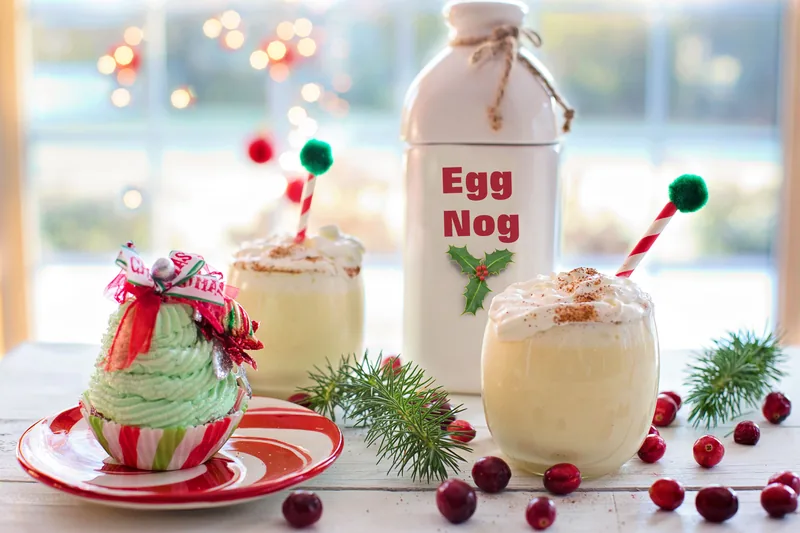
Classic eggnog: the recipe card
A cooked custard base, chilled overnight, thick enough to coat a spoon. Nothing like the carton.
What goes into the custard
- 6 egg yolks
- ¾ cup (150 g) superfine sugar
- 2 cups (480 ml) whole milk
- 1½ cups (360 ml) heavy cream
- 1 tsp freshly grated nutmeg, plus more to serve
- 1 tsp vanilla extract
- Pinch of fine salt
- ½ cup (120 ml) bourbon or dark rum, optional
Cooking the custard to 170°F (77°C)
- 1 Whisk the yolks and sugar together until pale and thick, about 2 minutes. This dissolves the sugar and protects the yolks from setting too fast.
- 2 Heat the milk, 1 cup (240 ml) of the cream, the nutmeg and salt in a heavy pan until steaming but not simmering.
- 3 Pour the hot milk into the yolks in a thin stream, whisking constantly. Adding it slowly is what stops the yolks scrambling.
- 4 Return everything to the pan over low heat and stir constantly, reaching into the corners, for 8–10 minutes until it thickens and reaches 170°F (77°C) — past the 160°F (71°C) the USDA gives for egg custards, and thick enough to coat the back of a spoon.
- 5 Strain through a fine sieve into a pitcher — this catches anything that did set — and stir in the vanilla, the remaining cream and the bourbon if using.
- 6 Cool, then refrigerate at least 8 hours and ideally overnight. Serve cold with nutmeg grated over.
Nutmeg, keeping, thinning
- Grate the nutmeg fresh. Pre-ground nutmeg loses its aromatics within weeks and this drink is built around it.
- With alcohol it keeps a week; without, three days. Either way, keep it below 40°F (4°C) and stir before pouring — it separates a little on standing.
- It thickens considerably overnight. Loosen with a splash of milk if you prefer it pourable.
- The batch halves and doubles cleanly, but a doubled quantity in a wide pan reaches 170°F (77°C) faster than you expect. Check early.
- Six leftover whites freeze for three months in a covered container and thaw to whip normally — meringue, an angel food cake, or an egg white omelet.
- Make it up to three days ahead if you are serving a crowd; the flavor is better on day two than day one.
Custard temperature, safety and texture
It went above 175°F (79°C). Straining rescues a mildly overcooked batch completely — pour it through a fine sieve and carry on. A badly curdled one will not come back, because the proteins have squeezed the liquid out rather than holding it.
The spoon test tracks the same thing a thermometer does — a custard coats a spoon at roughly the point the yolks have set, which is the point the heat has done its work. But guessing at 160°F (71°C) is a bad place to guess, and a $12 instant-read is the cheapest confidence in the kitchen. If you have no thermometer and are serving anyone pregnant, elderly, very young or immunocompromised, buy one.
No. Alcohol at this dilution is roughly 5 percent of the finished drink, which is far too weak to sterilize anything quickly — the aging experiments people cite ran for weeks at high proof. Cook the custard. The bourbon is for flavor.
It never got hot enough. A custard that only reached 150°F (66°C) tastes fine and stays the consistency of milk, because the protein mesh never formed. You can return it to the pan and take it up to 170°F (77°C) — reheat gently and stir the whole time, and strain it again afterward.
You can, and it will be thinner and taste faintly of cooked egg white. Whites set firm and rubbery around 180°F (82°C) and contribute no fat, so they add opacity and a slightly sulfurous note without adding richness. Two whole eggs plus four yolks is a reasonable compromise if you would rather not have whites left over.
More custard
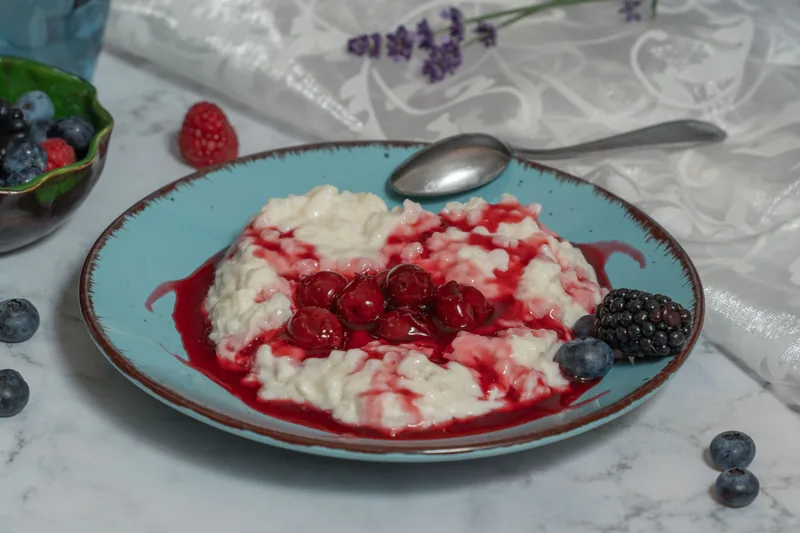
Old-Fashioned Rice Pudding
Stovetop, stirred, and finished with egg yolks off the heat. Loose when it comes off, set by the time it reaches the table.
- Total time
- 50 min
- Yield
- Serves 6
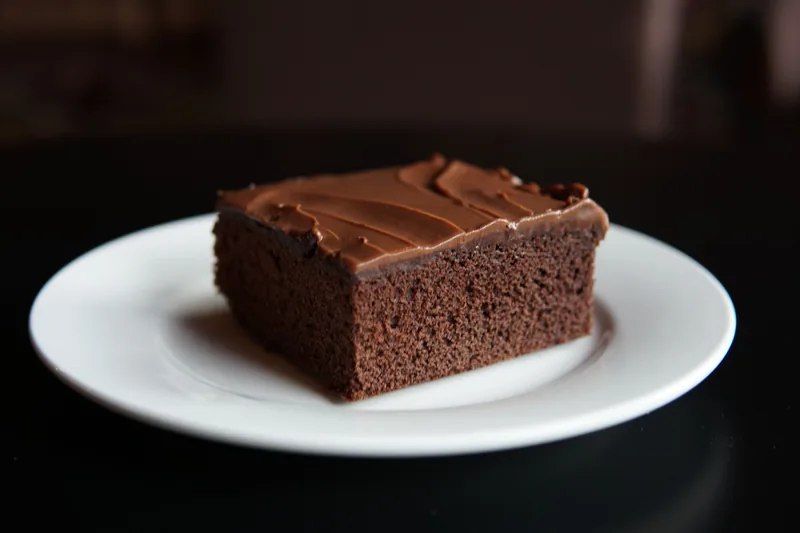
Chocolate Mayonnaise Cake
A Depression-era cake that stays damp for four days. The mayonnaise is the eggs and the oil, and you will never taste it.
- Total time
- 50 min
- Yield
- One 9-inch cake, 12 slices

Cinnamon Roll Protein Shake
Thirty grams of protein that tastes like the middle of a cinnamon bun. Frozen banana does the work, not ice.
- Total time
- 5 min
- Yield
- Makes 1 large shake