Frozen Lemonade Slush
Frozen lemonade cubes blitzed back into a slush. Five minutes, no ice, no dilution.
- Prep
- 10 min
- Rest
- 4 hr
- Makes
- Serves 4
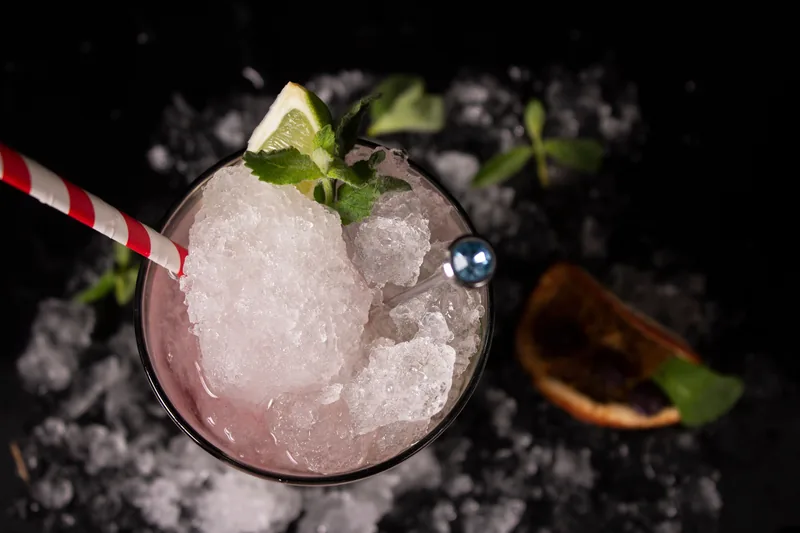
The obvious method — blend lemonade with ice — is the wrong one. Ice is frozen water, and as it breaks down it dilutes everything. The drink starts sharp and ends up as pale lemon water in the bottom third of the glass.
Freeze the lemonade itself into cubes instead. Nothing gets diluted because there is nothing in the blender but the drink. The color stays strong to the last spoonful.
Made with peach lemonade instead of plain, it is better still.
Sugar keeps the cubes workable. A sugar solution freezes softer than plain water because dissolved sugar interferes with ice crystal formation, so the cubes crush rather than rattling around whole. Make the lemonade slightly sweeter than you would drink it — cold suppresses sweetness, and a slush that tasted right at room temperature tastes flat frozen.
There is a working range, and both ends of it fail visibly. This mix is roughly one part sugar to four parts liquid. Go much leaner and the cubes come out as hard as ice, bounce off the blades and stall the motor. Go much sweeter and nothing ever sets properly — you open the freezer to trays of cold syrup with a skin of crystals on top. The test takes a second: a correct cube dents under a thumbnail straight out of the freezer and snaps with a dull crunch rather than a sharp crack.
Small cubes, not big ones. A standard tray cube of about 1 inch (2.5 cm) gets caught and cut; a large novelty cube rides on top of the blades, spins the whole mass around with it and melts from the outside in while the middle stays solid.
For a blended drink with protein rather than sugar, see cinnamon roll protein shake.
The zest matters more than it looks. Nearly all of the smell of a lemon lives in the oil in the peel; the juice is mostly acid, sugar and water. Stirring zest through the syrup while it is still warm pulls that oil into the liquid, and it is the difference between a drink that tastes sour and one that tastes of lemons.
Blend in short pulses with a tamper. A long continuous blend generates enough friction heat to melt the whole thing back to liquid, which is a genuinely annoying way to lose four hours of freezing.
Stop at the moment it moves as one mass and climbs the sides of the jar together. Spooned into a glass it should hold a ridge for a couple of seconds before settling. Another ten seconds of blending past that point and you have lemonade again, cold and thin.
Chill the glasses. A room-temperature glass melts the outer layer of slush on contact and you get a wet collar around a frozen center. Five minutes in the freezer while the cubes blend is enough.
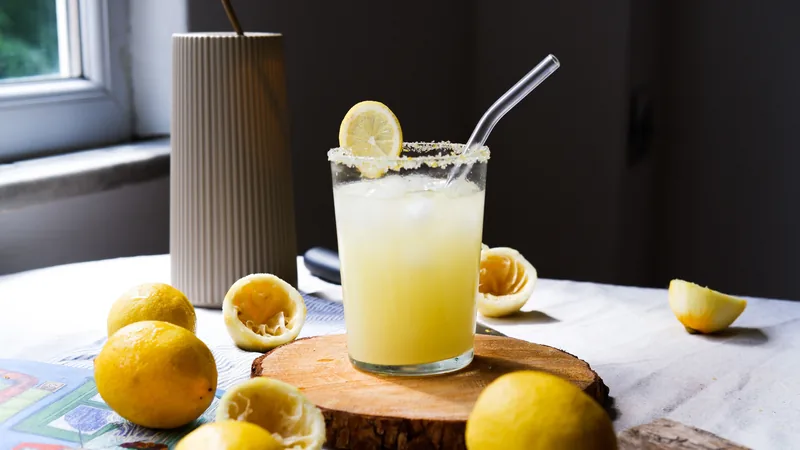
Lemonade slush: the recipe card
Frozen lemonade cubes blitzed back into a slush. Five minutes, no ice, no dilution.
Four things
- 1 cup (240 ml) fresh lemon juice, from about 6 lemons
- 1 cup (200 g) superfine sugar
- 3 cups (720 ml) water
- Zest of 1 lemon
- Lemon slices and mint, to serve
Freeze first, blend second
- 1 Warm 1 cup (240 ml) of the water with the sugar, stirring just until dissolved. Stir in the zest and let it cool.
- 2 Mix the syrup with the lemon juice and the remaining water. It should taste slightly too sweet — freezing dulls it.
- 3 Pour into ice cube trays and freeze at least 4 hours, or overnight.
- 4 Blend the cubes in short pulses, scraping down and using a tamper, until you have a thick slush. Stop as soon as it comes together.
- 5 Serve immediately in chilled glasses with lemon and mint.
If it will not blend
- If it will not blend, add a tablespoon of cold lemonade, not water. Water is what you froze the cubes to avoid.
- The cubes keep a month in the freezer, so it is worth doubling.
- Bag the frozen cubes once they are solid and reuse the trays. Left in the tray they pick up freezer smells within a week or two.
- A pinch of fine salt in the syrup sharpens the lemon without reading as salty. It is the same trick that makes cut melon taste more like melon.
- For an adult version, add 2 oz (60 ml) of vodka to the blender. Alcohol lowers the freezing point, so the slush will be looser — freeze the cubes an hour longer to compensate.
- Leftover blended slush refreezes into a solid brick. Pour it back into trays instead, or spread it in a metal pan and rake it with a fork every half hour for a granita.
Hard cubes, stalled blenders, thin slush
Yes, as long as it is sweetened with real sugar — that sugar is what keeps the cubes crushable. Diet and sugar-free lemonades contain almost no dissolved solids, so they freeze nearly as hard as plain water and behave exactly like the ice you were trying to avoid.
Either the cubes are too big for the blades to catch or the mix was too lean in sugar. Break the cubes up in a bag with a rolling pin, start the blender on its lowest speed, and keep the tamper pushing the top layer down into the blades.
Air whipped in during a long, fast blend, usually in a warm jar. Rinse the jar in cold water first and use pulses. Foam also means the mix is already partly melted, so it will separate in the glass within a minute.
A food processor handles it better than a weak blender, because the blade sits low and the wide bowl keeps the cubes in contact with it. Failing both, freeze the lemonade in a shallow metal pan and scrape it with a fork every 30 minutes — you get a coarser, crystalline version of the same drink.
Only by about 20 minutes, held in the freezer in a metal bowl. Beyond that it sets into a block. Freeze plenty of cubes instead and blend each batch as glasses empty; that part takes a minute.
More summer drinks
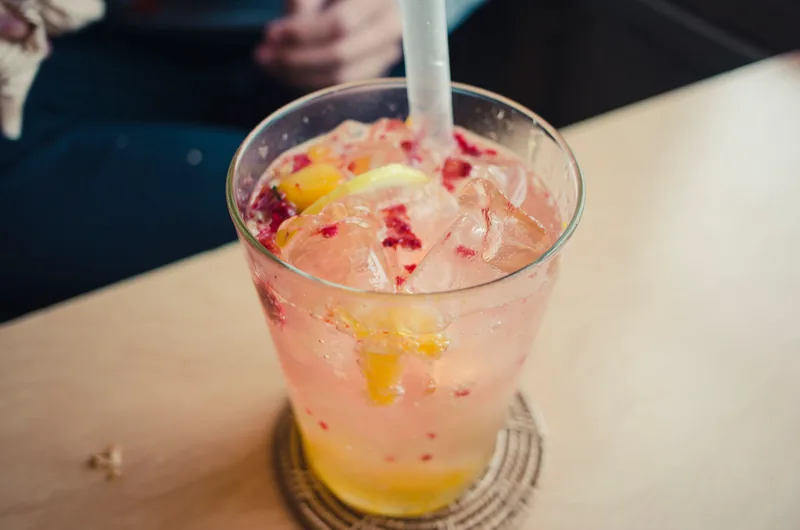
Peach Lemonade
Ripe peaches blitzed into fresh lemonade, strained smooth. Nothing from a bottle, ready in ten minutes.
- Total time
- 15 min
- Yield
- Makes about 6 cups (1.5 liters), serves 6
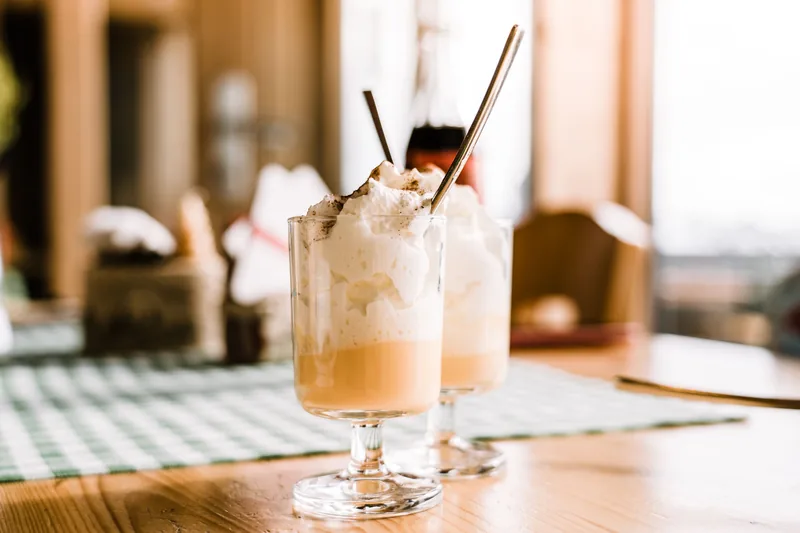
Cinnamon Roll Protein Shake
Thirty grams of protein that tastes like the middle of a cinnamon bun. Frozen banana does the work, not ice.
- Total time
- 5 min
- Yield
- Makes 1 large shake
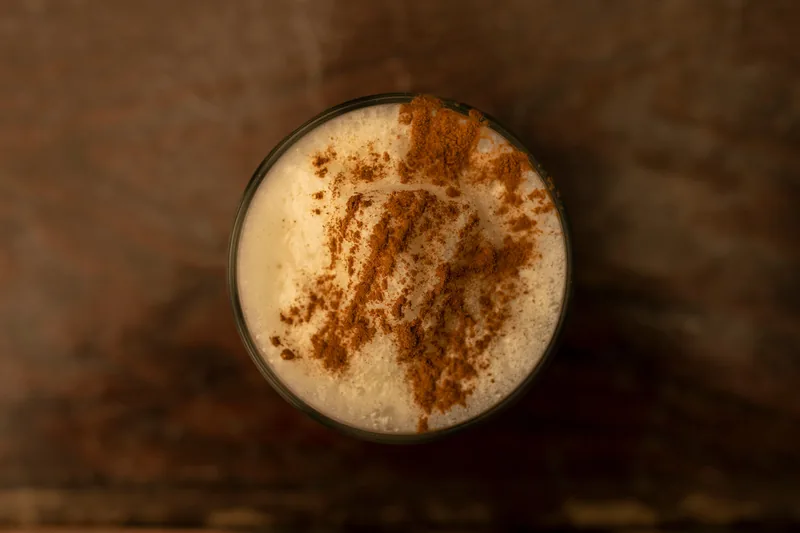
Homemade Eggnog
A cooked custard base, chilled overnight, thick enough to coat a spoon. Nothing like the carton.
- Total time
- 8 hr 30 min
- Yield
- Makes 5 cups (1.2 liters), serves 8