Old-Fashioned Apple Crisp
Tart and sweet apples baked soft under a crunchy oat, brown sugar and cold-butter topping, with juices thick enough to hold on a spoon.
- Prep
- 25 min
- Cook
- 55 min
- Rest
- 30 min
- Makes
- Serves 8
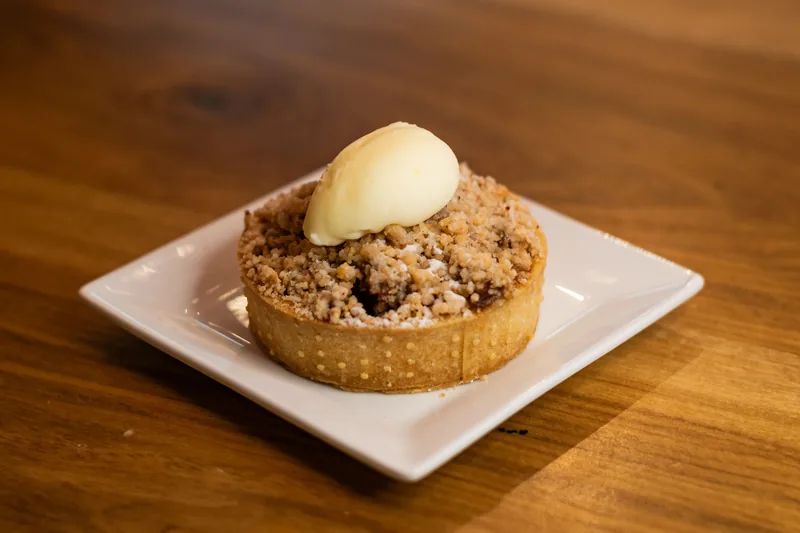
Apple crisp has two halves that want opposite things. The apples want wet heat for long enough to go tender and give up their juice. The topping wants dry heat so the butter can fry the oats and flour into something that crunches. Both happen in the same pan at the same time, with the topping sitting directly on top of all that steam. Nearly every disappointing crisp is one of those halves winning at the other's expense.
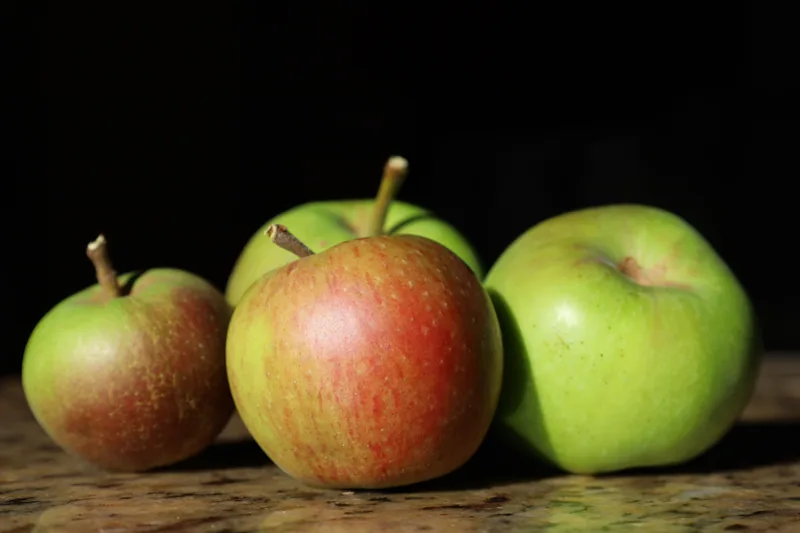
Start with the apples, because they decide more than the topping does. A crisp made only with a soft eating apple such as McIntosh turns to applesauce under the crust. One made only with Granny Smith holds its shape but can taste thin and sharp. A mix is the answer: half Granny Smith for structure and acidity, half Honeycrisp, Braeburn or Pink Lady for sweetness and a slice that softens without collapsing. Cut them a quarter inch thick. Thinner slices dissolve; thicker ones are still firm when the topping is done.
The juice is the part people get wrong without noticing. Four pounds of apples release a surprising amount of liquid in the oven, and without a thickener it pools in the bottom of the dish and soaks the topping from below. Cornstarch fixes that, but only if it boils. Cornstarch starts to thicken well below a boil but only reaches full strength, and turns clear, near 203°F (95°C), so a crisp pulled when the top looks brown but the edges are only simmering will serve up cloudy, runny juice. The cue is the edges: thick, glossy bubbles breaking slowly around the rim of the dish. That, not the color of the topping, is when it is done.
The topping stays crisp for one reason: the butter goes in cold. Rubbed into the flour, oats and brown sugar while it is still firm, it forms small lumps that melt in the oven and fry the crumbs around them. Melted butter makes a paste instead, which bakes into a flat, chewy sheet. Keep the clumps about the size of peas, and do not press the topping down once it is on the fruit. Loose crumbs brown and crunch; packed ones steam.
Old-fashioned rolled oats matter too. Quick oats are cut thin and soften into the fruit, while whole rolled oats hold a bit of chew under the crunch. In American usage the oats are what usually separate a crisp from a crumble, whose topping tends to be flour, butter and sugar alone — though the two names overlap more than any rule admits.
Let it rest at least thirty minutes. Straight from the oven, the thickened juice is still loose, and the first scoop floods the plate. As it cools toward warm, the starch sets and the filling holds its own shape next to a scoop of vanilla ice cream.
If the oats are the part you love, oatmeal chocolate chip cookies build on the same chew. For another warm fall dessert, try custard-style rice pudding, and the rest of the apple harvest goes well into autumn apple pasta salad.
The apple crisp, printed
Tart and sweet apples baked soft under a crunchy oat, brown sugar and cold-butter topping, with juices thick enough to hold on a spoon.
The apples, and the oat topping
For the apples
- 4 lb (1.8 kg) apples, about 9 medium, half Granny Smith and half Honeycrisp or Braeburn
- ⅓ cup (65 g) granulated sugar
- 2½ tbsp (20 g) cornstarch
- 1 tbsp (15 ml) lemon juice
- 1 tsp ground cinnamon
- ¼ tsp ground nutmeg
- Pinch of fine salt
For the oat topping
- 1 cup (125 g) all-purpose flour
- 1 cup (90 g) old-fashioned rolled oats
- 1 cup (200 g) packed light brown sugar
- 1 tsp ground cinnamon
- ½ tsp fine salt
- ¾ cup (170 g) cold unsalted butter, cut into ½ in (1 cm) cubes
Baking until the edges bubble thick
- 1 Heat the oven to 375°F (190°C) with a rack in the center. Butter a 9×13 in (23×33 cm) baking dish, or any 3-quart dish.
- 2 Peel and core the apples and cut them into slices ¼ in (6 mm) thick. Toss them in a large bowl with the sugar, cornstarch, lemon juice, cinnamon, nutmeg and salt until no dry cornstarch is visible. Spread them in the dish in an even layer.
- 3 For the topping, whisk the flour, oats, brown sugar, cinnamon and salt in another bowl. Add the cold butter and rub it in with your fingertips, or cut it in with a pastry blender, until the mixture holds together in clumps with pea-sized pieces of butter still visible.
- 4 Scatter the topping evenly over the apples, breaking up any large clumps. Do not press it down.
- 5 Set the dish on a rimmed baking sheet to catch drips and bake 50–60 minutes. It is done when the topping is deep golden and the juices bubble thickly and slowly at the edges; a knife should slide into the apples with no resistance. If the top browns before the edges bubble, lay a sheet of foil loosely over it and keep baking.
- 6 Let it cool at least 30 minutes so the juices set. Serve warm with vanilla ice cream or softly whipped cream.
Other apples, making ahead and re-crisping
- Apples: any firm, tart-sweet baking apple works in place of Honeycrisp — Pink Lady, Jonagold or Golden Delicious. Avoid McIntosh and Red Delicious, which turn to mush.
- Make ahead: mix the topping up to 3 days ahead and keep it in the refrigerator, or freeze it for up to 3 months and scatter it on frozen, allowing 5 extra minutes in the oven. Slice the apples just before baking so they do not brown.
- Storage: covered at room temperature for 1 day, then refrigerated up to 4 days. Reheat at 350°F (180°C) for 15 minutes to re-crisp the top; a microwave warms it but softens the topping.
- Freezing: bake, cool completely, wrap and freeze up to 3 months. Thaw overnight in the refrigerator and reheat in the oven.
- Gluten free: swap the flour for a 1:1 gluten-free blend and use oats labeled gluten free.
- Smaller batch: halve everything in an 8 in (20 cm) square dish and bake 40–50 minutes.
Runny fillings and soggy tops
It came out before the cornstarch boiled. The juices only thicken once they bubble thickly at the edges, and even then they need about 30 minutes of cooling to set. Cutting into it hot makes a thickened crisp look runny too.
Usually melted butter, a topping pressed flat, or apples sliced so thin they collapsed into a puddle underneath. Cold butter in visible lumps and a loosely scattered topping stay crisp.
No. The peel softens in the oven and adds a little color, but it can come loose in chewy strips. Peeled apples give a smoother filling, which is the old-fashioned version.
In American recipes a crisp has oats in the topping and a crumble does not; a crumble topping is usually flour, butter and sugar alone, so it bakes into a finer, more biscuit-like layer.
Yes. Replace the oats with another ½ cup (65 g) of flour and ½ cup (55 g) of chopped pecans or walnuts, which keep some of the crunch the oats would have given.
More desserts for fall
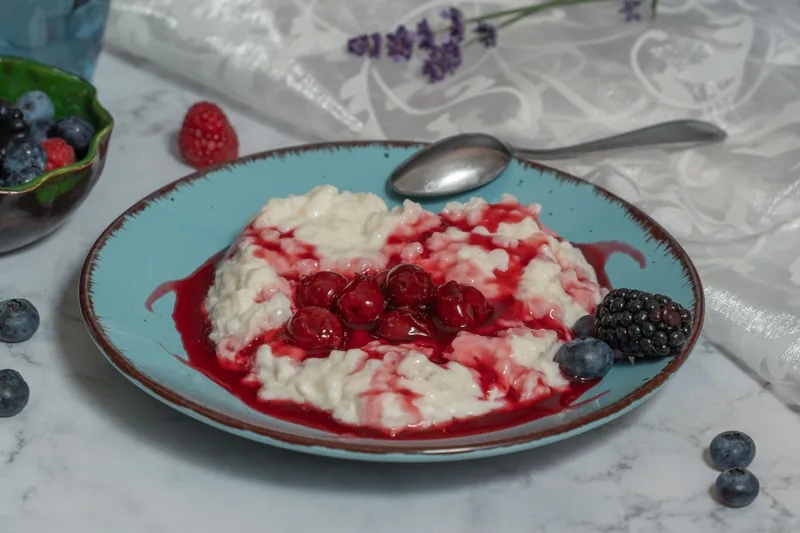
Old-Fashioned Rice Pudding
Stovetop, stirred, and finished with egg yolks off the heat. Loose when it comes off, set by the time it reaches the table.
- Total time
- 50 min
- Yield
- Serves 6
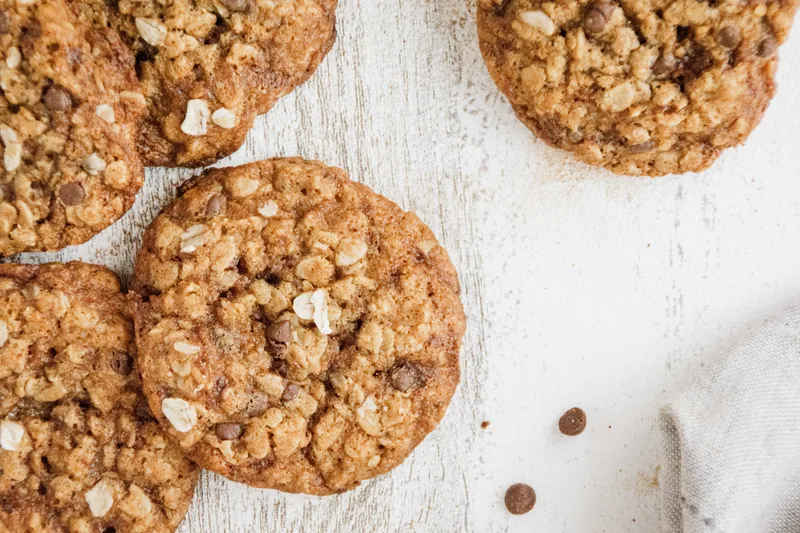
Oatmeal Chocolate Chip Cookies
Chewy in the middle, crisp at the rim, with oats you can still see. The dough rests overnight and it matters.
- Total time
- 12 hr 32 min
- Yield
- Makes 24 cookies
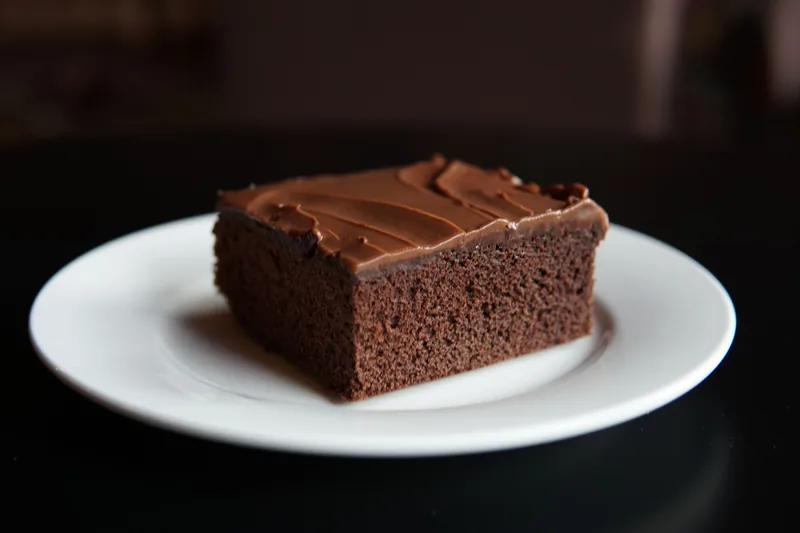
Chocolate Mayonnaise Cake
A Depression-era cake that stays damp for four days. The mayonnaise is the eggs and the oil, and you will never taste it.
- Total time
- 50 min
- Yield
- One 9-inch cake, 12 slices