Old-Fashioned Rice Pudding
Stovetop, stirred, and finished with egg yolks off the heat. Loose when it comes off, set by the time it reaches the table.
- Prep
- 5 min
- Cook
- 45 min
- Makes
- Serves 6
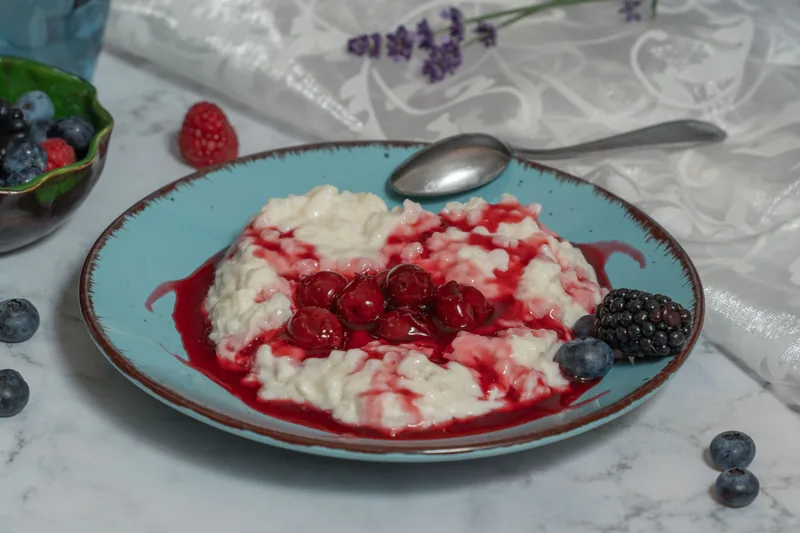
Baked rice pudding and stovetop rice pudding are different desserts with the same name. The baked one sets into something sliceable with a skin on top. This is the other one: loose, spoonable, custard-thickened, the sort served warm in a bowl.
Short-grain rice, and this is not negotiable. Arborio, Calrose or anything sold as pudding rice is high in amylopectin, the branched starch that leaches out of the grain and thickens the liquid around it. Long-grain rice is high in amylose instead, which is the straight-chain starch that stays inside the grain and helps it hold its shape — exactly the property you want in pilaf and exactly the wrong one here. Long-grain gives you rice sitting in milk.
Two things slow the grain down, and neither is a fault. Milk is not water: its protein and fat coat the starch and get in the way of it absorbing. Sugar does the same thing more aggressively, competing for the water and raising the temperature at which starch gelatinizes at all. So a sweet pan of rice in milk takes noticeably longer to soften than the same rice boiled plain. If yours is still chalky at 40 minutes, that is why. Keep going; it gets there.
Scraping the bottom is not optional either. Milk proteins denature and stick to the hot metal floor of the pan before anything else in the pot is in trouble, and once a thin scorched layer forms, every stir drags burnt flecks up through the pudding and there is no rescuing it. A heavy-based pan buys you margin, low heat buys you more, and a flat-edged spatula run across the base every few minutes does the rest.
The egg yolks go in at the end, off the heat, and this is the step that goes wrong. Yolks set at around 160°F (70°C); a simmering pan is at 205°F (95°C). Tip them straight in and you get sweet scrambled egg in seconds. Temper them instead: whisk a ladleful of the hot milk into the yolks first, which raises them gently, then return the mixture to the pan with the heat off entirely. Homemade eggnog is the same technique at a slightly higher temperature.
Tempering works because it is dilution as much as warming. A yolk suspended in a lot of hot sweet liquid is surrounded by sugar and water molecules that physically get between its proteins and keep them from linking into curds, which is why a custard can be taken higher than a bare yolk can. Pour slowly and whisk constantly, and you can feel it thicken under the whisk within a minute of going back into the pan.
It thickens substantially as it cools. Take it off the heat while it still looks too loose — if it is right in the pan, it will be stiff in the bowl. The cue is a spoon dragged across the base leaving a trail that closes over in about two seconds. Faster than that and it needs a few more minutes. If the trail holds open, you have already gone too far, and the fix is a splash of warm milk stirred in before it cools any further.
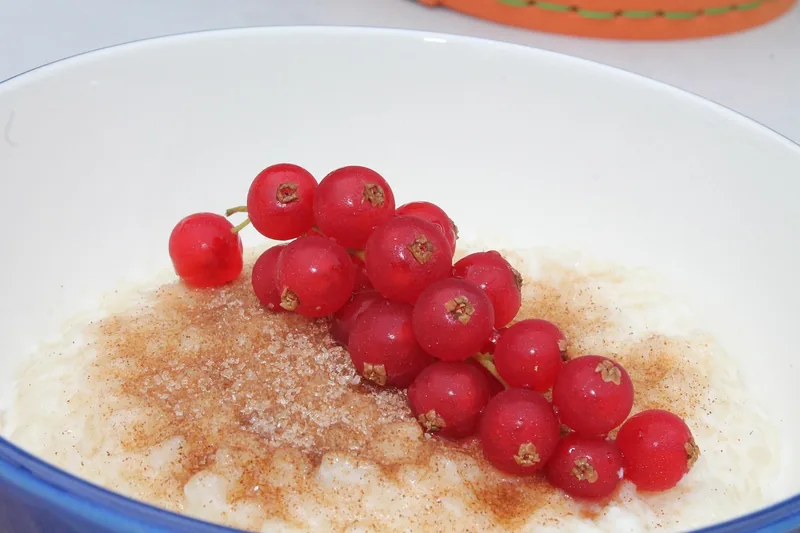
Creamy rice pudding, printed
Stovetop, stirred, and finished with egg yolks off the heat. Loose when it comes off, set by the time it reaches the table.
Six things
- ¾ cup (150 g) short-grain rice, such as arborio
- 4 cups (950 ml) whole milk
- ½ cup (100 g) superfine sugar
- 1 vanilla bean, split, or 2 tsp vanilla extract
- Pinch of fine salt
- 2 egg yolks
- ¼ cup (60 ml) heavy cream
- Ground cinnamon and nutmeg, to serve
Simmering, then tempering the yolks
- 1 Put the rice, milk, sugar, vanilla and salt in a heavy saucepan. Bring to a bare simmer over medium heat, stirring.
- 2 Drop the heat to low and cook 35–40 minutes, stirring every few minutes and scraping the base — milk catches and burns there before anywhere else. The rice should be soft and the liquid thickened.
- 3 Whisk the yolks and cream together in a bowl.
- 4 Take the pan off the heat. Whisk a ladleful of the hot rice mixture into the yolks, then a second, then pour it all back into the pan and stir. The residual heat sets it; the burner stays off.
- 5 Leave 10 minutes to thicken, then serve warm with cinnamon and nutmeg.
Reheating, raisins and skin
- Refrigerated, it sets firm. Loosen it with a splash of milk and warm it gently.
- Raisins, if you want them, go in for the last 10 minutes so they plump without dissolving.
- It keeps four days covered in the refrigerator and does not freeze — thawed rice pudding is watery and grainy at once.
- Press plastic wrap onto the surface if you dislike skin. Skin forms because water evaporates from the top and strands the milk proteins there; contact with the wrap stops the evaporation.
- A strip of lemon zest or orange zest simmered with the milk and fished out at the end is the easiest way to change it without changing the method.
- To halve it, use a smaller pan rather than the same one. A wide shallow layer of milk evaporates much faster and reduces to paste before the rice is soft.
Ways creamy rice pudding goes wrong
The yolks went in too hot or too fast. Temper them with two ladlefuls of hot liquid first and add them with the pan off the heat, not simmering.
It will cook, but it will not thicken. Long-grain rice is specifically bred to release less starch, and that starch is the entire mechanism here.
Oat milk is the best of them, because it carries its own starch and body. Almond milk is mostly water and gives a thin, sweet gruel. Whatever you use, keep the egg yolks — with no dairy protein in the pot they are doing all of the setting rather than some of it.
It thickens fine, because thickening comes from starch and egg rather than fat, but it tastes lean and the texture goes slightly chalky on the tongue. If that is what you have, make up the difference with the heavy cream at the end.
Both, and they are noticeably different desserts. Warm, it is loose and the vanilla is forward. Cold, the starch retrogrades overnight into something dense and sliceable, and the sweetness reads lower because sugar registers most strongly near body temperature.
More puddings
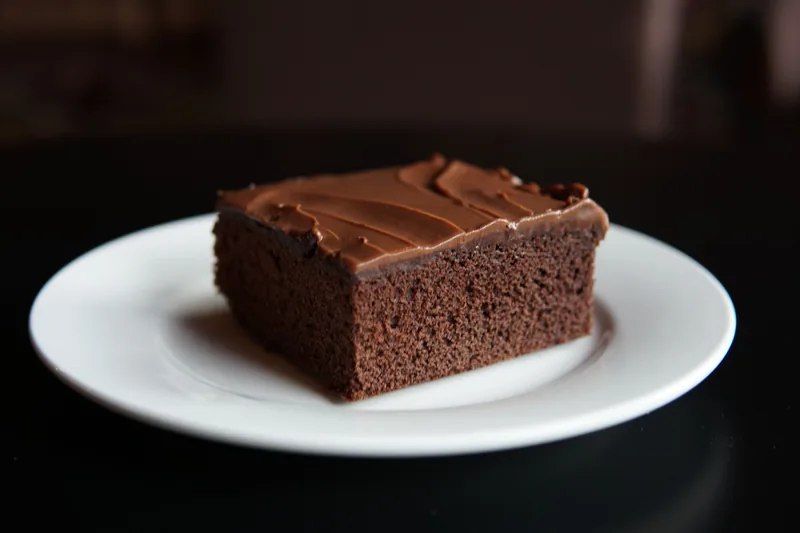
Chocolate Mayonnaise Cake
A Depression-era cake that stays damp for four days. The mayonnaise is the eggs and the oil, and you will never taste it.
- Total time
- 50 min
- Yield
- One 9-inch cake, 12 slices
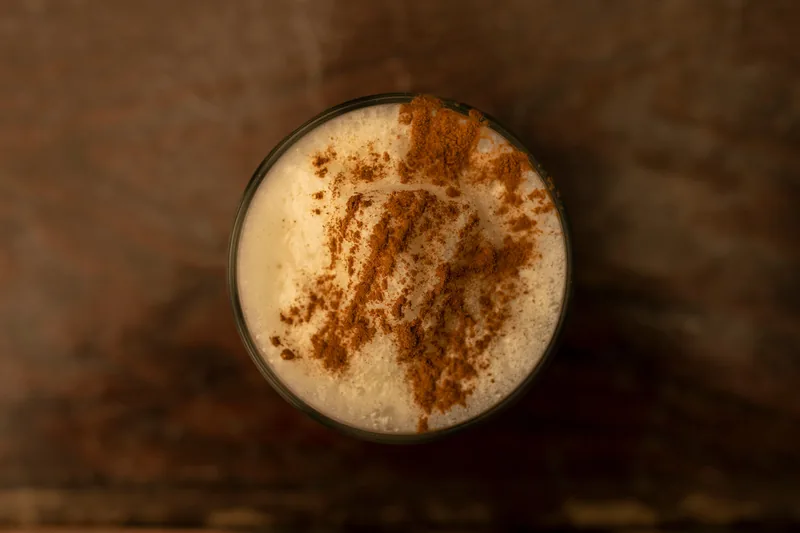
Homemade Eggnog
A cooked custard base, chilled overnight, thick enough to coat a spoon. Nothing like the carton.
- Total time
- 8 hr 30 min
- Yield
- Makes 5 cups (1.2 liters), serves 8
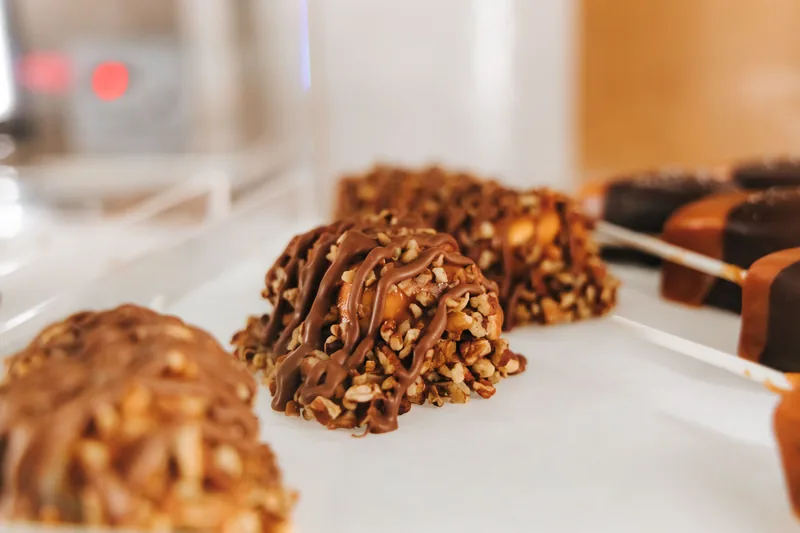
Chocolate Pecan Turtle Clusters
Toasted pecans under a firm-ball caramel and a coat of seeded dark chocolate, cooked to a thermometer so the chew is the same every time.
- Total time
- 2 hr 15 min
- Yield
- Makes about 18 clusters