Chocolate Mayonnaise Cake
A Depression-era cake that stays damp for four days. The mayonnaise is the eggs and the oil, and you will never taste it.
- Prep
- 15 min
- Cook
- 35 min
- Makes
- One 9-inch cake, 12 slices
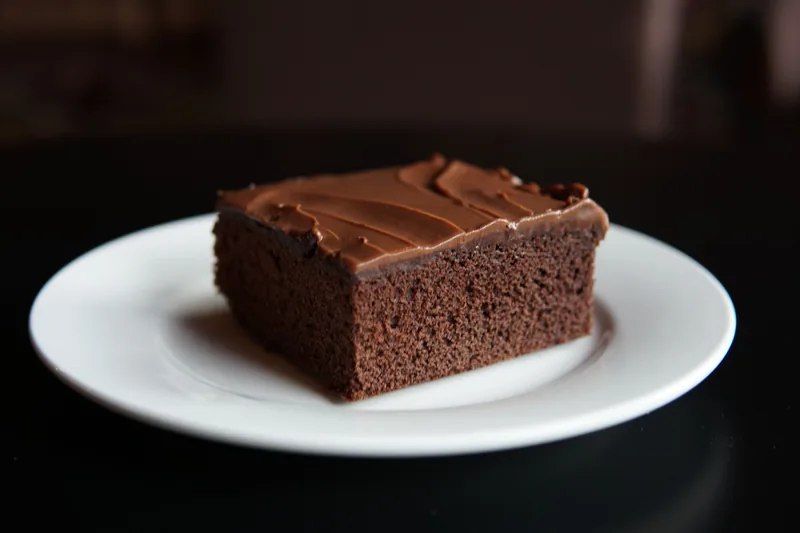
The name puts people off, which is a shame, because the reasoning is sound and about a century old. Mayonnaise is an emulsion of oil, egg yolk and a little acid. A cake batter wants oil, egg and a little acid. Somebody in the 1930s, when eggs and butter were expensive and mayonnaise was not, worked out that you could use the jar instead of the components — and discovered the cake was better, because a pre-made emulsion disperses more evenly through flour than oil and egg added separately.
The result is a cake with an unusually fine, damp crumb that is still soft on day four. That is the whole appeal, and the reason is physical rather than magical: vegetable oil stays liquid at room temperature, where butter is solid. A butter cake firms up as it cools because its fat sets; an oil cake has nothing to set, so it feels moist on the tongue on the day it is baked and again three days later.
No butter means no butter flavor, so the chocolate has to carry it: use good cocoa and bloom it in boiling water, which is the step that turns cocoa from dusty to deep. Cocoa solids hold their aroma compounds locked in fat and starch, and boiling liquid is what frees them. Warm water does not. This is the difference between a cake that tastes brown and one that tastes of chocolate.
Either kind of cocoa works here, which is not true of every chocolate cake. Natural cocoa is acidic and reacts with the baking soda; Dutch-process has been alkalized to around neutral and cannot. This batter carries baking powder as well as soda, plus the vinegar or lemon juice already in the mayonnaise, so the lift does not depend on which box you own. Natural cocoa gives a slightly higher, redder crumb. Dutch gives a darker, smoother one.
Do not use light or reduced-fat mayonnaise. The fat is the point of it being there. The reduced-fat versions are mostly water thickened with starch and gums, and swapping one in gives you a cake that rises, sinks, and comes out gummy in the middle.
The batter will look alarming twice, and both times it is fine. Stirred into the dry mix, the mayonnaise makes a stiff, dry paste that looks like it will never come together. Then the boiling water goes in and it turns thinner than any cake batter should be — nearly pourable. Thin batter is what a fine crumb comes from; it also means you should stop whisking the moment it is smooth, because flour left sitting in liquid and agitated builds gluten, and gluten is chew.
The failure mode is overbaking, and it is easy to walk into because the batter is so wet that the first skewer test reads underdone. Start checking at 32 minutes. The center should spring back when pressed and the skewer should come out with a few damp crumbs clinging to it. Clean and dry means you have gone past it, and what you lost is exactly the four-day softness you came for.
Nobody who eats this without being told will guess. Whether you tell them is your business.
For the other end of the chocolate spectrum — chewy rather than damp — see oatmeal chocolate chip cookies. And for chocolate with no baking in it at all, turtle clusters set on the counter in the time it takes this cake to cool.
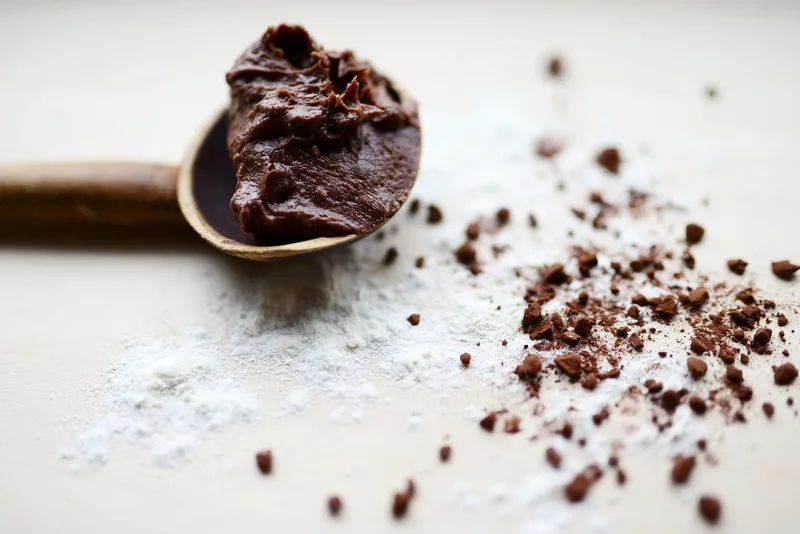
An easy chocolate cake, printed
A Depression-era cake that stays damp for four days. The mayonnaise is the eggs and the oil, and you will never taste it.
Cake and frosting
For the cake
- 2 cups (250 g) all-purpose flour
- 1½ cups (300 g) superfine sugar
- ¾ cup (65 g) cocoa powder
- 1½ tsp baking soda
- ½ tsp baking powder
- ½ tsp fine salt
- 1 cup (240 g) full-fat mayonnaise
- 1 cup (240 ml) boiling water
- 2 tsp vanilla extract
For the frosting
- ½ cup (115 g) butter, softened
- 2 cups (250 g) powdered sugar
- ½ cup (40 g) cocoa powder
- 3–4 tbsp milk
- Pinch of salt
How to make a moist chocolate cake with mayonnaise
- 1 Heat the oven to 350°F (175°C) and line a 9-inch (23 cm) round cake pan. Whisk the flour, sugar, cocoa, baking soda, baking powder and salt together thoroughly — cocoa clumps, and lumps will not disperse later.
- 2 Stir the mayonnaise into the dry mix. It will look wrong: dry, stiff and unpromising. Keep going.
- 3 Pour in the boiling water and the vanilla and whisk until smooth. The water blooms the cocoa, which is where the depth of flavor comes from. The batter will be thin.
- 4 Pour into the pan and bake 32–35 minutes, until a skewer comes out with a few damp crumbs. Clean and dry means it has gone too far.
- 5 Cool in the pan 15 minutes, then turn out onto a rack and cool completely before frosting.
- 6 Beat the frosting ingredients together, adding milk a tablespoon at a time until it spreads easily.
Keeping, freezing and other pans
- Full-fat mayonnaise only. Light versions are mostly water and the crumb collapses.
- Keeps four days, covered, at room temperature — much longer than a butter cake, which is the reason the recipe survived.
- It freezes well unfrosted, wrapped tightly, for three months.
- Two 8-inch (20 cm) pans work for a layer cake; start checking at 24 minutes, because a shallower batter sets sooner.
- As cupcakes it makes 20 and bakes in 18–20 minutes. Fill the liners two-thirds full — the batter is loose and will run over at three-quarters.
- A tablespoon of instant espresso powder in the dry mix deepens the chocolate without making the cake taste of coffee.
The questions everyone asks about mayonnaise in cake
No. There is no vinegar tang and no savory note in the finished cake — the cocoa and sugar bury it completely, and what remains is the fat and the egg doing exactly what fat and egg do in any cake.
Cocoa contains flavor compounds that only dissolve properly at high temperature. Blooming it in boiling liquid is the single biggest difference between a cake that tastes brown and one that tastes of chocolate.
You can, and you will get a good cake that is not quite this one. The emulsion is already made in the jar, so the fat is broken into droplets far finer than whisking by hand achieves, and those droplets coat flour more evenly. That evenness is the fine crumb.
Almost always reduced-fat mayonnaise, or an oven door opened before the structure set. Check the temperature with a thermometer too — an oven running 25 degrees cool lets the cake rise on gas before the flour and egg firm enough to hold it up, and it falls as it cools.
Yes. The egg in it is baked to well above any temperature that matters, and the finished crumb is a sugar-rich, low-moisture environment. Treat it like any other cake: covered, at room temperature, four days.
More chocolate
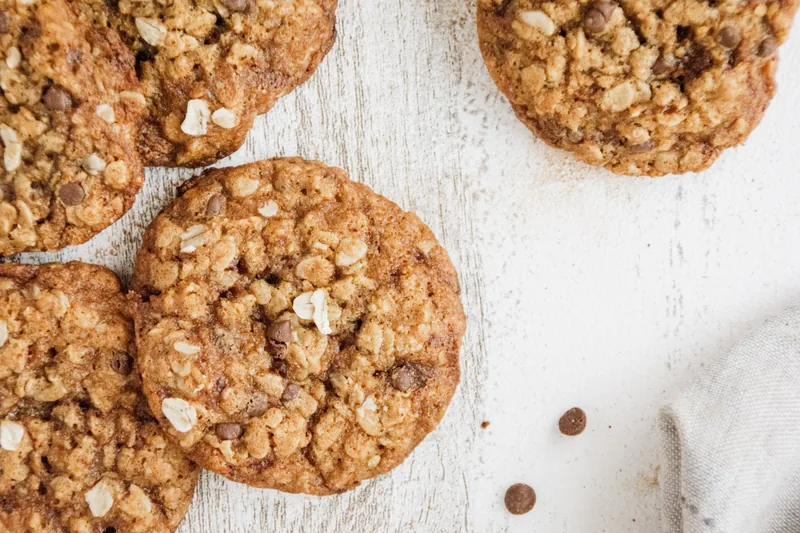
Oatmeal Chocolate Chip Cookies
Chewy in the middle, crisp at the rim, with oats you can still see. The dough rests overnight and it matters.
- Total time
- 12 hr 32 min
- Yield
- Makes 24 cookies
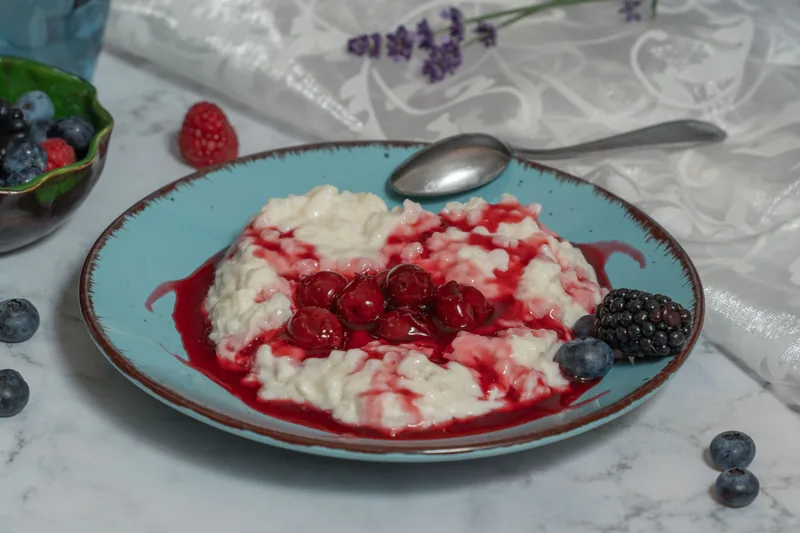
Old-Fashioned Rice Pudding
Stovetop, stirred, and finished with egg yolks off the heat. Loose when it comes off, set by the time it reaches the table.
- Total time
- 50 min
- Yield
- Serves 6
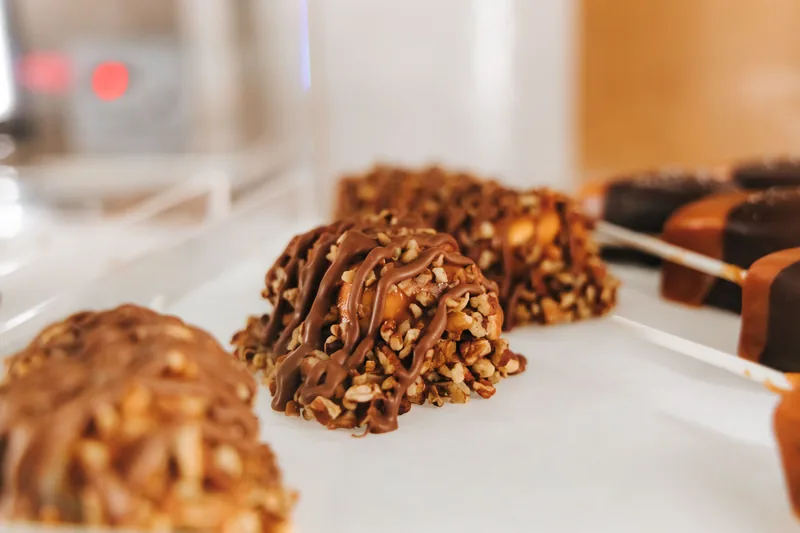
Chocolate Pecan Turtle Clusters
Toasted pecans under a firm-ball caramel and a coat of seeded dark chocolate, cooked to a thermometer so the chew is the same every time.
- Total time
- 2 hr 15 min
- Yield
- Makes about 18 clusters