Greek Chicken Gyros
Yoghurt-marinated thighs off a screaming hot pan, folded into warm pita with tzatziki, tomato and raw onion.
- Prep
- 20 min
- Cook
- 14 min
- Rest
- 3 hr
- Makes
- Makes 6 gyros
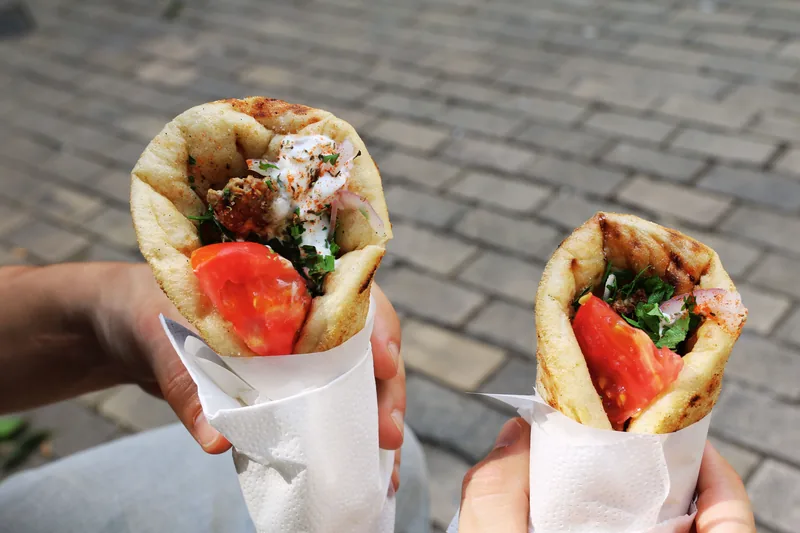
A real gyro comes off a vertical rotisserie, and no home kitchen has one. What a home kitchen can reproduce is the thing that actually makes it taste like a gyro: heavily seasoned meat cooked hot enough to char at the edges while staying juicy in the middle, then sliced thin.
The marinade is built on yoghurt for a specific reason. Its acidity is mild — around pH 4.5, against lemon juice at pH 2 — so it tenderises slowly and evenly over hours instead of turning the outer few millimeters chalky and grainy in forty minutes, which is what a straight lemon marinade does if you forget about it. The lemon is still in here, but in a supporting quantity.
The spicing is not improvised. Oregano is the backbone and it wants to be the dried kind, not fresh — drying concentrates the compounds that read as Greek, and Greek oregano is a different, stronger plant from the Italian sort sold as plain oregano. Cumin and smoked paprika stand in for the smoke and fat of a rotisserie stack. Five cloves of garlic sounds like a lot until you remember that most of it cooks off.
Thighs, always. A gyro is cooked hard and fast, and there is enough fat in a thigh to survive that. Breast meat at the same heat is dry before it is charred.
The one non-obvious step is drying the meat before it hits the pan. Marinade clinging to the surface boils rather than browns, and you get gray chicken in a wet pan. Wipe each piece; the flavor is in the meat by now, not in the film on the outside.
Heat the pan properly and then leave the chicken alone. Cold meat hitting hot cast iron drops the surface temperature hard, and the crust only forms once it recovers. Moving a piece to check on it at two minutes resets that clock. Six or seven minutes untouched, then turn once.
Two small things lift the assembly out of ordinary. Soak the sliced onion in cold water for ten minutes and drain it — this pulls out the sulphur compounds that make raw onion taste harsh, and leaves the crunch. And if you make the tzatziki yourself, salt the grated cucumber and wring it out in a cloth first; unsqueezed cucumber turns a thick sauce into a puddle within the hour.
Warm the pita properly — 30 seconds a side in the same pan, in the chicken fat. Cold pita cracks when you fold it, and a pita warmed dry in a toaster goes stiff rather than pliable.
Slice across the grain, not along it. Thigh meat has a clear fibre direction, and cutting along it gives long stringy strips that pull out of the bread in one piece when bitten.
Serve it with grilled potatoes and a crunch salad if you are feeding people rather than eating standing up. The dry-the-meat-and-leave-it-alone rule is the same one that separates good beef tacos from gray meat simmering in its own liquid, so it is worth learning once.
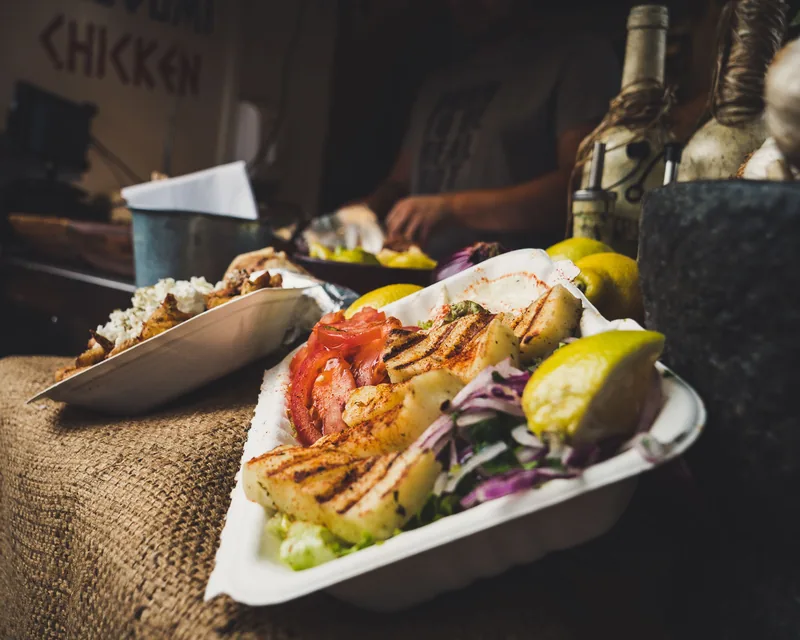
Chicken gyros: the recipe card
Yoghurt-marinated thighs off a screaming hot pan, folded into warm pita with tzatziki, tomato and raw onion.
For the marinade and the pita
For the marinade
- 1¾ lb (800 g) boneless, skinless chicken thighs
- ⅔ cup (150 g) Greek yoghurt
- 3 tbsp olive oil
- Juice of 1 lemon
- 5 garlic cloves, crushed
- 1 tbsp dried oregano
- 2 tsp smoked paprika
- 1 tsp ground cumin
- 1½ tsp fine salt
- ½ tsp black pepper
To assemble
- 6 pita breads
- 1¼ cups (300 g) tzatziki
- 2 large tomatoes, sliced
- 1 red onion, sliced paper-thin
- Large handful of flat-leaf parsley
Building the gyros
- 1 Whisk the marinade ingredients together and turn the thighs through it. Cover and refrigerate 3 hours, or overnight. Past 24 hours the texture starts to suffer.
- 2 Take the chicken out 30 minutes before cooking and wipe each piece almost dry with paper towels. This is the step that decides whether you get char or steam.
- 3 Heat a heavy griddle or cast-iron pan over high until it is smoking faintly. Cook the thighs 6–7 minutes a side without moving them, until blackened in patches and 165°F (74°C) at the thickest point.
- 4 Rest 5 minutes on a board, then slice across the grain into thin strips. Tip any juices from the board back over the meat.
- 5 Warm the pitas 30 seconds a side in the same pan.
- 6 Spread each pita with tzatziki, pile on chicken, tomato, onion and parsley, and fold. Eat immediately, standing up, over the sink.
Ahead of time
- Slice the onion on a mandoline if you have one. Thick onion in a gyro is unpleasant in a way thin onion is not.
- The marinade freezes with the raw chicken in it. Thaw overnight in the fridge and cook straight from there.
- Greek oregano, sold as rigani, is worth seeking out. Ordinary supermarket oregano is the milder Italian species and you will want half again as much.
- Cooked chicken keeps 3 days. Reheat it in a dry pan for a minute — the microwave turns the charred edges rubbery.
- For a crowd, cook the thighs whole and slice to order. Pre-sliced meat sitting in its own steam loses the crust within minutes.
Questions about greek chicken
Butterfly it first and cut the time to about 4 minutes a side. It will be drier — breast has neither the fat nor the connective tissue that lets thigh meat take this kind of heat.
Three hours is the minimum for the yoghurt to do anything useful. Overnight is the sweet spot. Beyond a day the surface starts going soft.
Any heavy pan works — the weight is what holds the heat when cold meat hits it. A thin non-stick pan drops temperature immediately and steams the chicken.
The seasoning and the assembly are. The cooking is not: a real gyro is shaved off a vertical rotisserie where stacked meat bastes itself for hours, and that is the one part a home kitchen cannot copy. What this recipe reproduces is the flavour and the char, which is most of what you taste.
Yes, and it is closer to the original. Thread the thighs onto flat skewers so they sit still, and keep them over direct heat — 5–6 minutes a side. Watch for flare-ups: there is oil in the marinade.
More to grill
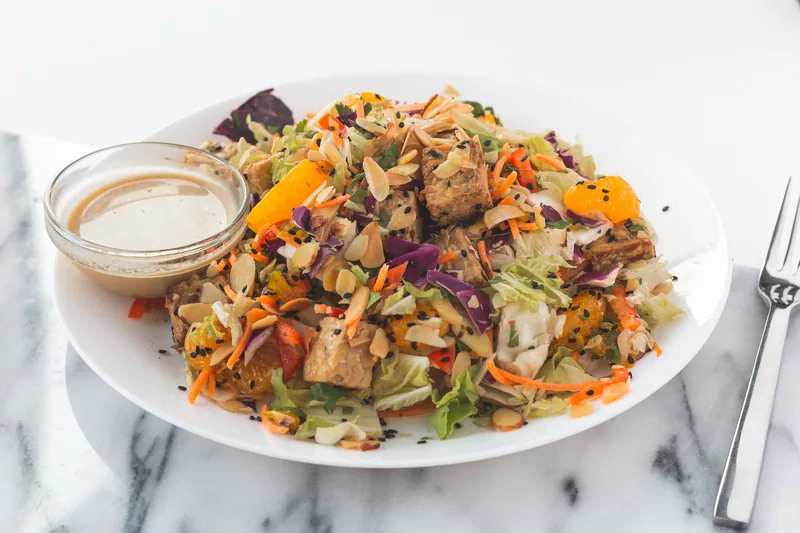
Crunch Salad
Six vegetables cut to the same size, feta, toasted seeds and a sharp balsamic vinaigrette. Assembled, not tossed in advance.
- Total time
- 20 min
- Yield
- Serves 6
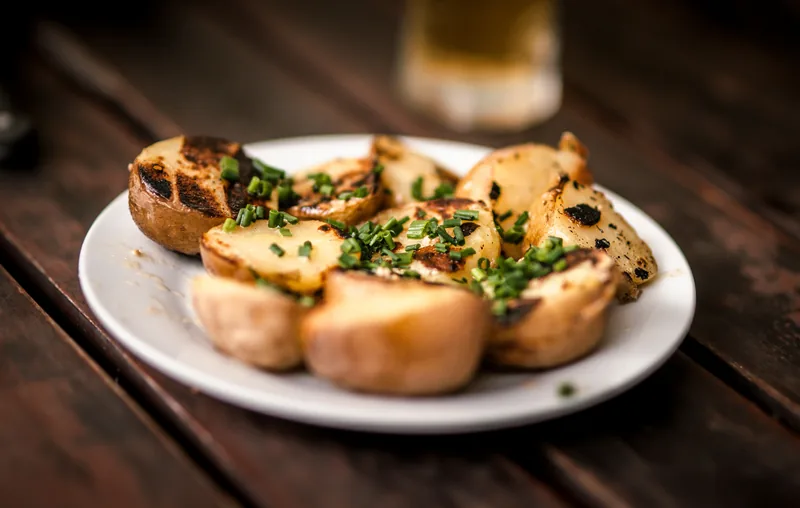
Grilled Potatoes with Garlic and Herbs
Parboiled first so the grill only has to char them. Twelve minutes over the coals, not forty.
- Total time
- 40 min
- Yield
- Serves 6
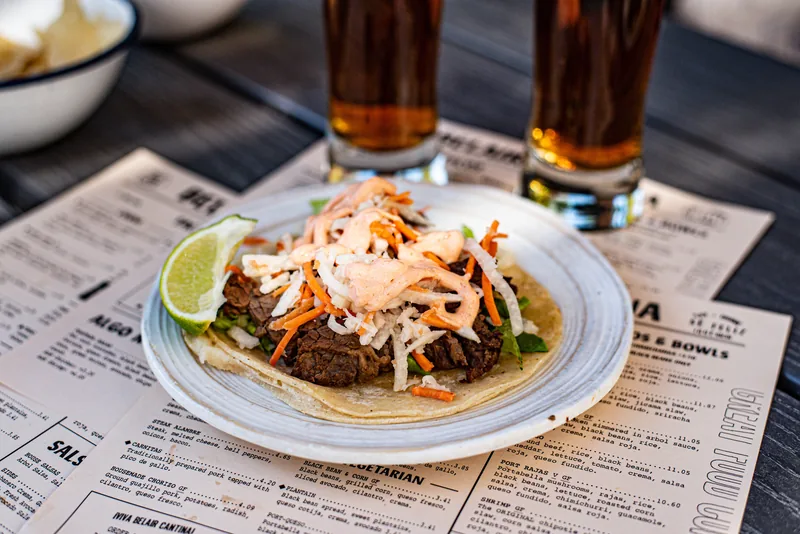
Beef Tacos with Peach Vinegar Slaw
Hard-seared ground beef in warm tortillas, topped with a cabbage and peach slaw dressed at the last possible moment.
- Total time
- 32 min
- Yield
- Makes 8 tacos, serves 4