German Potato Pancakes
Kartoffelpuffer: lacy, deep-golden, crisp to the edge. The trick is wringing the potatoes dry and reclaiming the starch.
- Prep
- 25 min
- Cook
- 20 min
- Makes
- Makes 12 pancakes
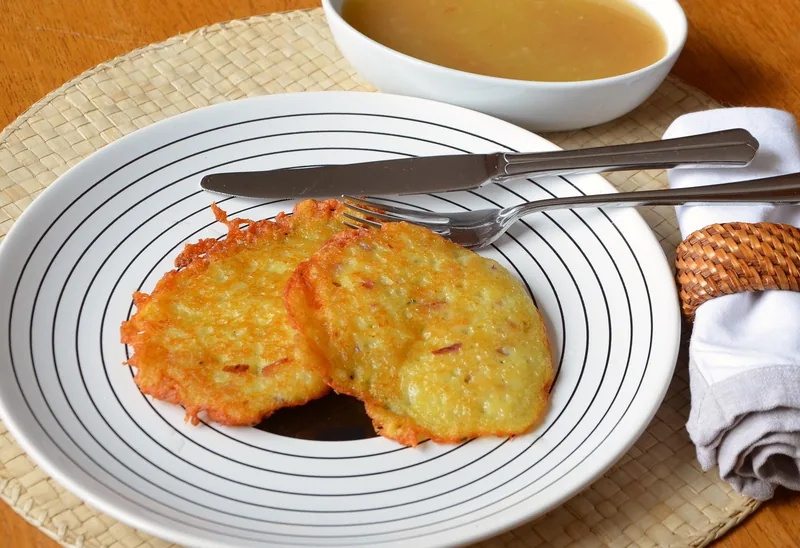
There is one step that separates a lacy, crisp Kartoffelpuffer from a heavy gray disc, and almost every recipe mentions it in passing as though it were optional. Wring the grated potato dry. Not pat, not drain — twist it in a dish towel until liquid stops running, then twist harder.
The reason is arithmetic. A raw potato is about three-quarters water, and every drop of it left in the bowl has to boil off in the pan before the surface can get above 212°F (100°C) and begin to brown. A wet mixture spends its whole time in the oil steaming itself, which is why it comes out limp, pale and greasy no matter how long you leave it.
Then do the part that most recipes leave out. Let the drained liquid stand for two minutes and you will find a dense white layer of potato starch at the bottom of the bowl. Pour off the water, scrape that starch back into the potatoes. It is the binder. With it you need barely any flour; without it you need three tablespoons, and flour is what makes a potato pancake taste of pancake instead of potato.
Floury potatoes, and nothing else. Russets carry more starch and less water to start with, so there is more to reclaim and less to wring out. A waxy potato holds its moisture stubbornly and fries to something closer to a hash brown that never quite crisps.
Fry in more oil than feels reasonable — a quarter inch (5 mm), not a slick — and do not press them down. Pressing squeezes out the air pockets that make the edges lacy. Spread each spoonful thin and leave it alone until the underside is properly brown.
Oil temperature is the second half of the job: about 350°F (175°C), or a shred of potato that sizzles the instant it lands and rises to the surface within a couple of seconds. Below that the pancake absorbs oil instead of being pushed away from it by escaping steam, and greasy is the result. Much above it and the outside is mahogany while the inside is still raw starch and tastes faintly of glue.
Cook with your ears. A pancake going into correctly hot oil starts loud and stays loud while the water is leaving; when that roar drops to a steady crackle, the underside is close. Lift a corner at that point and you should see a brown lace pattern rather than an even tan sheet — the gaps are the whole idea.
Three at a time in a 12-inch (30 cm) skillet, no more. Each cold pancake pulls the oil temperature down, and a crowded pan never recovers between additions. Give it thirty seconds back on the heat before the next batch goes in.
Salt at the last moment, with the egg and flour, not before. Salt draws water straight back out of the shreds you just spent five minutes wringing dry.
Apple sauce on the side is not a garnish in Germany, it is the point. If you want something savory alongside instead, creamy mushroom sauce works surprisingly well. The rules here — squeeze out the water, get the oil hot, then leave it alone until the crust forms — are the same ones that hold crab cakes together in a skillet.
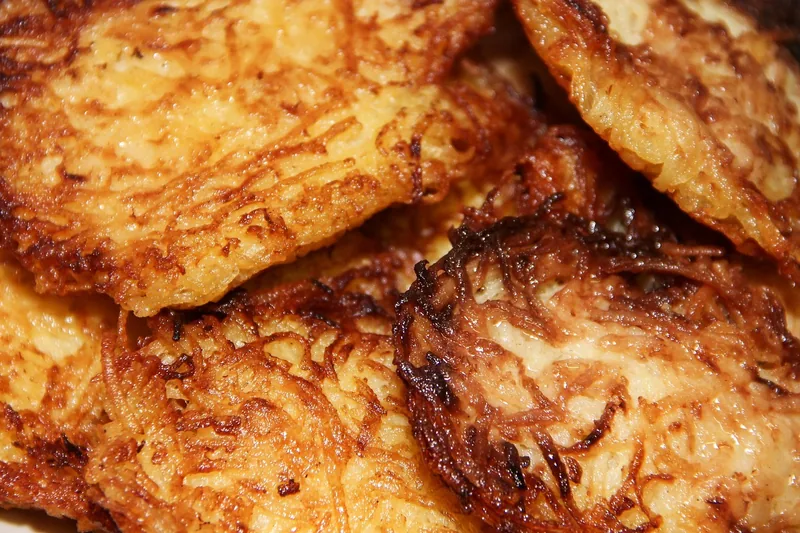
Traditional potato pancakes, printed
Kartoffelpuffer: lacy, deep-golden, crisp to the edge. The trick is wringing the potatoes dry and reclaiming the starch.
For the pancakes, and to serve
Ingredients
- 2 lb (900 g) floury potatoes, peeled
- 1 small onion
- 1 egg, beaten
- 2 tbsp all-purpose flour, or less if the starch is reclaimed
- 1½ tsp fine salt
- ¼ tsp grated nutmeg
- Neutral oil, for frying
To serve
- Apple sauce
- Sour cream and chives
How to make crispy potato pancakes
- 1 Grate the potatoes and the onion on the coarse side of a box grater, straight into a bowl of cold water. The onion is not only for flavor — its acidity slows the potatoes browning while you work.
- 2 Drain, then tip everything into the center of a clean dish towel. Gather the corners and wring it out over a bowl until no more liquid comes. Twist again.
- 3 Leave the collected liquid to stand 2 minutes. Pour off the water and scrape the white starch from the bottom of the bowl back into the potatoes.
- 4 Mix in the egg, flour, salt and nutmeg. Work quickly; the mixture grays within about 10 minutes.
- 5 Heat ¼ inch (5 mm) of oil in a heavy frying pan over medium-high until a shred of potato sizzles immediately. Drop in heaped tablespoons and spread each one thin with the back of the spoon.
- 6 Fry 3–4 minutes a side, until deep brown and crisp at the edges. Drain on a rack, not paper — paper steams the underside soft.
Potato variety and holding them warm
- Floury potatoes only. Waxy varieties hold their water and never crisp.
- Keep cooked pancakes in a 250°F (120°C) oven on a rack while you fry the rest. They hold 20 minutes without softening.
- Use a neutral oil with a high smoke point — canola, sunflower or refined peanut. Butter burns at this temperature and olive oil turns acrid.
- Cooked pancakes freeze well spread flat on a tray, then bagged. Reheat from frozen at 400°F (200°C) for 8 minutes; they come back genuinely crisp.
- For a gluten-free batch, use a tablespoon of potato starch in place of the flour, or nothing at all if you reclaimed a good layer.
- Doubling works, but grate and wring in two separate batches. A large bowl of grated potato sitting around is exactly the thing this recipe is trying to avoid.
Heavy, gray or falling apart
Too much liquid left in the potatoes, which then needed extra flour to hold together. Wring harder and use the reclaimed starch instead of flour.
Yes, and it is much faster, but the shreds are shorter and the lacy edges suffer a little. A box grater gives the better texture.
No. Grated potato oxidizes within minutes and it makes no difference to the taste or the finished color once fried.
The oil was not hot enough. While steam is streaming out of the pancake it holds oil at bay; once the pan cools below about 325°F (160°C) that pressure stops and the oil moves in instead. Fry fewer at a time and let the pan recover between batches.
No. Grated potato keeps weeping the entire time it sits, so you end up wringing twice and still finishing with a wet mixture, and the shreds go soft. Grate, wring and fry in one run — the whole thing takes 25 minutes.
More to fry
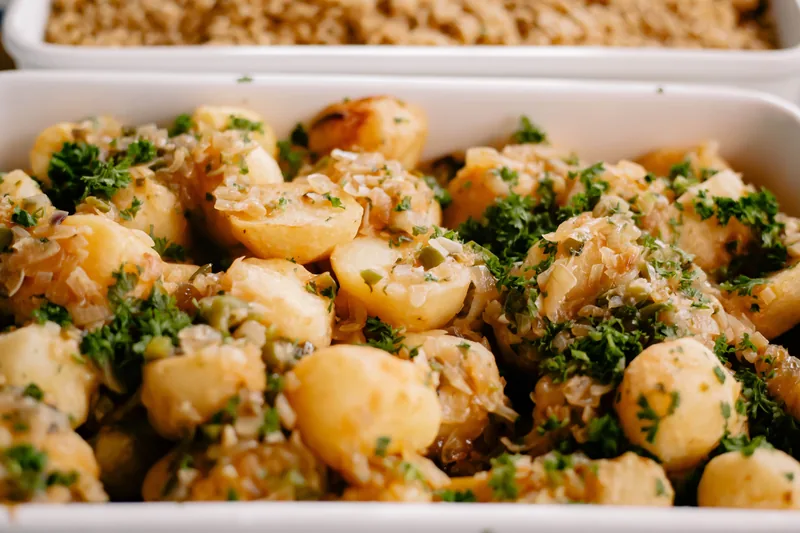
Slow Cooker Baby Potatoes with Garlic and Herbs
Four hours unattended, then five minutes under the broiler for the crust a slow cooker cannot give you.
- Total time
- 4 hr 15 min
- Yield
- Serves 8
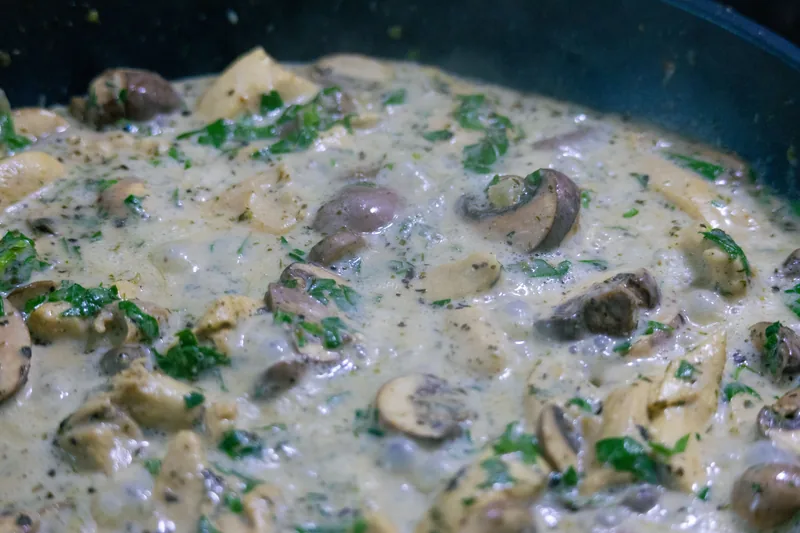
Creamy Mushroom Sauce
Built in the pan the steak came out of, in the time the steak needs to rest. Ten minutes, five ingredients that matter.
- Total time
- 17 min
- Yield
- Serves 4

Cheddar Bay Crab Cakes with Lemon Butter Drizzle
Barely bound lump crab with sharp cheddar and garlic, chilled hard so it holds, seared in butter and finished with lemon.
- Total time
- 1 hr 15 min
- Yield
- Makes 8 crab cakes