Cheddar Bay Crab Cakes with Lemon Butter Drizzle
Barely bound lump crab with sharp cheddar and garlic, chilled hard so it holds, seared in butter and finished with lemon.
- Prep
- 20 min
- Cook
- 10 min
- Rest
- 45 min
- Makes
- Makes 8 crab cakes
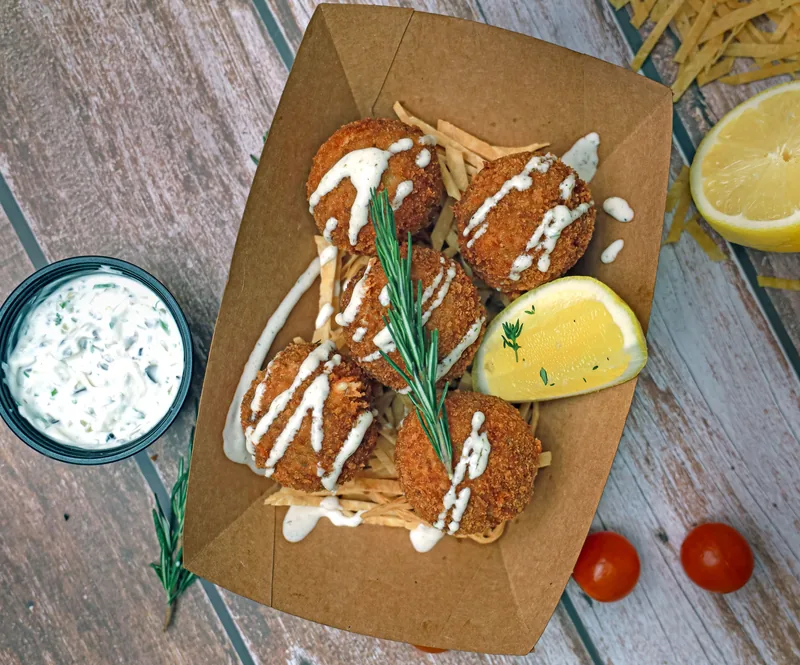
Every decision in a crab cake is a trade between holding together and tasting of crab. Breadcrumbs, egg and mayonnaise all help it survive the skillet, and all of them dilute the thing you paid for. A pound of good lump crab costs real money; a cake with a cup of crumbs in it tastes like a seafood-flavored hush puppy and you could have made it with anything.
So the binder here is deliberately thin — a third of a cup of panko for a whole pound of crab, one egg, three tablespoons of mayonnaise. That is barely enough, and barely enough is the target. What makes it work is not more binder but cold. Forty-five minutes in the refrigerator sets the egg proteins and firms the mayonnaise and the cheese into something that behaves like glue, and a chilled cake goes into the pan as a solid object. A room-temperature one goes in as a loose heap and comes apart on the first turn. If you take one thing from this, take the chill.
Dry crab matters as much. Lump crabmeat sits in liquid in its container, and that liquid has to leave before it meets the panko — otherwise the crumbs spend their absorbency on water instead of on holding the cake. Tip the crab into a strainer, let it drain a few minutes, then spread it on paper towels and press gently. You are not squeezing it; you are blotting.
Fold, do not stir. Lump crab is prized for the size of its pieces and a vigorous mix shreds them into something indistinguishable from the cheaper claw meat. Mix the binder ingredients together first in the bowl, add the crab last, and turn it over maybe eight times with a rubber spatula.
"Cheddar Bay" means the flavor of a cheddar-and-garlic biscuit, and it comes from three things: sharp cheddar, more garlic powder than feels reasonable, and parsley. Sharp, not mild — the crab is sweet and delicate and a mild cheddar simply disappears into it, leaving you with a greasy cake and no cheese flavor.
In the pan, medium heat and butter cut with oil. Straight butter browns and burns before a cake that thick has heated through; the oil raises the smoke point enough to buy the four minutes a side you need. Do not press them with the spatula, and do not move them at all for the first three minutes. The crust that forms is the second half of the structure, after the chill, and poking at a setting crust is how a cake that would have survived ends up scattered.
The cue is color and sound. A deep golden-brown crust and a steady, quiet sizzle; if the pan goes silent the heat is too low and the cakes are absorbing fat rather than searing. The crab is already cooked, so there is nothing to cook through — you are building a crust and getting the center to 145°F (63°C), which happens well before the outside is done.
The drizzle is melted butter, garlic, lemon juice and parsley, made in the empty skillet after the cakes come out so it picks up the browned bits. Add the lemon off the heat. Serve them with roasted sweet potato bites for a plate of small things, or ahead of beef caprese skewers. If the plate wants a green thing with some char on it to cut all that butter, Brussels sprouts straight out of a screaming skillet do the job.
Crab cakes and drizzle, printed
Barely bound lump crab with sharp cheddar and garlic, chilled hard so it holds, seared in butter and finished with lemon.
For the cakes, and for the butter
For the crab cakes
- 1 lb (450 g) lump crabmeat, well drained
- ⅓ cup (20 g) panko breadcrumbs
- ¾ cup (85 g) sharp cheddar, finely grated
- 1 large egg, beaten
- 3 tbsp mayonnaise
- 1 tsp Dijon mustard
- 1½ tsp garlic powder
- 2 tbsp chopped flat-leaf parsley
- 1 tsp lemon zest
- ½ tsp Old Bay seasoning
- ¼ tsp black pepper
- 2 tbsp butter and 2 tbsp neutral oil, for the pan
For the lemon butter drizzle
- 4 tbsp (55 g) butter
- 2 garlic cloves, minced
- 2 tbsp lemon juice
- 1 tbsp chopped flat-leaf parsley
- Pinch of fine salt
Folding gently, chilling hard, searing once
- 1 Drain the crabmeat in a strainer for 5 minutes, then spread it on paper towels and blot gently. Pick through it for shell fragments.
- 2 In a wide bowl, stir together the panko, cheddar, egg, mayonnaise, Dijon, garlic powder, parsley, lemon zest, Old Bay and pepper until it looks like a thick paste.
- 3 Add the crab and fold it in with a spatula — about eight turns, no more. You want the lumps intact and visible, not a uniform mixture.
- 4 Shape into 8 cakes about 3 in (7.5 cm) across and ¾ in (2 cm) thick, pressing just enough to hold. Set them on a lined tray and refrigerate at least 45 minutes. They should feel firm and lift cleanly off the paper.
- 5 Heat the butter and oil in a large skillet over medium until the foam subsides. Add 4 cakes, leaving space between them, and do not touch them for 3 minutes.
- 6 Turn once with a thin spatula and cook 3–4 minutes more, until both sides are deep golden and the centers reach 145°F (63°C). Keep the sizzle audible; a silent pan means the cakes are soaking up fat instead of searing. Repeat with the rest.
- 7 Wipe the skillet, melt the butter for the drizzle, and cook the garlic 30 seconds until fragrant but not colored. Off the heat, stir in the lemon juice, parsley and salt, and spoon it over the cakes just before serving.
Buying crab, making ahead, reheating
- Lump or jumbo lump is worth the money here. Claw meat tastes fine but is already shredded, so the cakes hold together more easily and read as a patty rather than as crab.
- Canned crab needs a harder drain and an extra tablespoon of panko. Taste before salting — it usually arrives salty.
- Shape up to a day ahead and keep them covered in the refrigerator. The extra time only makes them more stable.
- They can be baked at 400°F (200°C) for 15 minutes on a greased sheet if you would rather not fry. You lose the crust, which is a real loss.
- Storage: 2 days refrigerated. Reheat in a dry skillet over medium for 2 minutes a side; a microwave turns the crust to sponge.
- Make the drizzle fresh each time. Reheated lemon butter separates and tastes flat.
Binder, breakage and knowing when they are done
Almost always one of three things: they were not chilled long enough, the crab was wet when it went into the bowl, or they were turned before a crust had set. Adding more breadcrumbs fixes the symptom and ruins the dish.
You can, and each spoonful buys structure at the cost of flavor. A longer chill gives you the same stability for free. If you genuinely need insurance, add one more tablespoon of panko and another 15 minutes in the refrigerator.
The flavor of a cheddar-and-garlic biscuit — sharp cheddar, a heavy hand with garlic powder, parsley, and butter poured over at the end. There is no biscuit in the recipe; it is the seasoning profile borrowed onto crab.
Go by the crust, not the clock. Deep golden brown on both sides and hot through — 145°F (63°C) in the center — which arrives well before the outside is ready. There is nothing raw to worry about.
Yes. Shape 16 cakes about 2 in (5 cm) across and cook 2 minutes a side. Chill them the same length of time — small cakes are if anything more fragile, since there is less mass holding the crust together.
More small plates
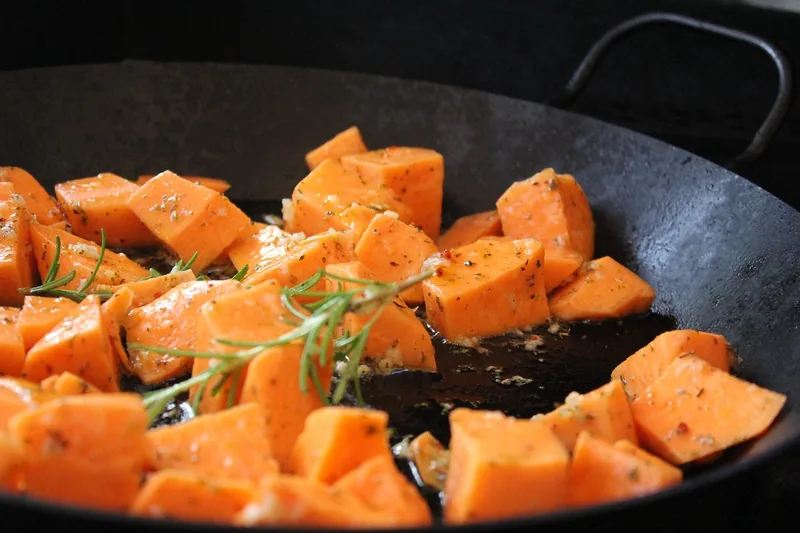
Roasted Sweet Potato Bites
Caramelized at the edges, soft inside. High heat, a hot tray, and enough space between the cubes.
- Total time
- 40 min
- Yield
- Serves 6
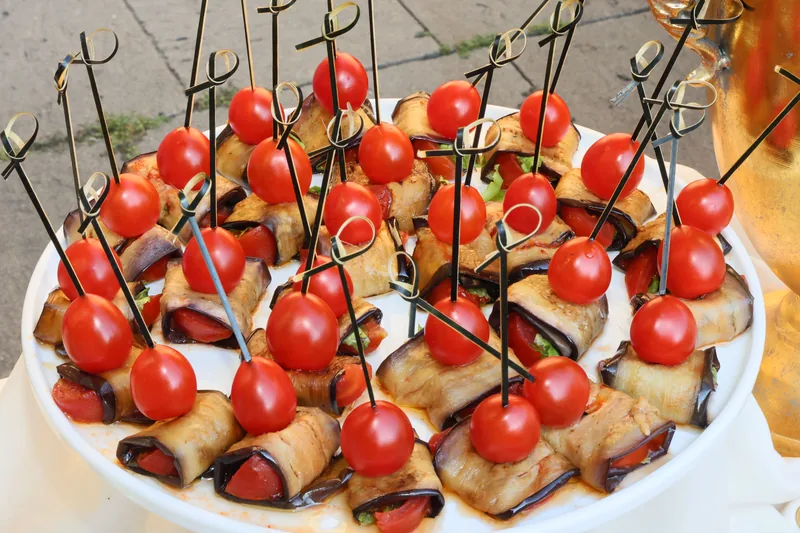
Beef Caprese Skewers
Seared sirloin, tomato, mozzarella and basil on a stick, finished with a balsamic glaze you reduce yourself.
- Total time
- 30 min
- Yield
- Makes 24 skewers
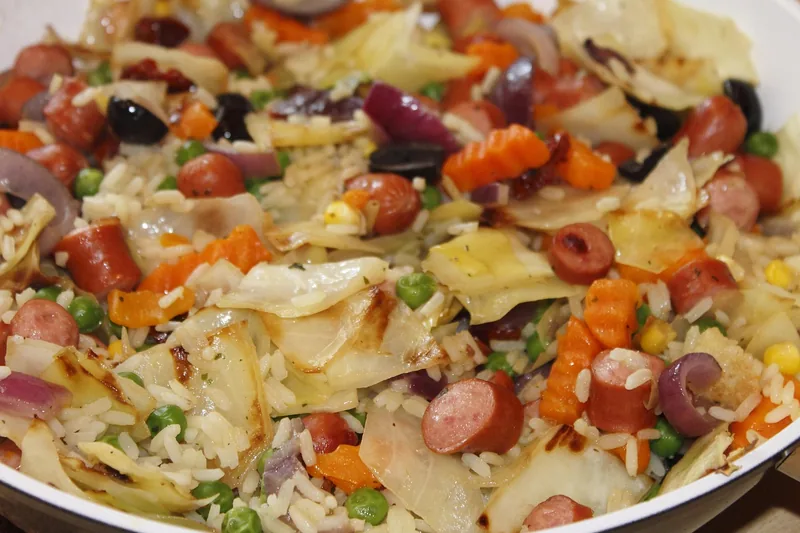
Five-Spice Brussels Sprouts and Sausage Stir-Fry
Halved sprouts seared hard in rendered sausage fat, glazed with soy, honey and five-spice, done in one skillet in under twenty minutes.
- Total time
- 30 min
- Yield
- Serves 4