Five-Spice Brussels Sprouts and Sausage Stir-Fry
Halved sprouts seared hard in rendered sausage fat, glazed with soy, honey and five-spice, done in one skillet in under twenty minutes.
- Prep
- 15 min
- Cook
- 15 min
- Makes
- Serves 4
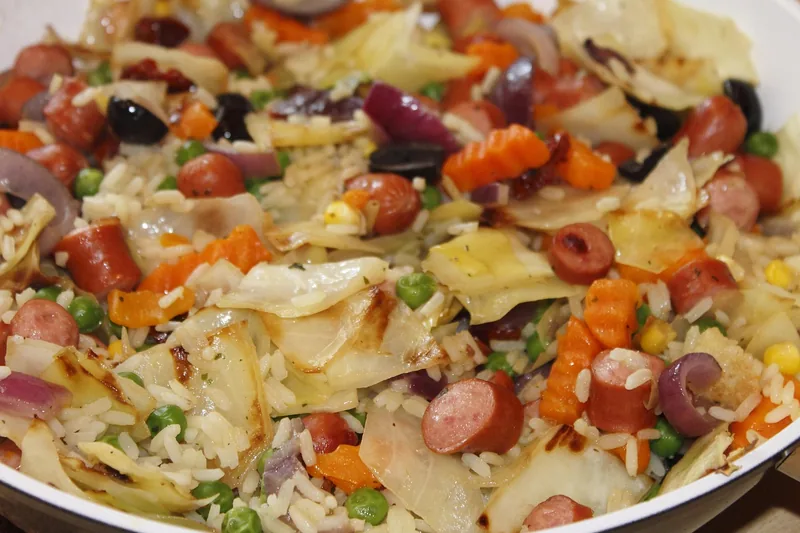
Brussels sprouts taste like two different vegetables depending on how you apply heat. Hit fast on a dry, ripping-hot surface, the cut face caramelizes before the inside has time to do anything, and you get something sweet and nutty. Left to sit in their own steam, the same sprouts cook long and slow in moisture, break down their sulfur compounds, and produce exactly the smell people think they hate. The difference is not the vegetable. It is whether the pan was hot enough and empty enough.
So everything here is arranged around keeping the pan dry. Sprouts go in halved, cut side down, and then you leave them alone for three full minutes — no tossing, no shaking, whatever your instincts say. Stirring a stir-fry constantly is a habit borrowed from dishes cooked in a wok over a jet engine. On a home burner, contact time is the only way to get color, and every toss resets the clock on a face that was halfway to browning.
The sausage is the cooking fat as well as the protein. Bulk pork sausage broken into craggy pieces renders enough to cook the whole pan, which is why the recipe starts with a nearly dry skillet and only a teaspoon of oil to get things moving. Brown it properly, in pieces rather than crumbs, and take it out — it will finish later and it should not spend eight minutes drying out while the sprouts catch up.
Five-spice needs handling. It is mostly star anise and cassia, both assertive, and it scorches faster than garlic. Added early to a hot dry pan it goes acrid and there is no coming back. Added to the liquid instead, it disperses through the whole glaze and stays sweet. That is why the powder lives in the sauce bowl here rather than in the pan.
The sauce is deliberately small — about a third of a cup total, most of it soy sauce, honey and rice vinegar. A stir-fry sauce is a glaze, not a broth. Pour in too much and the pan temperature crashes, the sprouts start simmering, and you have the sad steamed version after all the work of avoiding it. It should hit the hot skillet, hiss, thicken in under a minute, and coat.
Two minutes with a lid on is the only steam you want, and it goes in the middle, not at the end. After the sear, two tablespoons of water and a lid cook the dense core of each sprout through while the browned face stays browned. Lid off after that, and the pan dries out again before the sauce goes in.
Cook the sausage to 160°F (71°C). Pork sausage in pieces this size is there well before the sprouts are, so it is really a question of not leaving it in the pan longer than it needs — pull it at brown and return it at the end.
Doneness on the sprouts is a knife test, not a timer: the tip should go into the stem end with slight resistance, the way it does with a cooked but still firm potato. Fully soft means you went past it. For a similar fast pan and glaze on a different protein, there is beef and broccoli, and sweet and sour sauce if you want another glaze to keep in the refrigerator. Dessert has nothing to do with a skillet of sprouts, but chocolate pecan clusters keep for a week in a tin, which makes them the easiest thing to have made before the pan is even hot.
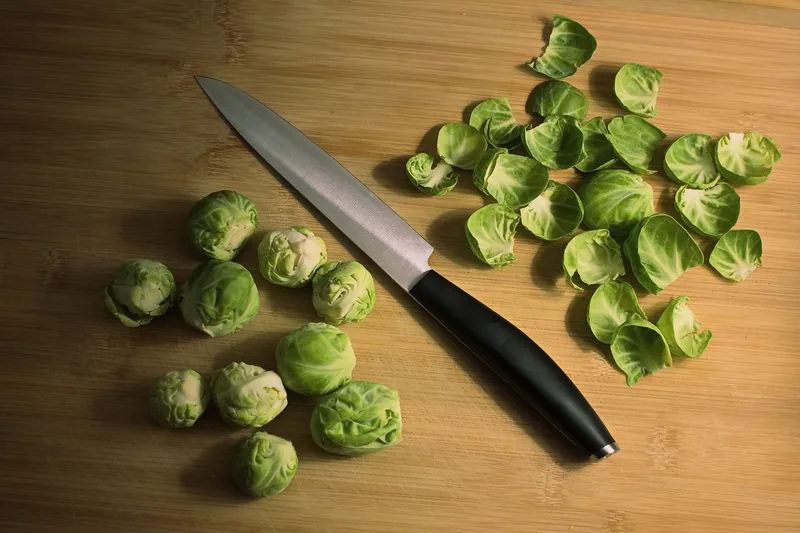
The stir-fry, printed for the stove
Halved sprouts seared hard in rendered sausage fat, glazed with soy, honey and five-spice, done in one skillet in under twenty minutes.
Sprouts, sausage and the glaze
For the stir-fry
- 1½ lb (680 g) Brussels sprouts, trimmed and halved through the stem
- 12 oz (340 g) bulk pork sausage
- 1 tsp neutral oil
- 4 garlic cloves, sliced thin
- 1 tbsp fresh ginger, minced
- 4 scallions, cut into 1-inch lengths
- 2 tbsp water
- 2 tbsp toasted sesame seeds
For the five-spice glaze
- 3 tbsp soy sauce
- 1 tbsp honey
- 1 tbsp rice vinegar
- 1½ tsp Chinese five-spice powder
- 1 tsp toasted sesame oil
- ½ tsp red pepper flakes
- 1 tsp cornstarch
Searing, steaming, then glazing
- 1 Stir the soy sauce, honey, rice vinegar, five-spice, sesame oil, pepper flakes and cornstarch together in a small bowl and set it by the stove. The five-spice belongs here, in liquid — added to a dry hot pan it scorches and turns bitter.
- 2 Halve the sprouts through the stem so each piece keeps a flat face and stays held together. Pat them dry. Any water on the cut surface has to boil off before browning can start.
- 3 Heat a large heavy skillet over medium-high with the teaspoon of oil. Add the sausage in large chunks and brown hard for 5–6 minutes, breaking it into craggy pieces rather than crumbs, until cooked through at 160°F (71°C). Lift it out with a slotted spoon and leave the fat behind.
- 4 Add the sprouts cut side down in a single layer — in two batches if they do not all fit with space around them. Do not touch them for 3 minutes. When the cut faces are deep brown, toss once.
- 5 Add the water and cover for 2 minutes. This cooks the stem end through while the seared face stays seared. Uncover and let the pan dry out again, about 30 seconds.
- 6 Push the sprouts aside, add the garlic and ginger to the bare pan and stir for 20 seconds, until fragrant but not colored.
- 7 Return the sausage, add the scallions, stir the sauce once more and pour it in. Toss constantly for 45–60 seconds as it thickens and coats everything. Off the heat, scatter the sesame seeds over.
Pans, swaps and leftovers
- Cast iron or carbon steel beats nonstick here. A nonstick surface will not hold the temperature needed for a hard sear once a pound and a half of cold vegetables lands on it.
- Smoked sausage or kielbasa works: slice it on an angle, brown it the same way, and add a tablespoon of oil since it renders less fat.
- For a vegetarian version, swap in 14 oz (400 g) pressed extra-firm tofu in cubes, browned first in 2 tablespoons of oil, and add ½ teaspoon more salt to the glaze.
- Sprouts can be halved a day ahead and kept in the refrigerator. Do not wash them until the moment before they hit the pan.
- Leftovers keep 3 days and reheat best in a hot skillet for 2 minutes. The microwave steams them soft.
- Serves 4 over rice, 3 as a plate on its own. Doubling means cooking the sprouts in two clear batches, not one crowded pan.
Heat, moisture and five-spice
They steamed instead of searing, which means the pan was crowded, damp, or not hot enough when they went in. Long exposure to moist heat breaks down the sulfur compounds in the leaves, and that is the smell. A hot dry pan with space between the pieces produces the opposite result from the same vegetable.
Not for this. Freezing ruptures the cell walls, so they release water the moment they warm and the pan never gets dry enough to brown. If it is all you have, roast them instead — an oven can drive off that much moisture, a skillet cannot.
It is what makes the sauce cling rather than run to the bottom of the pan. Without it you still get the flavor, but it pools. One teaspoon in this volume thickens without going gluey.
Yes, up to a week in a jar in the refrigerator. The cornstarch settles, so shake or stir it again right before it goes in the pan.
Warm and licorice-leaning, from the star anise, with cassia behind it. It reads as sweet against pork fat, which is why the honey stays at one tablespoon — more and the two together tip into candy.
More fast pans and glazes
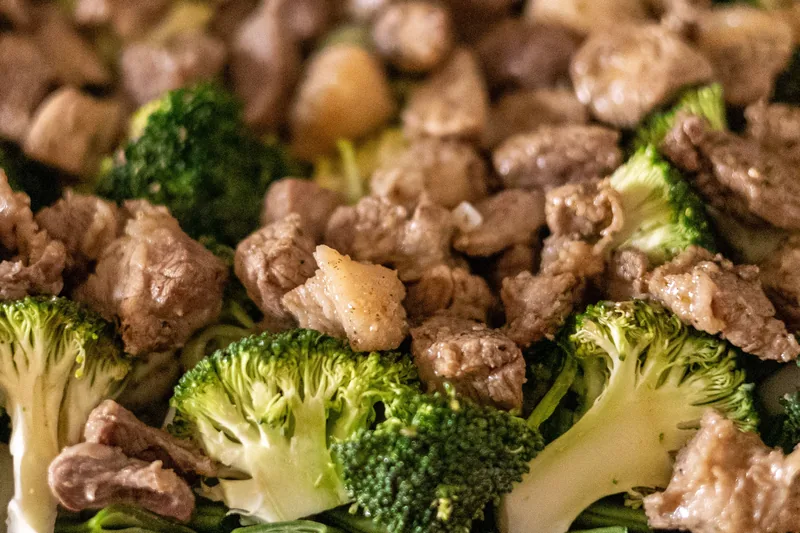
Crockpot Beef and Broccoli
Chuck steak braised until it gives, in a glossy soy and ginger sauce, with broccoli added at the very end so it stays green.
- Total time
- 5 hr 20 min
- Yield
- Serves 6
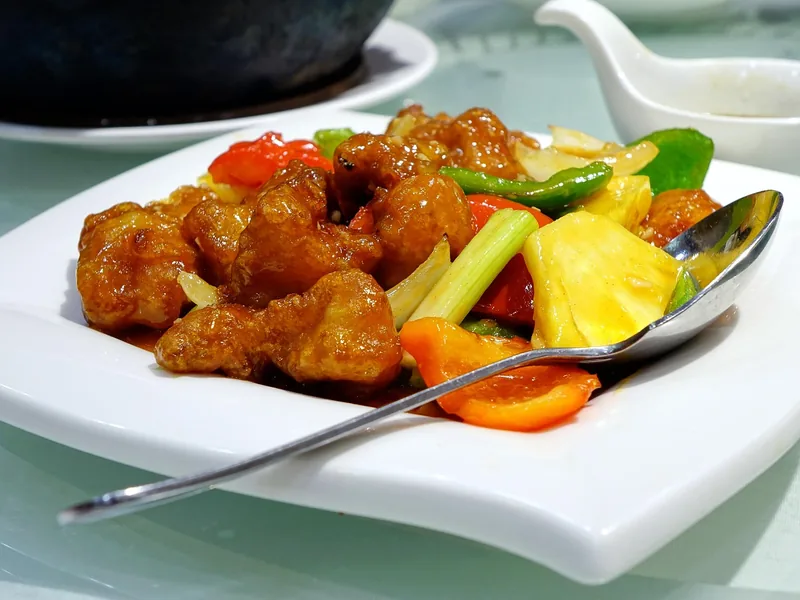
Chinese Sweet and Sour Sauce
Clear, glossy and sharp enough to cut through fried food. No ketchup, no food coloring, ready in eight minutes.
- Total time
- 13 min
- Yield
- Makes about 1½ cups (350 ml)
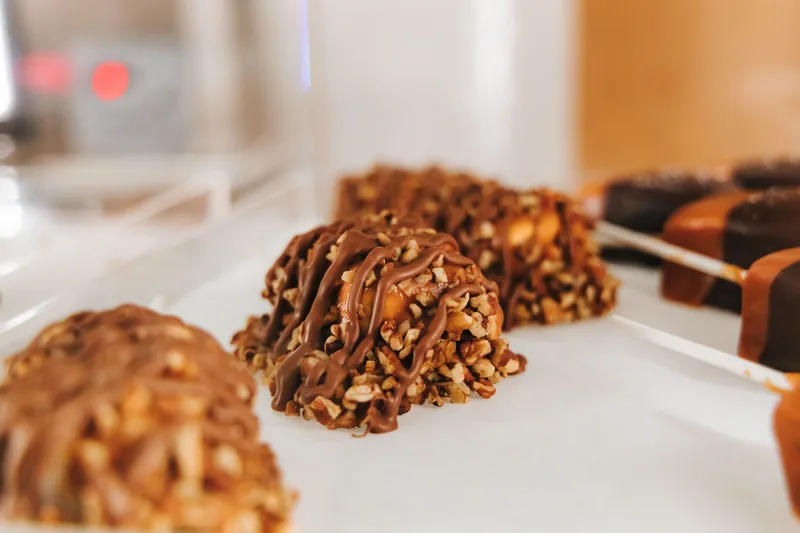
Chocolate Pecan Turtle Clusters
Toasted pecans under a firm-ball caramel and a coat of seeded dark chocolate, cooked to a thermometer so the chew is the same every time.
- Total time
- 2 hr 15 min
- Yield
- Makes about 18 clusters