Green Fruit Salad
Six green fruits, a honey lime dressing, and nothing brown. The dressing is what stops the apples turning.
- Prep
- 20 min
- Makes
- Serves 8
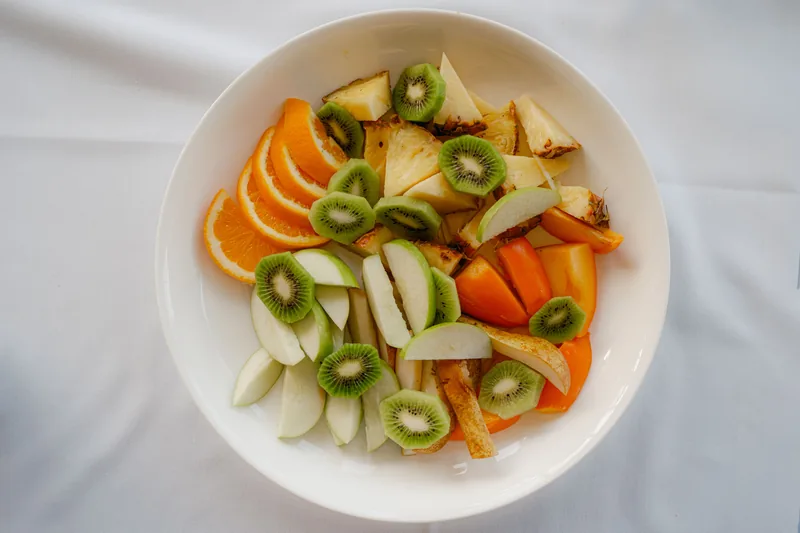
A fruit salad built on one color has one enemy, and it is browning.
Apples, pears and green grapes all contain polyphenol oxidase, an enzyme that reacts with oxygen and turns cut surfaces brown within minutes. Lime juice stops it two ways: the ascorbic acid is a reducing agent that reverses the first stage of the reaction, and the low pH slows the enzyme itself. So the dressing is not only flavor — toss the cut fruit in it as you go and the salad stays green for hours.
The honey pulls a third shift. It is thick and it is sticky, and a fruit cube wearing a film of honey-lime syrup has a physical barrier between its cut face and the air. This is why the dressing gets whisked before you pick up a knife rather than poured over at the end; a bowl of fruit dressed after the fact has already done its browning.
Cut the fruit to roughly the same size, about ¾ inch (2 cm). A salad with whole grapes and large chunks of melon eats badly; every forkful should be able to hold a bit of everything.
Buy the melon by weight in your hand and by the smell at the blossom end. A ripe honeydew feels heavy, sounds dull rather than hollow, and gives very slightly under a thumb at the end opposite the stem; the skin should be waxy and faintly tacky, not smooth and squeaky. An unripe one is crunchy, watery and tastes of almost nothing, and no amount of honey rescues it — refrigeration stops it ripening any further.
Choose the apple for structure. Granny Smith holds its edges and brings acid of its own, which helps the cause. A soft eating apple goes mealy in the dressing within an hour and turns the salad grainy.
Pears should be a shade underripe — firm enough that the knife meets resistance. A perfectly ripe pear is delicious and structurally hopeless, and by the time the bowl reaches the table it has become paste in the gaps.
Kiwi last and gently. It is soft, it bruises, and stirred through early it breaks down and clouds the whole bowl.
Kiwi carries one other thing worth knowing about: actinidin, a protease that digests protein. It does nothing to the other fruit, but it will thin whipped cream, turn yogurt bitter and loose within an hour, and stop gelatin setting at all. If a creamy dressing is wanted, spoon it over each serving rather than stirring it through the bowl.
The same honey and lime dressing works on peach lemonade as a syrup.
Mint, torn not chopped. A knife blackens the cut edges within minutes, which on a salad that is entirely about staying green is the wrong thing to do.
Serve it cool, not straight from the refrigerator. Cold blunts aroma and sweetness both; fifteen minutes on the counter is the difference between fruit that tastes of itself and fruit that tastes of cold.
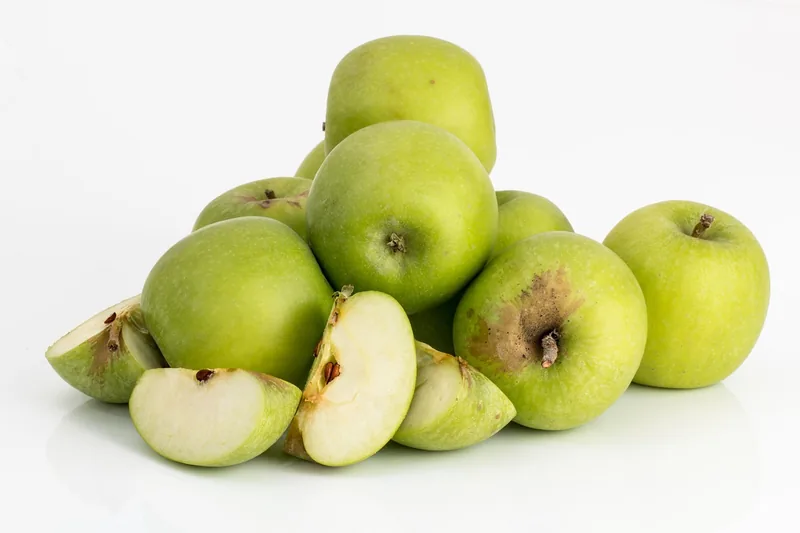
Green fruit salad, printed
Six green fruits, a honey lime dressing, and nothing brown. The dressing is what stops the apples turning.
The fruit and the honey lime dressing
For the salad
- ½ honeydew melon, in ¾-inch (2 cm) cubes
- 4 kiwis, peeled and quartered
- 2 cups (300 g) green grapes, halved
- 2 green apples, cored and diced
- 2 ripe pears, cored and diced
- 2 star fruit, sliced, optional
- Small handful of mint leaves
For the honey lime dressing
- Juice and zest of 2 limes
- 3 tbsp honey
- 1 tsp vanilla extract
- Pinch of fine salt
Cutting it in the right order
- 1 Whisk the dressing ingredients together in the bottom of a large bowl before you cut anything.
- 2 Prepare the apples and pears first and toss them in the dressing immediately — they brown fastest.
- 3 Add the melon and grapes and turn everything through the dressing.
- 4 Fold in the kiwi and star fruit last, gently, so they keep their shape.
- 5 Chill 30 minutes, then tear the mint over just before serving.
Why this healthy fruit salad keeps
- Keeps a day refrigerated, which is unusual for a fruit salad and is entirely down to the lime.
- A splash of elderflower cordial in the dressing suits it if you have some.
- Lemon works in place of lime, at the same quantity. It is slightly less aromatic and does exactly the same chemical job.
- The dressing alone keeps a week in a jar in the refrigerator. Shake it before using; the honey settles.
- Green seedless grapes, honeydew and Granny Smith are the reliable core. Star fruit, green plums and peeled cucumber are all fair additions if the market has them.
- Halve the recipe for a family and it still works; scale past double and cut the fruit in batches, tossing each batch into the dressing before starting the next.
Browning, weeping and making it ahead
The lime will keep the color honest for about 24 hours, so the browning is not the problem. Texture is. Melon and pear leach water overnight and go slack, so if you need a head start, cut the apples, grapes and melon the night before and add the kiwi and pears in the morning.
No — that is osmosis. Sugar outside the fruit cells is more concentrated than the juice inside them, so water migrates out into the dressing. Spoon it back over as you serve, or drain it off and drink it with soda water.
Frozen fruit weeps as it thaws and arrives soft; canned fruit is already soft and packed in its own syrup. Both turn this into a compote. If frozen grapes are all you have, leave them frozen and add them at the table as the chilling element.
Not to the bowl. The actinidin in kiwi breaks down milk protein, so within an hour a stirred-through dairy dressing goes thin and faintly bitter. Serve it alongside and let people spoon it on.
It was cold and crystallized. Warm the honey for ten seconds first, or whisk it into the lime juice a spoonful at a time so it disperses rather than hitting the acid all at once.
More no-cook dishes
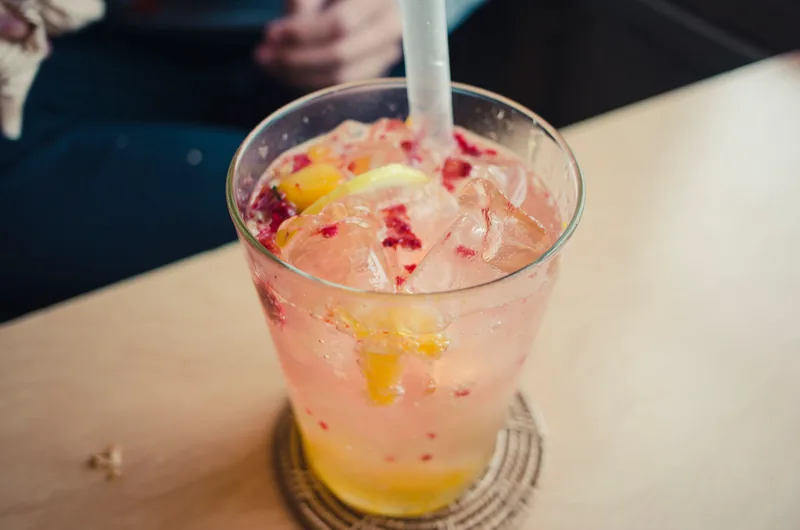
Peach Lemonade
Ripe peaches blitzed into fresh lemonade, strained smooth. Nothing from a bottle, ready in ten minutes.
- Total time
- 15 min
- Yield
- Makes about 6 cups (1.5 liters), serves 6
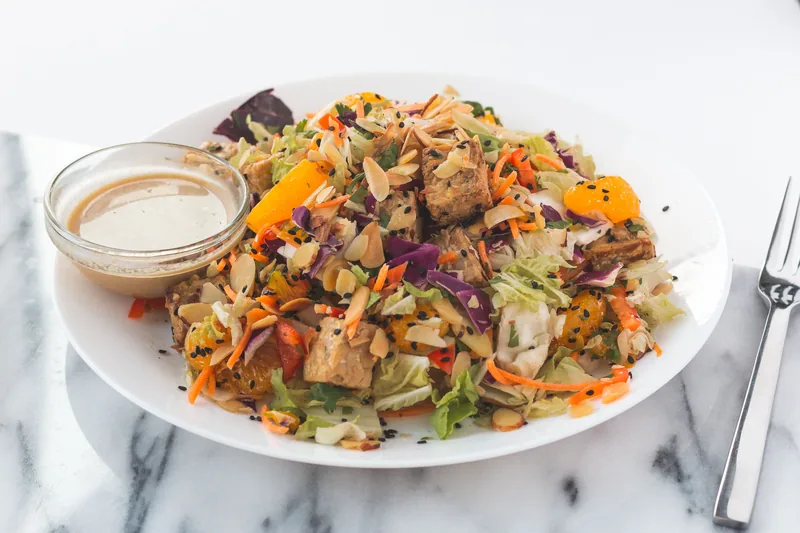
Crunch Salad
Six vegetables cut to the same size, feta, toasted seeds and a sharp balsamic vinaigrette. Assembled, not tossed in advance.
- Total time
- 20 min
- Yield
- Serves 6
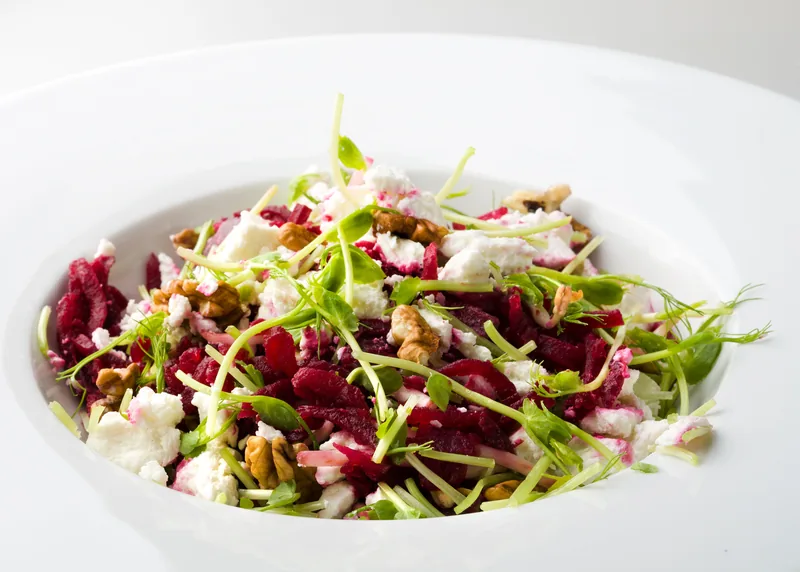
Roasted Beet Salad with Feta and Walnuts
Beets roasted in foil until they slip out of their skins, with salty feta and walnuts toasted to the edge of burning.
- Total time
- 1 hr 15 min
- Yield
- Serves 6