Roasted Beet Salad with Feta and Walnuts
Beets roasted in foil until they slip out of their skins, with salty feta and walnuts toasted to the edge of burning.
- Prep
- 15 min
- Cook
- 1 hr
- Makes
- Serves 6
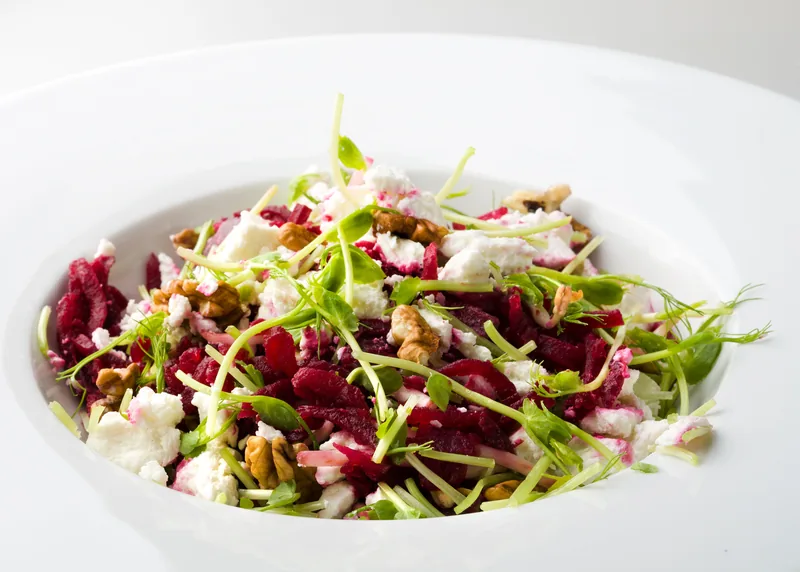
Boiled beets leach their color and about half their flavor into the water. Roasted whole in foil, they lose nothing — the parcel traps the steam, the sugars concentrate, and the skins slip off under a thumb afterwards without a peeler or purple hands.
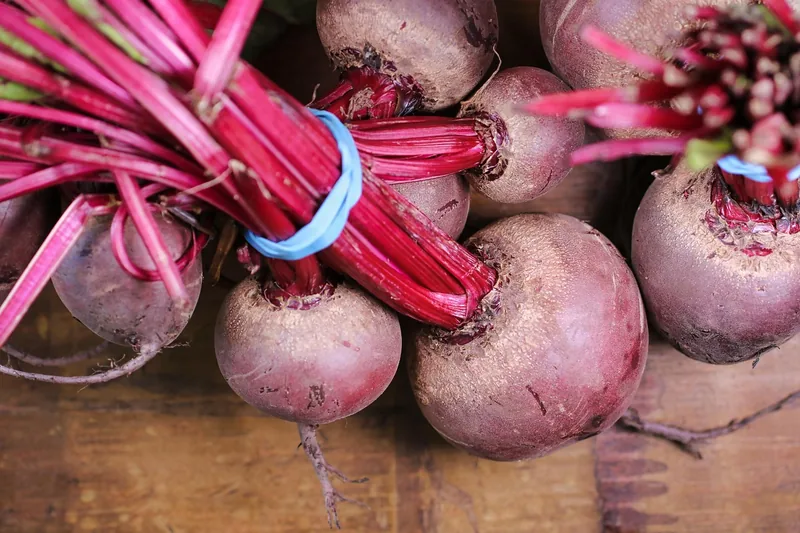
Wrap them whole and unpeeled. Cut beets bleed; whole ones do not.
Toast the walnuts properly, until they smell nutty and are a shade darker than looks safe. Raw walnuts are bitter and slightly astringent, and that bitterness fights the sweetness of the beets. Toasting drives off the volatile compounds responsible and brings out the oils. Four minutes in a dry pan, shaking constantly, and never walk away — they go from perfect to acrid in about twenty seconds.
Sort the beets by size before they go in the oven, and roast the big ones in their own parcel. A golf-ball beet is done in forty minutes and a tennis-ball one needs ninety, and a mixed tray gives you some that are still woody next to some that have collapsed. Test with a thin skewer through the thickest part: it should meet no resistance at all, not merely go in.
Foil rather than parchment, and sealed tightly. The point is to trap the beet's own steam around it — parchment lets it escape and you end up part-roasting, part-drying. If you would rather not use foil, a covered dish with a splash of water in the bottom does the same job.
Dress the beets while they are still warm. Warm vegetables absorb vinaigrette; cold ones wear it. This is the whole reason this version is tossed rather than arranged — you want the dressing inside the beet, not sitting on it.
Make the dressing sharper than you think it needs to be. Roasted beets are properly sweet, sweeter than boiled ones because nothing has leached out, and a gentle vinaigrette disappears against them. Red wine vinegar and a real mustard, and taste it on a piece of beet rather than off a spoon.
Beet juice stains wood and fingers. Cut them on a plate or a glass board rather than a wooden one, and if you mind purple hands, rub your palms with oil first — the pigment is water-soluble and will not grip an oiled surface.
Feta last and by hand. Crumbled with fingers it stays in soft irregular pieces; cut with a knife it turns to rubble. Add it once the beets have cooled to warm rather than hot, or it melts into the dressing and muddies it.
For the plated version with goat cheese, see beet and goat cheese salad. For a salad that needs no dressing trick at all, green fruit salad relies on lime to do two jobs at once.
Beet salad with feta: the card
Beets roasted in foil until they slip out of their skins, with salty feta and walnuts toasted to the edge of burning.
Salad and dressing
For the salad
- 2 lb (900 g) beets, scrubbed, tops trimmed
- 2 tbsp olive oil, for roasting
- 1 cup (100 g) walnut halves
- 7 oz (200 g) feta
- 3½ oz (100 g) arugula or mixed leaves
- Handful of dill
For the dressing
- 4 tbsp olive oil
- 2 tbsp red wine vinegar
- 1 tbsp honey
- 1 tsp Dijon mustard
- Salt and black pepper
Roasting the beets, toasting the walnuts
- 1 Heat the oven to 400°F (200°C) convection. Rub each beet with oil, wrap individually in foil, and roast 50–60 minutes until a knife slides through easily.
- 2 Cool until you can handle them, then rub the skins off with paper towels — they come away in one piece. Cut into wedges.
- 3 Toast the walnuts in a dry pan over medium heat for 4 minutes, shaking constantly, until fragrant and a shade darker. Tip them out immediately; the pan keeps cooking them.
- 4 Shake the dressing ingredients together and toss two-thirds of it through the warm beets. Leave 10 minutes.
- 5 Arrange the leaves on a platter, spoon the beets over, crumble the feta by hand and scatter the walnuts and dill.
- 6 Finish with the rest of the dressing.
Making it ahead
- Roast the beets up to three days ahead and keep them refrigerated in their dressing. They improve.
- Golden beets do not bleed and look striking mixed with red, if you can find them.
- Pecans or hazelnuts stand in for walnuts. Hazelnuts want an extra minute and their skins rubbed off in a cloth.
- Vacuum-packed cooked beets work on a weeknight. They are wetter and blander than roasted, so drain them hard and add an extra teaspoon of vinegar.
- Keep the leaves if they came attached. Young beet tops wilt in a hot pan with garlic in two minutes and belong on the same plate.
Roasting beets without losing the colour
No. Roast them whole and unpeeled in foil and the skins slip off under your thumb afterwards. Peeling first exposes the flesh, which then dries and loses colour into the pan.
A thin skewer should pass through the thickest part meeting no resistance whatsoever. If it goes in but drags, give them another 15 minutes — an undercooked beet is firm in a way that reads as woody rather than crisp.
Either they were not toasted, or they were toasted too far. Raw walnut skins are tannic and fight the sweetness of the beets; burnt ones are acrid. Four minutes in a dry pan, shaking constantly, and take them out when they smell nutty.
You can, and you lose the point. Boiling leaches colour and about half the flavour into the water, which is exactly what the foil parcel is designed to prevent. If boiling is the only option, do it in the skins and keep the water for a soup.
Beets and dressing, three days. Walnuts and feta go on within an hour of eating — nuts soften in a wet salad and feta dissolves into the dressing and clouds it.
More beet salad
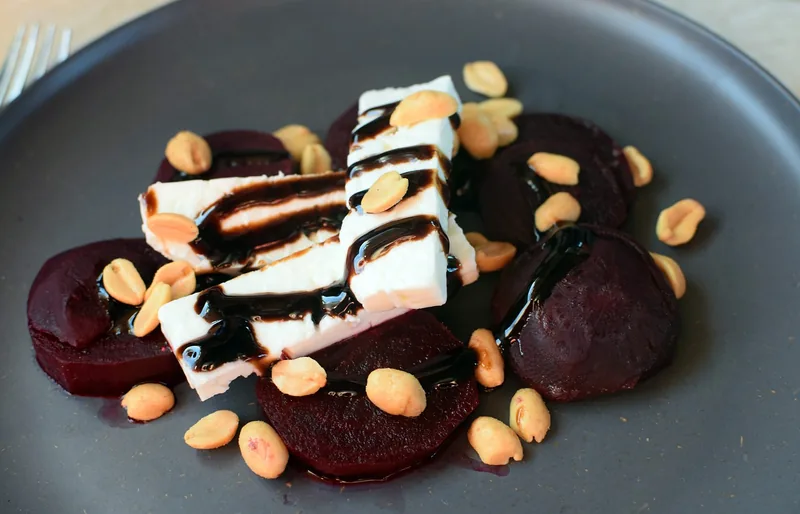
Beet and Goat Cheese Salad
Thinly sliced roasted beets, rounds of soft goat cheese, pistachios and a balsamic reduction.
- Total time
- 1 hr 20 min
- Yield
- Serves 4
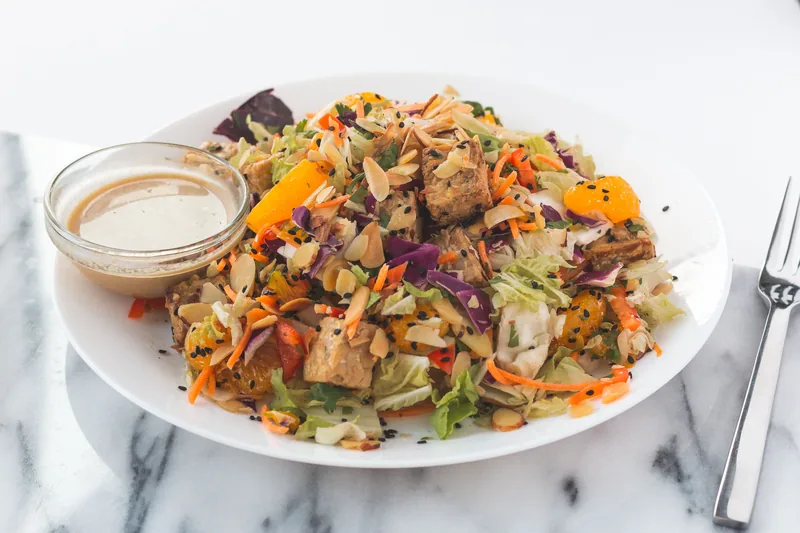
Crunch Salad
Six vegetables cut to the same size, feta, toasted seeds and a sharp balsamic vinaigrette. Assembled, not tossed in advance.
- Total time
- 20 min
- Yield
- Serves 6
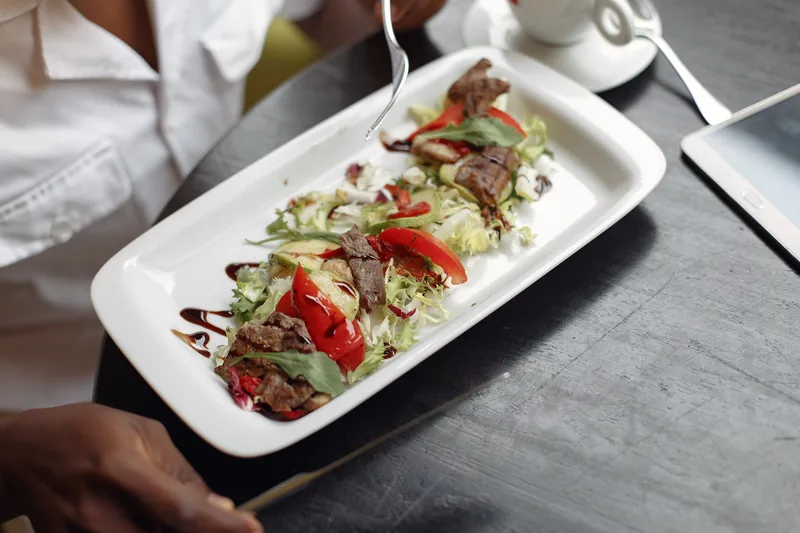
Balsamic Steak Gorgonzola Salad with Grilled Corn
Charred sweet corn, cold peppery leaves and warm sirloin sliced against the grain, with enough Gorgonzola to stand up to the balsamic.
- Total time
- 48 min
- Yield
- Serves 4