Sushi Bake
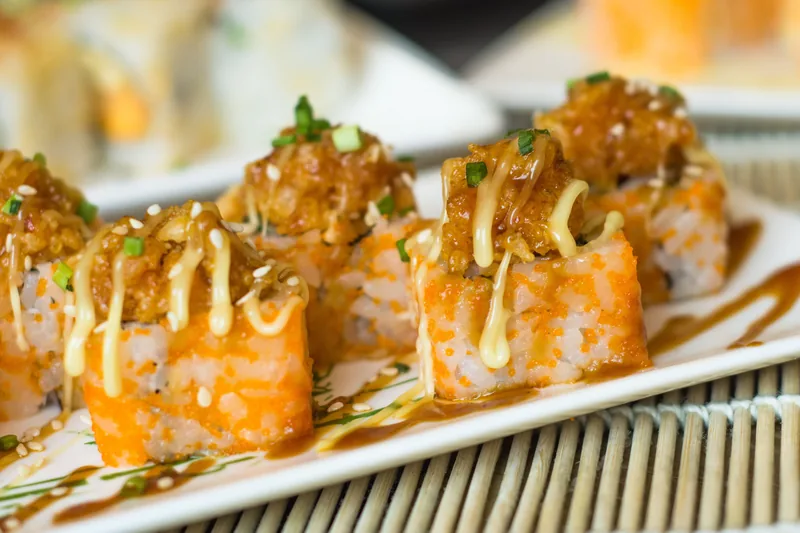
Seasoned sushi rice pressed into a dish, topped with a creamy salmon and imitation crab mixture, baked until golden and drizzled with spicy mayo and eel sauce. Scoop it onto roasted seaweed.
- Prep
- 30 min
- Cook
- 45 min
- Rest
- 5 min
- Makes
- Serves 6
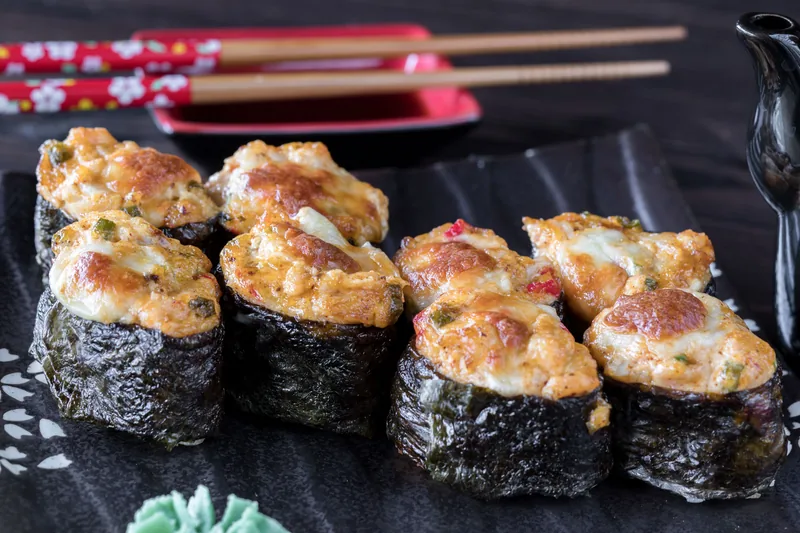
Nobody rolls anything for a sushi bake: it is baked in a dish and served by the spoonful. Seasoned rice on the bottom, a creamy, savory seafood topping baked until golden, then spicy mayonnaise and sweet eel sauce on top. Everyone scoops a portion onto a square of roasted seaweed and eats it like a hand roll. It came out of Filipino and Hawaiian home cooking, spread widely online, and has stayed popular because it gives you the flavor of sushi without any rolling skills.
It starts with the rice. Use Japanese short-grain rice, often sold as sushi rice. It is sticky enough to hold together when scooped, but its grains remain distinct. Long-grain rice falls apart. Rinse it until the water runs nearly clear, cook it, and season it while still hot with rice vinegar, sugar and salt. The hot grains absorb the seasoning; cold rice will not. Fan it or let it cool a little, so it is warm but not steaming, before pressing it into the dish.
Press the rice firmly into an even layer. That compact base is what lets you cut and scoop it neatly. A sprinkle of furikake, the Japanese rice seasoning of sesame seeds, seaweed and salt, between the rice and the topping adds savory crunch.
The topping is the heart of the dish. Cooked salmon and imitation crab, flaked and mixed with Japanese mayonnaise and a little cream cheese. Japanese mayo, such as Kewpie, is made with egg yolks only and a touch of rice vinegar, which makes it richer and tangier than American mayonnaise. It also browns beautifully in the oven. Sriracha in the mixture adds a little heat.
The salmon can be baked or pan-seared quickly before mixing, or you can use leftover cooked salmon. Do not use raw sushi-grade fish here; it will be cooked in the oven, and it is a waste of expensive fish. Imitation crab, made from pollock, is already cooked and gives the familiar California roll flavor.
Spread the topping evenly over the rice and bake until hot all the way through and golden on top. A minute or two under the broiler at the end gives the browned, slightly blistered surface that makes it so good. Watch it closely; mayonnaise goes from golden to burnt quickly.
Finish with a drizzle of spicy mayo and eel sauce, which is sweet and syrupy and contains no eel, plus sliced green onions and sesame seeds. Serve warm with roasted seaweed snack sheets, cucumber slices and avocado.
From the same Hawaiian home-cooking tradition, loco moco is the hearty rice bowl. For a fresher appetizer, beef spring rolls roll everything in rice paper. Air fryer salmon bites use the same salmon, and crab cakes are another way to make seafood go further.
Sushi bake for a crowd
Seasoned sushi rice pressed into a dish, topped with a creamy salmon and imitation crab mixture, baked until golden and drizzled with spicy mayo and eel sauce. Scoop it onto roasted seaweed.
Seasoned rice, a creamy seafood layer and the drizzles
For the sushi rice
- 2 cups (400 g) Japanese short-grain rice
- 2¼ cups (530 ml) water
- ¼ cup (60 ml) rice vinegar
- 2 tbsp sugar
- 1 tsp fine salt
- 2 tbsp furikake
For the seafood topping
- 12 oz (340 g) cooked salmon, flaked
- 8 oz (225 g) imitation crab, shredded
- 4 oz (115 g) cream cheese, softened
- ⅓ cup (75 g) Japanese mayonnaise
- 1 tbsp sriracha
- 1 tsp soy sauce
- 2 green onions, thinly sliced
To finish and serve
- 2 tbsp Japanese mayonnaise mixed with 1 tbsp sriracha
- 2 tbsp eel sauce (unagi sauce)
- 1 tbsp toasted sesame seeds
- 2 green onions, sliced
- Roasted seaweed snack sheets, cucumber slices and avocado
Season the rice, press, top, bake and broil
- 1 Rinse the rice in a sieve until the water runs nearly clear. Cook it with the water in a rice cooker or covered saucepan: bring to a boil, lower to the lowest heat and cook 15 minutes, then rest covered 10 minutes.
- 2 Warm the vinegar, sugar and salt until dissolved. Transfer the hot rice to a wide bowl and gently fold in the vinegar mixture with a spatula. Let it cool until warm.
- 3 Heat the oven to 400°F (200°C). Press the rice firmly and evenly into an 8×8 in (20×20 cm) or 7×11 in (18×28 cm) baking dish. Sprinkle the furikake over it.
- 4 Mix the salmon, imitation crab, cream cheese, mayonnaise, sriracha, soy sauce and green onions until evenly combined. Spread over the rice in an even layer.
- 5 Bake 12–15 minutes, until hot through. Switch the oven to broil and broil 1–3 minutes, watching closely, until the top is golden and blistered in spots.
- 6 Let it rest 5 minutes. Drizzle with the spicy mayo and eel sauce, and scatter the sesame seeds and green onions.
- 7 Serve warm, scooped onto seaweed sheets with cucumber and avocado.
Other seafood, making it ahead and leftovers
- Salmon: bake 1 lb (450 g) salmon fillet seasoned with salt at 400°F (200°C) for 12 minutes, cool and flake. Canned salmon also works.
- Shrimp: replace the salmon with 12 oz (340 g) cooked, chopped shrimp.
- Crab only: use 1¼ lb (565 g) imitation crab for a classic California roll flavor.
- Make ahead: make the rice and topping up to 1 day ahead and refrigerate separately. Warm the rice slightly before assembling, as cold rice hardens.
- Leftovers: refrigerate up to 2 days and reheat in the oven at 350°F (180°C) for 10 minutes.
The rice, raw fish and Japanese mayo
Japanese short-grain rice, also sold as sushi rice. It holds together for scooping while keeping distinct grains.
No. The salmon is cooked before mixing and the whole dish is baked, so it is fully cooked.
Yes, but Japanese mayonnaise is richer and tangier and browns better. If using regular mayo, add a few drops of rice vinegar and a pinch of sugar.
No. It is a sweet, thick sauce of soy sauce, mirin and sugar, named for being served with grilled eel.
More seafood to share
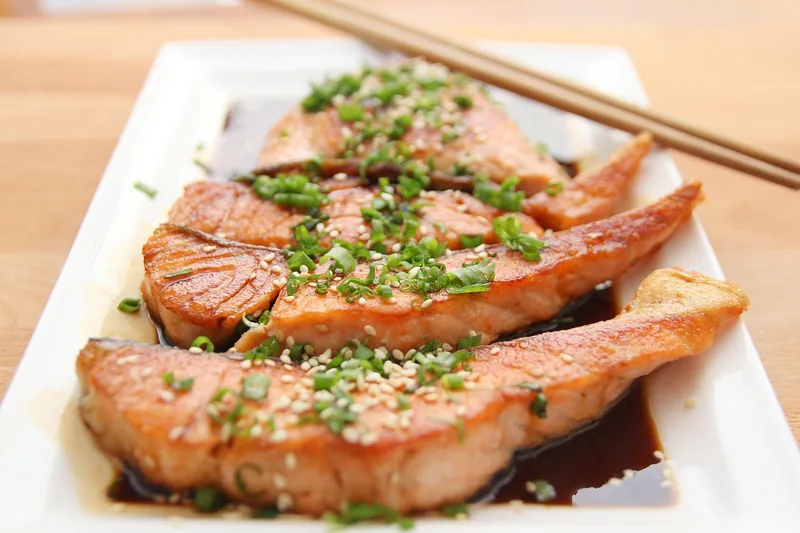
Air Fryer Salmon Bites with Garlic Cream Sauce
Eight minutes in the basket, caramelized outside and barely set within, with a lemon-garlic cream to dip.
- Total time
- 23 min
- Yield
- Serves 4
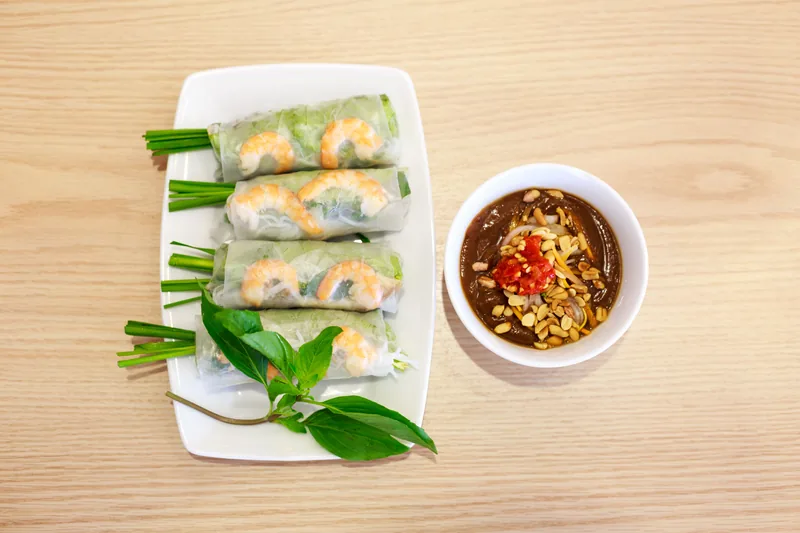
Beef Spring Rolls with Peanut Lime Sauce
Rice paper, herbs and seared beef, rolled cold. Nothing is cooked except the meat and the noodles.
- Total time
- 50 min
- Yield
- Makes 12 rolls
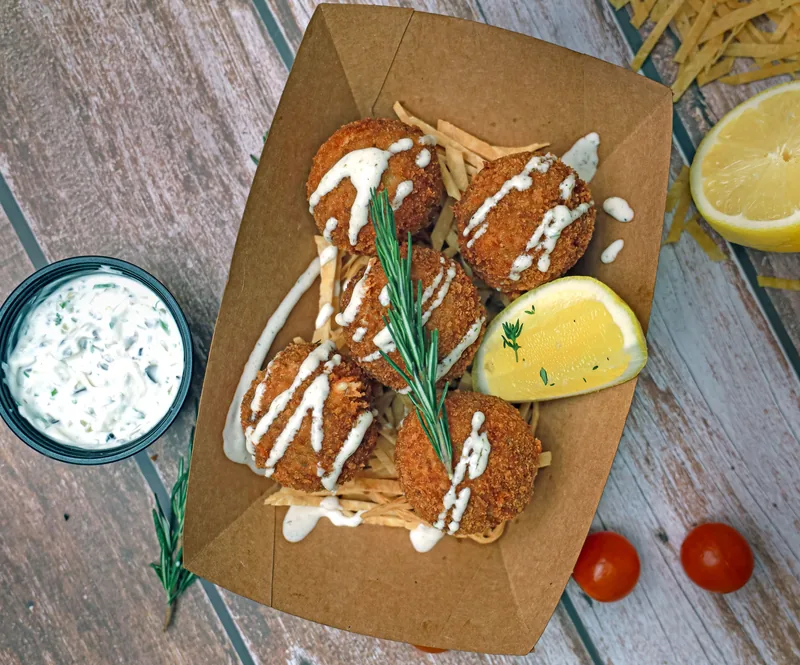
Cheddar Bay Crab Cakes with Lemon Butter Drizzle
Barely bound lump crab with sharp cheddar and garlic, chilled hard so it holds, seared in butter and finished with lemon.
- Total time
- 1 hr 15 min
- Yield
- Makes 8 crab cakes