Air Fryer Salmon Bites with Garlic Cream Sauce
Eight minutes in the basket, caramelized outside and barely set within, with a lemon-garlic cream to dip.
- Prep
- 15 min
- Cook
- 8 min
- Makes
- Serves 4
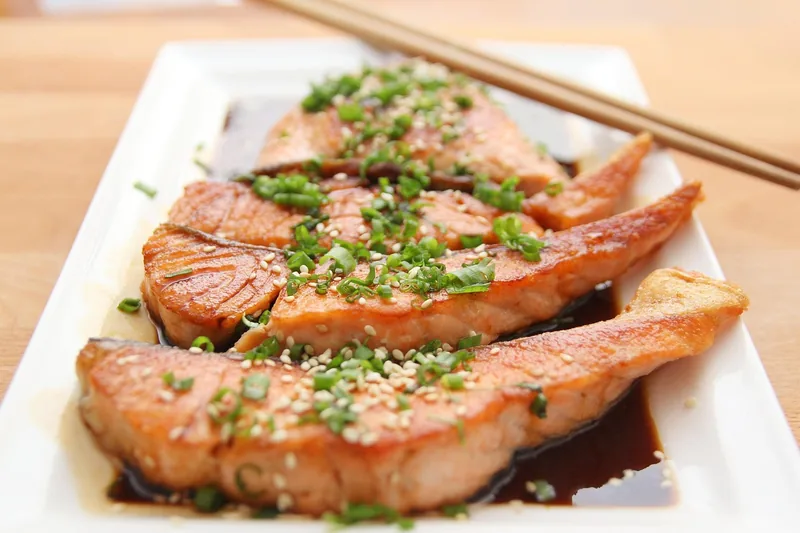
Salmon has a very short window. Its proteins begin to firm at around 120°F (50°C) and by 140°F (60°C) they have squeezed out the white albumin you see leaking from overcooked fillets. Cut into 3 cm cubes, the whole thing happens in about eight minutes at 400°F (200°C), and the difference between right and dry is roughly ninety seconds.
Cube it evenly. This sounds like pedantry until you have a batch where the small pieces are chalky and the large ones are raw. Aim for uniformity over any particular size — a ruler is not required, but glancing across the board for outliers before they go in the bowl is.
Pat the cubes bone dry and use honey in the marinade. Air fryers have no oil to conduct heat, so browning depends entirely on sugar and surface dryness. Surface water has to boil off before anything can brown, and while it does, the cube is sitting at the temperature of steam and going pale and firm rather than caramelised. Honey helps because its fructose browns at a lower temperature than table sugar does, so the lacquered edge forms inside the short window the fish gives you.
Know which salmon you bought. Farmed Atlantic is fatty and forgiving, and it is what this timing is written for. Wild sockeye or coho is much leaner, cooks noticeably faster and dries out sooner — start checking those at five minutes rather than seven.
A word on temperature and safety, because the two answers differ. The USDA recommends cooking fish to 145°F (63°C). The texture most people want from salmon arrives well before that, around 125°F (52°C), still translucent at the centre. This recipe aims for the lower figure deliberately. If you are cooking for someone pregnant, elderly or immunocompromised, take it to 145°F (63°C) and accept the firmer result.
The sauce is made cold, in the time the salmon cooks, and it should be sharper than seems reasonable — it is a foil for rich fish, not a companion to it. Crushing the garlic to a paste with salt rather than mincing it matters: a paste disperses through the sour cream evenly, so nobody gets a raw fragment, and the salt draws enough moisture out of the clove to let it dissolve rather than sit in flecks.
Take them out a touch early. A 3 cm cube carries enough heat to keep cooking for a minute on the plate, and that minute is most of the difference between the texture you wanted and the one you settled for.
For something punchier to dip into, burger sauce works here too, and air fryer fried chicken uses the same basket at a similar heat if you are feeding more people. For the opposite approach to the same fish — long, gentle, no ninety-second window — there is a fish stew that poaches white fillets in a tomato and fennel broth and never lets the pot boil.
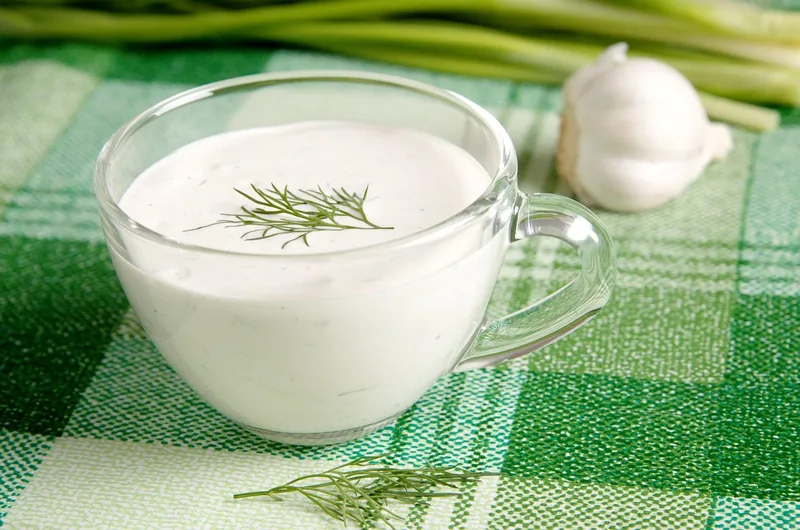
Salmon bites and cream sauce: the card
Eight minutes in the basket, caramelized outside and barely set within, with a lemon-garlic cream to dip.
Salmon, and the garlic cream sauce
For the salmon
- 1½ lb (700 g) skinless salmon fillet, cut into 3 cm cubes
- 1 tbsp olive oil
- 1 tbsp honey
- 1 tsp smoked paprika
- 1 tsp garlic powder
- 1 tsp fine salt
- ½ tsp black pepper
For the garlic cream sauce
- ⅔ cup (150 g) sour cream
- 3 tbsp mayonnaise
- 2 garlic cloves, crushed to a paste with salt
- Juice and zest of 1 lemon
- 2 tbsp chopped dill
- 1 tsp Dijon mustard
Eight minutes in the basket
- 1 Pat the salmon cubes thoroughly dry. Toss with the oil, honey and seasonings until evenly coated.
- 2 Stir the sauce ingredients together and refrigerate while the salmon cooks. Crushing the garlic with salt rather than mincing it gives a smoother, less aggressive flavor.
- 3 Heat the air fryer to 400°F (200°C). Arrange the cubes in a single layer with space between them — crowded, they steam.
- 4 Cook 7–8 minutes, shaking once at the halfway point. They are done when the outside is lacquered and the center is just opaque. If in doubt, take them out: they carry on cooking for a minute after.
- 5 Serve immediately with the cold sauce.
On frozen fish
- Frozen salmon works if thawed fully and dried hard. Any surface water steams and you lose the caramelized edge.
- Wild salmon is leaner than farmed and cooks faster. Start checking at 5 minutes.
- The sauce keeps three days and is good on anything fried. It is better on day two, once the garlic has settled into the dairy.
- No honey: maple syrup behaves the same way and browns just as readily. Skip both and the cubes cook through but stay pale.
- Leftovers are better cold, flaked into a salad, than reheated. Reheating takes them straight past the window this recipe is built around.
Knowing when air fryer salmon is done
The outside is browned and the center is just turning opaque, still slightly translucent at the very middle. That is around 120°F (50°C). Cooked until uniformly opaque, salmon is already dry.
Fish protein bonds to bare hot metal. Spray the basket after it has preheated rather than before, and leave the cubes alone for the first few minutes — they release by themselves once the surface has browned. Prising them up early tears them.
Not well. The ice melts into surface water, the water has to boil off, and by the time it has the outside is overcooked with no browning to show for it. Thaw fully and dry hard.
The broiler, about 4 inches from the element, for 5–6 minutes without turning. A very hot skillet also works: cook them on two sides only, 90 seconds each, and leave the other four faces alone.
Rice and something sharp and green. The bites are rich and the sauce is rich, so the plate needs acid somewhere — a cucumber salad, or lemon over blanched greens.
More small plates
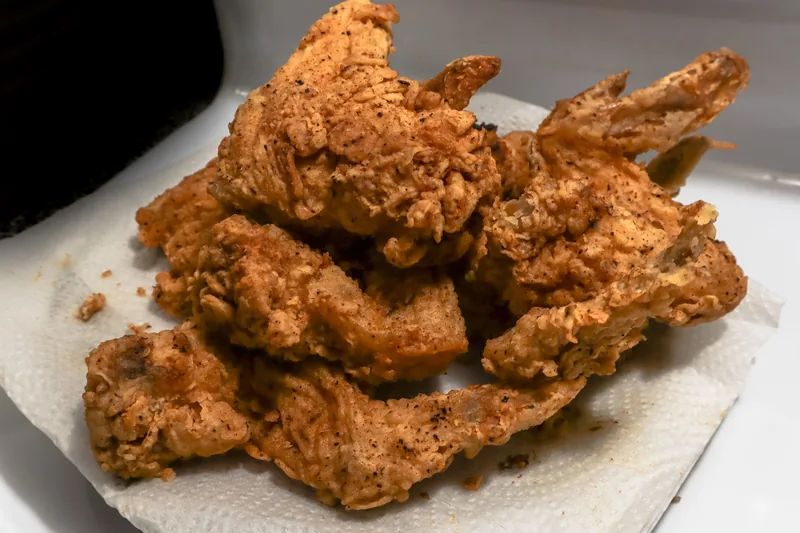
Air Fryer Fried Chicken
Buttermilk-brined thighs in a craggy seasoned crust, crisp all over in 25 minutes without a pot of hot oil.
- Total time
- 4 hr 45 min
- Yield
- Serves 4
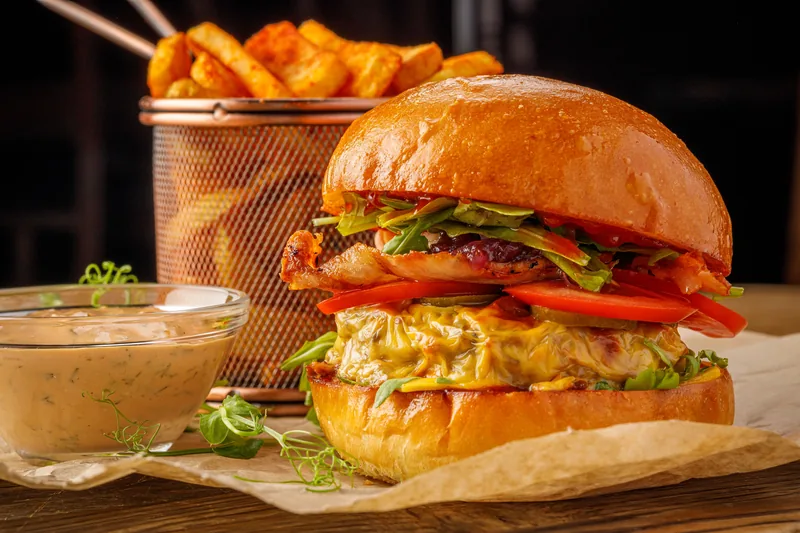
The Best Burger Sauce
Five minutes, no cooking, and better after an hour in the fridge. The pickle brine is the part everyone leaves out.
- Total time
- 1 hr 5 min
- Yield
- Makes about 1¼ cups (300 ml)
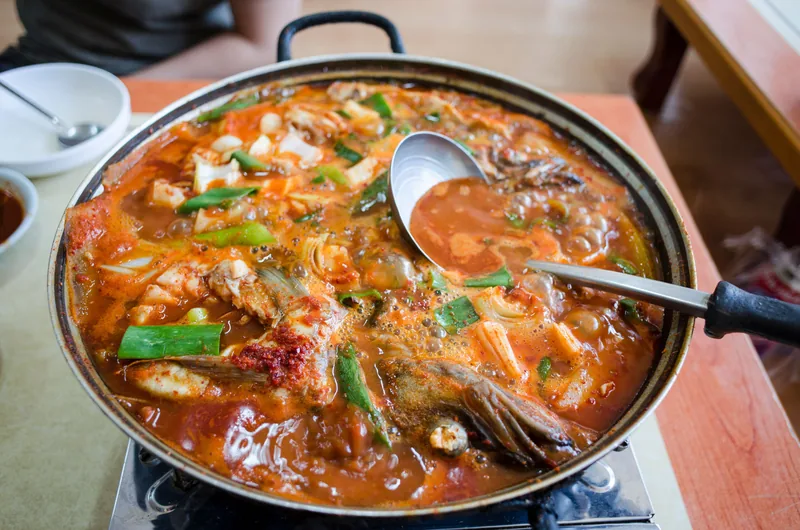
Easy Fish Stew Delight
White fish poached gently in a tomato, fennel and garlic broth, with the fish added last and the pot never allowed to boil.
- Total time
- 45 min
- Yield
- Serves 4