Beef Spring Rolls with Peanut Lime Sauce
Rice paper, herbs and seared beef, rolled cold. Nothing is cooked except the meat and the noodles.
- Prep
- 40 min
- Cook
- 10 min
- Makes
- Makes 12 rolls
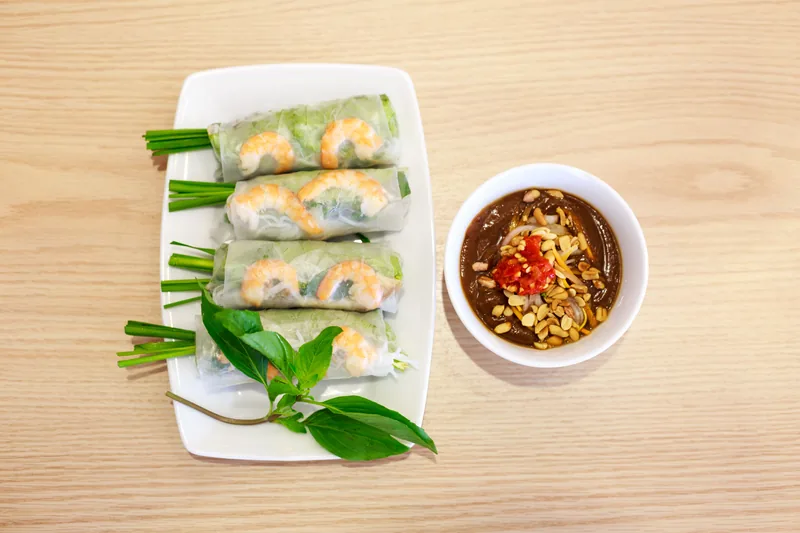
The technique that decides everything here is how long the rice paper spends in the water, and almost every set of instructions gets it wrong by telling you to soak until soft.
Two seconds. Dip and lift while the sheet is still stiff and feels underdone. It keeps absorbing water from the filling and from your hands for the next minute and arrives at exactly the right texture as you roll. Soak it until it is soft in the bowl and it will be a sticky, tearing mess by the time the filling is on — this is the single most common failure and it has nothing to do with skill.
Work on a damp dish towel, not a dry board. Rice paper welds itself to dry wood.
Roll tighter than feels safe. A loose roll falls apart when cut and the filling slides out at the first bite. Fold the sides in first, then roll away from you with steady pressure, keeping everything gathered.
Put the lettuce leaf down first, before anything else. It is not filler. The wet things — noodles, cucumber, beef — will tear a thin wrapper if they sit directly against it, and the leaf is a barrier that also keeps the roll from going soggy in the hour before it is eaten.
The beef has to be cold, rested and cut thin. Sear it, then rest it a full ten minutes before slicing: cut it early and the juices run out onto the board instead of staying in the meat, and warm slices steam inside a sealed rice paper roll. Slice across the grain and as thinly as your knife allows. A thick slice of steak in a soft roll pulls the whole thing apart when bitten.
Rinse the vermicelli under cold water until the water runs clear. Rice noodles shed a lot of starch, and unrinsed they set into a single clump that you then have to tear apart on top of the wrapper — which tears the wrapper.
Use all three herbs if you can. Mint is the bright one, cilantro the savoury one, Thai basil the faintly aniseed one, and the combination is the thing that reads as Vietnamese rather than as a salad in a wrapper. If you can only find one, make it mint.
The sauce needs the lime. Peanut butter and hoisin are both heavy and sweet, and without a sharp acid the dip coats your mouth and stays there. It also thickens as it sits — whisk in another spoonful of warm water just before it goes to the table.
For the deep-fried opposite of these, see corned beef egg rolls.
Fresh spring rolls: the recipe card
Rice paper, herbs and seared beef, rolled cold. Nothing is cooked except the meat and the noodles.
For the rolls, and for the peanut lime sauce
For the rolls
- 14 oz (400 g) sirloin or rump steak
- 1 tbsp neutral oil
- 3½ oz (100 g) rice vermicelli
- 12 round rice paper wrappers, 22 cm
- 1 cucumber, cut into matchsticks
- 2 carrots, cut into matchsticks
- 1 head of butter lettuce, leaves separated
- Large bunches of mint, cilantro and Thai basil
For the peanut lime sauce
- ⅓ cup (90 g) smooth peanut butter
- 2 tbsp hoisin sauce
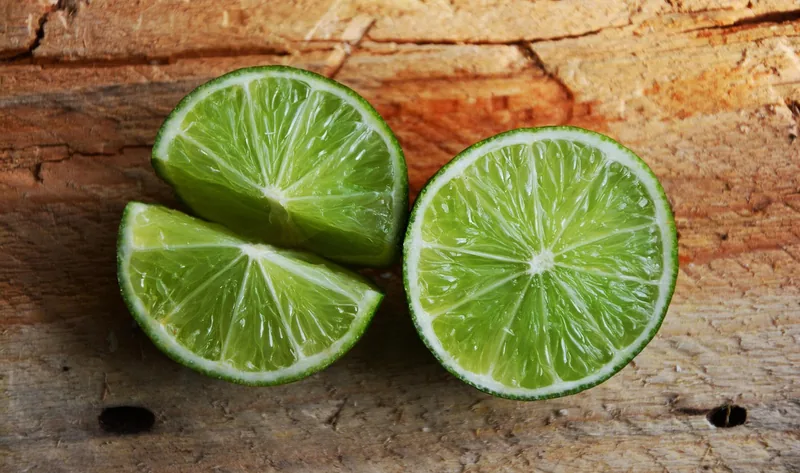
- Juice of 2 limes
- 1 tbsp soy sauce
- 1 tbsp honey
- 1 garlic clove, crushed
- 2–4 tbsp warm water, to loosen
Rolling rice paper without tearing it
- 1 Season the steak and sear it in a very hot pan, 3 minutes a side for medium-rare. Rest 10 minutes, then slice as thinly as you can across the grain.
- 2 Soak the vermicelli in boiling water for 3 minutes, drain, and rinse under cold water so it stops cooking and stops sticking.
- 3 Whisk the sauce ingredients together, adding warm water a spoonful at a time until it is just pourable.
- 4 Set out all the fillings within reach. Once you start rolling there is no time to fetch anything.
- 5 Dip one wrapper in warm water for 2 seconds only — it should still feel firm — and lay it on a damp dish towel.
- 6 Place a lettuce leaf on the lower third, then noodles, vegetables, herbs and beef. Fold the bottom up, fold both sides in, and roll tightly away from you.
- 7 Keep the finished rolls under a damp cloth, not touching each other, and serve within two hours with the sauce.
Storing and substituting
- Rolls stuck together are rolls that touched while wet. Space them out and cover with a damp cloth.
- Shrimp, tofu or shredded chicken all work in place of the beef. Shrimp look best split lengthways and laid cut side down against the wrapper.
- Make the sauce up to 5 days ahead. It stiffens in the fridge; loosen it with warm water, not cold, or the peanut butter seizes.
- The 22 cm wrappers are the standard size. The larger 25 cm ones hold more but are harder to keep taut, and the small 16 cm ones are for one-bite rolls.
- These do not keep overnight. The wrapper goes hard and cloudy in the fridge. Prep the fillings a day ahead and roll on the day.
Why fresh spring rolls fall apart
Soaked too long. Two seconds in the water, no more — the sheet finishes softening while you fill it. If it is pliable in the bowl, it is already past the point of use.
Warm, about the temperature of a bath. Hot water softens the sheet almost instantly and gives you no working time; cold water needs so long that the edges soften before the middle does.
Two hours is the outside limit, kept under a damp cloth at room temperature. Refrigerate them and the rice paper turns opaque and rubbery — the starch retrogrades, and warming them back up does not fix it.
Cold water hit warm peanut butter, or it went in too fast. Add the water a spoonful at a time and whisk each one in completely before the next. If it has already split, a spoonful of hot water and hard whisking usually brings it back.
Sirloin or rump. Both take a hard sear, stay tender sliced thin, and hold their shape in a roll. Skirt and flank have too coarse a grain for something eaten this delicately, and fillet is a waste here — its tenderness is lost against noodles and herbs.
More to start with
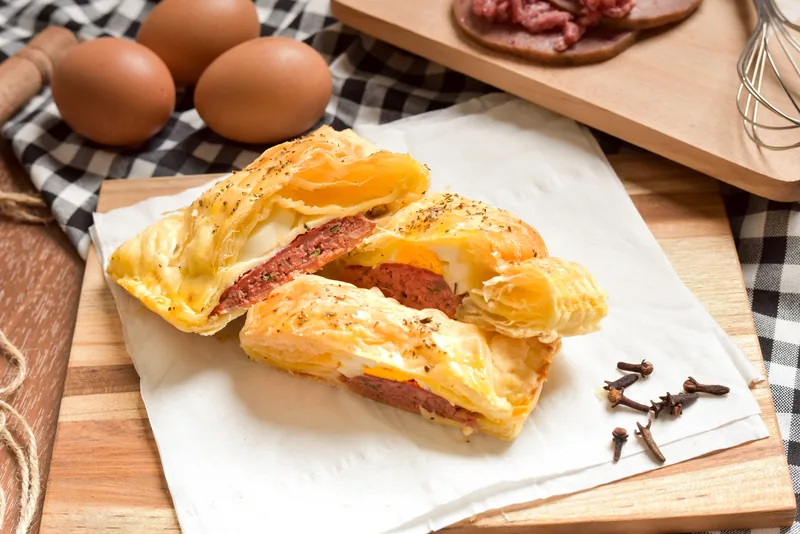
Corned Beef and Sauerkraut Egg Rolls
A Reuben sandwich in a fried wrapper. The sauerkraut has to be wrung dry or the whole thing bursts.
- Total time
- 45 min
- Yield
- Makes 12
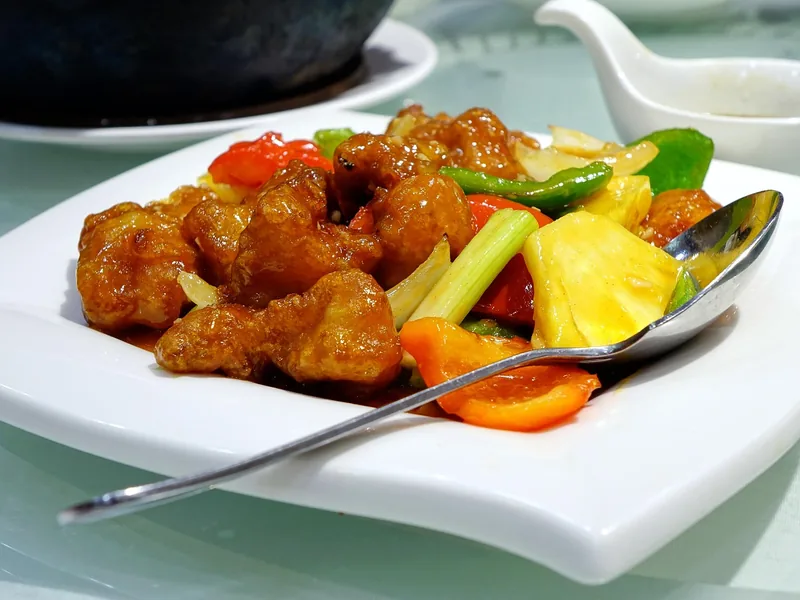
Chinese Sweet and Sour Sauce
Clear, glossy and sharp enough to cut through fried food. No ketchup, no food coloring, ready in eight minutes.
- Total time
- 13 min
- Yield
- Makes about 1½ cups (350 ml)
Beef Caprese Skewers
Seared sirloin, tomato, mozzarella and basil on a stick, finished with a balsamic glaze you reduce yourself.
- Total time
- 30 min
- Yield
- Makes 24 skewers