Chicken Pot Pie
Tender chicken and vegetables in a thick, savory gravy under a flaky golden crust, with a filling cooled before it is covered so the pastry bakes crisp instead of steaming.
- Prep
- 30 min
- Cook
- 50 min
- Rest
- 15 min
- Makes
- Serves 6
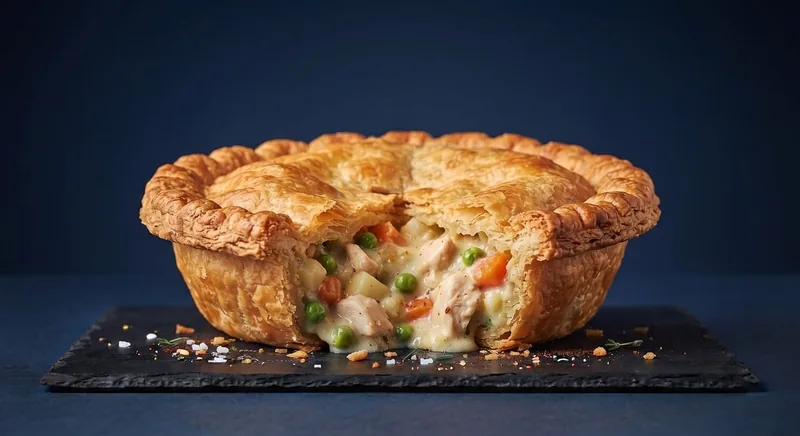
The lid is the hard part of a chicken pot pie: pastry has to bake crisp while it sits on something hot and wet. Pastry needs a blast of dry heat to puff and set before the butter inside melts out. Put raw dough over a steaming filling and the underside cooks in that steam instead, turning pale and doughy no matter how golden the top looks.
So the filling cools before it goes in the dish. Not cold, just warm enough to touch, which takes about twenty minutes on the counter or ten if you spread it out on a sheet pan. That small delay is the difference between a crust that shatters and one that sags. It also stops the butter in the pastry softening before it reaches the oven.
The gravy needs to be thicker than feels right in the pan. As the pie bakes, the vegetables release some water and the filling loosens. A sauce that looks just-right on the stove becomes soup under the crust. Aim for a gravy that clings heavily to the back of a spoon and mounds slightly on the spoon.
That thickness comes from a roux: a third of a cup of flour cooked in the butter with the vegetables before any liquid goes in. Cooking the flour for a couple of minutes removes the raw taste and gives the gravy a savory, slightly nutty flavor. Then broth goes in first, a little at a time to keep it smooth, and milk or cream last for body.
Any cooked chicken works. A store-bought rotisserie chicken is the fastest route and adds roasted flavor; shred it, discarding the skin, and you have about four cups. Poached breasts or leftover roast chicken work just as well. Thighs stay juicier than breasts if you are cooking the chicken for this.
Frozen peas go in at the end, straight from the freezer, so they stay bright and sweet. Carrots, celery and onion are the classic base. Potatoes are optional; diced small, they make the pie heartier but need a few extra minutes of simmering so they are tender before the bake.
Cut steam vents in the top crust. They let moisture escape instead of pooling under the pastry, and they show you when the filling is bubbling hard enough to be done. An egg wash gives the deep, shiny brown everyone expects.
For a weeknight version with no crust at all, million dollar chicken casserole covers creamy chicken with a buttery cracker topping. Chicken noodle soup uses the same vegetable base in a brothier bowl, and chicken and dumplings tops it with dumplings instead of pastry.
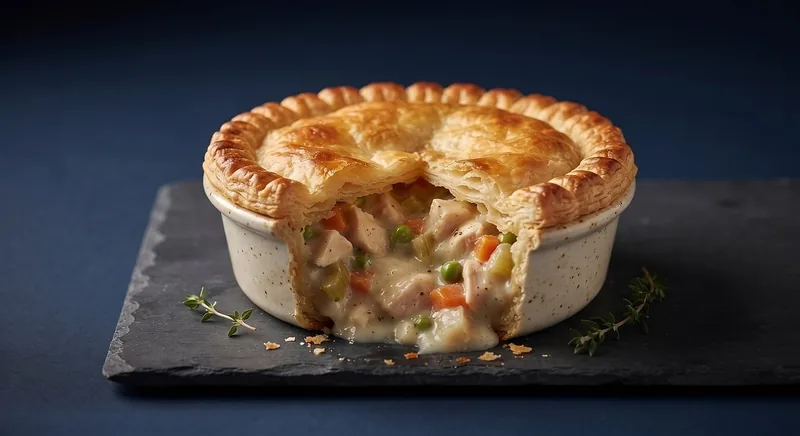
Chicken pot pie, to print
Tender chicken and vegetables in a thick, savory gravy under a flaky golden crust, with a filling cooled before it is covered so the pastry bakes crisp instead of steaming.
A thick filling and two crusts
For the filling
- 6 tbsp (85 g) unsalted butter
- 1 medium yellow onion, diced
- 2 medium carrots, peeled and diced
- 2 ribs celery, diced
- 1 medium Yukon Gold potato, peeled and cut into ½ in (1 cm) dice (optional)
- 2 cloves garlic, minced
- ⅓ cup (40 g) all-purpose flour
- 1¾ cups (415 ml) chicken broth
- ¾ cup (180 ml) whole milk or half and half
- 1 tsp fresh thyme leaves, or ½ tsp dried
- 1 tsp fine salt, plus more to taste
- ½ tsp black pepper
- 4 cups (560 g) cooked chicken, shredded or diced
- 1 cup (140 g) frozen peas
For the crust
- 2 refrigerated or homemade pie crusts, enough for a double-crust 9 in (23 cm) deep-dish pie
- 1 large egg beaten with 1 tbsp water
Thicken, cool, cover, bake hot
- 1 Melt the butter in a large skillet or Dutch oven over medium heat. Add the onion, carrots, celery and potato, if using, and cook until the onion is soft and the carrots are starting to soften, 8–10 minutes; if using the potato, cook 5 minutes longer, until it is nearly tender. Add the garlic for 30 seconds.
- 2 Sprinkle the flour over the vegetables and stir constantly for 2 minutes.
- 3 Pour in the broth a little at a time, stirring after each addition so it stays smooth, then stir in the milk. Add the thyme, salt and pepper and simmer until very thick, 3–5 minutes.
- 4 Stir in the chicken and frozen peas and take the pan off the heat. Taste for salt. Let the filling cool for at least 20 minutes, until just warm.
- 5 Heat the oven to 400°F (200°C) with a rack in the lower third. Fit one crust into a 9 in (23 cm) deep-dish pie plate and add the cooled filling.
- 6 Lay the second crust over the top, trim the overhang to 1 in (2.5 cm), fold it under the bottom crust edge and crimp. Brush with the egg wash and cut 4 slits in the center.
- 7 Set the pie on a rimmed baking sheet and bake 35–40 minutes, until the crust is deep golden and the filling bubbles through the vents. Cover the edge with foil if it browns too fast.
- 8 Rest 15 minutes before cutting so the filling thickens again.
Top crust only, freezing and individual pies
- Top crust only: skip the bottom crust and bake the filling in a 2 qt (2 L) baking dish or a 9 in (23 cm) deep-dish pie plate under one crust or a sheet of puff pastry for 30 minutes. The bottom never goes soggy because there is none.
- Make ahead: the filling keeps 2 days in the refrigerator. Assemble the pie cold and add 10 minutes to the bake.
- Freezing: assemble without the egg wash, wrap well and freeze up to 3 months. Bake from frozen at 375°F (190°C) for 70–80 minutes, covering with foil once golden.
- Turkey: leftover roast turkey replaces the chicken one for one.
- Individual pies: divide the filling among six 10 oz (300 ml) ramekins, top each with a round of pastry, and bake 25 minutes.
Soggy bottoms, runny filling and puff pastry
The filling was too hot or too thin when it went in, so the bottom crust steamed. Cool the filling, make the gravy thick, and bake on the lower rack.
The gravy was not thick enough before baking. Vegetables release water in the oven, so the sauce should be thicker on the stove than you want it at the table. Resting the pie also helps it set.
Yes, for the top only. Puff pastry does not hold up as a bottom crust. Lay a thawed sheet over the filling, cut vents and bake at 400°F (200°C) until puffed and deep golden.
Cut it into ½ in (1 cm) pieces and simmer it in the finished gravy until cooked through to 165°F (74°C), about 8 minutes, before adding the peas. Cooked chicken is quicker and more reliable.
Cover with foil and warm at 350°F (180°C) for 20 minutes, uncovering for the last 5 to recrisp the top. The microwave works but softens the pastry.
More comfort-food chicken dinners
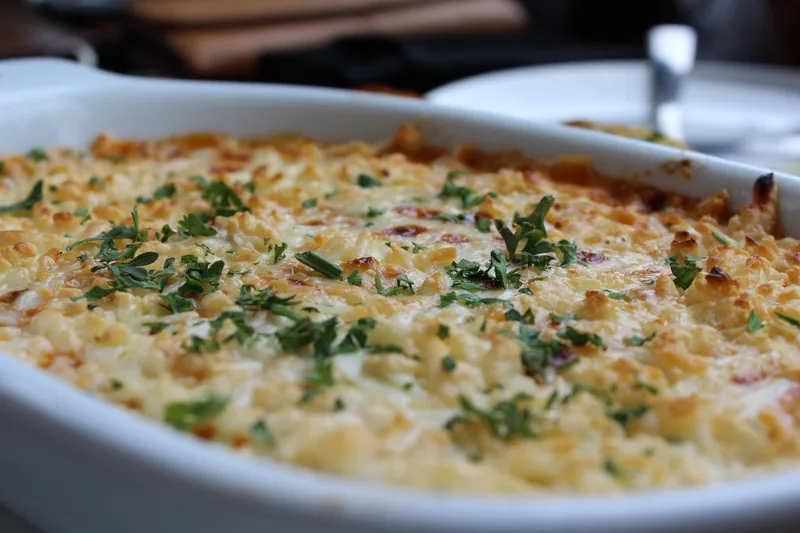
Creamy Million Dollar Chicken Casserole
Shredded chicken in a tangy cream cheese and sour cream layer under a buttery cracker crust, baked until the edges bubble and the top shatters.
- Total time
- 1 hr 5 min
- Yield
- Serves 6
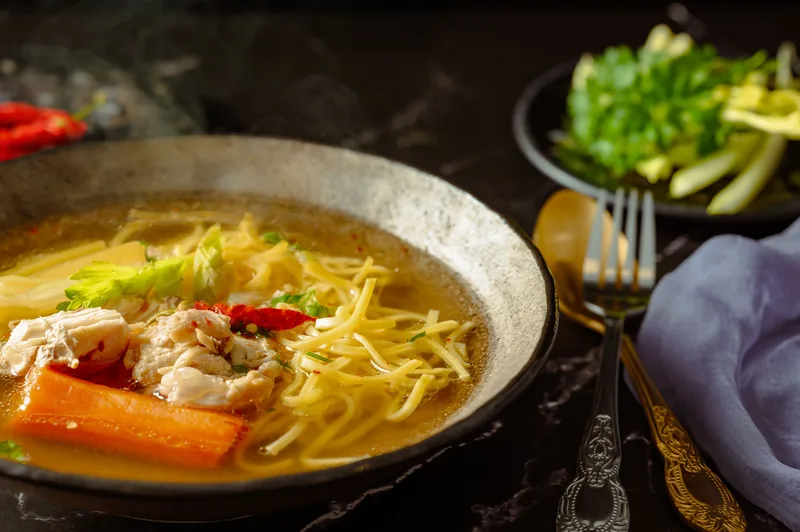
Farmhouse Chicken Noodle Soup
A whole chicken poached into its own stock, then shredded back in. The noodles cook separately and that is not fussiness.
- Total time
- 1 hr 50 min
- Yield
- Serves 8
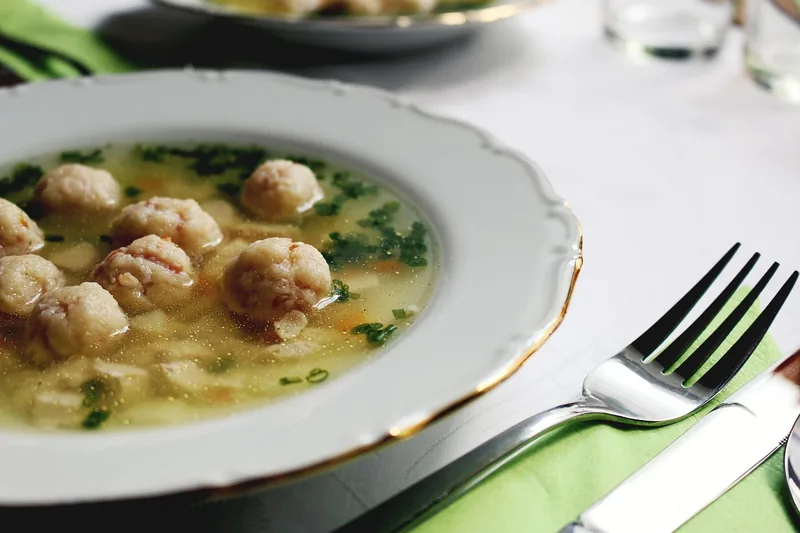
Chicken and Dumplings
Southern chicken and dumplings: bone-in thighs simmered into a rich, lightly creamy broth, topped with fluffy drop dumplings that steam under a closed lid until light all the way through.
- Total time
- 1 hr 35 min
- Yield
- Serves 6