Creamy Million Dollar Chicken Casserole
Shredded chicken in a tangy cream cheese and sour cream layer under a buttery cracker crust, baked until the edges bubble and the top shatters.
- Prep
- 20 min
- Cook
- 35 min
- Rest
- 10 min
- Makes
- Serves 6
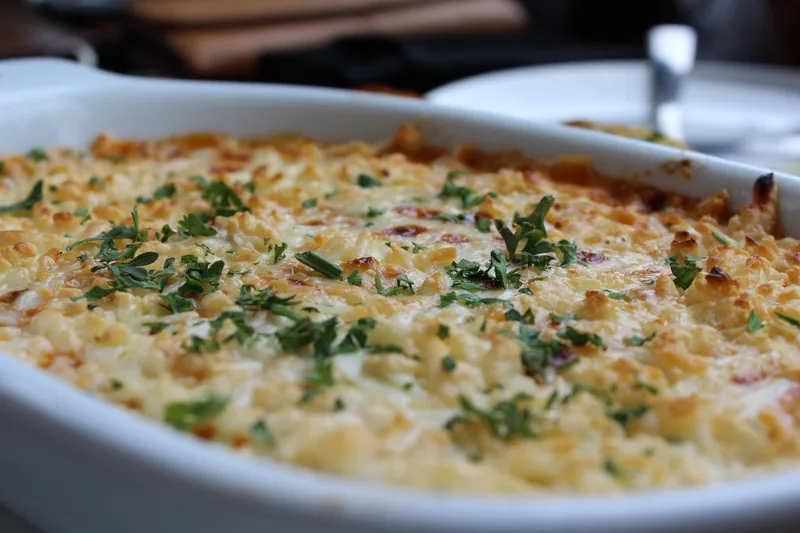
Cold cream cheese does not blend. It breaks into pieces that get smaller but never disappear, and then it bakes into pale lumps suspended in an otherwise smooth casserole. Everything good about this dish depends on that one block sitting on the counter for an hour first, until a spoon goes through it with no resistance at all. There is no rescue later — once the sour cream and cottage cheese go in, the mixture is too loose to work a cold lump out of, and the oven will not melt it smooth either.
The name is old church-cookbook shorthand for the layer itself: cream cheese for body, sour cream for tang, cottage cheese for the curd texture that keeps the whole thing from reading as pure fat. That third one is what people leave out and then cannot work out why their version tastes heavy. Cottage cheese is mostly water and lean protein. It lightens the layer and it carries salt, and its curds give the filling something to be other than smooth.
Water is the enemy on the other side. Chicken poached and shredded straight into the bowl brings a surprising amount of liquid with it, and so does any vegetable you decide to add. A casserole that weeps is not underbaked — it was overloaded with water before it ever saw heat, and thirty more minutes in the oven just browns the top of a puddle. Shred the chicken and let it drain in a colander while you make the filling. Rotisserie meat, already cooked and already drier, is the easiest fix there is.
The topping is buttery crackers and melted butter and nothing else clever. Crush them coarse, with pieces the size of peas rather than sand, because sand packs into a solid lid that steams from below. Coarse crumbs stay open and the steam escapes through them. Pour the butter over evenly and resist stirring — you want some crumbs soaked and some dry, which is where the uneven, shattering top comes from.
Bake uncovered at 350°F (175°C). Foil traps steam directly against the crackers and turns them to wet cardboard in about ten minutes. The casserole is done when the filling bubbles thickly at the edges and the center barely moves when you shove the dish, which takes 30 to 35 minutes. The top will be deep gold. If it is browning fast but the middle is still slack, the pan went in before the oven came up to temperature.
Ten minutes of rest before serving is not decoration. Coming straight out of the oven the filling is liquid and it runs across the plate; ten minutes of cooling tightens the dairy proteins enough that a spoonful holds its shape. Twenty minutes is fine too. This is a dish that does not punish you for being late.
Serve it with something sharp and green to cut it, or with garlic herb potatoes if you want the full comfort version. For the same shredded chicken in a lighter direction, there is farmhouse chicken noodle soup. Both rules above — soft cheese, and no wet ingredient going in undrained — carry straight over to cheesy stuffed chicken, where the water comes out of the mushrooms instead of the meat.
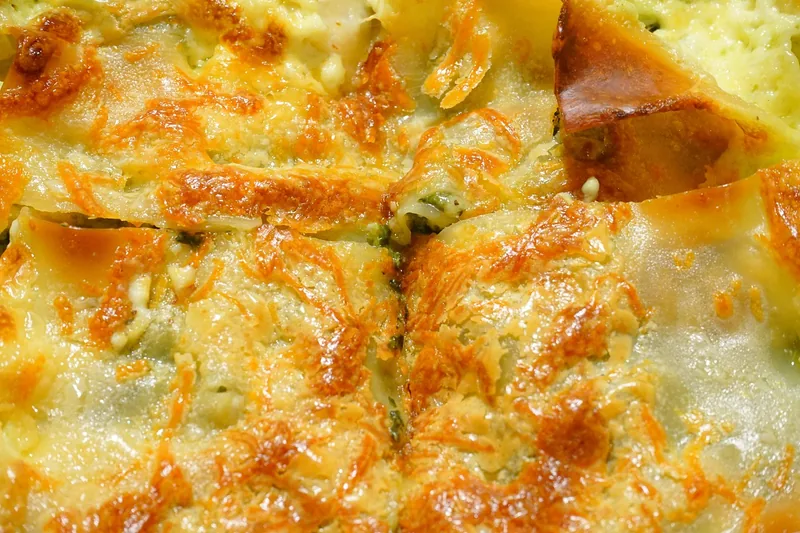
Million dollar chicken casserole at a glance
Shredded chicken in a tangy cream cheese and sour cream layer under a buttery cracker crust, baked until the edges bubble and the top shatters.
The creamy layer and the cracker crust
For the filling
- 4 cups (560 g) cooked chicken, shredded and drained
- 8 oz (225 g) cream cheese, at room temperature
- 1 cup (240 g) sour cream
- 1 cup (225 g) small-curd cottage cheese
- ½ cup (50 g) grated Parmesan
- 2 tbsp lemon juice
- 2 tsp onion powder
- 2 garlic cloves, grated
- 1 tsp fine salt
- ½ tsp black pepper
- ¼ tsp cayenne
For the cracker topping
- 4 oz (115 g) buttery round crackers, about 1 sleeve, coarsely crushed
- 4 tbsp (55 g) salted butter, melted
- 1 tsp poppy seeds, optional
Mixing, layering and baking it
- 1 Take the cream cheese out at least an hour ahead. It should be soft enough that a spoon meets no resistance — this is the single step that decides whether the filling is smooth or lumpy, and the oven will not fix it later.
- 2 Heat the oven to 350°F (175°C) and butter a 9x13-inch baking dish. Shred the chicken and leave it in a colander to drain while you work.
- 3 Beat the cream cheese alone until completely smooth, then beat in the sour cream, cottage cheese, Parmesan, lemon juice, onion powder, garlic, salt, pepper and cayenne. Stop when it is uniform; the curds from the cottage cheese should still be visible.
- 4 Fold in the drained chicken and spread the mixture into the dish. Level the top but do not press it down — a compacted filling bakes denser and takes longer in the middle.
- 5 Crush the crackers coarsely, to pieces about the size of peas rather than to crumbs, and scatter them over. Drizzle the melted butter evenly across and add the poppy seeds. Do not stir the topping; patchy is what makes it shatter.
- 6 Bake uncovered 30–35 minutes, until the edges bubble thickly and the center is set when you nudge the dish. The top should be deep gold. If you are working from cold chicken or a chilled dish, check that the center reaches 165°F (74°C).
- 7 Rest 10 minutes before serving so the filling tightens enough to hold a spoonful. Straight from the oven it will run.
Prep ahead, freeze, reheat
- A 2 lb (900 g) rotisserie chicken gives almost exactly the 4 cups needed, and its meat is drier than poached, which helps.
- Assemble up to a day ahead without the topping, refrigerate, and add crackers and butter just before baking. Add 10 minutes to the bake from cold.
- Freezes well before baking, topping and all, for 2 months. Bake from frozen at 350°F (175°C) for about 1 hour 15 minutes, covering loosely if the top runs ahead.
- No cottage cheese: use 1 cup (240 g) more sour cream. The result is richer and noticeably heavier, which is the tradeoff.
- Leftovers keep 4 days. Reheat uncovered at 350°F (175°C) for 15 minutes — a microwave leaves the crackers soft.
- To halve it, use an 8-inch square dish and start checking at 25 minutes.
Lumps, liquid and topping questions
The cream cheese was still cold when it went into the bowl. Cold cream cheese breaks into pieces rather than dissolving, and nothing after that point blends them in — not more beating, not the oven. Soften the block fully next time. A 20-second burst in the microwave gets you there if you forgot.
Water from the chicken, not underbaking. Freshly poached chicken holds a lot of it, and so do any mushrooms or spinach added without being cooked down first. Drain the meat properly and the casserole sets instead of separating.
It works and it is very wet, so drain it hard and press it in the colander. Expect a softer texture — canned meat has no shred to it, so the filling ends up more uniform than a casserole made with pulled meat.
Crushed saltines, panko, or crushed cornflakes all crisp. They are all leaner than the original, so go up to 5 tablespoons (70 g) of butter, or the topping bakes dusty rather than golden.
Yes, if you cook the water out of them first. Broccoli florets blanched and dried, or mushrooms sauteed until they stop squeaking, both belong here. Raw vegetables release their liquid into the filling during the bake and thin it.
Other ways to use shredded chicken

Farmhouse Chicken Noodle Soup
A whole chicken poached into its own stock, then shredded back in. The noodles cook separately and that is not fussiness.
- Total time
- 1 hr 50 min
- Yield
- Serves 8
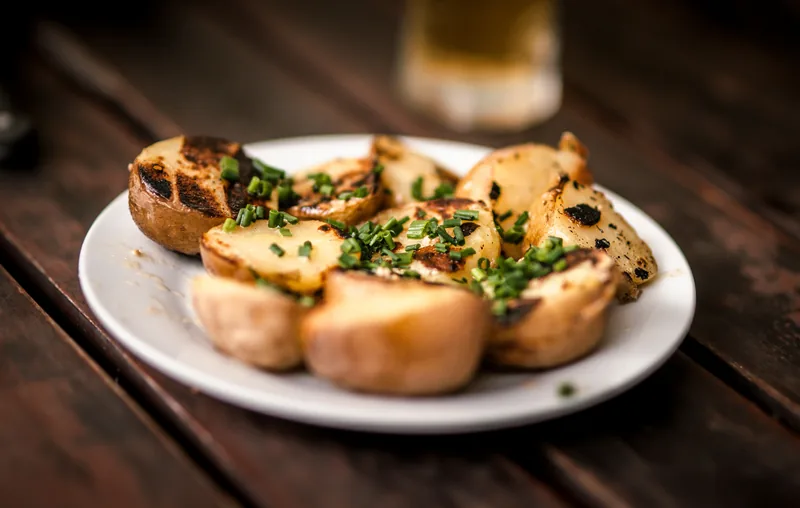
Grilled Potatoes with Garlic and Herbs
Parboiled first so the grill only has to char them. Twelve minutes over the coals, not forty.
- Total time
- 40 min
- Yield
- Serves 6
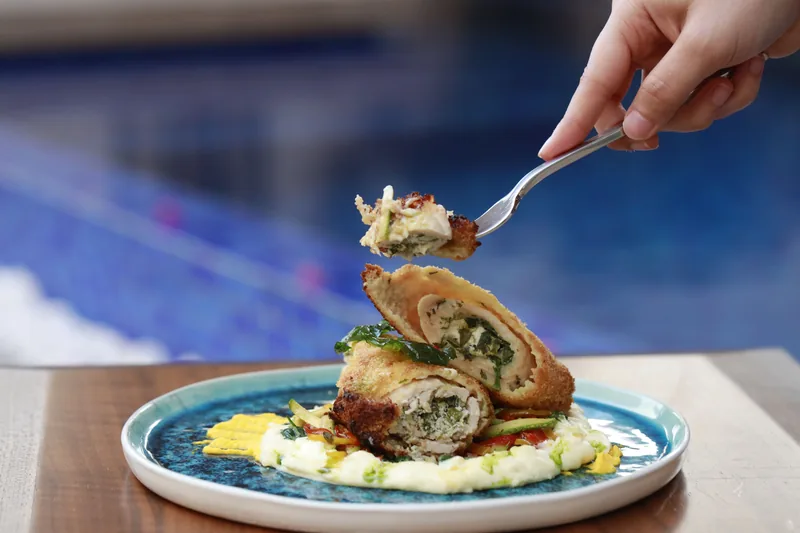
Cheesy Garlic Butter Mushroom Stuffed Chicken
Chicken breasts packed with dry-cooked mushrooms and three cheeses, seared to seal the seam and finished in a garlic butter pan.
- Total time
- 55 min
- Yield
- Serves 4