Orzo Pasta Salad
Dressed twice — once warm, once cold — so the seasoning goes through the pasta instead of sitting on it.
- Prep
- 20 min
- Cook
- 10 min
- Makes
- Serves 8
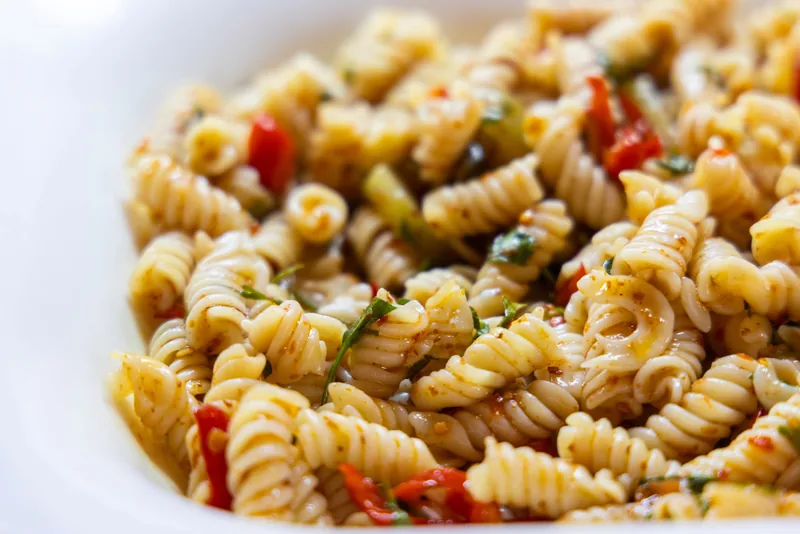
Most pasta salad is bland in the middle and oily on top, and the cause is that it was dressed once, cold.
Warm pasta absorbs. Cold pasta repels — the starch on the surface has set and the dressing has nowhere to go, so it slides off and collects at the bottom of the bowl. Dress half the vinaigrette through the orzo while it is still hot from the pan, let it cool, then dress again before serving. The first half seasons the pasta itself; the second coats everything.
Orzo is the right shape for this and not merely a fashionable one. It is small enough that a spoonful carries pasta, tomato, olive and feta together rather than requiring you to chase each one round the bowl, and its surface is smooth enough that the dressing coats it evenly instead of pooling in ridges the way it does on fusilli. It eats closer to a grain salad than a pasta salad, which is why it takes a sharp vinaigrette so well.
Do not rinse it. Rinsing washes off the surface starch that helps dressing cling, and it is the reflex that undoes the point of the first dressing. Just drain and dress immediately.
Orzo is small and cooks fast — nine minutes, not twelve. Stir it in the first minute or it welds to the base of the pan, which is a specific hazard of small pasta shapes that nobody warns you about. Salt the water as heavily as you would for any pasta, and then some: this is the only chance to season the orzo from the inside, and a salad eaten cold needs more than a hot dish does.
Spread it out to cool rather than leaving it heaped. A hot mound of orzo goes on cooking in its own heat for another ten minutes and comes out the other side soft and swollen. A wide tray or a shallow bowl stops that within a couple of minutes.
Seed the cucumber. The seeds and the jelly around them are almost entirely water, and left in they leak out over the next hour and dilute everything you dressed so carefully. Halve it lengthways, run a teaspoon down the middle, then dice.
If raw red onion is too aggressive for you, slice it and soak it in cold water for ten minutes before draining. It stays crisp and loses the sulphurous edge, which matters in a salad that is going to sit on a table for a while.
Serve it at room temperature, not straight from the fridge. Cold blunts olive oil and mutes herbs, and fridge-cold feta is chalky. Twenty minutes out of the fridge, then taste it again and correct the salt and the acid — it will need both.
The same dress-it-warm principle is why crunch salad gets its vinaigrette at the table instead. Once the tomatoes are finished for the year, the warm-dressing habit carries straight over to a fall salad of apples and Greek yogurt dressing.
Orzo salad, printed
Dressed twice — once warm, once cold — so the seasoning goes through the pasta instead of sitting on it.
Salad and vinaigrette
For the salad
- 14 oz (400 g) orzo
- 1½ cups (250 g) cherry tomatoes, halved
- 1 cucumber, seeded and diced
- 1 cup (150 g) black olives, halved
- 7 oz (200 g) feta, crumbled
- ½ red onion, finely sliced
- Large handful each of basil and flat-leaf parsley
For the vinaigrette
- ½ cup (120 ml) olive oil
- ¼ cup (60 ml) red wine vinegar
- Juice and zest of 1 lemon
- 2 garlic cloves, crushed
- 1 tbsp Dijon mustard
- 1 tsp dried oregano
- 1 tsp honey
- Salt and black pepper
Dressing the pasta salad twice
- 1 Shake all the vinaigrette ingredients together in a jar until thick.
- 2 Cook the orzo in heavily salted water for 9 minutes, stirring for the first minute so it does not stick to the base. Drain but do not rinse.
- 3 Tip the hot orzo into a wide bowl and stir through half the vinaigrette. Spread it out and leave to cool 20 minutes.
- 4 Fold in the tomatoes, cucumber, olives, onion and feta.
- 5 Add the rest of the vinaigrette and the torn herbs just before serving, and taste again — cold food needs more salt than warm food.
Keeping and reviving it
- Keeps two days refrigerated. Bring it back to room temperature and add a splash of oil and lemon before serving; it tightens in the cold.
- Any small shape works — ditalini, fregola, or broken spaghetti at a push.
- Grilled chicken, chickpeas or flaked tuna turn this into a main. Add them at the end so they do not break up in the folding.
- For a crowd, make it to the end of the cooling step a day ahead and hold back the herbs, feta and second dressing until an hour before.
- Toasted pine nuts or chopped pistachios add the one thing this salad otherwise lacks, which is crunch.
Why this pasta salad is dressed twice
Because hot pasta absorbs and cold pasta does not. The first half goes into the orzo while it is still steaming and seasons the pasta itself; the second goes on cold and coats the vegetables and herbs. Dressed once, cold, you get bland pasta sitting in a pool of oil.
No. Rinsing strips the surface starch that the dressing needs to cling to, and it cools the pasta past the point where it will absorb anything. Drain it and dress it straight away.
Normal, and easily fixed. Orzo goes on absorbing dressing in the fridge and the oil stiffens when cold. Bring it to room temperature and stir through a little more oil and lemon juice before serving.
Yes, with a gluten-free small shape such as risoni or ditalini. Cook it a minute under the packet time — gluten-free pasta goes from firm to mushy quickly, and it has a second chance to soften while it sits in the dressing.
About two hours in shade, less in direct sun, and that limit is the feta and the dressing rather than the pasta. If it is a hot day, set the bowl inside a larger one of ice.
More summer salads
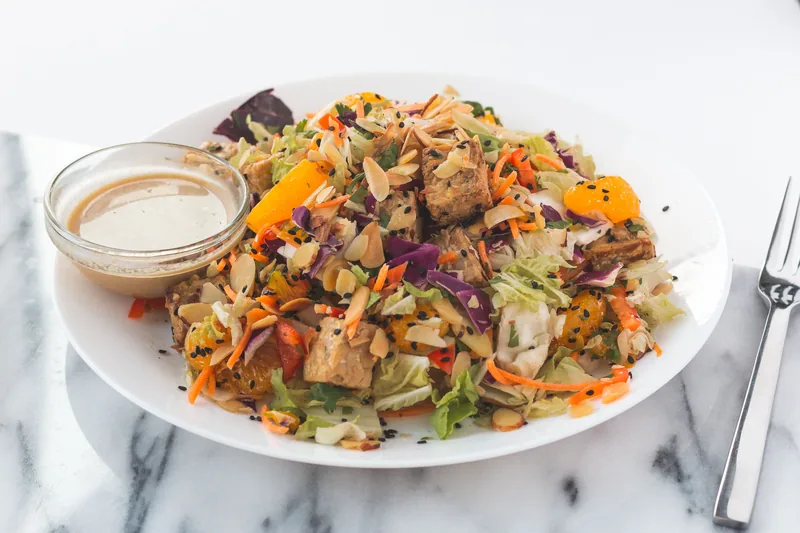
Crunch Salad
Six vegetables cut to the same size, feta, toasted seeds and a sharp balsamic vinaigrette. Assembled, not tossed in advance.
- Total time
- 20 min
- Yield
- Serves 6
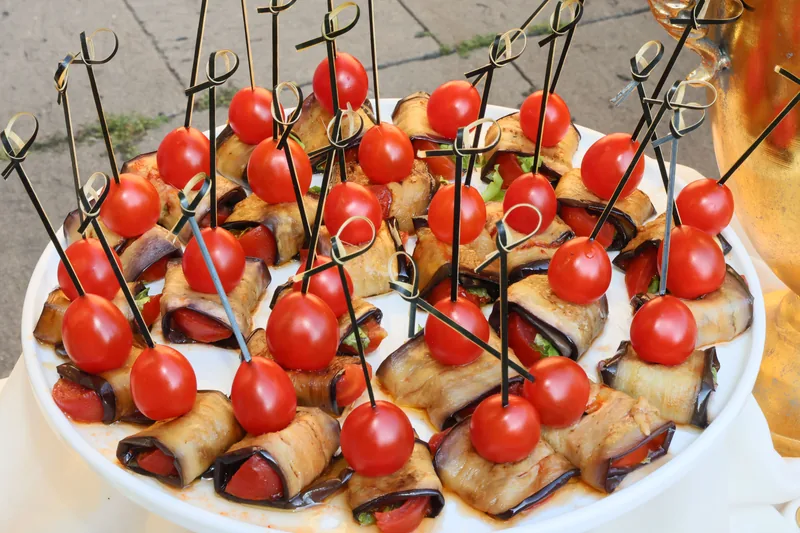
Beef Caprese Skewers
Seared sirloin, tomato, mozzarella and basil on a stick, finished with a balsamic glaze you reduce yourself.
- Total time
- 30 min
- Yield
- Makes 24 skewers
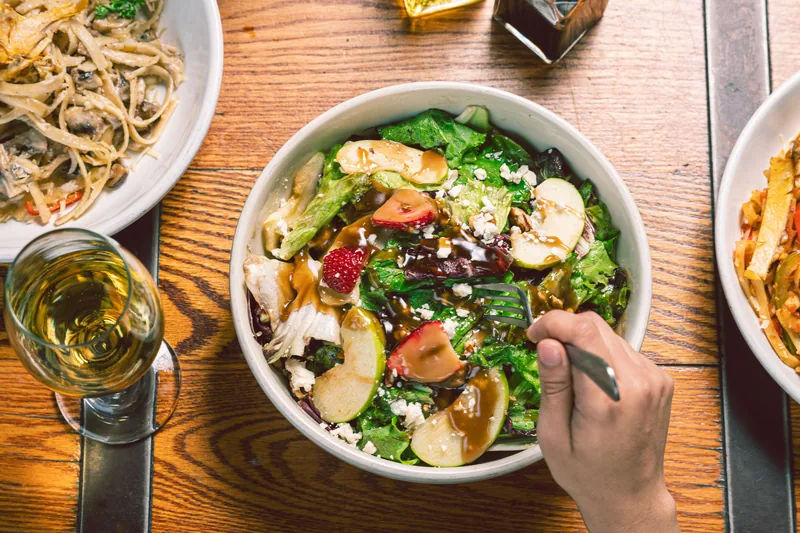
Autumn Apple Pasta Salad
Crisp diced apple, toasted pecans and cold pasta in a tangy Greek yogurt dressing that keeps the fruit pale and the noodles seasoned all the way through.
- Total time
- 1 hr
- Yield
- Serves 6 as a side