Corned Beef and Sauerkraut Egg Rolls
A Reuben sandwich in a fried wrapper. The sauerkraut has to be wrung dry or the whole thing bursts.
- Prep
- 30 min
- Cook
- 15 min
- Makes
- Makes 12
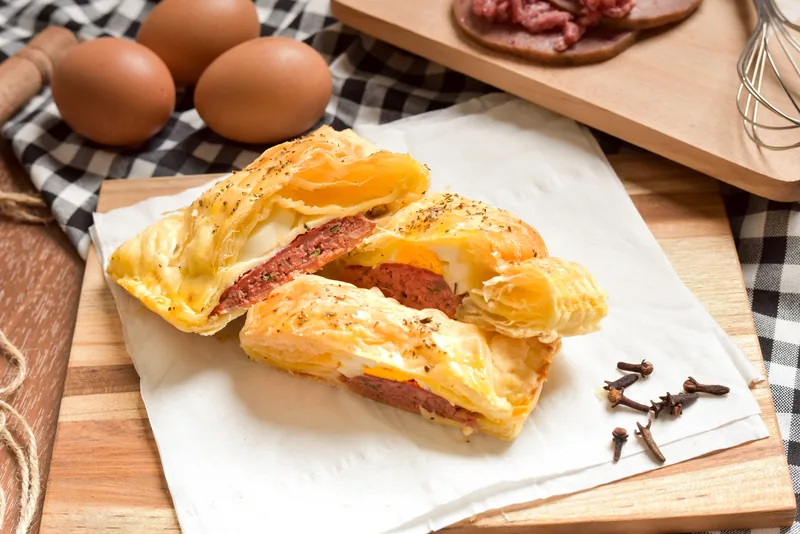
Everything that goes wrong with these comes down to water.
Sauerkraut is packed in brine and holds an enormous amount of it. Left wet, that liquid turns to steam inside a sealed wrapper in 350°F (180°C) oil, the pressure builds, and the roll splits along a seam and empties itself into the pan. Squeeze it in your fists until nothing more comes out, then squeeze again in a dish towel. You will be surprised how much comes out on the second go.
Let the filling cool completely before rolling. Warm filling generates steam on contact with the wrapper and softens it from the inside, so it tears as you roll.
Seal with a flour-and-water paste rather than egg or plain water. Water evaporates in the fryer and the seam opens; a starch paste gelatinizes and holds.
Roll tight, and press the air out as you go. A pocket of trapped air expands in hot oil the same way trapped steam does, and a loosely rolled egg roll balloons, floats lopsided and browns on one side only.
Fry at 350°F (180°C). Cooler and the wrapper drinks oil before it crisps; hotter and it browns before the filling is hot. The reason a cool fryer makes greasy food is worth understanding, because it governs everything you will ever deep-fry: water leaving the surface of the food turns to vapor and pushes outward hard enough to keep oil from soaking in. At 350°F (180°C) that outward push is strong. At 300°F (150°C) it is weak, oil moves inward faster than steam moves out, and the wrapper arrives at the table heavy and translucent instead of blistered.
Use your ears. A roll dropped into correct oil hisses loudly for the first minute, then quiets to a steady crackle as the surface water finishes leaving. When the sound drops off noticeably and the wrapper is deep gold with blistered patches, it is done — usually three to four minutes. A silent fryer means the oil has cooled below working temperature, which is what happens when you put six in at once.
Egg roll wrappers, not spring roll wrappers. Egg roll wrappers are a thicker wheat dough with egg in it, and they fry into the bubbled, slightly chewy shell this needs to hold a heavy filling. The tissue-thin spring roll sheets shatter under the same weight.
The cheese is structural as well as delicious. Melted Swiss binds chopped corned beef and shredded kraut into a mass that stays put when you bite into one, instead of avalanching down your wrist. Grate it from a block — pre-shredded cheese is coated in starch to stop it caking, and that coating is exactly what keeps it from flowing when it melts.
Do not salt the filling. Corned beef is cured meat and sauerkraut is fermented in brine; between them they carry more salt than anything else on the table. The caraway is what is really doing the work, because it is the flavor of the rye bread that an egg roll cannot have, and without it the whole idea stops reading as a Reuben.
For the uncooked, cold-rolled opposite, see fresh spring rolls. For the same wrapped, crisp-shelled idea without a pot of hot oil to manage, baked chicken chimichangas get there in the oven.
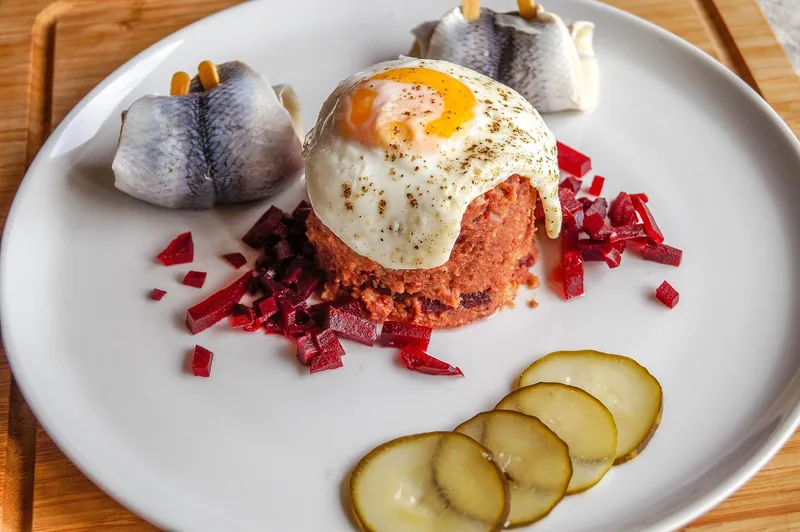
Crispy egg rolls, printed
A Reuben sandwich in a fried wrapper. The sauerkraut has to be wrung dry or the whole thing bursts.
Filling, wrappers and oil
For the filling
- 12 oz (350 g) cooked corned beef, finely chopped
- 10 oz (300 g) sauerkraut, squeezed very dry
- 1½ cups (150 g) Swiss cheese, grated
- 3 tbsp Russian or Thousand Island dressing
- 1 tsp caraway seeds
- Black pepper
To assemble and fry
- 12 egg roll wrappers
- 2 tbsp all-purpose flour mixed with 3 tbsp water, for sealing
- Neutral oil, for frying
- More dressing, to serve
Rolling and frying
- 1 Squeeze the sauerkraut dry in your hands, then wring it in a dish towel until no more liquid comes. This is the step the recipe lives or dies on.
- 2 Mix it with the corned beef, cheese, dressing, caraway and pepper. Chill 20 minutes so the filling is cold and firm.
- 3 Lay a wrapper as a diamond. Put 3 tablespoons of filling across the lower third, fold the bottom corner over, fold both sides in, then roll up tightly, pressing out any trapped air. Seal the last corner with the flour paste.
- 4 Heat 2 inches (5 cm) of oil to 350°F (180°C). Use a thermometer — this temperature matters more than the timing.
- 5 Fry 3–4 at a time for 3–4 minutes, turning, until deep golden and the loud hiss has settled to a quiet crackle. Crowding the pan drops the oil temperature and makes them greasy.
- 6 Drain on a rack and serve hot with more dressing.
Freezing, and the air fryer version
- They freeze well uncooked. Freeze on a tray, bag them, and fry from frozen for 5–6 minutes.
- In an air fryer: spray well and cook at 375°F (190°C) for 10 minutes, turning once. Less crisp, much less oil.
- Make the filling a day ahead. It is easier to roll straight from the refrigerator and the caraway has time to spread through it.
- Deli corned beef works. Ask for it sliced thick, then chop it — shaved slices mat together into a wet layer instead of separating through the kraut.
- Drain on a wire rack, never paper towels. A towel traps the steam still coming off the underside and softens the one surface you cannot see.
- For a party, fry them ahead and hold on a rack in a 250°F (120°C) oven. They stay crisp for about 30 minutes; after that they are merely warm.
Why crispy egg rolls burst
Wet sauerkraut or warm filling. Both produce steam inside a sealed wrapper, and the seam is the weakest point. Squeeze harder and chill the filling.
The oil was below 350°F (180°C), usually because too many went in at once. Cold food pulls the temperature down fast, and below about 325°F (163°C) oil soaks into the wrapper faster than escaping steam can push it back out. Fry three at a time and let the oil recover between batches.
It works but it behaves differently. Canned corned beef is finely emulsified and turns pasty when it warms, so the filling loses the chew that makes these worth eating. If it is what you have, use a little less dressing to compensate for the softer texture.
You can, at 425°F (220°C) for about 18 minutes, brushed with oil and turned once, and they will be crisp in patches and pale where they touched the pan. Baking gives dry heat with no oil to conduct it into the dough, so the wrapper dries out rather than frying. The air fryer is the better compromise.
Anything neutral with a smoke point well above 350°F (180°C) — peanut, canola, sunflower. Not olive oil, which smokes too low and tastes wrong here. Strained and refrigerated, the oil is good for three or four more frying sessions.
More fried starters
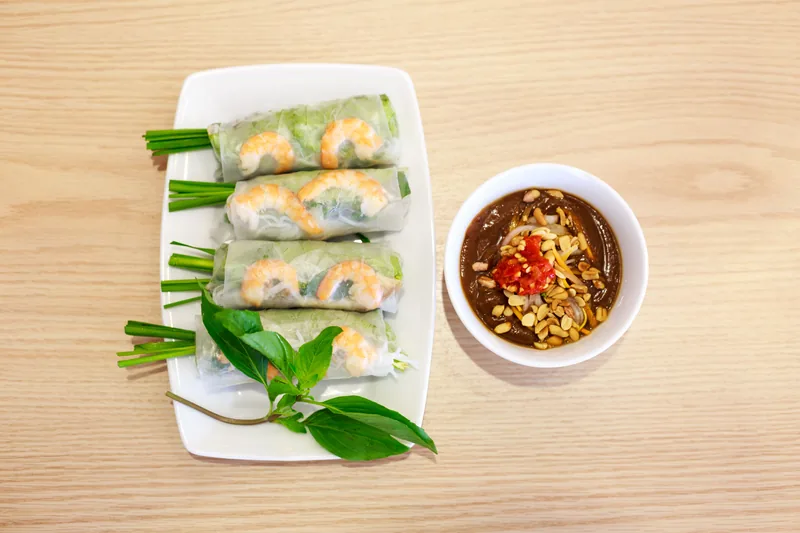
Beef Spring Rolls with Peanut Lime Sauce
Rice paper, herbs and seared beef, rolled cold. Nothing is cooked except the meat and the noodles.
- Total time
- 50 min
- Yield
- Makes 12 rolls
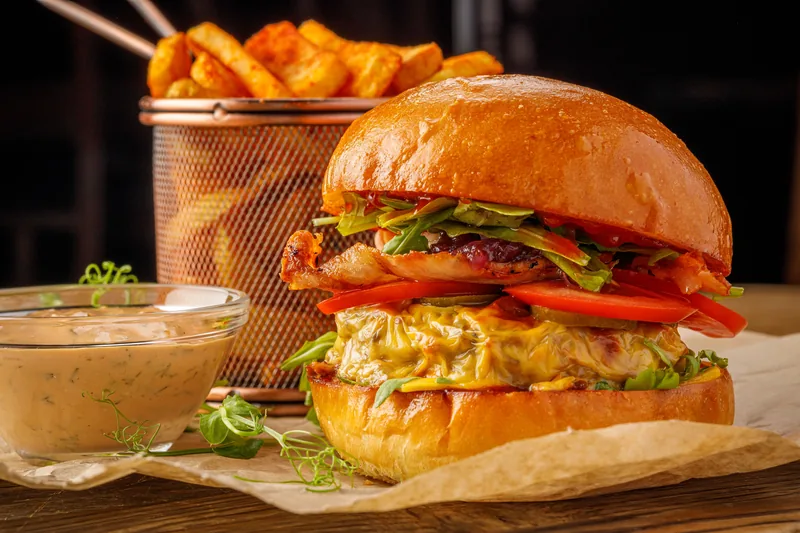
The Best Burger Sauce
Five minutes, no cooking, and better after an hour in the fridge. The pickle brine is the part everyone leaves out.
- Total time
- 1 hr 5 min
- Yield
- Makes about 1¼ cups (300 ml)
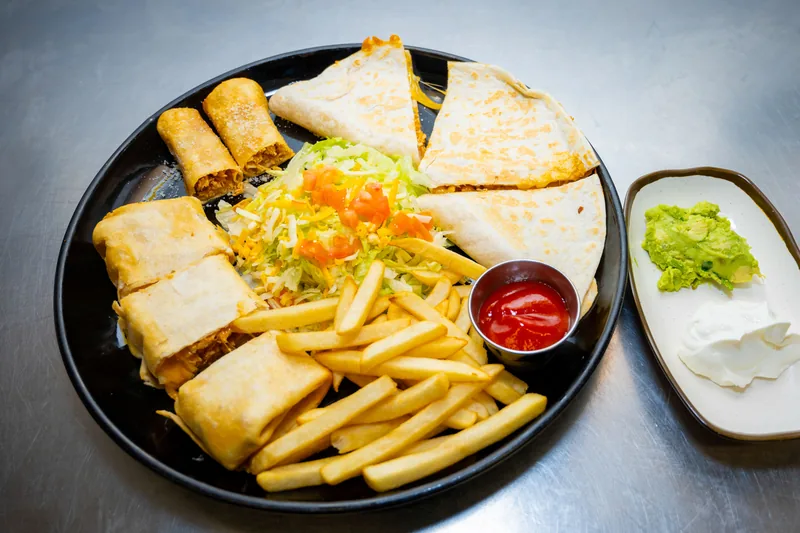
Baked Chicken Chimichangas
A dry, well-seasoned chicken filling rolled tight, brushed with butter and baked seam down on a preheated pan until the tortilla blisters.
- Total time
- 50 min
- Yield
- Makes 6 chimichangas