Beet and Goat Cheese Salad
Thinly sliced roasted beets, rounds of soft goat cheese, pistachios and a balsamic reduction.
- Prep
- 20 min
- Cook
- 1 hr
- Makes
- Serves 4
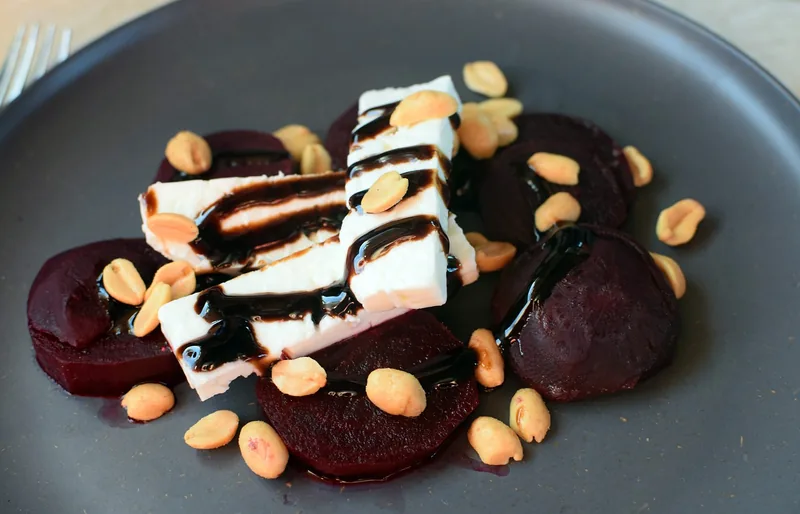
This is the plated version of a beet salad — sliced thin and arranged rather than tossed — and the pairing is a genuinely old one because it works on chemistry as much as taste. Beets are earthy from geosmin, the same compound that gives soil its smell after rain. Fresh goat cheese is acidic and lactic. The acid cuts the earthiness in a way that a mild creamy cheese cannot, which is why mozzarella here would taste of nothing much.
Slice the beets thinly — about an eighth of an inch. Thick wedges are for a rustic tossed salad; this one wants overlapping rounds that yield under a fork. A mandoline earns its place here: by hand, the slices vary enough that the plate looks careless, and this is a dish where the only thing on show is the arrangement.
Everything about this version is the opposite of the tossed one. The beets are dressed cold, not warm, and lightly, because the point is distinct layers rather than a salad that has been allowed to merge. Roast them the day before and chill them; a cold beet slices cleanly and a warm one drags on the blade.
Let the goat cheese come up from fridge cold before it goes on the plate — twenty minutes is enough. Straight from the fridge it is chalky and tastes of very little; at room temperature it is soft, lactic and properly acidic, which is the whole reason it is here.
The balsamic reduction goes on at the very end and sparingly. It is intense, and too much of it turns the plate into a single sweet note that flattens both the beets and the cheese. Drizzle it in thin lines across the plate rather than pooling it in the middle, so that no single forkful gets all of it. The same reduction, used with the same restraint, is what holds a balsamic steak salad together, where it has charred corn and a sharper blue cheese to answer instead of beets.
Build it on a wide flat plate, not in a bowl. Lay the rounds in overlapping arcs working outwards, so every slice is partly visible — a heap in a bowl hides three-quarters of what you just sliced carefully, and the dish has no other trick. Break the cheese over the top in pieces of different sizes rather than placing neat discs; irregular looks deliberate in a way that evenly spaced rounds do not.
Salt at the table, not in the bowl. Salt draws water out of sliced beet within minutes, and a plate that looked crisp when you built it sits in a pink puddle by the time it is carried through. Flaky salt over the top as it goes down.
Pistachios rather than walnuts, purely for color. Against dark red and white, green reads. Toast them briefly and salt them.
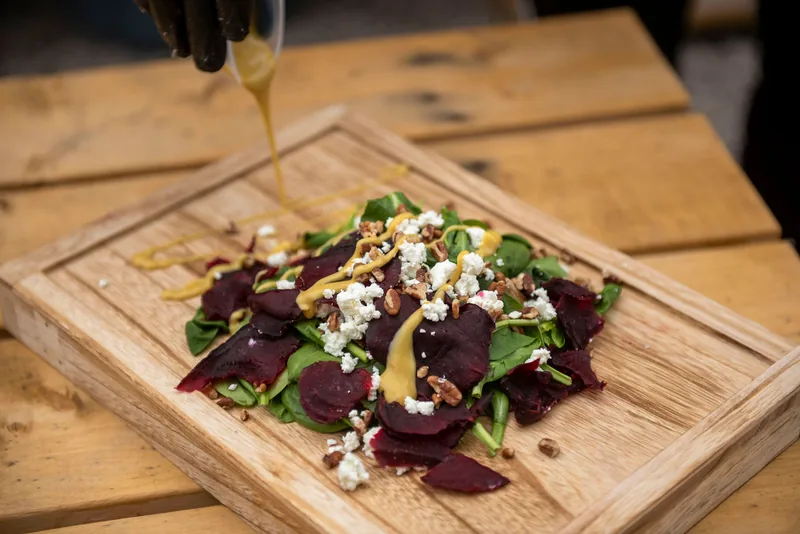
For the tossed version, dressed while the beets are still warm so the vinaigrette goes into them rather than onto them, there is roasted beet salad with feta.
Goat cheese salad with roasted beets, printed
Thinly sliced roasted beets, rounds of soft goat cheese, pistachios and a balsamic reduction.
Salad and balsamic reduction
For the salad
- 1½ lb (700 g) beets
- 5 oz (150 g) soft goat cheese log, in 1 cm rounds
- ½ cup (60 g) shelled pistachios
- 3 oz (80 g) arugula
- Small handful of mint leaves
- 2 tbsp good olive oil
- Flaky salt and black pepper
For the balsamic reduction
- ¾ cup (180 ml) balsamic vinegar
- 1 tbsp honey
Roasting, slicing, arranging
- 1 Roast the beets wrapped in foil at 400°F (200°C) convection for 50–60 minutes, until tender. Cool, rub off the skins and slice into thin rounds.
- 2 Simmer the balsamic and honey together for 6–8 minutes until reduced by two-thirds. It thickens as it cools, so stop while it still pours.
- 3 Toast the pistachios in a dry pan for 3 minutes, then chop them roughly and salt them.
- 4 Arrange the beet rounds overlapping on a platter. Scatter the arugula over, then set the goat cheese rounds among them.
- 5 Drizzle with olive oil, season, and add the pistachios and mint.
- 6 Zigzag the cooled reduction over just before serving — a little goes a long way.
Cutting goat cheese cleanly
- A cheese wire or a knife dipped in hot water cuts goat cheese cleanly. Cold and dry, it crumbles.
- The reduction keeps a month in a jar at room temperature.
- Roast and slice the beets a day ahead. Cold beets cut cleanly; warm ones drag and tear on the blade.
- A handful of peppery leaves — watercress, rocket, young mustard — between the layers turns this from a starter into a lunch.
- Golden and candy-striped beets sliced thin alongside the red make the plate without changing a thing about the flavour.
Why goat cheese works with beets
Because it is acidic. Beets taste earthy from geosmin, and it takes a sharp lactic tang to cut that. Mozzarella or a mild cream cheese has nothing to push back with, and the plate ends up tasting only of beet.
It is too cold and the blade is dry. Use a cheese wire, or dip a thin knife in hot water and wipe it between each cut. Let the log sit out for 20 minutes first — it improves the flavour as well as the cut.
On a plate with four components you will taste the difference. Bottled glaze is usually thickened grape must with caramel colour — sweeter, flatter, and without the sourness that makes a reduction work against the cheese. Eight minutes in a small pan is the whole job.
About an eighth of an inch, and even matters more than thin. The slices should overlap and give under a fork without needing to be cut. Much thicker and you are eating wedges; much thinner and they tear as you lift them.
Build the plate up to two hours ahead and keep it cool and covered, but hold back the salt, the glaze and the pistachios. Salt draws water out of the beets, the glaze bleeds, and the nuts go soft.
More roasted beets
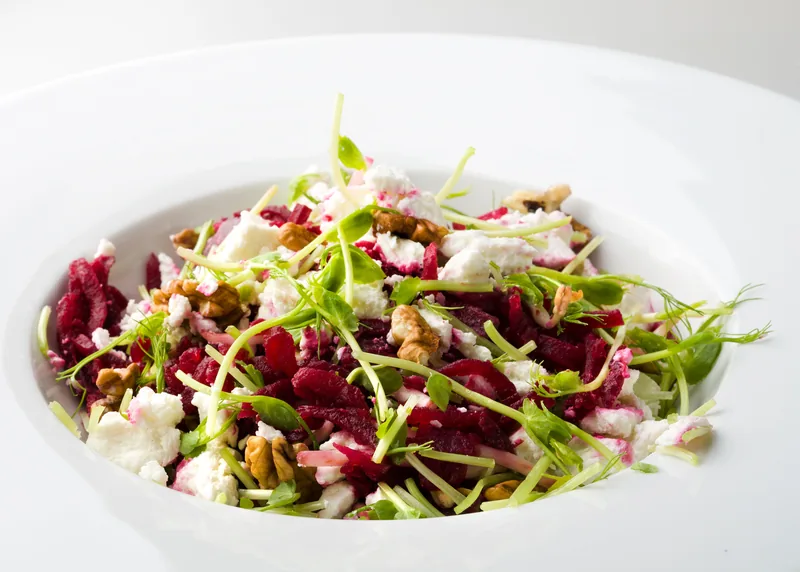
Roasted Beet Salad with Feta and Walnuts
Beets roasted in foil until they slip out of their skins, with salty feta and walnuts toasted to the edge of burning.
- Total time
- 1 hr 15 min
- Yield
- Serves 6
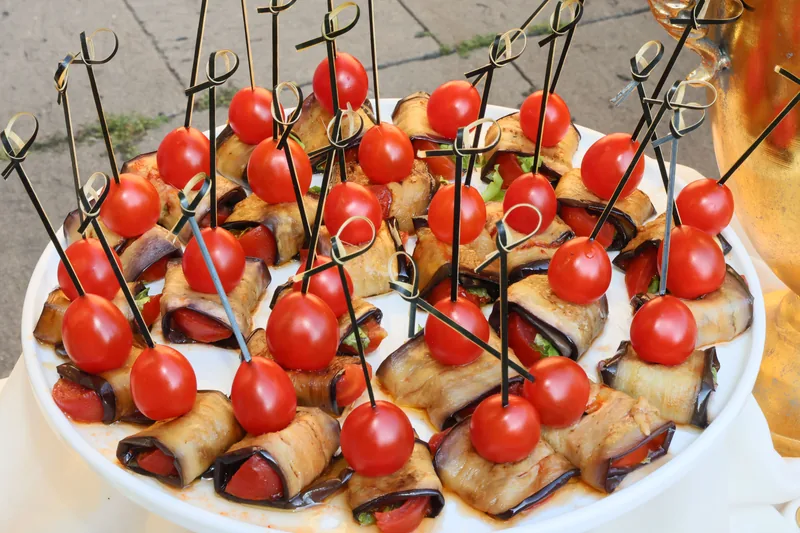
Beef Caprese Skewers
Seared sirloin, tomato, mozzarella and basil on a stick, finished with a balsamic glaze you reduce yourself.
- Total time
- 30 min
- Yield
- Makes 24 skewers
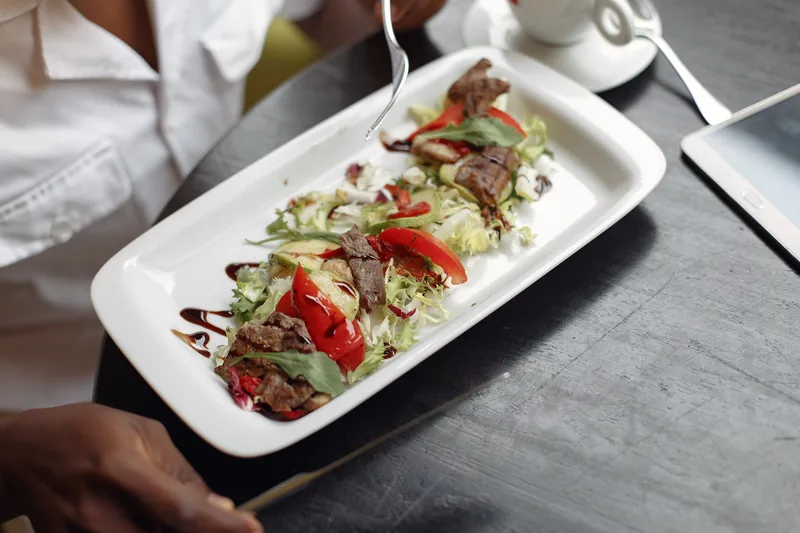
Balsamic Steak Gorgonzola Salad with Grilled Corn
Charred sweet corn, cold peppery leaves and warm sirloin sliced against the grain, with enough Gorgonzola to stand up to the balsamic.
- Total time
- 48 min
- Yield
- Serves 4