Red Enchilada Sauce
A smooth, brick-red enchilada sauce made from toasted dried guajillo and ancho chiles, blended with garlic and onion and simmered in broth, with a quick chili-powder version for busy nights.
- Prep
- 15 min
- Cook
- 25 min
- Makes
- About 3 cups (710 ml)
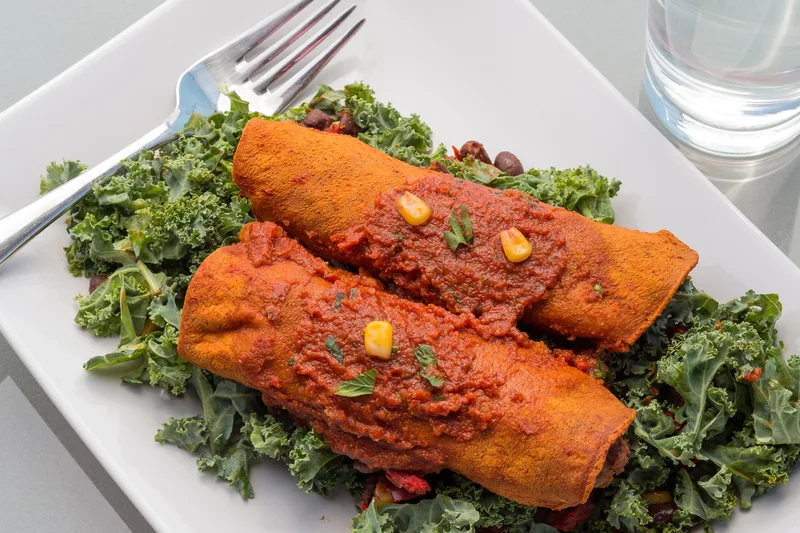
Canned enchilada sauce mostly tastes of tomato paste and chili powder, with a faint tinny edge. Real red enchilada sauce is a chile sauce first. Dried red chiles, toasted to wake them up, soaked until soft, and blended with garlic and onion into a smooth, deep red purée with a flavor that is earthy, slightly fruity and gently bitter in a good way. It takes about forty minutes and makes enough for one 9×13 in (23×33 cm) pan of enchiladas, with extra for serving.
Guajillo and ancho chiles are the base. Guajillos are bright, tangy and only mildly hot, and they give the sauce its vivid red color. Anchos, which are dried poblanos, are darker and sweeter, with a raisin-like depth. Together they balance each other. For more heat, add a couple of small chiles de árbol. Look for chiles that are still pliable, not brittle; old dried chiles taste dusty.
Toasting is the step that makes the difference, and the step where things go wrong. Lay the stemmed, seeded chiles flat in a dry skillet over medium heat for about twenty seconds per side, just until they smell fragrant and turn slightly more flexible. That is all. If they start to smoke or turn black, they have burned, and burned chiles make the whole sauce harsh and bitter. When in doubt, toast less.
Then soak the chiles in hot water for fifteen minutes until soft, and blend them with garlic, onion, a few spices and some of the soaking liquid. Taste the soaking water before using it. Usually it is fine, but if it tastes bitter, use fresh water instead.
Blend for longer than you think necessary. Chile skins are tough, and a sauce that looks smooth after thirty seconds is still slightly gritty. Two full minutes in a regular blender gives a velvety sauce. Strain it through a sieve if you want restaurant smoothness; it takes a minute and removes the last bits of skin.
The final step is frying the purée. Pour it into a little hot oil in a saucepan and let it sputter and darken for a few minutes before the broth goes in. This concentrates the flavor and cooks off the raw edge of the chiles, the same technique used for the broth in chicken tortilla soup. Then simmer with broth until it coats a spoon. A pinch of sugar and a splash of vinegar at the end balance any bitterness.
No dried chiles in the pantry? The quick version below uses chili powder and tomato paste cooked in a roux and is ready in fifteen minutes. It is not the same, but it is far better than the can.
Use it for enchiladas, of course, or in baked chicken chimichangas, spooned over Mexican rice, or simmered with shredded chicken for tacos. For other sauces worth making from scratch, homemade barbecue sauce keeps for weeks.
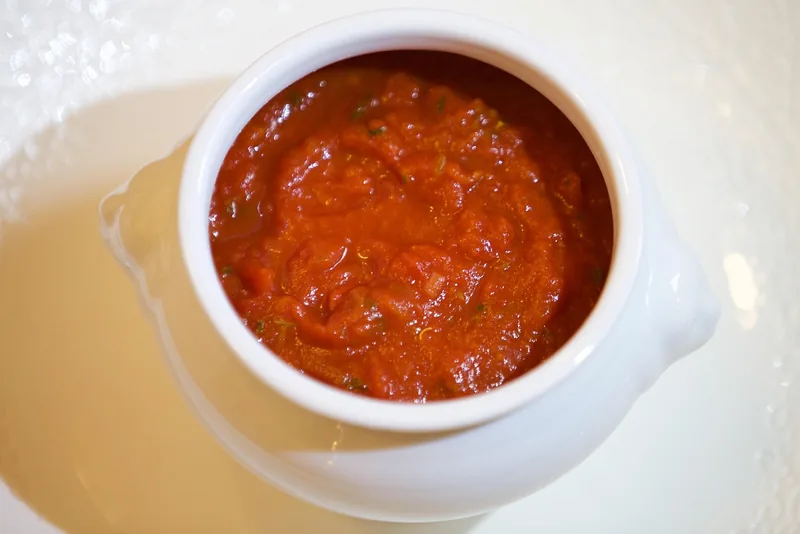
Enchilada sauce, step by step
A smooth, brick-red enchilada sauce made from toasted dried guajillo and ancho chiles, blended with garlic and onion and simmered in broth, with a quick chili-powder version for busy nights.
Dried chiles, or the quick pantry version
For the dried chile sauce
- 6 dried guajillo chiles, stems and seeds removed
- 2 dried ancho chiles, stems and seeds removed
- 2 dried chiles de árbol (optional, for heat)
- 3 cups (710 ml) hot water, for soaking
- ½ medium white onion, roughly chopped
- 4 cloves garlic
- 1 tsp ground cumin
- 1 tsp dried oregano, Mexican if possible
- 2 tbsp vegetable oil
- 2 cups (475 ml) low-sodium chicken or vegetable broth
- 1 tsp fine salt, plus more to taste
- 1 tsp sugar
- 1 tsp apple cider vinegar
Quick version, without dried chiles
- 2 tbsp vegetable oil
- 2 tbsp all-purpose flour
- 3 tbsp chili powder
- 1 tsp ground cumin
- ½ tsp garlic powder
- ½ tsp dried oregano
- 2 tbsp tomato paste
- 2 cups (475 ml) chicken or vegetable broth
- ½ tsp fine salt
- 1 tsp apple cider vinegar
Toast lightly, soak, blend long, fry
- 1 Heat a dry skillet over medium heat. Toast the chiles flat, pressing down with a spatula, about 20 seconds per side, until fragrant and slightly puffed. Do not let them blacken.
- 2 Put the toasted chiles in a bowl, cover with the hot water and soak 15 minutes, until soft.
- 3 Taste the soaking liquid; if it is not bitter, keep 1 cup (240 ml) of it. Transfer the chiles to a blender with the onion, garlic, cumin, oregano and the reserved liquid, or 1 cup (240 ml) fresh water if it was bitter.
- 4 Blend on high for 2 full minutes, until completely smooth. For a silkier sauce, press it through a fine sieve.
- 5 Heat the oil in a medium saucepan over medium heat. Pour in the chile purée carefully, as it will spatter. Cook, stirring, until it darkens and thickens, 4–5 minutes.
- 6 Stir in the 2 cups (475 ml) broth, the salt and the sugar. Simmer gently, stirring now and then, until it coats the back of a spoon, 10–15 minutes. Stir in the vinegar and taste for salt.
- 7 Quick version: heat the oil in a saucepan over medium heat, whisk in the flour and cook 1 minute. Add the chili powder, cumin, garlic powder and oregano and stir 30 seconds. Whisk in the tomato paste, then the broth. Simmer 10 minutes until thickened, then add the salt and vinegar.
Storing, milder and smoky versions
- Storage: refrigerate up to 1 week in a covered jar, or freeze up to 6 months. Freeze in 1-cup (240 ml) portions for single pans.
- Enchiladas: one batch covers a 9×13 in (23×33 cm) pan of about 12 enchiladas, with some to spoon over the top.
- Milder: use only anchos, which are sweet and very mild, and skip the chiles de árbol.
- Smoky: add 1 chipotle pepper in adobo to the blender.
- Too bitter: the chiles were over-toasted or the soaking water was bitter. A little more sugar and a squeeze of lime help; next time toast for less time.
Bitterness, heat and finding the chiles
The chiles were toasted too long or the bitter soaking water was used. Toast just until fragrant, and taste the soaking water before adding it.
Made with guajillos and anchos alone, it is mild with gentle warmth. The heat comes from chiles de árbol, which you can leave out.
In the Hispanic foods aisle of most large grocery stores, at Latin American markets, or online. They keep for months in an airtight bag.
Up to 1 week in the refrigerator and 6 months in the freezer.
Dishes to pour it over
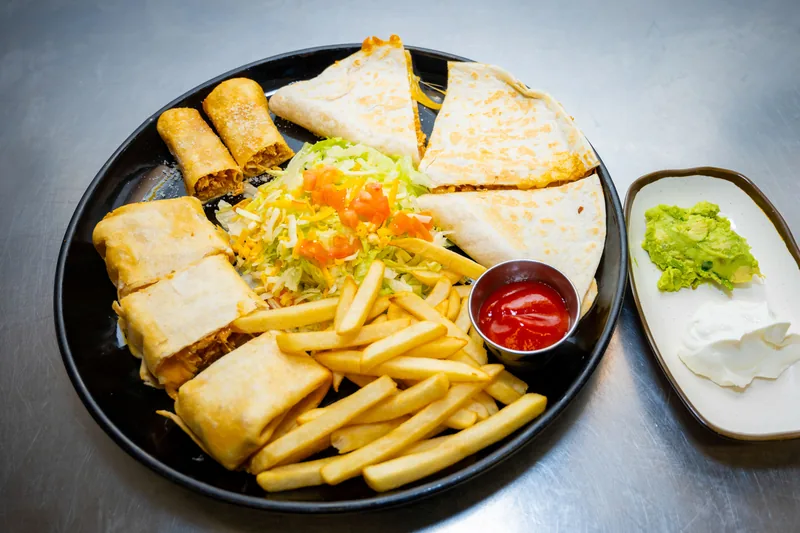
Baked Chicken Chimichangas
A dry, well-seasoned chicken filling rolled tight, brushed with butter and baked seam down on a preheated pan until the tortilla blisters.
- Total time
- 50 min
- Yield
- Makes 6 chimichangas
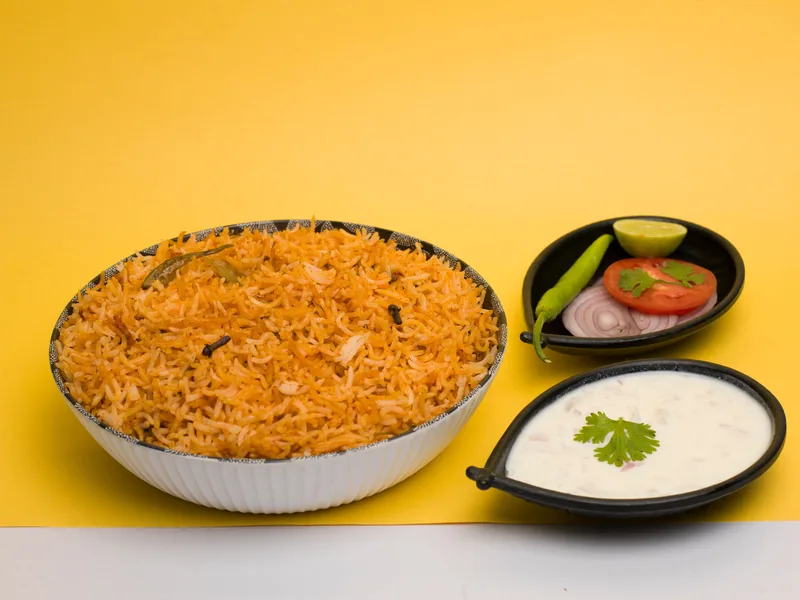
Mexican Rice
Restaurant-style Mexican rice with separate, fluffy grains: long-grain rice rinsed, toasted golden in oil, then simmered in a blended tomato, onion and garlic broth and left covered to steam.
- Total time
- 45 min
- Yield
- Serves 6
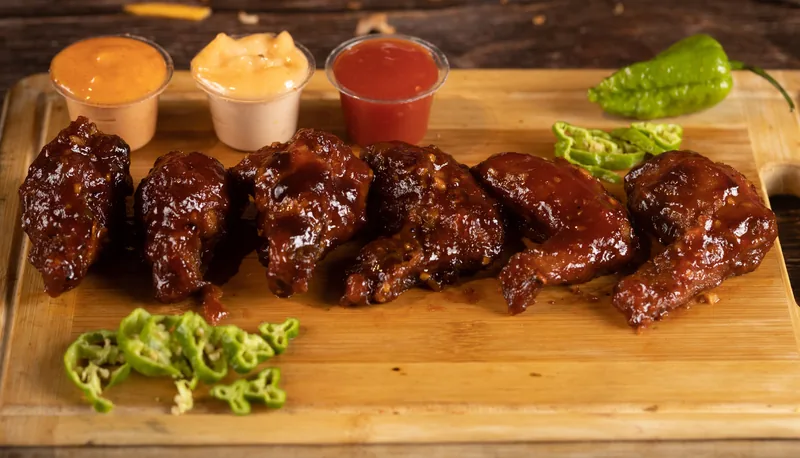
Homemade Barbecue Sauce
A thick Kansas City-style sauce built on tomato, molasses and smoked paprika. Twenty minutes on the stovetop and it keeps a month.
- Total time
- 35 min
- Yield
- Makes about 2½ cups (600 ml)