Fruit Pizza Cookies
Sugar cookie bases, cream cheese frosting, fresh fruit on top. Assembled within an hour of eating.
- Prep
- 30 min
- Cook
- 12 min
- Rest
- 1 hr
- Makes
- Makes 16
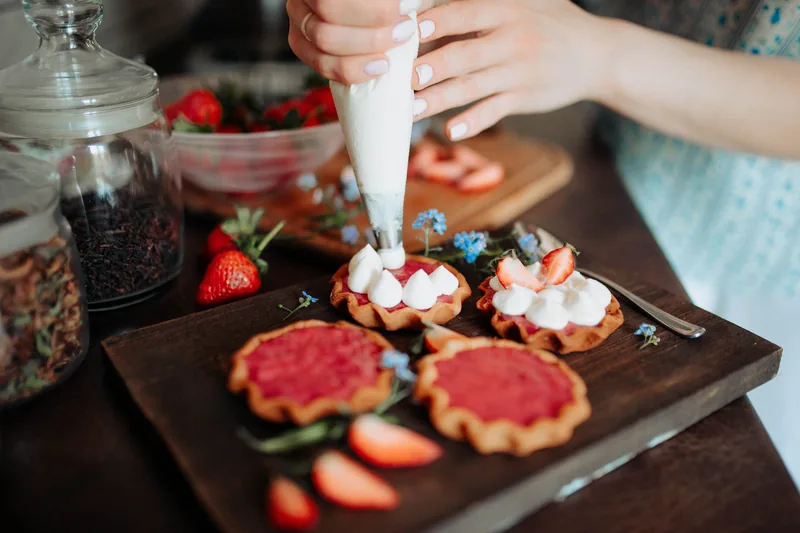
Three components, and the only difficulty is that they have to meet at the last minute.
The cookie base needs to stay flat, so it gets more flour and less leavening than a normal sugar cookie. A domed cookie makes an unstable platform and the fruit rolls off.
Baking powder does that job; baking soda would ruin it. Soda raises the pH of the dough, and a more alkaline dough weakens gluten, spreads further and browns much faster — everything you want in a chewy chocolate chip cookie and everything you do not want in a pale, flat disc that has to hold frosting. Powder is close to pH neutral and lifts just enough to keep the crumb tender.
Butter temperature decides the rest. It should be pliable but still cool, around 65°F (18°C) — dent it with a finger and the dent should hold its edges. Butter warmer than that is already half melted, and the dough will spread into thin, greasy wafers before the structure has a chance to set. The hour in the refrigerator afterwards is not a formality: cold fat melts later in the bake, which gives the flour and egg time to set the shape first.
Pull them pale. The cue is the edge, not the clock — the rim goes from glossy to matte and the center still looks faintly underdone when the tray comes out. They finish setting on the hot tray. A cookie baked to golden all over is a cookie that will be dry and sandy by the time it has spent an hour under wet frosting.
The frosting is cream cheese rather than buttercream, and the reason is acidity. Fresh fruit is sweet and slightly sour; buttercream is sweet and fatty, and together they are cloying. Cream cheese has enough tang to sit under fruit without the whole thing tasting like a sugar delivery system.
Both cream cheese and butter must be at genuine room temperature. Cold cream cheese produces lumps that no amount of beating removes — you have to start again.
Use block cream cheese, never the spreadable kind from a tub. Tub cream cheese is thinned with water and stabilizing gums so it will spread straight from cold, and a frosting built on it never firms up — it slumps off the cookie and takes the fruit with it.
And stop beating once it is smooth. Cream cheese is an emulsion of fat in water, and prolonged whipping shears it apart; the frosting goes from thick to soupy in about thirty seconds and no extra powdered sugar brings it back.
The base is a close cousin of the dough in air fryer peanut butter cookies, with flour doing the work instead of peanut butter.
Assemble within an hour. Fruit weeps, and frosting under wet fruit turns to soup and softens the cookie beneath it. Bases and frosting can be made two days ahead and kept separately; the fruit goes on last.
Kiwi and fresh pineapple are the two toppings that add urgency of their own. Both carry proteases — actinidin and bromelain — that break down the protein holding a dairy frosting together, so where they sit the frosting slowly thins. Over an hour you will never notice. Over four, you will.
The warm apricot glaze is worth the extra pan. Brushed over the arranged fruit it seals cut surfaces from the air, which slows both weeping and the browning on anything apple-adjacent, and it is the only reason bakery fruit tarts look wet-shiny hours later.
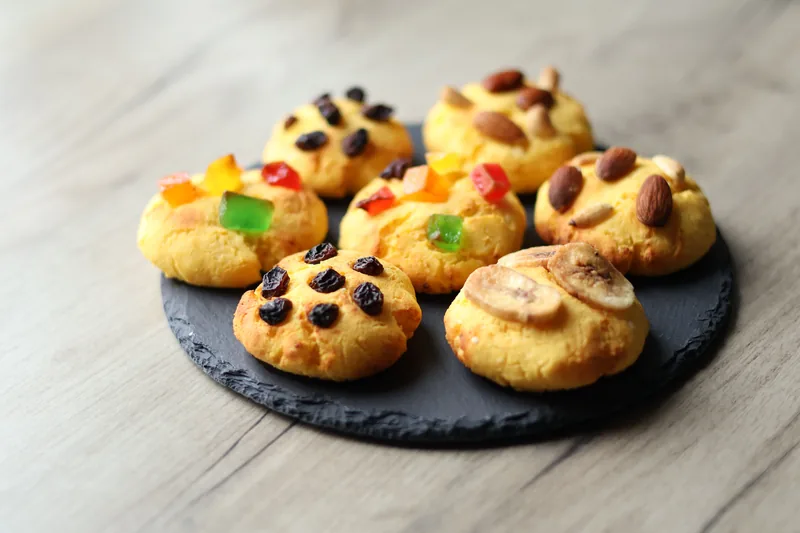
Fruit pizza cookies: the card
Sugar cookie bases, cream cheese frosting, fresh fruit on top. Assembled within an hour of eating.
Cookie, frosting, fruit
For the cookies
- ¾ cup (170 g) butter, softened
- ¾ cup (150 g) superfine sugar
- 1 egg
- 1 tsp vanilla extract
- 2 cups (250 g) all-purpose flour
- ½ tsp baking powder
- ½ tsp fine salt
For the frosting
- 8 oz (225 g) full-fat block cream cheese, room temperature
- ¼ cup (60 g) butter, softened
- 1 cup (120 g) powdered sugar
- 1 tsp vanilla extract
To finish
- Strawberries, blueberries, kiwi, mandarin segments
- 2 tbsp apricot jam, warmed and sieved, optional
Baking flat, frosting, topping
- 1 Beat the butter and sugar 3 minutes until pale. Add the egg and vanilla.
- 2 Fold in the flour, baking powder and salt until just combined. Chill the dough 1 hour.
- 3 Heat the oven to 350°F (180°C). Roll 1½ oz (40 g) balls, flatten each to about 2¾ inches (7 cm) across, and space them well apart on lined trays.
- 4 Bake 11–12 minutes, until set with barely any color at the edges. Cool completely on the trays.
- 5 Beat the cream cheese and butter together until smooth before adding the powdered sugar — this order prevents lumps — then beat in the vanilla.
- 6 Spread frosting on each cooled cookie and arrange the fruit on top. Brush with warmed jam if you want them to shine.
Making the parts ahead
- Pat cut fruit dry with paper towels. Wet fruit slides off and thins the frosting.
- Bases keep three days in a tin; frosting keeps a week refrigerated. Assemble on the day.
- Unbaked dough freezes as rolled balls for three months. Bake from frozen and add 2 minutes.
- Skip watermelon, melon and any canned fruit in syrup. All three carry too much free water and will flood the frosting within the hour.
- For one large fruit pizza instead of sixteen cookies, press the chilled dough into a 12-inch (30 cm) round on a lined tray and bake 18–20 minutes to the same pale, matte-edged cue.
- Frosted cookies keep 24 hours refrigerated and are best in the first three. The bases soften from then on.
Runny frosting and soggy bases
Usually. Refrigerate it 20 minutes and stir it gently with a spatula rather than beating it — if it broke from over-whipping, more mixer time makes it worse. If it was warm to begin with, chilling alone fixes it.
Too much flour, usually from scooping the cup rather than spooning flour into it — that alone can add 20 percent. Weigh it if you can. Overworking the dough after the flour goes in does the same thing.
Yes, but chill it hard and expect more spread; commercial doughs are built to bake soft and usually contain baking soda, so they brown faster. Take them out at the matte-edge cue rather than the time on the package.
Not with fruit on them. Freezing ruptures the cell walls in berries and kiwi and they thaw into water sitting on top of your frosting. Freeze the plain bases instead and assemble after they thaw.
A frosted, unfruited cookie holds about four hours at room temperature and a day refrigerated under a cover. It is the fruit contact that starts the clock, not the frosting.
More to assemble
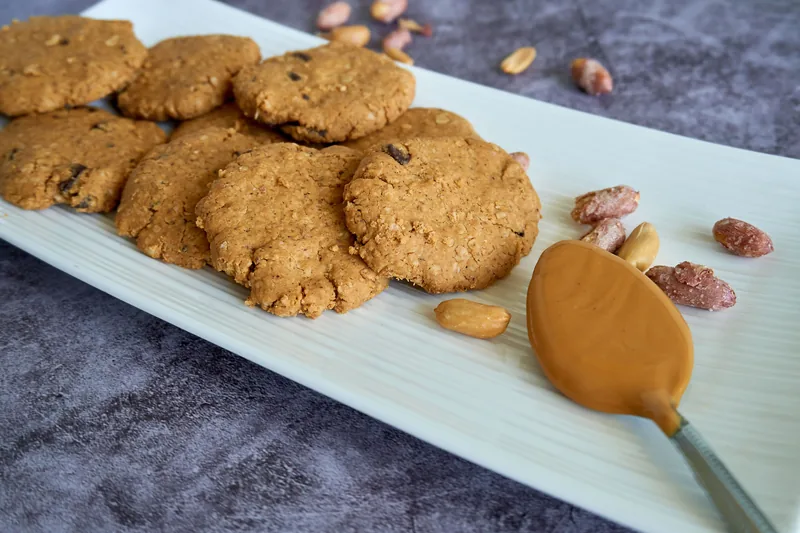
Air Fryer Peanut Butter Cookies
Three ingredients, eight minutes, six cookies at a time. No flour and no oven to heat.
- Total time
- 18 min
- Yield
- Makes 18 cookies
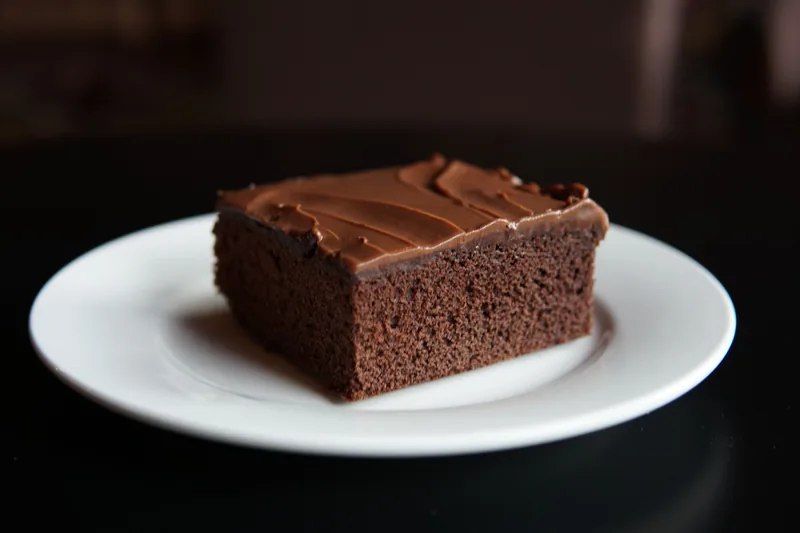
Chocolate Mayonnaise Cake
A Depression-era cake that stays damp for four days. The mayonnaise is the eggs and the oil, and you will never taste it.
- Total time
- 50 min
- Yield
- One 9-inch cake, 12 slices
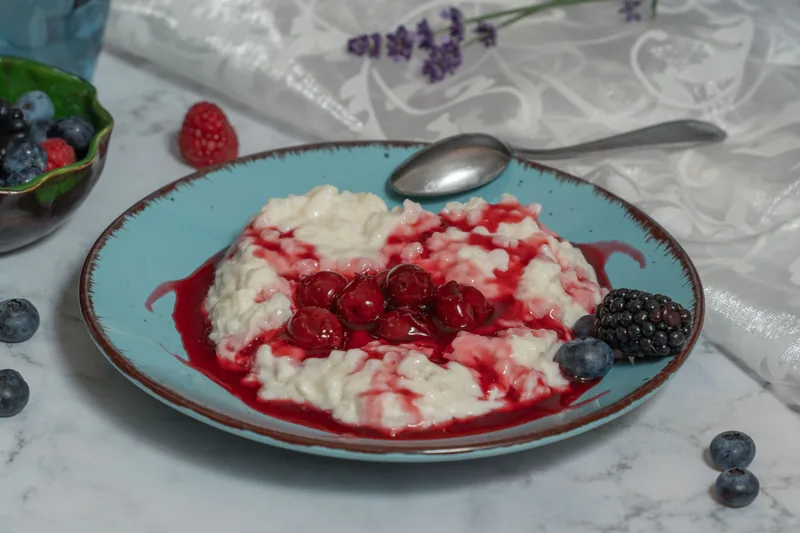
Old-Fashioned Rice Pudding
Stovetop, stirred, and finished with egg yolks off the heat. Loose when it comes off, set by the time it reaches the table.
- Total time
- 50 min
- Yield
- Serves 6