Lemon Bars
Classic lemon bars with a crisp, buttery shortbread base baked first, a bright fresh-lemon filling baked low until just set, and a dusting of powdered sugar.
- Prep
- 20 min
- Cook
- 45 min
- Rest
- 3 hr
- Makes
- 16 bars
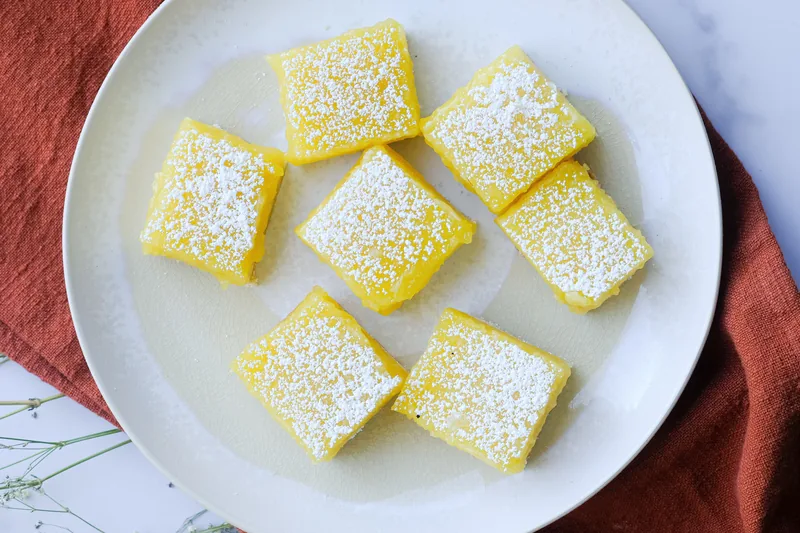
A lemon bar is two layers that want completely different treatment. The shortbread base needs steady heat and time to become crisp and golden. The lemon filling is an egg custard that needs gentle heat and needs to come out the moment it sets. Bake them together from the start and you get a soggy, pale base under a filling that has overcooked into a rubbery, bubbled layer. So the base bakes alone first.
The shortbread is butter, flour, powdered sugar and salt. Powdered sugar rather than granulated gives a finer, more tender crumb that melts in the mouth. Press it firmly and evenly into a lined pan; a flat-bottomed measuring cup helps. Bake it until it is golden at the edges and lightly colored across the top. A pale base absorbs liquid from the filling and turns soft. A properly baked one stays crisp for days.
Pour the filling onto the base while the base is still hot. The heat begins to set the bottom of the filling immediately, sealing the base so the lemon custard sits on top of it rather than soaking in. This one detail does more than anything else to keep the layers distinct.
The filling is eggs, sugar, a little flour and a lot of fresh lemon juice and zest. Use fresh lemons; bottled juice tastes flat and slightly bitter, and this is a dessert that is nothing but lemon. The zest carries the fragrant lemon oils, which is where much of the flavor comes from. Rub it into the sugar with your fingers before whisking, which releases the oils.
Whisk the filling until smooth but do not beat it into a froth. Air bubbles rise during baking and form a pale, foamy crust on top. If you see foam, let the mixture sit for a few minutes and skim it off.
Lower the oven temperature for the filling. It is done when the edges are set and the center barely jiggles as a whole when you nudge the pan, not sloshing. Overbaked lemon filling cracks, browns at the edges and turns slightly eggy.
Then the hardest part: cool the bars completely at room temperature, then chill them for at least two hours. The filling finishes setting as it cools, and cold bars cut cleanly. Cut with a sharp knife, wiping it clean between cuts, and dust with powdered sugar just before serving, as it dissolves into the filling over time.
For other bright desserts, fruit pizza cookies are a colorful party option, and frozen lemonade slush is the drink equivalent. Blueberry oatmeal bars use the same pressed-base method.
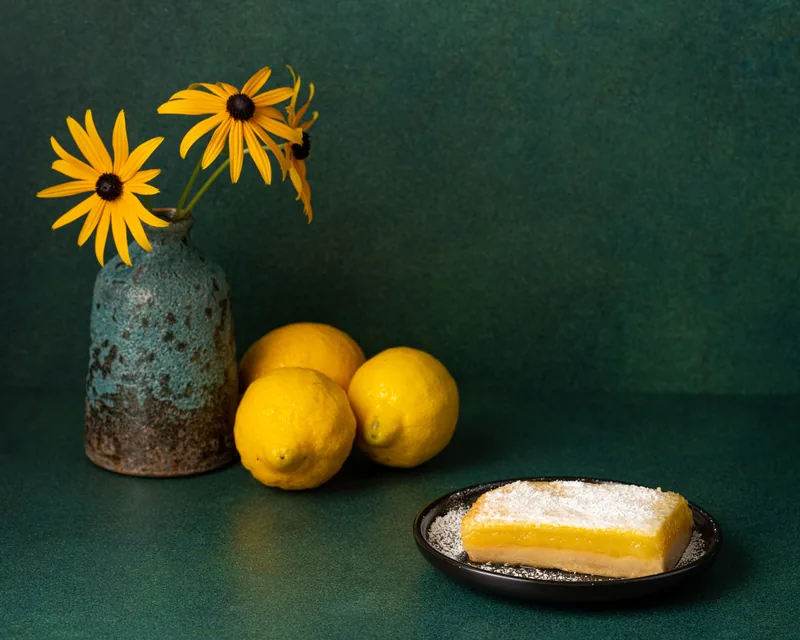
Lemon bars, start to finish
Classic lemon bars with a crisp, buttery shortbread base baked first, a bright fresh-lemon filling baked low until just set, and a dusting of powdered sugar.
A shortbread base and a fresh lemon filling
For the shortbread base
- 1 cup (225 g) unsalted butter, softened
- ½ cup (60 g) powdered sugar
- 2 cups (250 g) all-purpose flour
- ¼ tsp fine salt
For the lemon filling
- 1½ cups (300 g) granulated sugar
- 2 tbsp finely grated lemon zest, from about 3 lemons
- 4 large eggs, at room temperature
- ⅔ cup (160 ml) fresh lemon juice, from 4–5 lemons
- ⅓ cup (40 g) all-purpose flour
- Pinch of fine salt
To finish
- 2 tbsp powdered sugar, for dusting
Bake the base, pour hot, bake low, chill
- 1 Heat the oven to 350°F (180°C). Line a 9×13 in (23×33 cm) pan with parchment, leaving an overhang on two sides.
- 2 Beat the butter and powdered sugar until creamy. Add the flour and salt and mix on low until it forms a soft, crumbly dough.
- 3 Press the dough evenly into the pan. Bake 20–22 minutes, until golden at the edges and lightly colored on top.
- 4 While the base bakes, rub the sugar and lemon zest together with your fingertips until fragrant. Whisk in the eggs, then the lemon juice, flour and salt, until smooth but not foamy. Skim any foam.
- 5 As soon as the base comes out, lower the oven to 325°F (165°C). Pour the filling over the hot base.
- 6 Bake 18–22 minutes, until the edges are set and the center barely jiggles.
- 7 Cool completely at room temperature, about 1 hour, then refrigerate at least 2 hours.
- 8 Lift out by the parchment, cut into 16 bars with a sharp knife, wiping it between cuts, and dust with powdered sugar just before serving.
Smaller pans, Meyer lemons and lime bars
- Smaller batch: halve the recipe and bake in an 8×8 in (20×20 cm) pan. Bake the base 18 minutes and the filling 16–18 minutes.
- Meyer lemons: they are sweeter and less acidic; reduce the sugar in the filling to 1¼ cups (250 g).
- Storage: keep covered in the refrigerator for up to 5 days. Dust with powdered sugar again before serving.
- Freezing: freeze cut bars in a single layer, then wrap and freeze up to 3 months. Thaw in the refrigerator.
- Lime bars: replace the lemon juice and zest with fresh lime juice and zest.
Soggy crust, white foam and doneness
The base was underbaked or the filling went on a cold base. Bake the shortbread until golden, then pour the filling on while it is hot.
That is foam from whisking too hard. It bakes into a pale crust. Whisk gently and skim any foam before baking.
The edges are set and the center barely jiggles as a whole when you nudge the pan. They finish setting as they cool.
It dissolves into the moist filling over time. Dust the bars just before serving.
More bright, fruity desserts
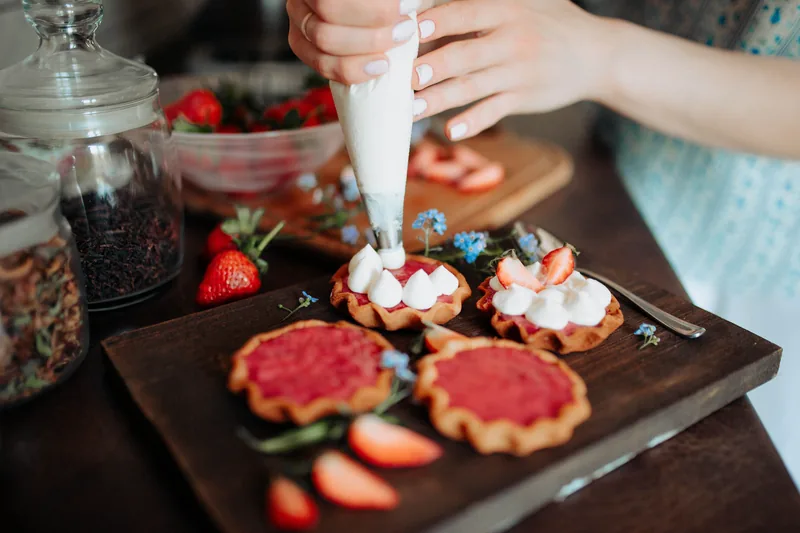
Fruit Pizza Cookies
Sugar cookie bases, cream cheese frosting, fresh fruit on top. Assembled within an hour of eating.
- Total time
- 1 hr 42 min
- Yield
- Makes 16

Frozen Lemonade Slush
Frozen lemonade cubes blitzed back into a slush. Five minutes, no ice, no dilution.
- Total time
- 4 hr 10 min
- Yield
- Serves 4
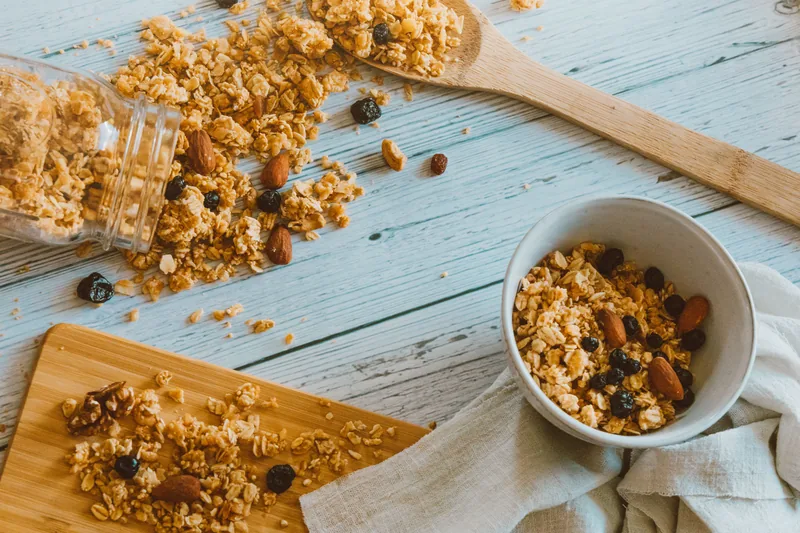
Blueberry Oatmeal Breakfast Bars
One oat mixture, used twice — pressed as a base and crumbled on top. Cut them cold or they fall apart.
- Total time
- 3 hr
- Yield
- Makes 12 bars