Scalloped Potatoes
Thin Yukon Gold slices simmered in garlic cream before they go in the dish, so they bake tender all the way through under a browned Gruyère and cheddar top.
- Prep
- 25 min
- Cook
- 1 hr 10 min
- Rest
- 15 min
- Makes
- Serves 8
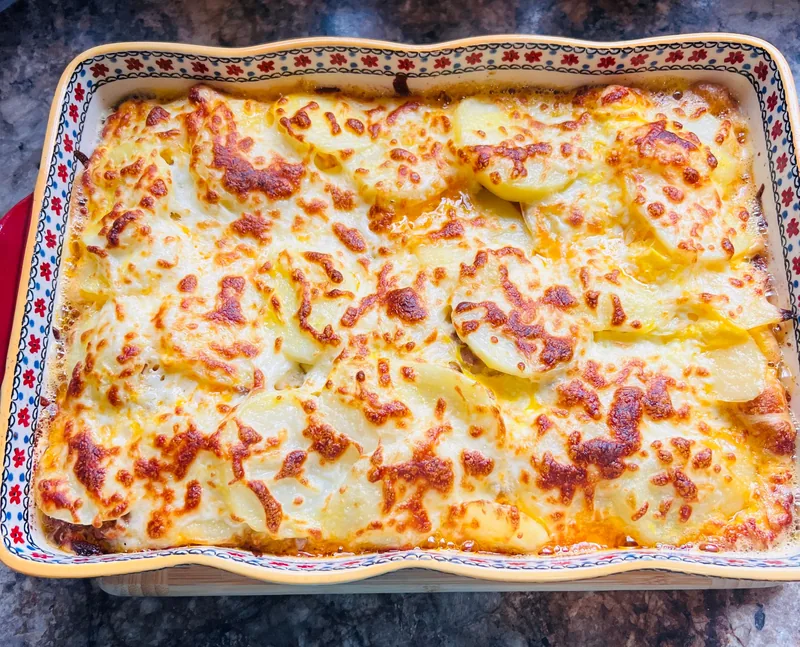
The classic complaint about scalloped potatoes is that the top is brown, the sauce is bubbling, and the potatoes underneath are still hard. It happens because raw potato slices, packed tightly in a dish of cold cream, take far longer to cook than the top takes to brown. The fix is to start them on the stove.
Simmering the sliced potatoes in the seasoned cream for about ten minutes before they go into the dish does two things. It gives them a head start, so the oven only has to finish what the stovetop began. And it pulls starch out of the potatoes into the cream, which thickens the sauce naturally. That is why this recipe needs no flour: the potatoes make their own sauce, and it stays smooth instead of turning pasty.
Slice thickness decides how evenly everything cooks. An eighth of an inch is the target, about the thickness of a coin. A mandoline makes this quick and consistent; a sharp chef's knife works if you are patient. Uneven slices mean some pieces turn to mush while others stay firm, so whatever tool you use, aim for sameness over speed.
Use Yukon Gold potatoes. They sit between starchy and waxy, so they soften fully but keep their shape in layers. Russets break down more and give a softer, almost mashed texture between the layers, which some people prefer. Red potatoes stay firm and never quite meld with the cream. Do not rinse the slices after cutting; the surface starch is what thickens the sauce.
The cheese is optional in the strict sense. Traditional scalloped potatoes are only cream and potatoes, and the cheesy version is closer to potatoes au gratin. In practice most American tables expect cheese, so this recipe puts Gruyère between the layers for nutty depth and sharp cheddar on top for color. Keep the cheese away from the sauce on the stove; it only goes in once the potatoes are in the dish.
Bake covered first, so the potatoes steam tender in their own sauce, then uncover so the top browns and the cream reduces at the edges. Then let the dish rest for fifteen minutes. Straight from the oven the sauce is thin and runs across the plate; after a rest it settles into the layers and the slices lift out cleanly.
Scalloped potatoes are rich enough to anchor a plate next to something simple, like honey Dijon chicken. On a holiday table they share the oven with green bean casserole. For a lighter potato side, garlic herb potatoes skip the cream entirely.
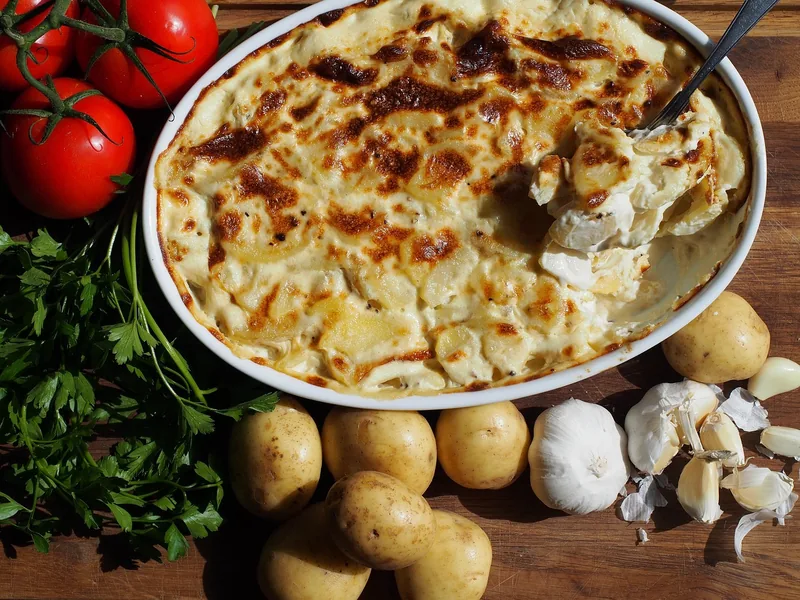
Scalloped potatoes for the holiday oven
Thin Yukon Gold slices simmered in garlic cream before they go in the dish, so they bake tender all the way through under a browned Gruyère and cheddar top.
Potatoes, garlic cream and two cheeses
For the potatoes and cream
- 3 lb (1.4 kg) Yukon Gold potatoes, peeled and sliced ⅛ in (3 mm) thick
- 2 tbsp (30 g) unsalted butter, plus more for the dish
- 3 cloves garlic, minced
- 2 cups (475 ml) heavy cream
- 1 cup (240 ml) whole milk
- 2 tsp fine salt
- ½ tsp black pepper
- ¼ tsp ground nutmeg
- 4 sprigs fresh thyme, leaves only, or ½ tsp dried
For the cheese
- 1½ cups (150 g) Gruyère, grated
- 1 cup (100 g) sharp cheddar, grated
- 1 tbsp chopped fresh chives, to finish
Simmer first, then layer and bake
- 1 Heat the oven to 375°F (190°C). Butter a 9×13 in (23×33 cm) baking dish or a 3 qt (2.8 L) gratin dish.
- 2 Melt the butter in a large, wide pot over medium heat. Add the garlic and cook 30 seconds until fragrant. Pour in the cream and milk, and add the salt, pepper, nutmeg and thyme.
- 3 Add the potato slices and bring to a gentle simmer, stirring carefully so the slices separate and do not stick. Simmer 8–10 minutes, until the potatoes are just starting to soften at the edges and the cream has thickened slightly.
- 4 Spoon one third of the potatoes and cream into the dish and spread them flat. Scatter half the Gruyère over them. Repeat with another third and the remaining Gruyère, then finish with the last of the potatoes and cream.
- 5 Press the top layer down gently so the cream rises around it. Scatter the cheddar over the surface.
- 6 Cover tightly with foil and bake 35 minutes. Uncover and bake 20–25 minutes more, until the top is deep golden and a knife slides through the center with no resistance.
- 7 Rest 15 minutes before serving so the sauce sets between the layers. Sprinkle with the chives.
Making it ahead, no cheese and other potatoes
- Make ahead: assemble, cool, cover and refrigerate up to 1 day. Bake straight from cold, adding 15 minutes to the covered time.
- Without cheese: leave both cheeses out and dot the top with 2 tbsp butter for the traditional cream-only version.
- Lighter: use 2 cups (475 ml) half and half and 1 cup (240 ml) milk instead of cream and milk. The sauce will be thinner, so add 1 tbsp flour with the garlic.
- Potatoes: russets give a softer, more blended texture. Avoid red potatoes, which stay firm.
- Reheating: cover and warm at 350°F (180°C) for 20 minutes, or reheat single portions in the microwave.
Hard potatoes, split sauce and au gratin
Raw slices in cold cream take a long time to cook, and the top browns first. Simmering the slices in the cream on the stove before baking, and baking covered for the first half, solves it.
Milk alone or low-fat dairy can split in a long bake. Heavy cream is the most stable. Boiling the cream hard on the stove can also break it, so keep it at a gentle simmer.
Traditionally, scalloped potatoes are baked in cream alone, and au gratin potatoes have cheese and often breadcrumbs. Many American recipes, including this one, blur the line by adding cheese.
No. The starch on the surface of the slices thickens the cream into a sauce. Rinsing it away leaves the sauce thin.
About ⅛ in (3 mm), roughly the thickness of a coin. Consistency matters more than exact thickness, so every slice cooks at the same rate.
Mains and sides to set beside it
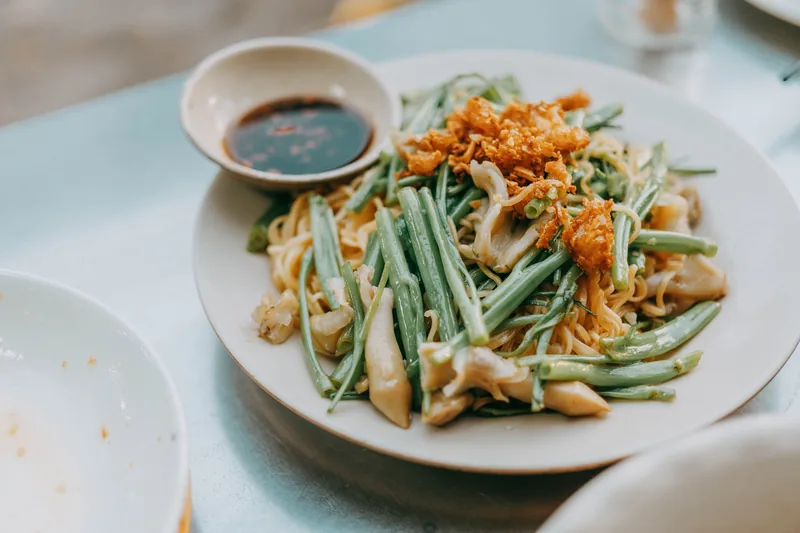
Green Bean Casserole
Fresh green beans blanched bright, folded into a mushroom cream sauce built in one skillet, and baked under a thick crown of crispy fried onions.
- Total time
- 1 hr 10 min
- Yield
- Serves 8
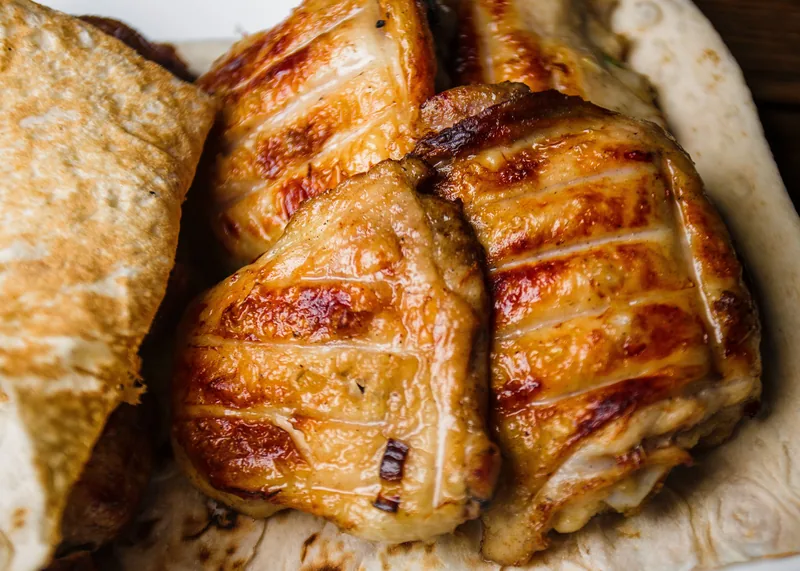
Baked Honey Dijon Chicken
Chicken breasts baked plain, glazed in the last ten minutes with honey, two mustards and cider vinegar, then flashed under the broiler.
- Total time
- 45 min
- Yield
- Serves 4
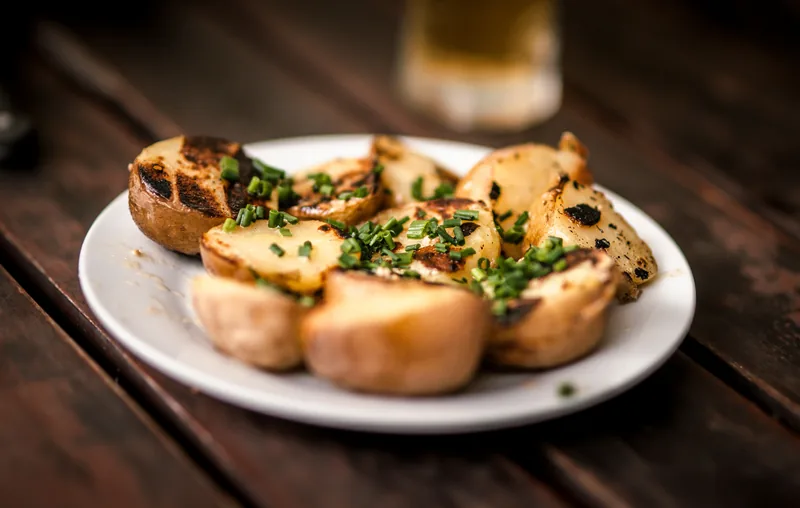
Grilled Potatoes with Garlic and Herbs
Parboiled first so the grill only has to char them. Twelve minutes over the coals, not forty.
- Total time
- 40 min
- Yield
- Serves 6