Chocolate-Cinnamon Sugar Cookies
Deep cocoa dough rolled in cinnamon sugar, baked until the tops crack and the centers are still soft enough to fold.
- Prep
- 20 min
- Cook
- 10 min
- Rest
- 30 min
- Makes
- Makes about 28 cookies
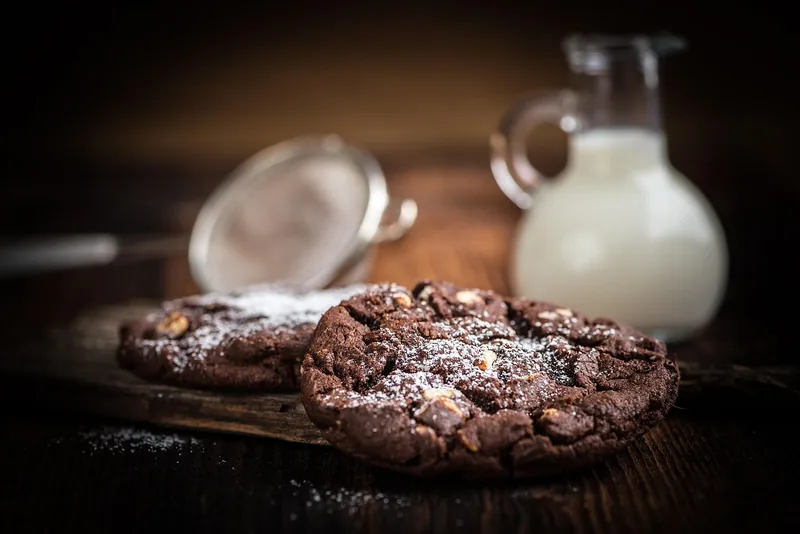
Cocoa powder is not flour with the color turned up. It is roughly a quarter starch, a fifth protein and very thirsty, and unlike flour it forms no gluten at all. Swap a half cup of cocoa into a sugar cookie in place of a half cup of flour, as a lot of recipes do, and you get something dry and crumbly that tastes faintly of chocolate and breaks on the way to your mouth.
Two adjustments fix it, and this dough uses both. The cocoa replaces only part of the flour rather than a cup for a cup, so there is still enough gluten to hold a chewy structure. And the fat and sugar both go up, because cocoa's thirst has to be met by something. An extra egg yolk does the same job from a different direction — yolk is fat and emulsifier, and it keeps the crumb tender for days instead of hours.
Cream of tartar earns its place here for taste, not lift. It gives the tang that makes a snickerdoodle taste like a snickerdoodle rather than a plain sugar cookie, and that slight sourness is exactly what dark cocoa needs to stop it going flat and dusty. Along with the baking soda it also keeps the dough soft enough to spread into thin, chewy discs.
The crackle on top is mechanical, not magic. Each ball goes into cinnamon sugar and comes out with a dry, sandy shell. In the oven the inside puffs and spreads outward while that shell stays rigid, so it has to split — those pale fissures across a dark cookie are the sugar crust tearing. Roll them heavily. A thin coat gives you a cookie that is merely brown on top.
Chill the dough thirty minutes, no longer than overnight. Cold butter melts later in the bake, so the cookie sets before it spreads out thin and crisp. Skipping the chill entirely gives you wide, lacy cookies — not bad, just a different cookie than the thick chewy one this recipe is aimed at.
Pull them early. This is where most chocolate cookies are lost, because the usual visual cue does not exist: a dark cookie never looks golden, so cooks keep waiting and the cookie overbakes into a brownie-edged puck. Judge it by the surface instead. At nine or ten minutes at 350°F (180°C) the edges are set and matte, the cracks have opened, and the centers still look soft and slightly domed. They will look underdone. Take them out. Five minutes on the hot sheet finishes the middle by carryover, and that is the whole difference between a cookie that stays soft on day three and one that snaps.
One more thing worth knowing: dutch-process and natural cocoa are not interchangeable for texture here. Natural cocoa is acidic and reacts with the baking soda; dutch-process is neutral and will give a slightly cakier, less risen cookie. Either tastes good, so use what you have, but expect natural cocoa to spread a little more.
If you are baking a mixed tray, oatmeal chocolate chip cookies bake at the same temperature, and air fryer peanut butter cookies keep the oven free. Come spring that tray usually picks up Easter cookies as well, which want the same early pull for the same reason.
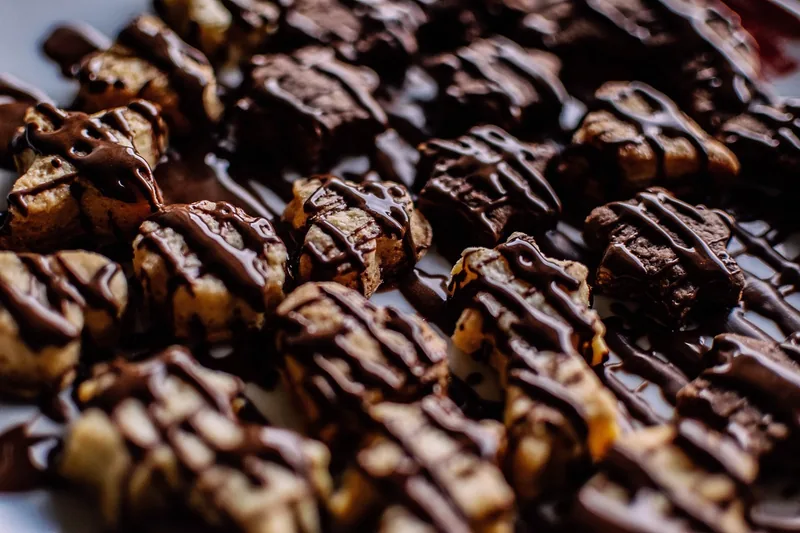
The cookie card
Deep cocoa dough rolled in cinnamon sugar, baked until the tops crack and the centers are still soft enough to fold.
Dough and coating
Cookie dough
- 1¾ cups (220 g) all-purpose flour
- ⅔ cup (60 g) unsweetened cocoa powder
- 1 tsp cream of tartar
- ½ tsp baking soda
- 1 tsp ground cinnamon
- ¾ tsp fine salt
- 12 tbsp (170 g) unsalted butter, softened
- 1¼ cups (250 g) granulated sugar
- ¼ cup (50 g) packed light brown sugar
- 1 large egg, plus 1 large egg yolk
- 2 tsp vanilla extract
Cinnamon sugar coating
- ⅓ cup (65 g) granulated sugar
- 1½ tsp ground cinnamon
- Pinch of fine salt
Mixing, chilling, rolling, baking
- 1 Whisk the flour, cocoa, cream of tartar, baking soda, cinnamon and salt together thoroughly. Cocoa clumps, so break up any lumps against the side of the bowl now rather than in the dough.
- 2 Beat the butter with both sugars for 2–3 minutes, until lightened and fluffy. Add the egg, the extra yolk and the vanilla and beat just until smooth.
- 3 Add the dry ingredients and mix on low only until no dry streaks remain. The dough will be soft and slightly tacky. Cover and refrigerate 30 minutes.
- 4 Heat the oven to 350°F (180°C) and line two sheet pans with parchment. Stir the coating sugar, cinnamon and salt together in a small bowl.
- 5 Roll the dough into balls of about 1½ tablespoons (30 g), then roll each one in the cinnamon sugar until it is completely, generously coated. Space them 2 inches (5 cm) apart — they spread to roughly double.
- 6 Bake one sheet at a time for 9–10 minutes. They are done when the edges look set and matte and the tops have cracked, while the centers still look soft and puffed. Do not wait for color; a chocolate cookie will not give you any.
- 7 Leave them on the hot sheet 5 minutes to finish setting, then move to a rack. They firm up considerably as they cool.
Cocoa choices, freezing, keeping them soft
- For a deeper, darker cookie, use half dutch-process and half natural cocoa. All dutch-process works but rises slightly less.
- A ½ teaspoon of instant espresso powder in the dry ingredients sharpens the chocolate without tasting of coffee.
- Dough balls freeze well, coated or uncoated, for 3 months. Bake from frozen with 2 extra minutes; if uncoated, roll them in the cinnamon sugar straight from the freezer while they are still frosty and it sticks perfectly.
- Baked cookies stay soft 4 days in an airtight container. A slice of sandwich bread in the tin keeps them that way; it gives up its moisture before the cookies do.
- To scale up, the dough doubles cleanly. Coating sugar does not scale the same way — make one batch, and mix a second only if you run out, because leftover cocoa-flecked sugar is not worth keeping.
- Halving the batch: use the whole egg and skip the extra yolk, and expect a marginally less chewy cookie.
Texture, spread and the sugar crust
Either too much flour or too long in the oven, and with a dark dough it is usually the oven. Measure flour by weight if you can, and pull them while the centers still look wet. A minute past the crack point is enough to change the texture for the worse.
The dough was too warm when it was rolled, so the sugar dissolved on contact instead of sitting on the surface as a dry shell. Chill the dough, work in batches, and re-roll any ball that looks glossy rather than sandy.
You can substitute 1½ teaspoons baking powder for the cream of tartar and baking soda together, but you lose the tang that balances the cocoa. The cookie will taste noticeably flatter and more like plain chocolate.
No. The dough is deliberately soft and high in fat so it spreads, which is the opposite of what a cutout needs. A rolled dough would need less butter, more flour and no baking soda.
Warm dough hitting a warm pan. Reusing a sheet straight out of the oven melts the butter before the cookie can set — let pans cool between batches, and keep the second half of the dough in the refrigerator while the first bakes.
Other cookies worth baking
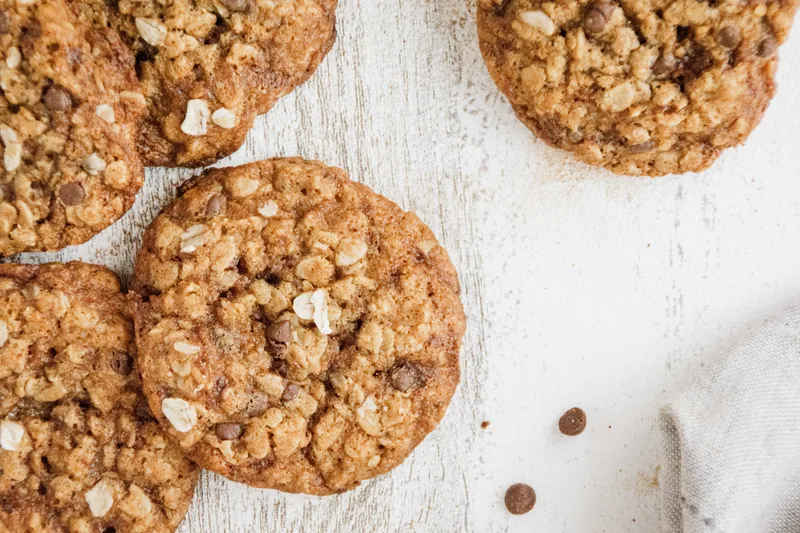
Oatmeal Chocolate Chip Cookies
Chewy in the middle, crisp at the rim, with oats you can still see. The dough rests overnight and it matters.
- Total time
- 12 hr 32 min
- Yield
- Makes 24 cookies
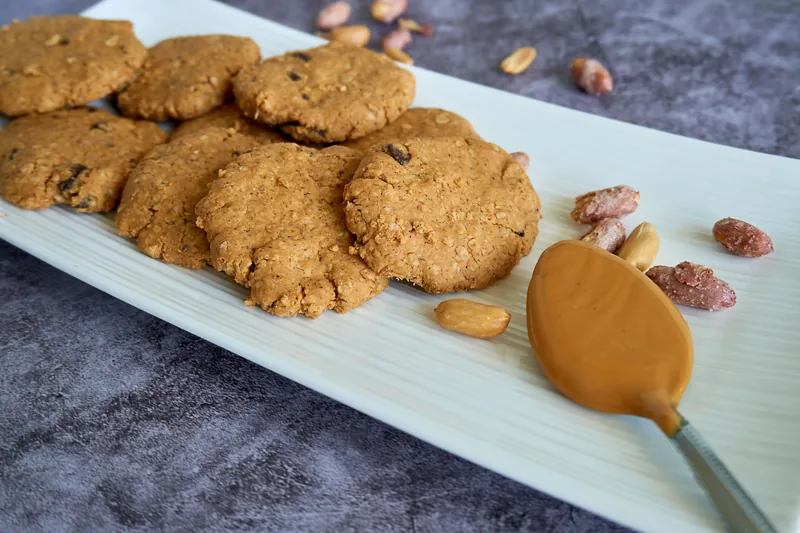
Air Fryer Peanut Butter Cookies
Three ingredients, eight minutes, six cookies at a time. No flour and no oven to heat.
- Total time
- 18 min
- Yield
- Makes 18 cookies
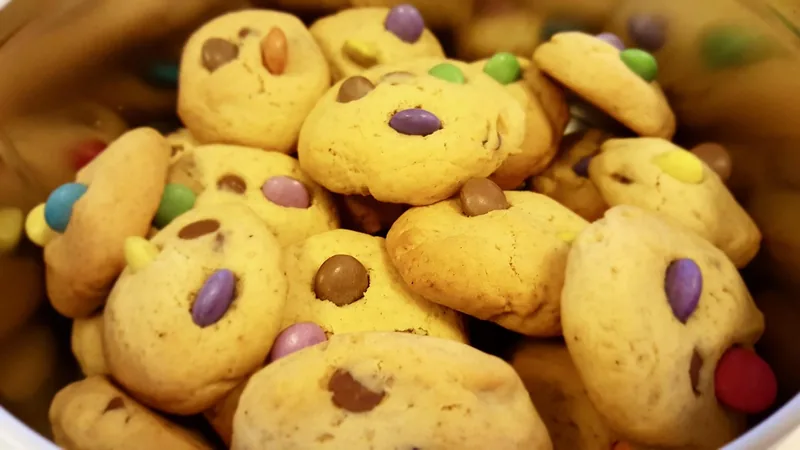
Easter Chocolate Chip Cookies
A brown-sugar chocolate chip dough handled so the candy-shelled eggs keep their pastel shells instead of bleeding into it.
- Total time
- 1 hr 1 min
- Yield
- Makes 24 cookies