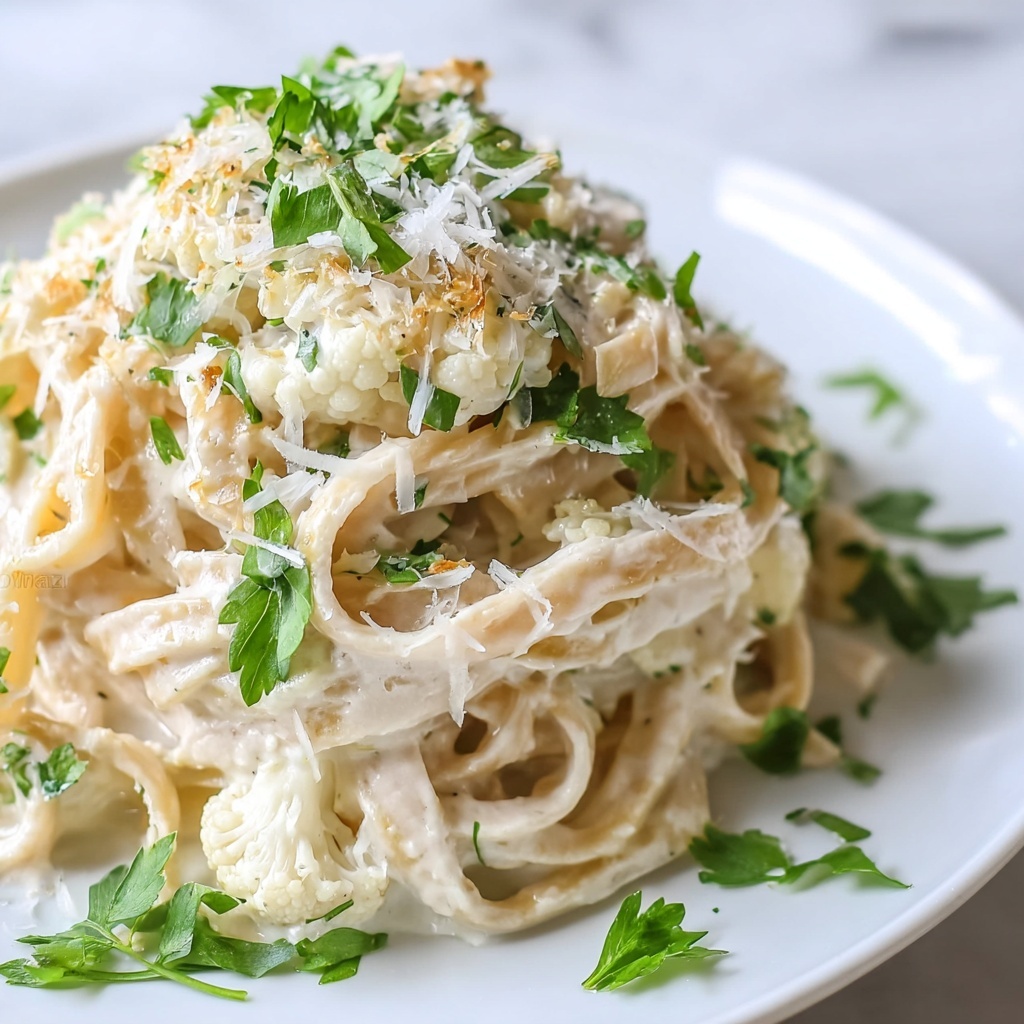
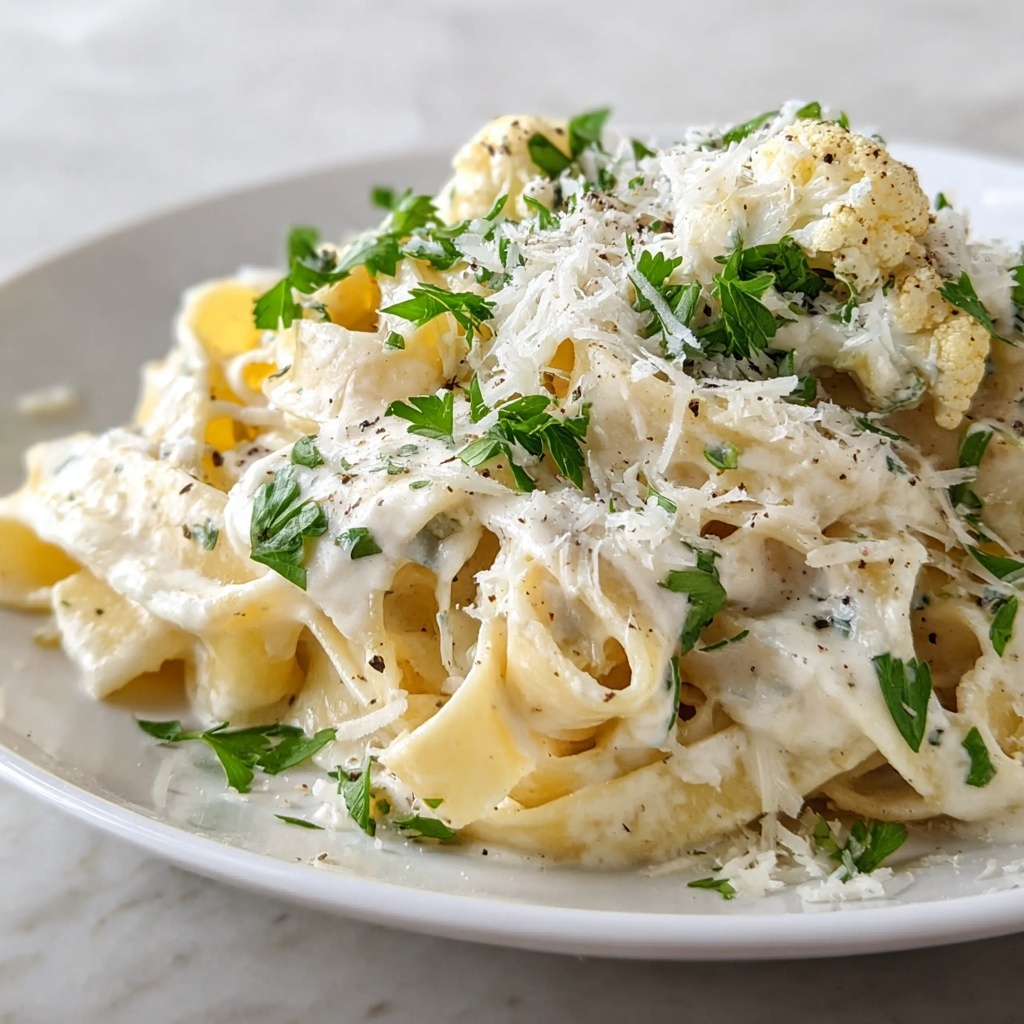
If you crave a comforting pasta dish that feels indulgent yet wholesome, this Roasted Cauliflower Alfredo Recipe is about to become your new go-to. It brilliantly transforms roasted cauliflower into a luxuriously creamy Alfredo sauce that’s both rich in flavor and lighter than traditional versions. Perfectly roasted cauliflower and garlic meld into a velvety sauce with a subtle nutmeg hint and the sharp, savory tang of Parmesan. This recipe brings warmth, comfort, and a sneaky veggie boost to your table, proving that Alfredo doesn’t always have to mean heavy cream and butter alone.
Ingredients You’ll Need
Every great dish starts with ingredients that are simple but thoughtfully chosen, each playing a vital role in crafting the perfect balance of flavors, textures, and colors in this recipe.
- Cauliflower florets: The star of the sauce, roasting them develops a deep, caramelized flavor that turns creamy once blended.
- Garlic cloves: Roasting mellows the garlic’s sharpness, lending a sweet, nutty aroma essential to the sauce’s character.
- Whole milk: Adds smoothness and body, making the sauce creamy without overwhelming richness.
- Grated Parmesan cheese: Imparts a salty, umami depth that enriches every bite.
- Unsalted butter: Used in the roasting and the sauce, it gives subtle richness and helps blend flavors.
- Fettuccine or pasta of choice: Classic fettuccine is ideal for coating with the sauce, but any pasta you love works beautifully.
- Ground nutmeg: A tiny pinch adds warmth and complexity, balancing the creaminess perfectly.
- Salt and black pepper: Fundamental seasonings to brighten and enhance the natural flavors.
- Chopped fresh parsley: A vibrant, fresh garnish that adds color and a touch of herbal brightness.
How to Make Roasted Cauliflower Alfredo Recipe
Step 1: Prepare Your Oven and Vegetables
Start by preheating your oven to 425°F and lining a baking sheet with parchment paper for easy cleanup. Toss the cauliflower florets and garlic cloves in one tablespoon of butter, making sure every piece is coated to encourage beautiful caramelization. Spread them evenly on your baking sheet so the heat can roast them perfectly golden and tender.
Step 2: Roast the Cauliflower and Garlic
Let your veggies roast for 25 to 30 minutes, stirring halfway to ensure even browning. This step builds the core flavor of your Alfredo sauce, turning simple cauliflower into a rich, nutty base that’s absolutely dreamy when blended smooth.
Step 3: Cook the Pasta
While your cauliflower roasts, bring a large pot of well-salted water to a boil and cook your pasta according to the package directions until al dente. Before draining, remember to reserve one cup of pasta water – it’s a secret weapon that helps adjust the sauce’s creaminess and loosen it up if needed.
Step 4: Blend the Sauce
In a blender, combine the roasted cauliflower and garlic with the remaining butter, whole milk, Parmesan cheese, nutmeg, salt, and pepper. Blend until completely smooth, adding the reserved pasta water bit by bit until you reach the perfect silky consistency that clings to every strand of pasta.
Step 5: Combine and Heat Through
Pour your luscious sauce into a large skillet over medium heat, just until it starts to simmer gently. Then, toss in your cooked pasta, stirring well to coat every noodle in that creamy goodness. This step warms everything together and lets the flavors marry beautifully.
How to Serve Roasted Cauliflower Alfredo Recipe
Garnishes
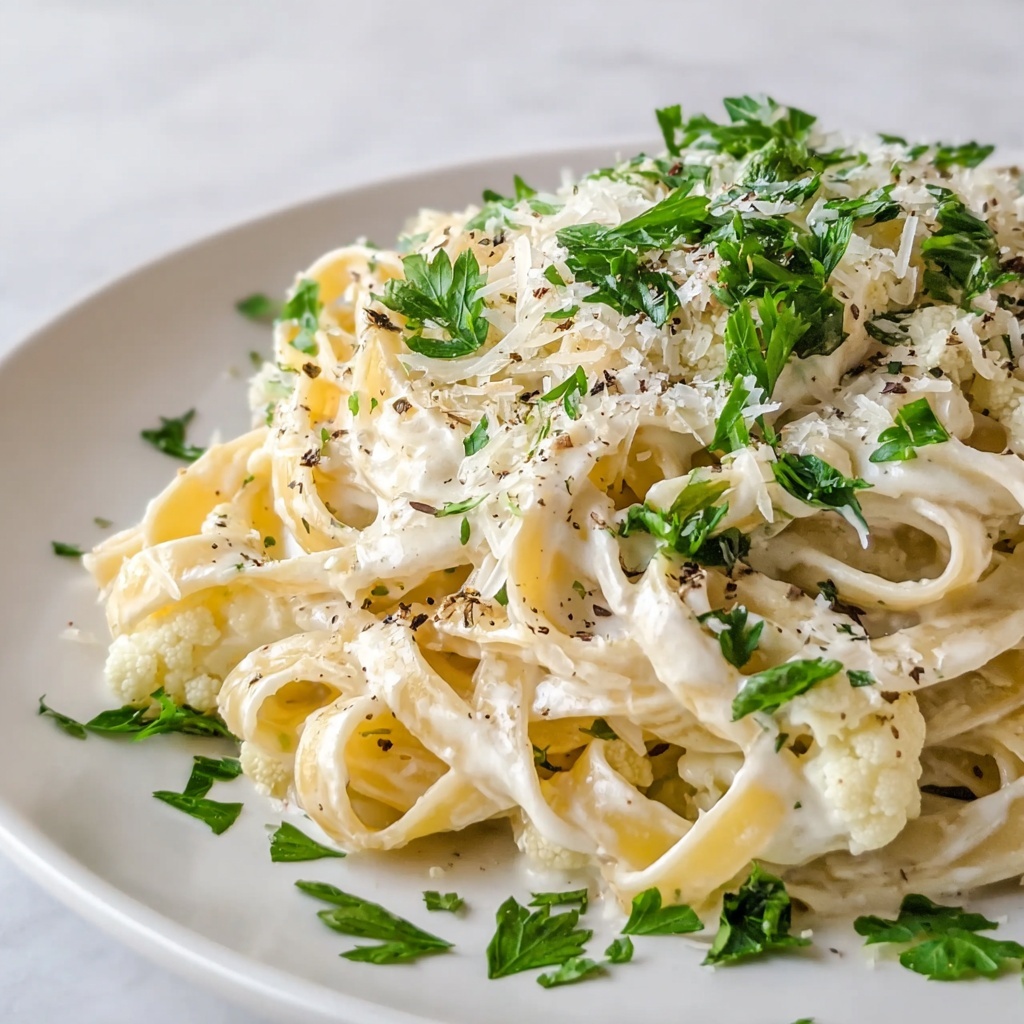
Finish off your plate with bright, freshly chopped parsley and a sprinkle of extra Parmesan cheese. These simple garnishes add vibrant green color and a salty kick that elevate the dish’s appearance and flavor, making it look as fantastic as it tastes.
Side Dishes
Pair this hearty pasta with a crisp green salad dressed in a tangy vinaigrette or some roasted seasonal vegetables for a balanced meal. Garlic bread or crusty artisan bread is also perfect for mopping up any extra sauce and adds satisfying crunch to your dining experience.
Creative Ways to Present
Serve the pasta in shallow bowls to showcase the silky sauce piled high with a parsley flourish. For a fun twist, turn this recipe into a baked casserole by mixing the pasta with sauce, topping with breadcrumbs and extra cheese, then baking until golden and bubbly. It’s comfort food with a new twist sure to impress your guests.
Make Ahead and Storage
Storing Leftovers
If you have any leftovers of this Roasted Cauliflower Alfredo Recipe, store them in an airtight container in the refrigerator. They will keep well for up to 3 days, allowing you to enjoy this creamy delight again without fuss.
Freezing
Because of its dairy base, the sauce can separate when frozen and reheated, so it’s best to freeze the pasta and sauce separately if you plan on freezing. Wrap the pasta tightly and store the sauce in a freezer-safe container, both lasting up to 2 months. Thaw overnight in the fridge before reheating.
Reheating
Reheat gently on the stovetop over low heat, adding a splash of milk or reserved pasta water to bring back the sauce’s original creaminess. Stir frequently to prevent sticking and maintain that smooth texture you loved in the first place.
FAQs
Can I use a different type of milk for this recipe?
Absolutely! While whole milk gives the creamiest texture, you can substitute with 2% milk or even unsweetened plant-based milks like oat or almond for a lighter or dairy-free version, though the sauce may be a bit less rich.
Is this recipe suitable for vegans?
The current recipe uses butter and Parmesan cheese, which are not vegan. However, you can easily swap butter for vegan margarine and Parmesan for a plant-based cheese alternative or nutritional yeast to create a vegan-friendly Roasted Cauliflower Alfredo Recipe.
Can I make this recipe gluten-free?
Yes! Simply choose your favorite gluten-free pasta instead of traditional wheat noodles. The sauce is inherently gluten-free, so this dish adapts well to gluten-free diets without sacrificing flavor or texture.
How can I make the sauce thicker or thinner?
If you want a thicker sauce, reduce the amount of reserved pasta water you add while blending, or cook the sauce a bit longer on the stove. For a thinner sauce, gradually add more pasta water or milk until you reach your desired consistency.
What other vegetables work well in this Alfredo sauce?
While roasted cauliflower is the hero here, you can experiment by adding roasted broccoli or even cooked spinach to the sauce for added flavor and nutrients. Just make sure to adjust seasoning accordingly so the delicate balance stays perfect.
Final Thoughts
This Roasted Cauliflower Alfredo Recipe is a true celebration of comfort food with a clever twist that’s both delicious and nourishing. It’s a wonderful way to enjoy pasta night while sneaking in some extra veggies in the most indulgent way possible. I can’t wait for you to try it and see how this creamy, flavorful sauce transforms your usual dinner routine into a memorable feast. Happy cooking!
Print
Roasted Cauliflower Alfredo Recipe
- Prep Time: 10 minutes
- Cook Time: 40 minutes
- Total Time: 50 minutes
- Yield: 4 servings
- Category: Main Course
- Method: Roasting
- Cuisine: Italian
- Diet: Vegetarian
Description
This Roasted Cauliflower Alfredo recipe offers a rich and creamy pasta dish made with roasted cauliflower and garlic, blended into a smooth Alfredo sauce. It’s a delicious, comforting alternative to traditional cream-based Alfredo, bringing a subtle nutty flavor and velvety texture while using wholesome ingredients.
Ingredients
Vegetables
- 1 medium head cauliflower, cut into florets
- 3 cloves garlic, peeled
Dairy
- 1 cup whole milk
- 1/2 cup grated Parmesan cheese
- 2 tablespoons unsalted butter
Pantry
- 12 ounces fettuccine or pasta of choice
- 1/4 teaspoon ground nutmeg
- 1/2 teaspoon salt, plus more to taste
- 1/4 teaspoon black pepper
Garnish
- Chopped fresh parsley
- Additional grated Parmesan cheese
Instructions
- Prepare oven and baking sheet: Preheat the oven to 425°F (220°C). Line a baking sheet with parchment paper to prevent sticking and simplify cleanup.
- Season and arrange cauliflower: In a bowl, toss the cauliflower florets and peeled garlic cloves with 1 tablespoon of unsalted butter, ensuring they are evenly coated. Spread the mixture in a single layer on the prepared baking sheet for even roasting.
- Roast vegetables: Place the baking sheet in the preheated oven and roast the cauliflower and garlic for 25 to 30 minutes. Halfway through, stir the vegetables to ensure they brown evenly and become tender with golden edges.
- Cook pasta: While the vegetables roast, bring a large pot of well-salted water to a boil. Add the fettuccine or pasta of choice and cook according to the package instructions until al dente. Reserve 1 cup of the starchy pasta water before draining the pasta.
- Blend sauce: In a blender, combine the roasted cauliflower, roasted garlic, remaining 1 tablespoon of butter, whole milk, grated Parmesan cheese, ground nutmeg, salt, and black pepper. Blend until the sauce is completely smooth and creamy. Add reserved pasta water gradually to reach the desired sauce consistency.
- Heat and combine: Pour the blended sauce into a large skillet and warm over medium heat until it just begins to simmer. Add the cooked pasta to the skillet and toss thoroughly to coat the noodles evenly with the creamy cauliflower Alfredo sauce.
- Serve immediately: Plate the pasta while warm, garnishing with chopped fresh parsley and additional grated Parmesan cheese for added flavor and presentation. Serve immediately to enjoy the creamy texture and rich taste.
Notes
- Use whole milk for the creamiest sauce, but you can substitute with 2% milk or a milk alternative if preferred.
- Reserving pasta water is essential to adjust the thickness of the sauce and help it cling better to the noodles.
- For a nut-free version, omit the nutmeg or use a pinch of ground white pepper instead for subtle warmth.
- This sauce works well with any type of pasta, although wider noodles like fettuccine or pappardelle are ideal to catch the sauce.
- To make it vegan, substitute butter with plant-based margarine, Parmesan with a vegan cheese alternative, and use unsweetened plant milk.