Crème Brûlée French Toast with Salted Caramel
Thick slices of challah soaked overnight in vanilla custard over a salted brown-sugar caramel, baked in the morning and finished with a crackly burnt-sugar top. Assemble it the night before.
- Prep
- 20 min
- Cook
- 40 min
- Rest
- 8 hr
- Makes
- Serves 6
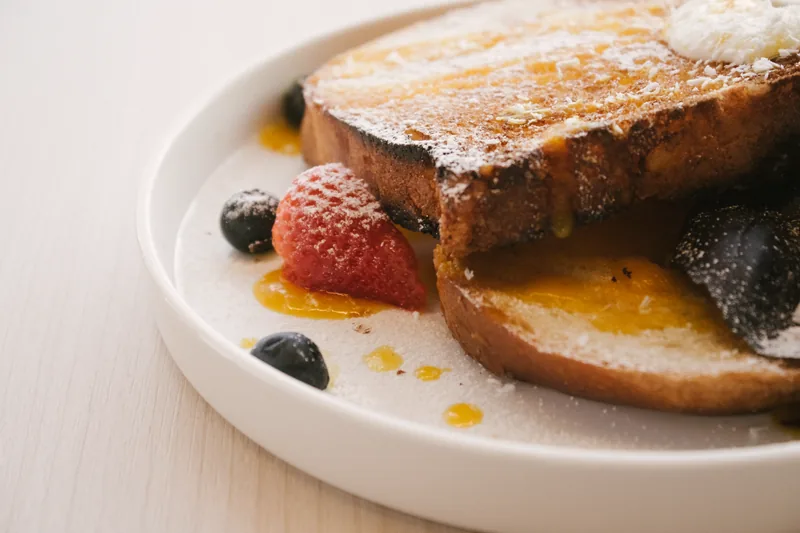
Crème brûlée french toast borrows two things from the dessert: a rich vanilla custard, and a layer of caramelized sugar. Here the custard soaks into thick slices of bread overnight, the caramel sits underneath them in the baking dish, and a thin sugar crust goes on top at the very end. In the morning there is nothing left to do but bake it.
The caramel is not cooked to a deep amber the way a dessert caramel is. Butter, brown sugar and a spoonful of corn syrup are melted together for a few minutes and poured into the dish. In the oven it bubbles up into the bottom of the bread and turns into a soft, buttery sauce. The corn syrup keeps the sugar from crystallizing while the dish sits in the fridge all night, and the salt keeps the whole thing from tasting only of sugar.
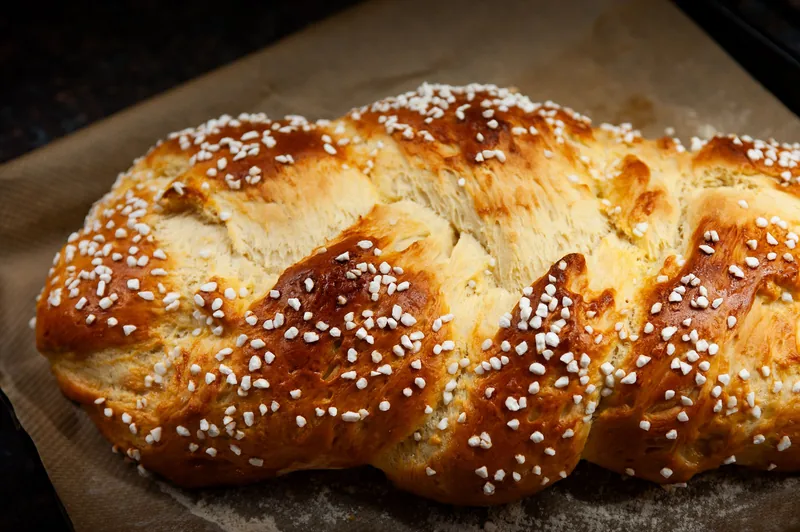
Use challah or brioche, cut thick and a day old. Both breads are made with eggs and butter, so they drink up custard without falling apart. Sandwich bread turns to pudding, and a crusty sourdough stays chewy. Cut the slices a full inch thick. Thinner slices soak through in an hour and lose the soft middle that makes this worth the wait.
The overnight soak matters more than it looks. Custard poured over bread at 9 p.m. is still pooling in the dish at 10, and by morning it has moved all the way into the center of every slice. Press the bread down once before you cover it so the top slices get their share. If you are short on time, two hours is the minimum, and the middle will be a little drier.
The custard is five eggs to a cup and a half of half-and-half, which is richer than ordinary french toast and close to a real crème brûlée base. Whole milk alone makes it thinner and firmer, and heavy cream alone makes it heavy enough to feel like dessert at breakfast. Half-and-half sits in between. Vanilla carries the flavor, and a spoonful of orange liqueur, the way many restaurant versions do it, makes it taste less sweet without tasting of orange. The dish is done when the bread has puffed above the rim, the edges are deep golden, and a knife slid into the center comes out with no wet custard on it. Underbaked, the middle stays eggy. Overbaked, the caramel underneath starts to turn bitter.
The burnt-sugar top is the crème brûlée part, and it is optional. Sprinkle a thin, even layer of white sugar over each serving and melt it with a kitchen torch until it is amber. No torch? Five minutes under the broiler on a sheet pan does the same job. Watch it the whole time, because sugar goes from amber to black in seconds.
Serve it caramel side up, with berries to cut the richness and a mug of vanilla caramel latte if you want to go all the way.
Crème brûlée french toast at a glance
- Total time
- 9 hr
- Yield
- Serves 6
Caramel, bread, custard and sugar
Salted caramel layer
- ½ cup (1 stick, 113 g) unsalted butter
- 1 cup (200 g) packed light brown sugar
- 2 tbsp light corn syrup
- ¾ tsp flaky sea salt, or ½ tsp fine salt
Bread and custard
- 1 loaf challah or brioche (about 1 lb / 450 g), a day old, cut into 8 slices 1 inch (2.5 cm) thick
- 5 large eggs
- 1½ cups (360 ml) half-and-half, or 1 cup whole milk plus ½ cup heavy cream
- 2 tsp pure vanilla extract
- 1 tbsp orange liqueur, such as Grand Marnier (optional)
- ¼ tsp fine salt
To finish
- 3 tbsp (38 g) granulated sugar
- Fresh berries, to serve
Assemble at night, bake in the morning
- 1 Butter a 9 x 13-inch (23 x 33 cm) baking dish.
- 2 Put the butter, brown sugar and corn syrup in a small saucepan over medium heat. Stir until the butter melts and the mixture is smooth and bubbling, about 3 minutes. Stir in the salt and pour it into the dish, tilting to spread it over the bottom.
- 3 Arrange the bread in a single snug layer on top of the caramel. Trim a slice or two to fill any gaps.
- 4 Whisk the eggs, half-and-half, vanilla, liqueur if using, and salt until no streaks of egg remain. Pour it slowly and evenly over the bread, then press each slice down gently with your fingers.
- 5 Cover the dish and refrigerate at least 8 hours, or up to 24.
- 6 Take the dish out of the fridge 30 minutes before baking and heat the oven to 350°F (175°C). Bake uncovered 35–40 minutes, until the bread is puffed and golden and a knife slid into the center comes out without wet custard.
- 7 Rest 5 minutes. Run a knife around the edge, lift each slice out with a spatula and turn it over onto a plate, caramel side up. Spoon any caramel left in the dish over the top.
- 8 For the brûlée top, sprinkle each slice with a thin, even layer of granulated sugar and melt it with a kitchen torch until amber. Or set the slices on a foil-lined sheet pan and broil 6 inches from the heat for 2–5 minutes, watching closely. Serve right away with berries.
Bread, smaller batches and leftovers
- Fresh bread is too soft and turns soggy. If yours is fresh, cut the slices and leave them out on a rack for a few hours, or dry them in a 300°F (150°C) oven for 10 minutes.
- For a smaller batch, halve everything and use an 8-inch (20 cm) square dish. The baking time stays about the same.
- Skip the liqueur and add the finely grated zest of half an orange to the custard for the same flavor without alcohol.
- Leftovers keep, covered, in the fridge for up to 3 days. Reheat slices in a 350°F (175°C) oven for 10 minutes. The sugar crust softens overnight, so brûlée it again just before serving.
- Dark brown sugar makes a deeper, more molasses-flavored caramel. Light brown sugar keeps it closer to a classic crème brûlée.
Soaking, torches and the right bread
Yes, with at least a 2-hour soak. Press the bread down well and turn the slices once halfway through so the custard reaches the middle. An overnight soak still gives the softest center.
No. The caramel baked underneath already gives the dish its name. For the crackly top without a torch, broil the sugared slices on a sheet pan for 2–5 minutes and watch them the whole time.
Challah or brioche, a day old and cut 1 inch thick. Both are rich enough to soak up the custard without collapsing. Thick-cut Texas toast works too, though it is a little less tender.
It is a casserole in the way it is made: assembled in one dish the night before and baked in the morning. It is served in whole slices rather than scooped, though, so it looks like french toast on the plate.
Whole milk works, but the custard sets a little firmer and tastes less rich. Avoid low-fat milk, which makes the bread watery.
More for a slow morning

Vanilla Caramel Latte
Espresso or strong coffee, homemade caramel sauce, real vanilla and milk heated to 150°F (65°C) and frothed in a jar. Hot or iced, no espresso machine required.
- Total time
- 20 min
- Yield
- Serves 2, with caramel sauce to spare
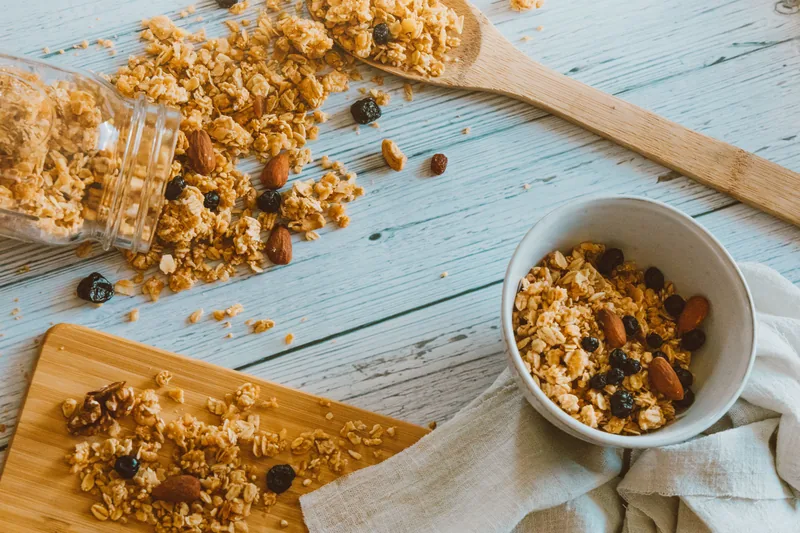
Blueberry Oatmeal Breakfast Bars
One oat mixture, used twice — pressed as a base and crumbled on top. Cut them cold or they fall apart.
- Total time
- 3 hr
- Yield
- Makes 12 bars
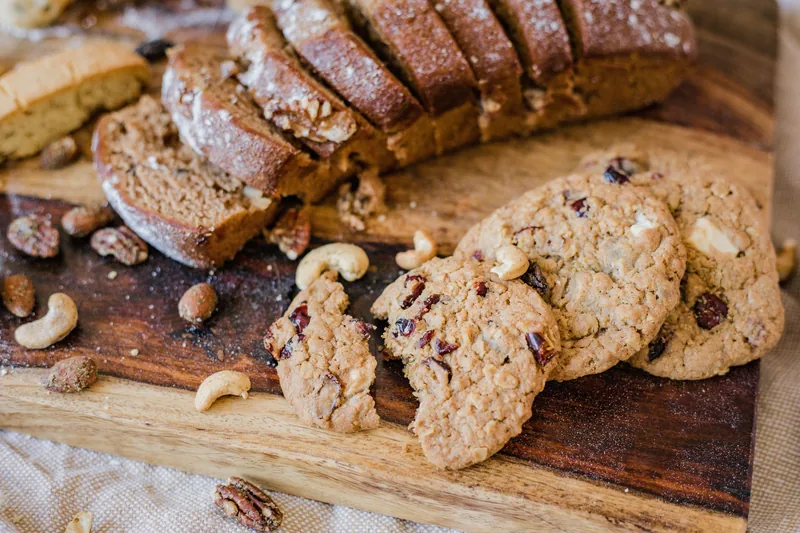
Caramel Banana Bread Cookies
Soft, cakey banana cookies with pockets of molten caramel — a chilled dough built to stop banana from spreading it flat.
- Total time
- 1 hr 33 min
- Yield
- Makes 20 cookies