Vanilla Caramel Latte
Espresso or strong coffee, homemade caramel sauce, real vanilla and milk heated to 150°F (65°C) and frothed in a jar. Hot or iced, no espresso machine required.
- Prep
- 5 min
- Cook
- 15 min
- Makes
- Serves 2, with caramel sauce to spare

A latte is mostly milk, so the milk decides how good it is. Coffee shops steam it to about 150°F (65°C) and no hotter, and there is a reason. Milk tastes sweetest in that range, because warm lactose reads as sweeter on the tongue. Past about 160°F (70°C) the proteins start to change, the sweetness drops away and a cooked, slightly eggy flavor takes over. A latte made with scalded milk needs twice the syrup to taste right. Heat the milk gently and stop when it steams and the edge just starts to tremble, and the drink is half done.
Froth comes from air trapped in milk protein, and it does not need a steam wand. Pour the hot milk into a jar no more than a third full, close the lid tightly and shake it hard for thirty seconds. A French press works too: pump the plunger fifteen or twenty times. Let the milk sit for a minute so the big bubbles rise and burst, leaving the fine foam. Whole milk makes the creamiest foam. Oat milk sold as barista style is the best of the dairy-free choices.
The caramel is the part worth making yourself. Bottled caramel syrup is mostly sweetness, with a flat caramel flavor. Real caramel is sugar taken to deep amber, which builds bitter, toasty notes alongside the sweet, and those are what stand up to coffee. Cook the sugar until it is the color of an old copper coin, around 350°F (175°C), then stop it with warm cream and butter. Pull it too early and it tastes only sweet. Take it too far and it turns acrid. A pinch of salt makes it taste more like caramel. The batch below makes about a cup and keeps for two weeks, enough for eight lattes.
Vanilla goes into the cup, not the caramel, where its aroma would cook off. Use pure extract or vanilla bean paste. Imitation vanilla tastes thin next to the caramel.
No espresso machine is needed. A moka pot gives the closest result. Strong brewed coffee at double strength works well, and instant espresso powder dissolved in a little hot water is perfectly fine for this, since the caramel and milk carry most of the flavor.
For an iced version, skip heating the milk. Stir the caramel and vanilla into the hot coffee first so they dissolve, then pour it over ice and top with cold milk.
It is a good mid-morning cup after a green moringa smoothie bowl. For a richer holiday drink built on the same rule about milk temperature, there is homemade eggnog.
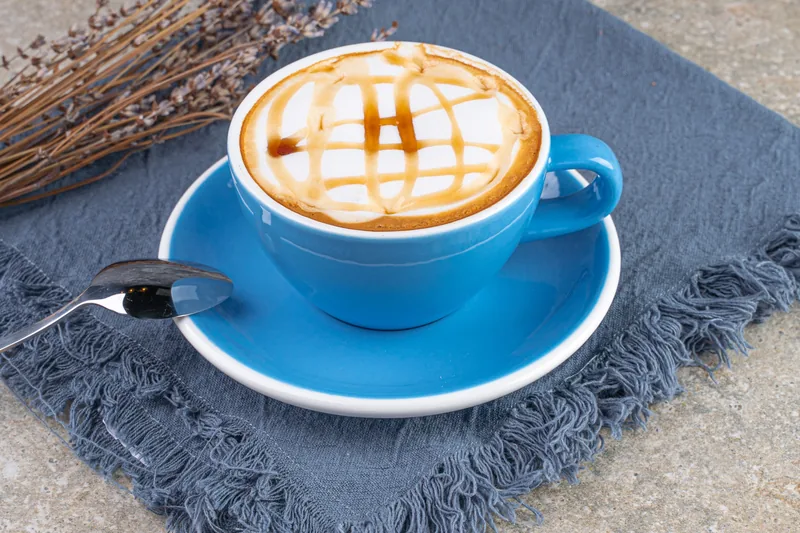
Vanilla caramel latte at a glance
- Total time
- 20 min
- Yield
- Serves 2, with caramel sauce to spare
Caramel sauce, coffee, vanilla and milk
Caramel sauce (makes about 1 cup)
- ¾ cup (150 g) granulated sugar
- 3 tbsp water
- ½ cup (120 ml) heavy cream, warmed
- 2 tbsp (28 g) unsalted butter
- ¼ tsp fine sea salt
For 2 lattes
- 4 shots espresso (4 oz / 120 ml), or 1 cup (240 ml) double-strength brewed coffee
- 3 tbsp caramel sauce, plus more to drizzle
- 1 tsp pure vanilla extract or vanilla bean paste
- 1½ cups (360 ml) whole milk or barista-style oat milk
Caramel to amber, milk just steaming, shake to froth
- 1 Make the caramel: put the sugar and water in a small, light-colored saucepan over medium heat. Swirl the pan, without stirring, until the sugar dissolves and the syrup turns deep amber, 6–8 minutes, about 350°F (175°C).
- 2 Take the pan off the heat and carefully pour in the warm cream. It will bubble up hard. Whisk until smooth, then whisk in the butter and salt. Let it cool for 5 minutes; it thickens as it cools.
- 3 Brew the espresso or coffee.
- 4 Divide the caramel sauce and vanilla between two mugs. Pour in the hot coffee and stir until the caramel dissolves.
- 5 Heat the milk in a small saucepan over medium-low heat until it steams and small bubbles form at the edge, about 150°F (65°C). Do not let it simmer.
- 6 Pour the milk into a jar no more than a third full, seal it and shake hard for 30 seconds, or pump it in a French press 15–20 times. Let it rest 1 minute so the large bubbles settle.
- 7 Pour the milk into the mugs, holding back the foam with a spoon, then spoon the foam on top. Drizzle with a little more caramel and serve.
Iced lattes, rescuing caramel and keeping it
- Iced vanilla caramel latte: stir the caramel and vanilla into hot coffee, pour it over a full glass of ice, then top with cold milk. Do not heat or froth the milk.
- If the caramel seizes into lumps when the cream goes in, return the pan to low heat and whisk until it melts smooth again.
- The caramel sauce keeps 2 weeks in a jar in the refrigerator. Warm it for 10 seconds in the microwave before measuring.
- For a stronger caramel flavor, add the caramel to the milk while it heats instead of to the cup.
- A sugar-free version: use 1 tablespoon of sugar-free caramel syrup per drink in place of the sauce. It tastes sweeter and less toasty.
No machine, milk temperature and macchiatos
Use a moka pot, double-strength brewed coffee or instant espresso powder for the coffee, and heat the milk on the stove, then froth it by shaking it in a sealed jar or pumping it in a French press.
About 150°F (65°C): steaming, with small bubbles at the edge, but not simmering. Hotter milk loses its natural sweetness and tastes cooked.
Not quite. In a latte the caramel and vanilla are mixed into the coffee and milk. A caramel macchiato is usually vanilla syrup and milk with the espresso poured on top and caramel drizzled over, so it is layered rather than mixed.
Yes. Use a thick caramel sauce rather than a thin syrup and the same amount. It will taste sweeter and a little less toasty than homemade.
Whole dairy milk makes the creamiest, most stable foam. For dairy-free, barista-style oat milk froths best; almond milk makes a thin, quickly fading foam.
With breakfast
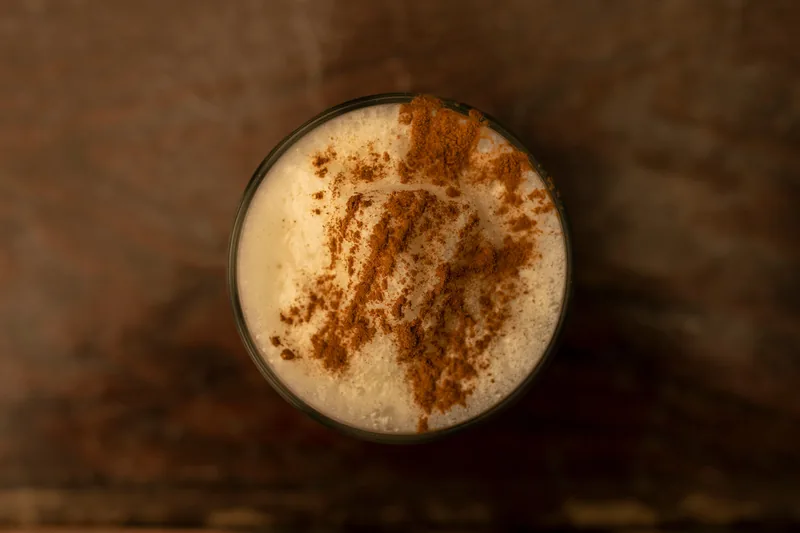
Homemade Eggnog
A cooked custard base, chilled overnight, thick enough to coat a spoon. Nothing like the carton.
- Total time
- 8 hr 30 min
- Yield
- Makes 5 cups (1.2 liters), serves 8
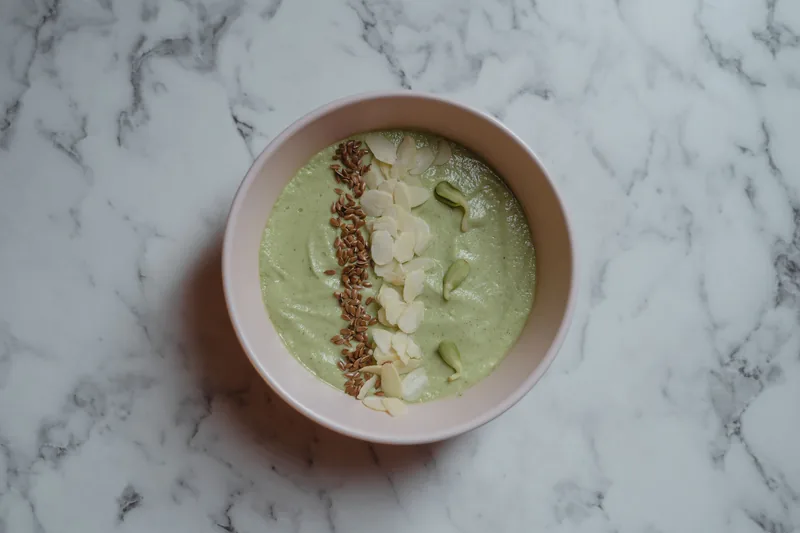
Green Moringa Smoothie Bowl with Chia
A spoon-thick green smoothie bowl of frozen banana, mango and spinach with a measured teaspoon of moringa, balanced with lime, topped with chia seeds, fruit and a crunchy layer.
- Total time
- 10 min
- Yield
- Serves 2
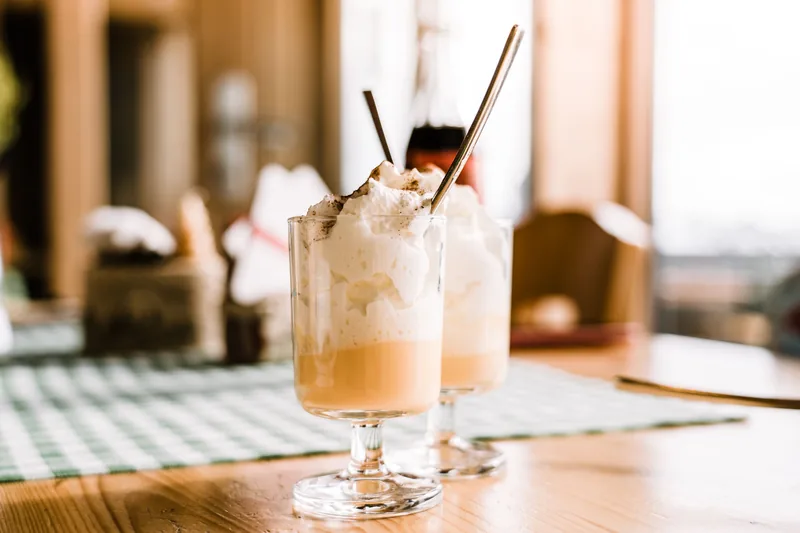
Cinnamon Roll Protein Shake
Thirty grams of protein that tastes like the middle of a cinnamon bun. Frozen banana does the work, not ice.
- Total time
- 5 min
- Yield
- Makes 1 large shake