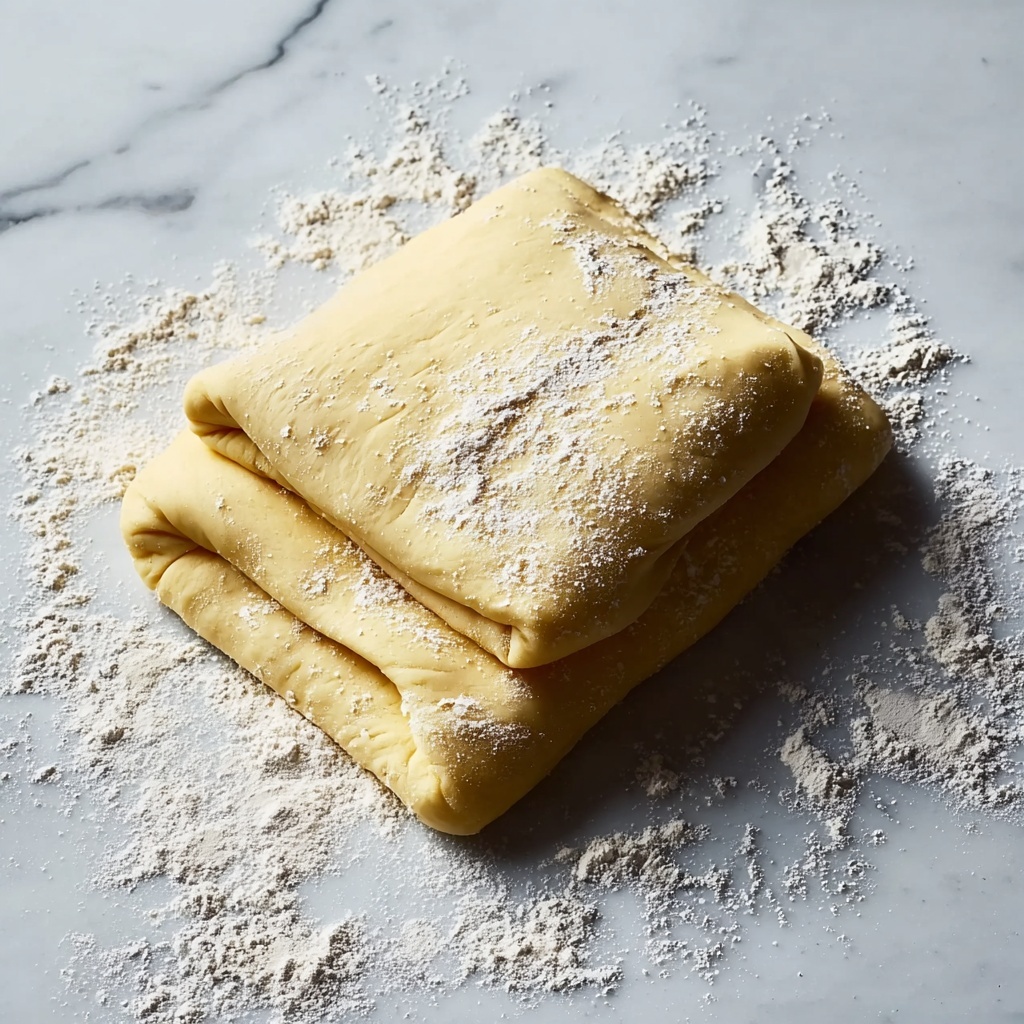
If you’ve ever dreamed of creating flaky, buttery pastries right in your own kitchen, then this Homemade Rough Puff Pastry Dough Recipe is exactly what you’ve been waiting for. This recipe captures the magic of classic puff pastry but with less fuss and a quicker process, making it perfect for both baking enthusiasts and curious beginners. With just a handful of simple ingredients and a bit of patience, you’ll be rewarded with a versatile dough that puffs up beautifully, creating layers that are crisp, tender, and utterly irresistible. Whether you’re whipping up savory tarts or sweet turnovers, this dough is a total game changer that feels like a warm hug from your oven.
Ingredients You’ll Need
These ingredients are straightforward, familiar staples, each playing a crucial role in building the delicate texture and rich flavor of your puff pastry dough. From the flour that forms your dough’s structure to the cold butter that creates those iconic flaky layers, every component is essential for success.
- 2 1/2 cups all-purpose flour: The foundation for your dough, offering strength and the right amount of gluten for flakiness without toughness.
- 1 teaspoon salt: Enhances the flavor and balances the richness of the butter.
- 1 cup (2 sticks) unsalted butter, cold and cubed: Cold butter is the key to flaky layers, so keep it as chilled as possible for best results.
- 1/2 cup cold water: Helps bring the dough together without melting the butter, preserving pockets of butter for flakiness.
- 1 teaspoon lemon juice or vinegar: Adds just enough acidity to tenderize the dough, improving texture and helping layers separate beautifully.
How to Make Homemade Rough Puff Pastry Dough Recipe
Step 1: Mix the Dry Ingredients
Start by whisking together the all-purpose flour and salt in a large bowl. This step ensures that the salt is evenly distributed for balanced seasoning throughout your dough.
Step 2: Incorporate Butter
Add your cold, cubed butter to the flour mixture. Using your fingers or a pastry cutter, work the butter into the flour until you achieve coarse crumbs with chunks of butter still visible. Those chunks are what help to create flaky, airy layers when baked—so don’t overwork the butter!
Step 3: Add Water and Lemon Juice
Mix the cold water and lemon juice (or vinegar) in a separate cup. Gradually stir this liquid into your flour and butter mixture just until the dough begins to come together. Be careful not to overmix, as this can cause the dough to become tough instead of tender.
Step 4: Shape the Dough
Once combined, shape your dough roughly into a rectangle. Wrap it tightly with plastic wrap and chill it in your refrigerator for 30 minutes. This rest period firms up the butter and relaxes the gluten, making rolling easier and helping with flakiness.
Step 5: First Roll and Fold
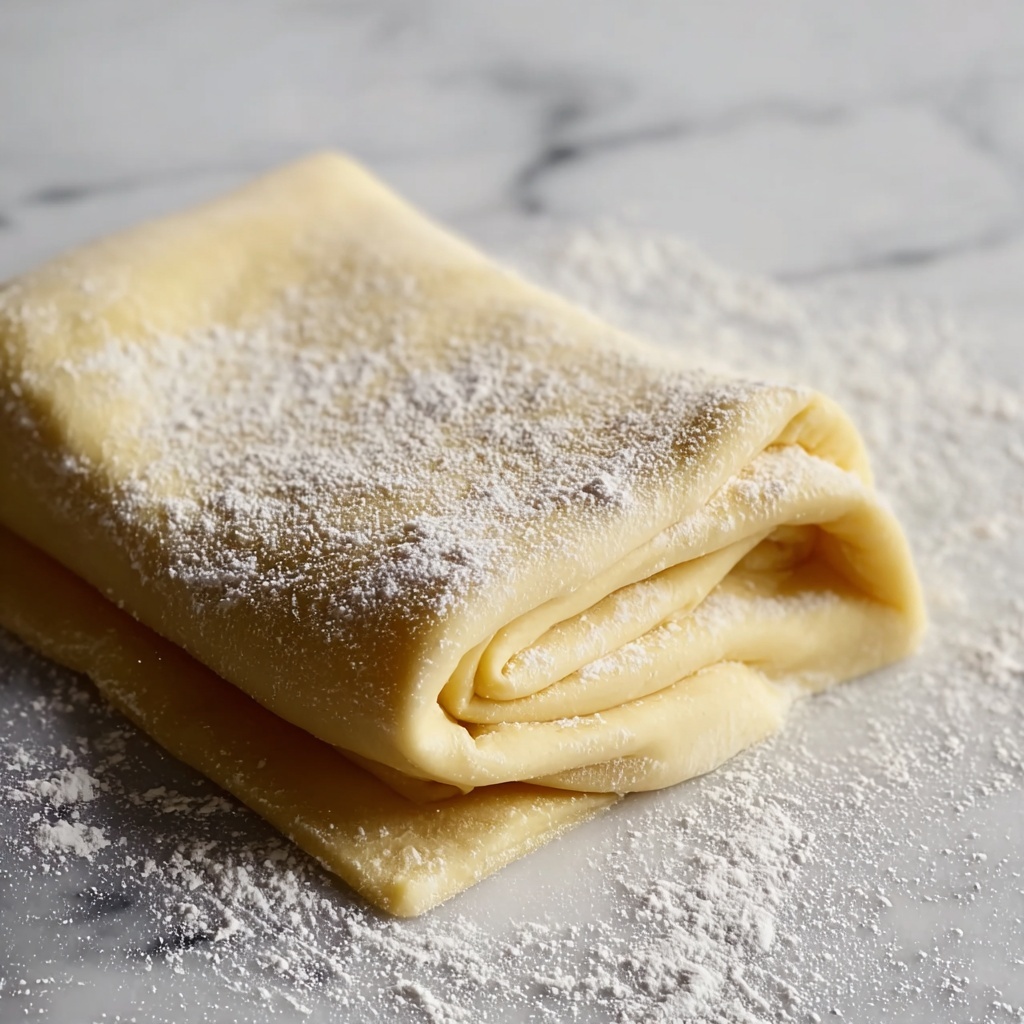
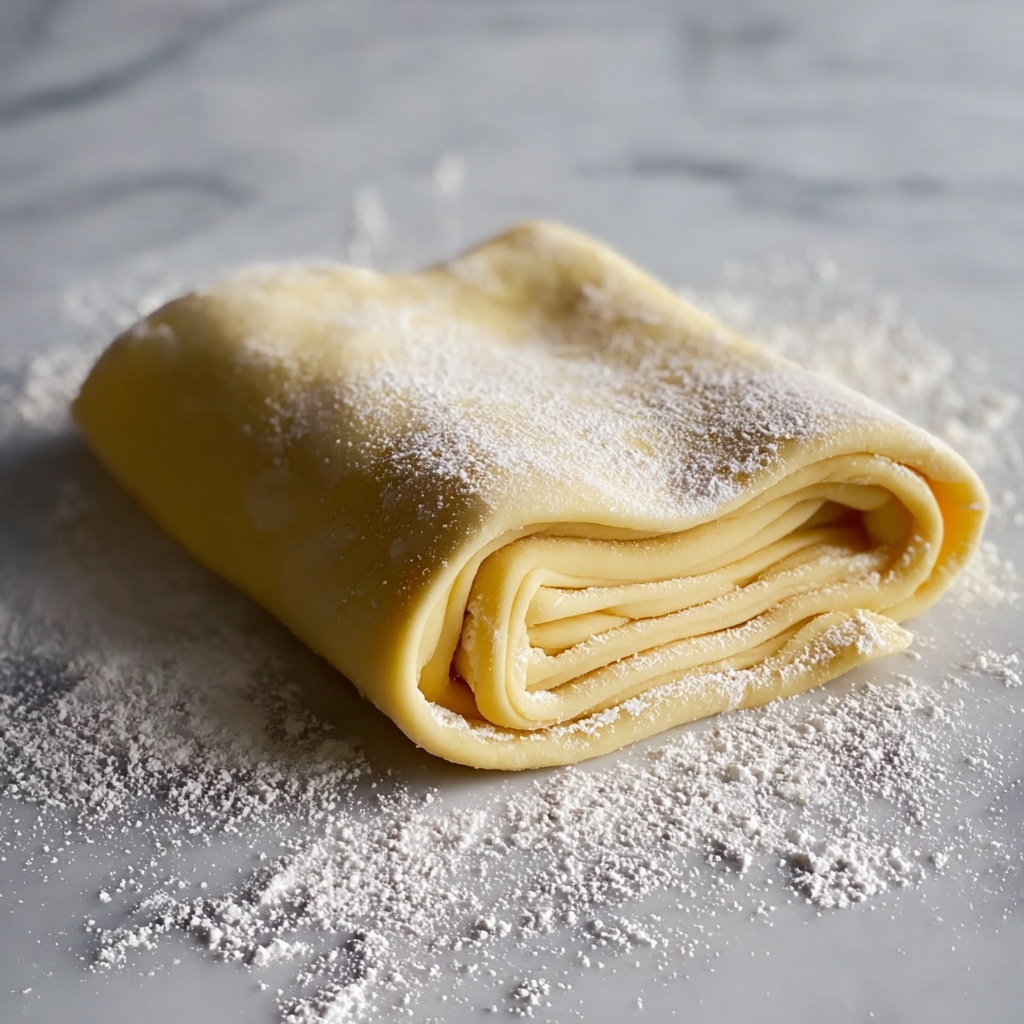
On a lightly floured surface, roll the chilled dough into an 8 by 16-inch rectangle. Fold the dough like a letter (fold one side into the middle and then the other side over it) and turn it 90 degrees. This folding traps layers of butter and dough, setting the stage for puffing up beautifully in the oven.
Step 6: Repeat Rolling and Folding
Repeat the rolling and folding process three more times, chilling the dough for 20 minutes between each fold. These multiple turns build up the many thin layers that give puff pastry its signature flakiness, so patience is key.
Step 7: Final Chill
After the last fold, wrap the dough well and chill it for at least one hour before you plan to use it. This final chill firms the butter once again and relaxes the dough, ensuring easier handling and better puff.
Step 8: Ready to Use
Your Homemade Rough Puff Pastry Dough Recipe is now ready to be rolled out and transformed into your favorite tarts, pies, croissants, or turnovers. It can be stored in the fridge for up to 3 days or frozen for up to 1 month for convenient use later.
How to Serve Homemade Rough Puff Pastry Dough Recipe
Garnishes
When serving your puff pastry creations, think about garnishes that add a pop of flavor and color—a sprinkle of coarse sea salt or a brush of egg wash before baking not only enhances taste but creates that golden, glossy finish that makes your pastry irresistible.
Side Dishes
Puff pastry dishes shine when paired with fresh, vibrant sides. Consider simple salads with tangy vinaigrettes to balance buttery richness, or roasted vegetables that add hearty flavors and textures alongside your pastry stars.
Creative Ways to Present
Don’t be afraid to get a little fancy with your presentation! Cut your puff pastry into shapes using cookie cutters for charming treats, or arrange small pastry cups filled with savory or sweet fillings for a delightful appetizer spread that’s sure to impress.
Make Ahead and Storage
Storing Leftovers
If you have leftover dough or baked goods, store dough tightly wrapped in plastic wrap in the refrigerator for up to 3 days. Baked pastries are best kept in an airtight container at room temperature for 1-2 days to preserve their crispness.
Freezing
Puff pastry dough freezes wonderfully. Wrap it securely in plastic and place it in a freezer-safe bag. It will keep for up to one month. When ready to use, thaw overnight in the refrigerator rather than at room temperature to preserve the dough’s texture.
Reheating
Reheat pastries in a warm oven set at 350°F (175°C) for 5-10 minutes to revive their crisp layers without drying them out. Avoid microwaving, as it can make the pastry soggy and chewy.
FAQs
Can I use salted butter instead of unsalted in this recipe?
Yes, but if you do use salted butter, reduce or omit the added salt in the recipe to prevent your dough from tasting too salty.
How important is it to keep the butter cold?
Keeping the butter cold is absolutely vital to achieving those flaky layers. Warm or melted butter will blend fully into the dough and prevent proper puffing during baking.
Can I substitute lemon juice with something else?
Absolutely! Vinegar is a great alternative acid that helps tenderize the dough. Just use the same amount as the lemon juice.
Is this dough suitable for both sweet and savory recipes?
Definitely. The neutral, buttery flavor of this rough puff pastry dough makes it versatile enough for everything from fruit-filled desserts to hearty meat pies.
Why does the recipe call for multiple rolling and folding steps?
Each roll and fold creates layers of dough and butter. These layers are what puff up when baked, giving you that light, flaky texture synonymous with puff pastry.
Final Thoughts
Making your own puff pastry might seem intimidating at first, but this Homemade Rough Puff Pastry Dough Recipe simplifies the process in such a way that anyone can achieve delicious results with practice and patience. It’s a truly rewarding experience to pull flaky, golden pastries fresh from your oven that you made from scratch. So give it a try, let your creativity loose, and delight your friends or family with pastries that taste as charming as they look!
Print
Homemade Rough Puff Pastry Dough Recipe
- Prep Time: 30 minutes
- Cook Time: 0 minutes
- Total Time: 2 hours
- Yield: 8 servings
- Category: Baking
- Method: Baking
- Cuisine: French
Description
This homemade rough puff pastry dough recipe yields a flaky and buttery pastry ideal for tarts, pies, croissants, and turnovers. The method involves incorporating cold butter into flour, followed by repeated rolling and folding to create layers, resulting in a tender yet crisp texture. With a total preparation and chilling time of around 2 hours, this versatile dough can be stored in the fridge or freezer for convenience.
Ingredients
Dry Ingredients
- 2 1/2 cups all-purpose flour
- 1 teaspoon salt
Wet Ingredients
- 1 cup (2 sticks) unsalted butter, cold and cubed
- 1/2 cup cold water
- 1 teaspoon lemon juice or vinegar
Instructions
- Mix the Dry Ingredients: In a large bowl, whisk together the all-purpose flour and salt until evenly combined, creating the dry base of your dough.
- Incorporate Butter: Add the cold, cubed unsalted butter to the flour mixture. Using your fingers or a pastry cutter, work the butter into the flour until you achieve coarse crumbs with visible chunks of butter, which help create the flaky texture.
- Add Water and Lemon Juice: In a separate container, mix the cold water with lemon juice or vinegar. Gradually stir this mixture into the flour and butter combination. Stir just until the dough comes together, being careful not to overmix to preserve the butter chunks.
- Shape the Dough: Form the dough into a rough rectangular shape. Wrap it tightly in plastic wrap and chill in the refrigerator for 30 minutes to firm up the butter and hydrate the flour.
- First Roll and Fold: On a lightly floured surface, roll the chilled dough into an 8×16-inch rectangle. Fold it like a letter by bringing one short side towards the center and then folding the other side over. Rotate the dough 90 degrees to prepare for the next fold.
- Repeat Rolling and Folding: Repeat this rolling and folding process three more times, chilling the dough for 20 minutes between each fold. This lamination builds the flaky layers essential for puff pastry.
- Final Chill: After the final fold, wrap the dough tightly and chill it for at least 1 hour. This rest period ensures the dough is firm and ready for baking.
- Use or Store: The rough puff pastry dough is now ready to be used in recipes such as tarts, pies, croissants, or turnovers. Store any unused dough in the refrigerator for up to 3 days or freeze for up to 1 month for future use.
Notes
- Ensure the butter and water are very cold to create distinct layers and achieve the best flaky texture.
- Do not overwork the dough to keep butter chunks visible, which contributes to flakiness.
- The lemon juice or vinegar helps tenderize the dough and can slightly inhibit gluten development.
- Use plastic wrap tightly to prevent the dough from drying out during chilling.
- If freezing, thaw the dough in the refrigerator overnight before rolling out and using.